

Mandaluyong's Now Now Updates Comfort Classics With Fermented Ingredients, Fresh Flavor Combos
Think big brunch plates and hearty mains that cleverly incorporate fermented elements.

Now Now
497-C Rosa Building, Calbayog corner Esteban Street, Mandaluyong City
Instagram: www.instagram.com/nownow.ph
Currently on soft opening; open from 6 to 10 p.m. (Friday), 11 a.m. to 3 pm. and 6 to 10 p.m. (Saturday and Sunday)
(SPOT.ph) The space at Mandaluyong newcomer Now Now is of the less-is-more sort for the most part, flaunting a modern, industrial-esque look of grey brick walls, crimson seats, concrete floors, steel fixtures, and aluminium tables. But what immediately catches my eye is the pair of shelves displaying jars of their little projects: housemade shio koji; kombucha brewing under a scoby; lacto-fermented everything from pineapple to calamansi to chili to talong; even pistachio miso. "You can still taste the nuts but with a bit of sour, savory, and umami,” says owner Bryan Kong.
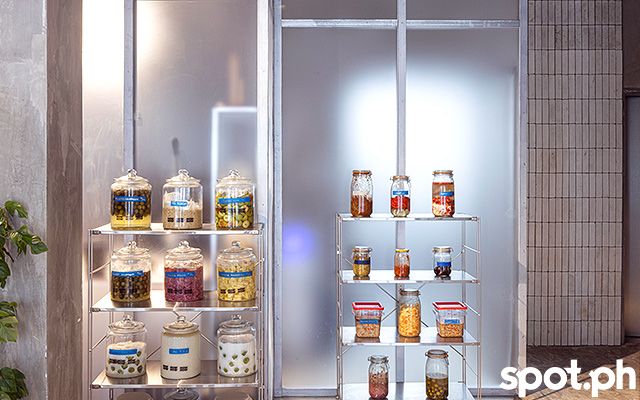
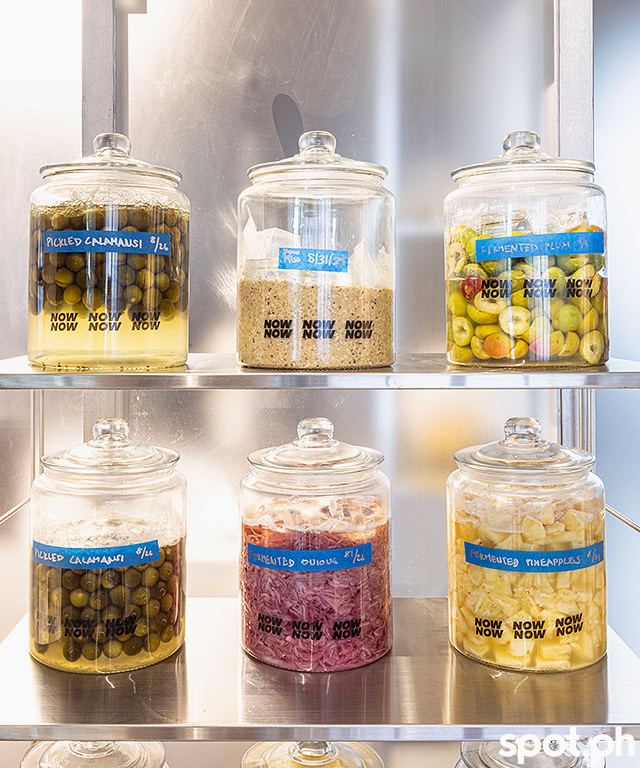
My fascination only further expands as I look up the ceiling, where I find an installation piece by Pinto artist Chino Yulo that loosely resembles crumpled paper—or a cloud. “The concept behind this is, we do a lot of ferments—so [the piece] is like the top of the brine,” fellow owner Maxine Kong explains. “Like, you know how everything's submerged [and you have the cloud on top]? That's sort of like the philosophy behind this artwork.”

Also read:
At the Gallery by Chele x Haoma Collab, Sustainability United Filipino + Neo-Indian Flavors
Now Now in Mandaluyong
There’s a clear tribute to the fermentation process in the restaurant, which is endearing to witness. Fermentation is magical stuff—it’s primarily done to extend the shelf life of the otherwise-easily perishable, but the process also unlocks properties you otherwise might not think exist in its base ingredients: vegetables develop a yeasty sourness as salt is added and lactofermentation ensues; fizzy, tangy-sweet kombucha comes about as tea, sugar, and a SCOBY (that stands for a Symbiotic Culture of Bacteria and Yeast—the more you know) join forces; koji is the umami-rich product of rice, salt, and Aspergillus oryzae.


Of course, fermentation’s long been a staple of Filipino cuisine, what with traditional delicacies like buro, bagoong, galapong, and our range of native vinegars. Modern house ferments are also increasingly becoming a staple of contemporary and fine-dining restaurants like Noma, which would influence successors the globe. We have our growing share of spots in Manila that embrace the fermentation genre—Toyo, Gallery by Chele, and Metiz are just some that come to mind.


Bryan, whose also owns neighborhood katsu gem Crazy Katsu and Japanese-style craft ice cream brand Kurimu with Maxine, similarly admires Noma and the way Chef Rene Redzepi has helped popularize fermentation in this context. “Maxine and I, we'd been traveling a lot—we ate at Noma [among other places]... and the concept is all behind fermenting whatever's local,” he explains. “So we decided, you know what? Why not try it?” From that point on, he started “geeking out” about the topic, reading on and doing research from all the resources he could get his hands on.
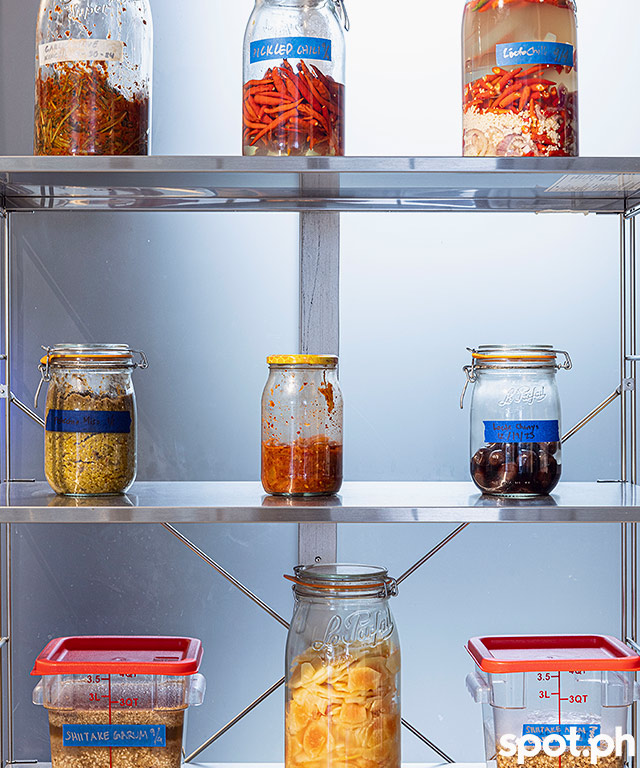
“Noma is a big proponent for koji fermentation, so I started trying to grow my own mold and then it worked out,” Bryan shares. “I got shocked [and] started trying it with your normal sinigang, tinola, and all of that—it's like a supercharger for flavor. We did a deep dive now we're starting to experiment making our own misos lacto-fermenting stuff.”
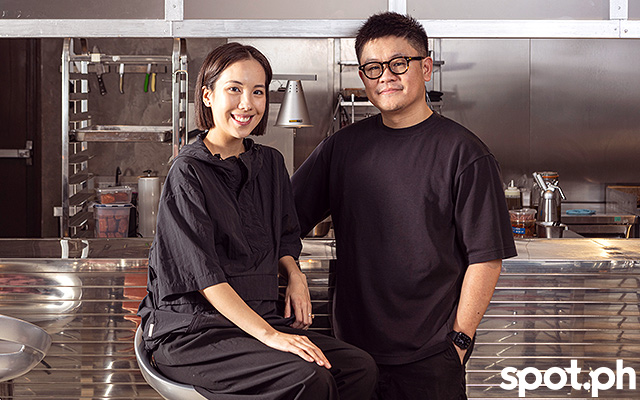
Now Now began as a venture for ready-to-heat frozen meals, Bryan and Maxine tell me. But they soon found the opportunity to work with acclaimed Polish chef Mateusz Łuczaj (who has experience working for Ritz Barcelona and guesting on MasterChef Poland where he was a finalist) as their Executive Chef, and Filipina chef Lisane Łuczaj (who’s worked the kitchens of Takashi Ochiai in Barcelona and Intercontinental Warsaw) as their Executive Pastry Chef; the two met in Le Cordon Bleu Madrid and are based in Warsaw. Mateusz in particular is highly knowledgeable about fermentation. "What clicked with this concept was, Mateusz is working on a few things in terms of slow food and fermentation as well," says Bryan. From there, he and Maxine shifted the brand to becoming the fermentation lab and dine-in spot that Now Now is today.

Whereas most other fermentation-centric modern dining spots tend toward the scholarly and/or fine-dining end of the spectrum however, Now Now makes the idea more approachable as they incorporate fermented elements into big brunch plates and other comfort mains that are easy to relate to—and love. Oats cooked in koji stock make for a subtly savory, hearty base to be topped with Greek yogurt, granola, and a bruleed wedge of gourd in the Roast Pumpkin Granola Bowl (P380). Their lacto-fermented onions function as a refreshing counterpoint in the Arancini (P340) featuring a croquette of truffle-infused, cream cheese-stuffed rice; and in the Lu Rou Fan (P420) that stars Taiwanese braised pork and scratch-made mantou.


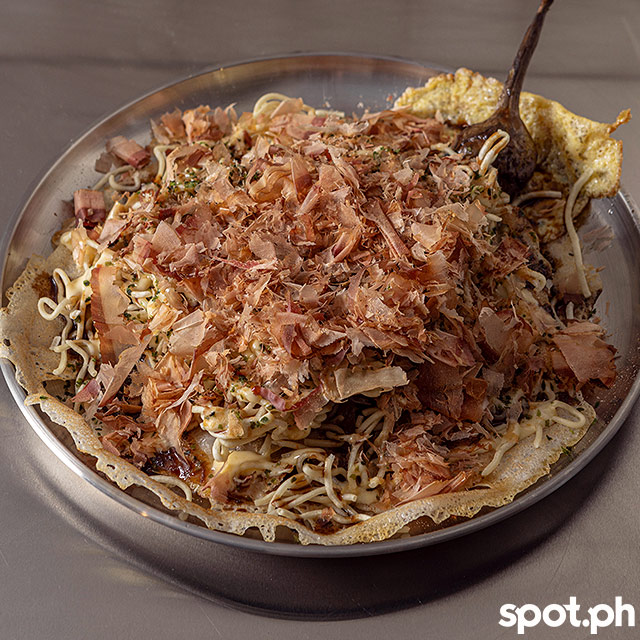
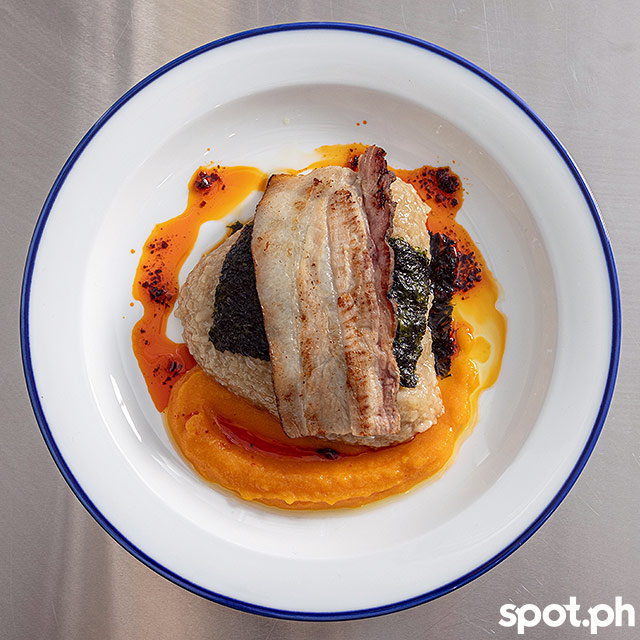
In the Tortang Talong Okonomiyaki (P420), pickled calamansi ponzu brightens the decidedly heavy, stick-to-your-ribs base of an eggplant-bacon-crispy noodle stuffed savory pancake. It’s a similar case for the Now Now Machang (P345), which stars a lacto-fermented papaya chutney sidekick and smoked miso-cured bacon topping. Drinks like the gin-based Peach Fizz (P460) with subtly savory lacto-fermented peaches, and the Dayap Amazake Lemonade (P300) inspired by the Brazilian version of the drink, make for star accompaniments to any of their brunch numbers.
Bryan’s eyes light up comes out as he brings out the meatier mains on their menu, where the proteins are marinated or otherwise aged in koji. “It eats up protein or starch,” he explains. “Like if chicken is chicken, [koji] makes it taste more like chicken.” I see this in practice as plates of the Fried Chicken (P420) arrive on our table. Two sauce options are available—Pickled Kalamansi Ponzu, which brings to mind Korean dakgangjeong gone citrusy; and Orange Chicken, which takes after the Chinese-American classic but gets its natural sweetness not from oranges but from mangoes. Both make way to meat that’s moist and tender all throughout, and, true to Bryan’s claim, more chicken-y, thanks to a subtle umami from the koji that hums in the background.


Should you come visit with a special someone in tow, don’t you even hesitate to get the Steak & Mash (P3,490/380 to 310 grams). This time around, it’s all about Wagyu zabuton that they age in koji, which Bryan explains does something similar to dry-aging—but sped up significantly. “So dry-aging [usually] takes 36 weeks; this one [with koji] you can do it in three days,” he tells me. “Shio koji eats protein and then makes it into amino acids—that's what actually brings out the umami and it also tenderizes the protein.”

Not even dessert is exempt from the Now Now treatment. The Fish Cake (P550) is, well, indeed a dessert—their take on burnt Basque cheesecake to be exact, but with a welcome savory finish the team didn’t divulge the full source of apart from revealing it's dusted with powdered bonito on top. (My guess: fish sauce, whose pungency goes beautifully with the crackly bruleed top and cream-cheese filling.) There, too, is the Gochujang Cookie (P350), which comes as a single-serve bar cookie imbued with the fermented Korean condiment and topped with sesame ice cream and what they dub a “sour cracker.” I for one embrace its offbeat flavors, and find myself endlessly intrigued by what the heck makes that cracker “sour." The team at least hints that it’s made of kitchen scraps from making their other dishes, in line with Now Now’s goal of becoming a zero-waste restaurant.


Serving big plates brimming with bold flavors, Now Now makes the oft-intimidating world of ferments accessible to both casual and more discerning diners. As of writing, Now Now is still on soft opening, tweaking the interiors and parts of the menu—but it's worth celebrating embracing not just their destination but the whole journey and process of things, not unlike how it works in fermentation itself.
Photos by Jar Concengco
Hey, Spotters! Check us out on Viber to join our Community and subscribe to our Chatbot.