

The Giving Café Continues to Support Local Farmers at New Branch in an Ancestral House
The A. Mabini branch of the coffee social enterprise helmed by awarded barista Michael Harris Conlin ties history and community.
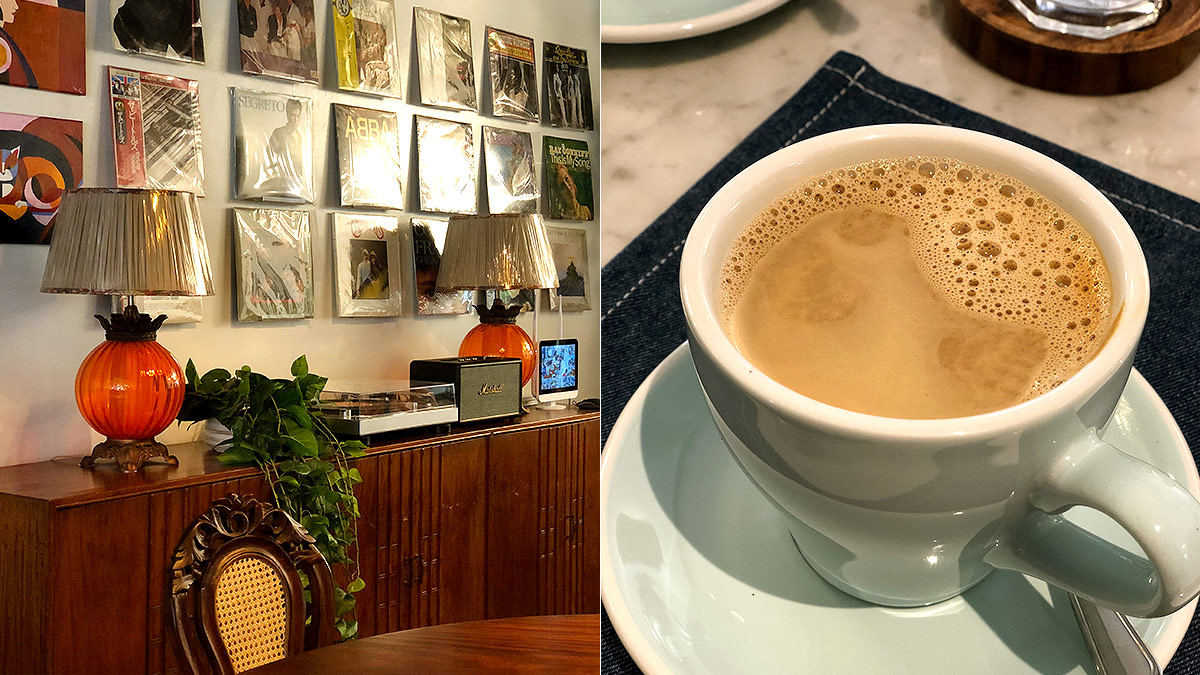
The Giving Café
858-B A. Mabini Street, Barangay Addition Hills, Mandaluyong City
Contact: 0927-247-1490; 0985-128-4751; 8518-9291
Facebook: www.facebook.com/tgcsocialentrep
(SPOT.ph) The living room in 858 A. Mabini, Mandaluyong is bright and airy, thanks in part to the architecture designed to maximize airflow and sunlight—a trademark of midcentury Filipino architecture. “This is where we used to play as kids,” Michael Harris Conlin gestures around as he tours guests around, myself included, all as the soft, warm lights and Philippine hardwood furniture inviting both socializing and relaxation.
Anyone who’s sold a beloved house knows the sense of finality accompanying the sale, a lingering hope that whoever purchases it will keep the space’s original purpose—that of a home. Of course, it’s not always the case, and in some cases, the entire building may go down.
But one can always hope.
Similarly, anyone who’s restored an ancestral house and continued its original purpose knows that not only was a space restored, but so was a home. It’s painstaking work, requiring time and financial as well as emotional resources, but in Conlin’s case, his wish to honor his grandfather’s legacy is now a shared dream through The Giving Café’s second branch, built in the restored Conlin family home.
Also read: Heritage, History, and Coffee Come Together at This Quiet Binondo Café
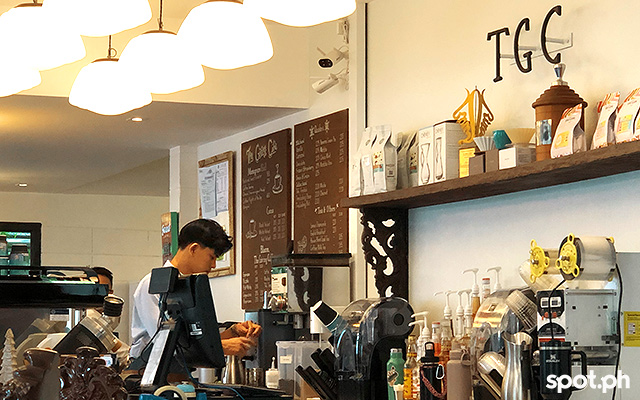
The Giving Café at A. Mabini in Mandaluyong City
Old Manila in New Manila
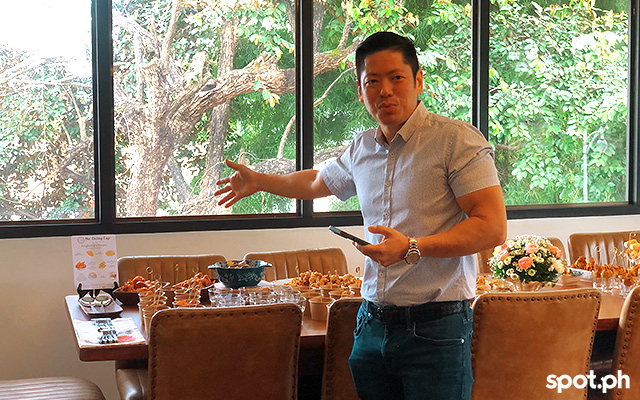
“We envisioned the A. Mabini branch as more than just a café—it’s a place where future generations in the community can come together,” Conlin tells SPOT.ph over lunch hosted at The Giving Café (TGC), “whether it’s a quiet coffee date or a lively family occasion, this branch is designed to be a space where connections are nurtured.”
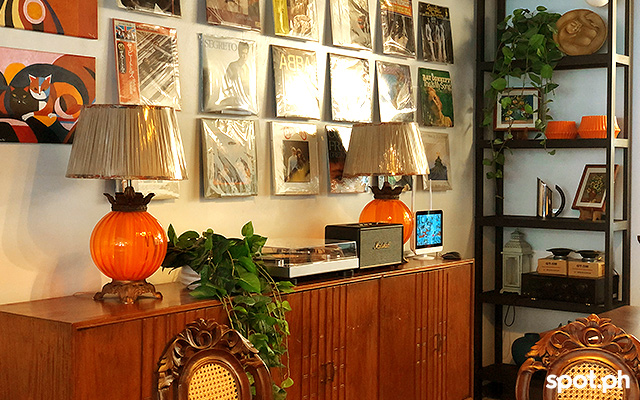
The plaster is new, the wood freshly varnished, the restored space a balancing act between the Instagram Era’s sleek glitz and the 1950s postwar reconstruction optimism: The “functional metal elements with angular forms, a hallmark of the era’s architectural style seen in railings, window grilles, and other structural accents,” as Conlin points out.
“We made sure to refurbish all the wood in the house,” he explains further, “ensuring that the beautiful grains and natural character were preserved and showcased. As for the furniture, “by restoring rather than replacing, we honored the craftsmanship of the past and minimized waste.”
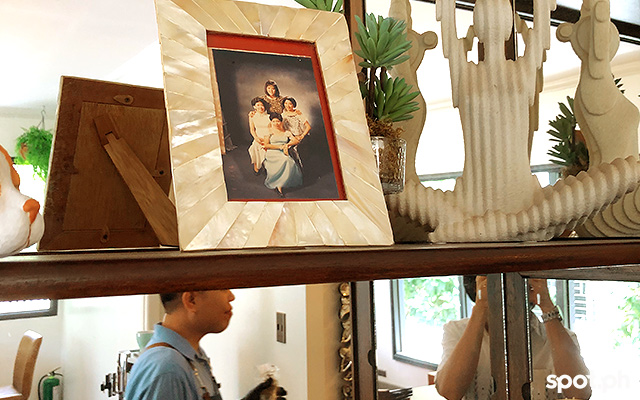
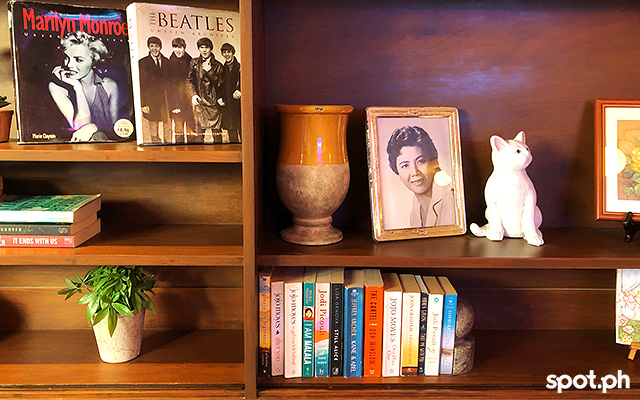
There’s a reading room with individual desk lamps and sockets (“students are welcome here!”) all next to a bookshelf with titles owned by Conlin’s family (which he also added to), which guests can read.
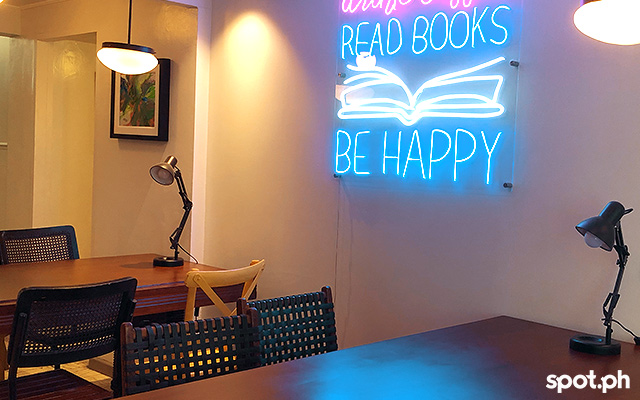
There are youthful neon signs in some rooms, strategically placed yet tastefully decorated mirrors for selfies, a restored billiards table open for game time, and a staircase traditionally used for uniquely Chinese-Filipino betrothal rituals, each space bearing a story. The restored home is now intended for a gamut of activities: Business meetings, special occasion receptions, languid or laughter-filled lunches.
It’s a big house for a big family, purposely designed for midcentury life, a stark contrast to today’s atomized urban life: A master’s bed room, a basement room often reserved for the eldest child bringing home their spouse as a new family member, second-floor rooms for the siblings still in school, many lounge areas, including a large living room for soirees and a music room with a vinyl collection.
In said basement room, Conlin laughs with a knowing smile, “this is where young families—newlyweds—would start out.” Days before this tour, one of TGC’s staff held her baby shower here, and the cafe crafted a special menu, all aligned with the newborn’s name. “The A. Mabini branch,” Conlin explains, “offers specially curated themed menus tailored for events.”
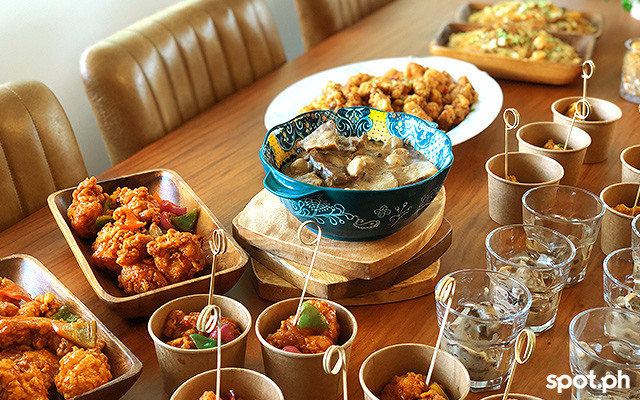
Nonetheless, patrons from the Sheridan branch will be pleased to find their familiar Chinese-Filipino comforts here in Mabini.
All in all, there’s a lingering sense of lived-in space: Festive and gregarious like a 1950s matriarch inviting guests for seconds, the patriarch offering another round of spirits, putting TGC Mabini in a league with other café-restaurants built in ancestral houses in heritage districts from Escolta, Manila to San Roque, Marikina, from Lucban, Quezon to Taal, Batangas.
Spotlighting Philippine Coffee
Throughout his career as a barista and proprietor of coffee roaster Henry & Sons, Conlin has also discovered the meaning of found family, thanks to the communities he’s worked with. At the Sheridan branch, they happily support Sitio Hartwell in Itogon, Benguet: "[They're] a community that has been successfully transformed from a mining community into a thriving coffee farming community," Conlin shares.
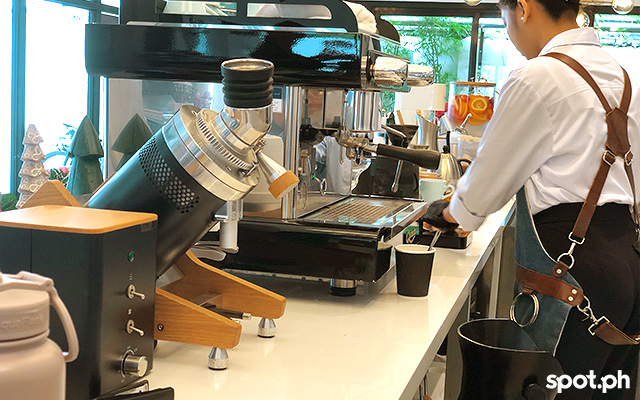
TGC A. Mabini similarly supports Sitio Hartwell, as well as a Liberica coffee community in Calamba, Laguna. "This community, rediscovered during the COVID-19 pandemic, had given up on coffee farming, allowing their Liberica coffee trees to grow wildly to heights as tall as coconut trees."
“During a series of dialogues,” Conlin reveals, “I realized that Philippine coffee was at a crossroads. Younger generations of farmers were increasingly uninterested in continuing their parents’ craft. Without significant intervention, the Philippines was at risk of losing its identity as a coffee-producing country.”
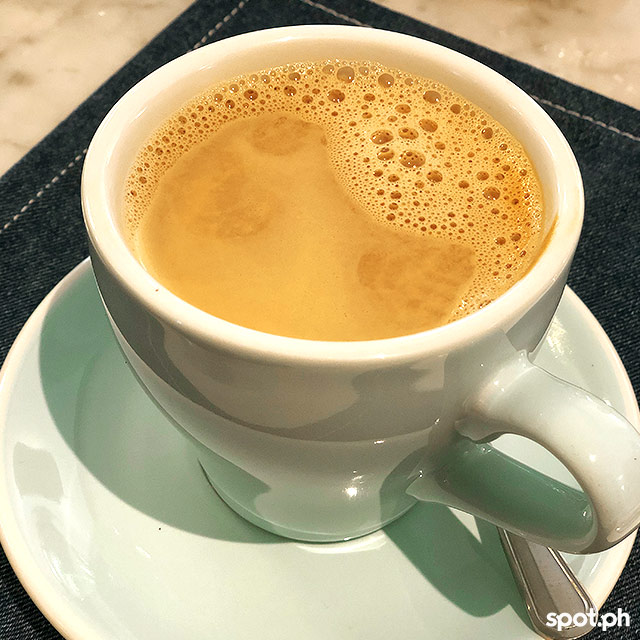
“Despite being one of the first countries in Asia to produce coffee,” the entrepreneur expounds, “the Philippines has struggled to keep pace with countries like Vietnam and Indonesia, which have invested heavily in coffee production infrastructure. Meanwhile, South American and African countries continue to dominate the global coffee trade.”
“However, I firmly believe that the Philippines is on the cusp of a coffee renaissance,” he adds, citing Sitio Hartwell as a success story, “one notable example is the transformation of Itogon Benguet coffee into one of the most prized Philippine coffees globally,” proud that Henry & Sons, through TGC, has played its part in that development.
Past, Present, Future
Conlin recalls that his grandfather, water polo medalist Juan Bautista Lee, liked to keep a tub of ice cream in the refrigerator. “It didn’t matter what time of year it was—there was always a tub of ice cream waiting,” the barista and entrepreneur smiles, realizing now that the dessert was stored not just for Angkong’s personal consumption but in the off-chance that a guest paid a surprise visit or a family member needed comfort.
Who knew something cold could hold so much warmth?
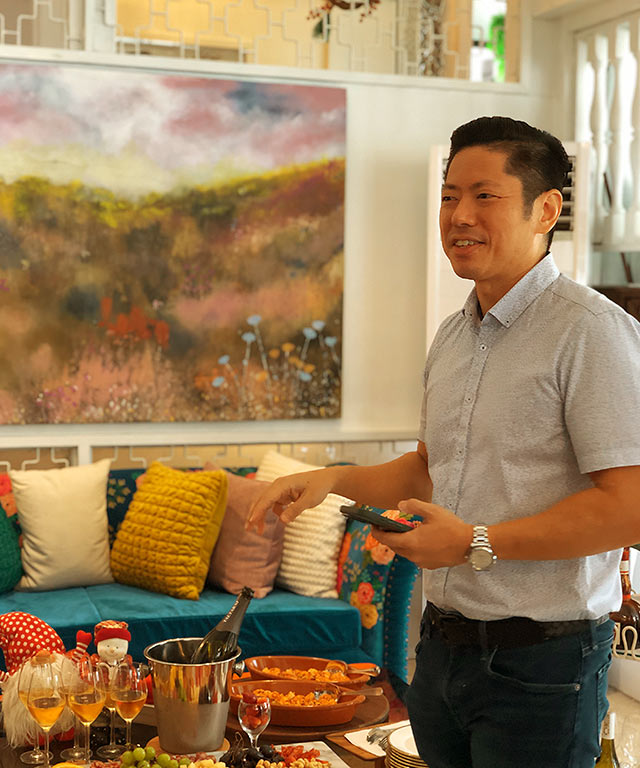
Conlin started his career roasting coffee as Conlin’s Coffee almost 25 years ago, as was typical of anyone in their early 20s, the goal was simply “to be the best.”
In 2006, his brother Lloyd Eric joined him and the operation expanded further, supplying hotels, casinos, and restaurants in the Philippines, acquiring their biggest rival in 2013 and renaming the business to Henry & Sons, in honor of their father, Henry Lim-Conlin.
“The real turning point for me,” he reveals, “came in 2016 when I was invited to meet coffee farmers in Benguet,” and that’s when the true state of Philippine coffee revealed itself.
I mention the elephants in the room, citing predatory rates and institutional neglect, and Conlin answers without hesitation, sharing that TGC wants to “go beyond transactional agreements, [to] establish long-term relationships based on trust and mutual growth, cutting out unnecessary middlemen to ensure that farmers receive fair compensation for their hard work.”
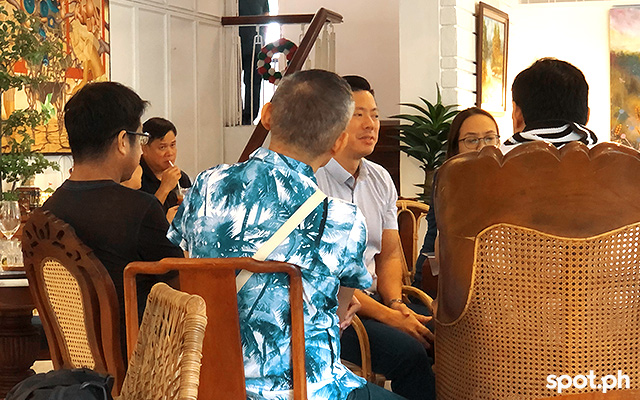
TGC A. Mabini’s mission is two-fold, as they aim to honor Conlin’s family legacy by tying it to a larger advocacy: “When we open a new TGC branch,” Conlin tells Spot, “it’s not just about expanding our business—it’s about growing our ability to support more coffee farming communities by providing them with resources, knowledge, and market access, all while promoting their unique coffee varietals, like Laguna Liberica.”
He illustrates this point by sharing that “the Calamba farmers were paid for the wood, leaves, and flowers from pruning the trees, which were used to create a special wood, leaf, and flower syrup exported to Japan. This process not only convinced the farmers to rejuvenate their trees but also resulted in a quadrupling of farm productivity in just one year.”
If ever TGC will open a new branch, Conlin envisions a new partnership with another coffee community.
“The biggest challenge we face is the perception among farmers that coffee isn’t worth the effort. In terms of agreements and practices, we hope other roasters and cafes will adopt similar direct-trade approaches and commit to paying a price that reflects the true value of farmers’ labor and produce,” Conlin expounds.
He continues: “Beyond fair pricing, we need to show farmers that their craft has real value and potential. Roasters, café owners, and consumers, we all have a role to play in this—helping farmers improve their skills, access modern tools, and diversify their income streams.”
The goal is “a ripple effect that benefits not just individual communities but the Philippine coffee market as a whole, where Filipino coffee is celebrated worldwide and everyone in the supply chain thrives.”
During our tour, one drink in particular stood out for me: a tea blended from the husks of coffee beans. “Zero-waste is the way,” Conlin smiles. Earthy, chocolatey, and full-bodied, it’s mildly confident, self-possessed in its role in the bigger orchestra of a Filipino merienda, a contrapunto to our traditionally loud pastries: puto-bumbong, turon drizzling with caramel, the works.
There it is, I realized as I sipped the tea, the world around me blurring in the ensuing caffeine-fueled buzz, there it is, the spirit that Mr. Lee passed on to Mr. Henry Lim-Conlin, which is now embodied by Mr. Michael and all the people writing a new story for 858, A. Mabini.