
Chef Andrew Walsh’s Butcher Boy Is a Melting Pot of Experiences
Here, it's all about the comfort classics that have long inspired the chef of Michelin-starred Cure in Singapore.
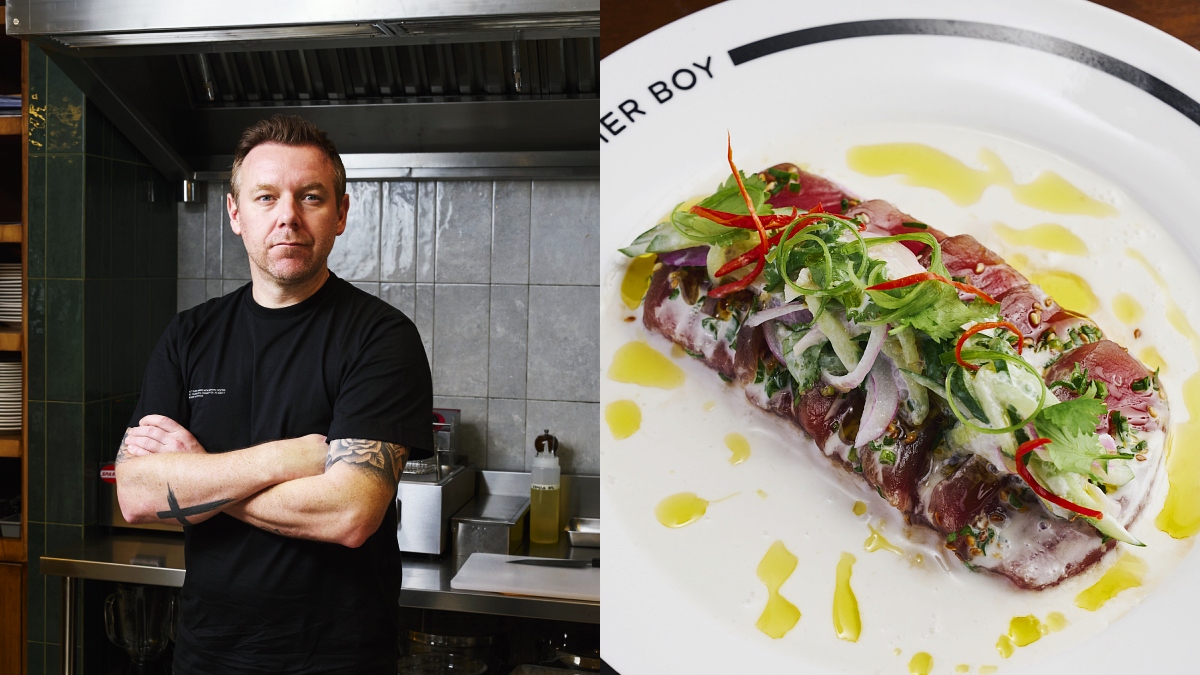
Butcher Boy
106 H.V. Dela Costa corner Soliman Street, Salcedo Village, Makati City
Instagram: www.instagram.com/butcherboyph
Open from 10 a.m. to 5:30 p.m.; 6 p.m. to 12 a.m for dinner, Monday to Sunday
(SPOT.ph) The idea of having an after-work go-to sounds—you’ll have to pardon the French—straight-up bonkers these days, but once you get into the swing of it, it can actually be pretty life-affirming. (It certainly beats napping too hard on the couch again and ruining another three weeks’ worth of sleep cycles.) Chef Andrew Walsh (of Michelin-starred Cure, 87 Club Street, and Ember Beach Club, all in Singapore) is no stranger to the idea; if anything, he’s one of its biggest proponents.
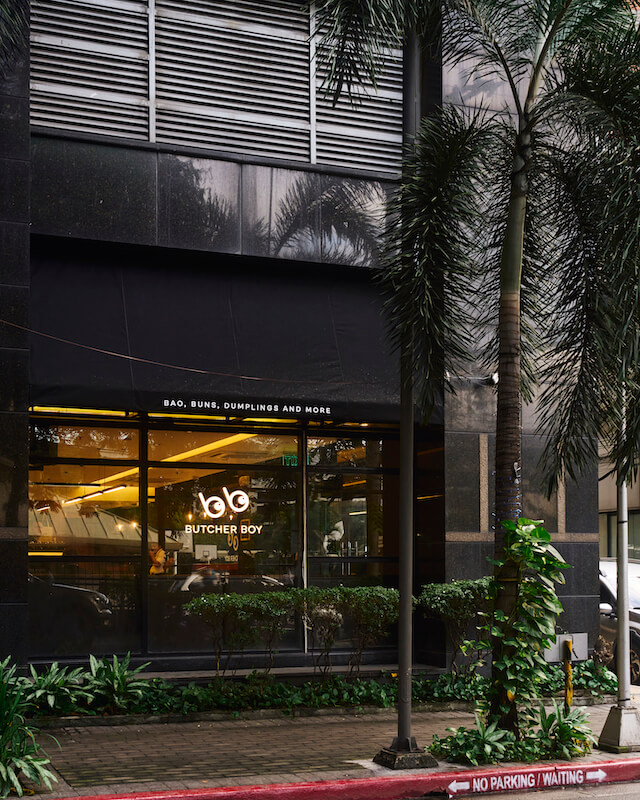
That’s not to say, of course, that he’s abandoning that which earned him the Michelin star. The work has shaped what he values and vice versa—something that rings true any time business and creativity find themselves mixing—and what you get in Walsh’s case is a place like Butcher Boy.
Also read: The SPOT.ph 50 Great Restaurants of 2024: Best of Manila and Beyond
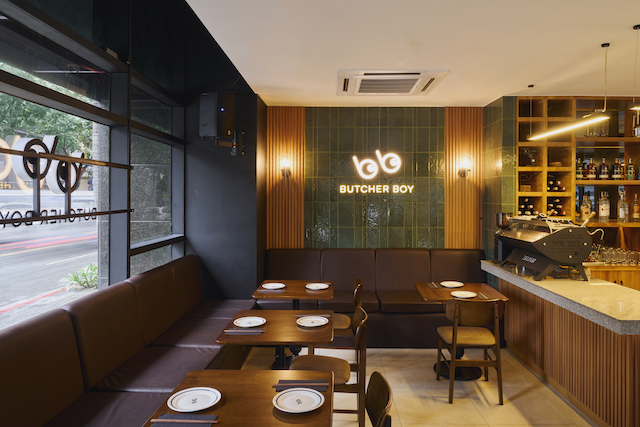
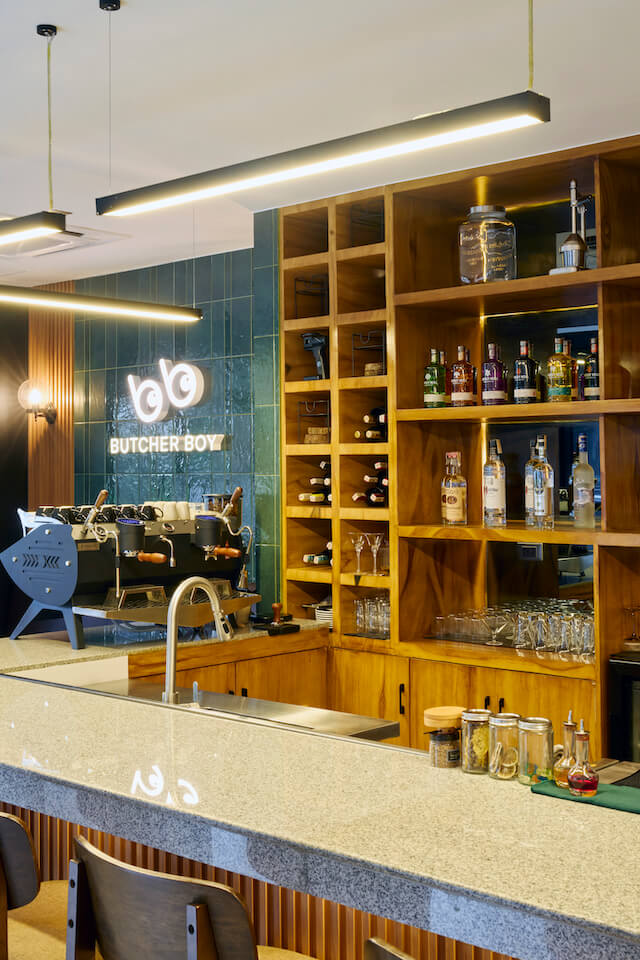
Butcher Boy in Salcedo Village, Makati
The Dinner Plate as a Lens to Asia
“[I grew up] in the West Coast of Ireland and have had the privilege of working in amazing cities such as Dublin, London, New York, Sydney, and Singapore,” says Walsh. “Since moving to Asia 12 years ago, I’ve been inspired by its rich ingredients and culture.”
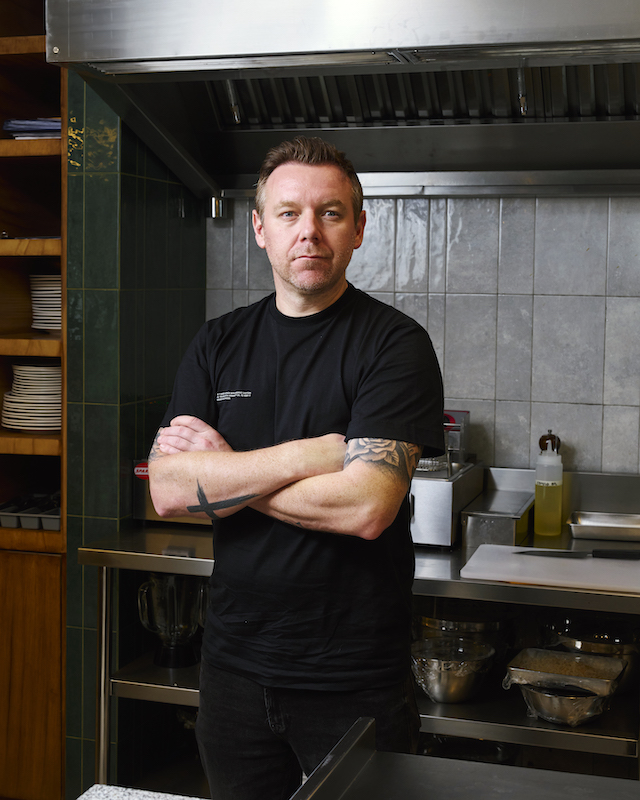
Bringing the Singapore staple to Salcedo (or to Manila, broadly) seemed inevitable; Walsh has long kept an eye on the burgeoning dining scene, even as its tendrils creep and thrive outside of the metropolis. In a sense, Butcher Boy 2.0 is not only a testament to the chef’s unique experiences, but also his singular way of putting down roots—or holding space, as the kids say—in a place he’s come to love: “I’ve been visiting Manila for many years, as my girlfriend Sherie is from here… I’ve made really good friends here, gotten to know people with incredible talent. It’s an exciting time to be entering the scene, but I think Butcher Boy matches that energy.”
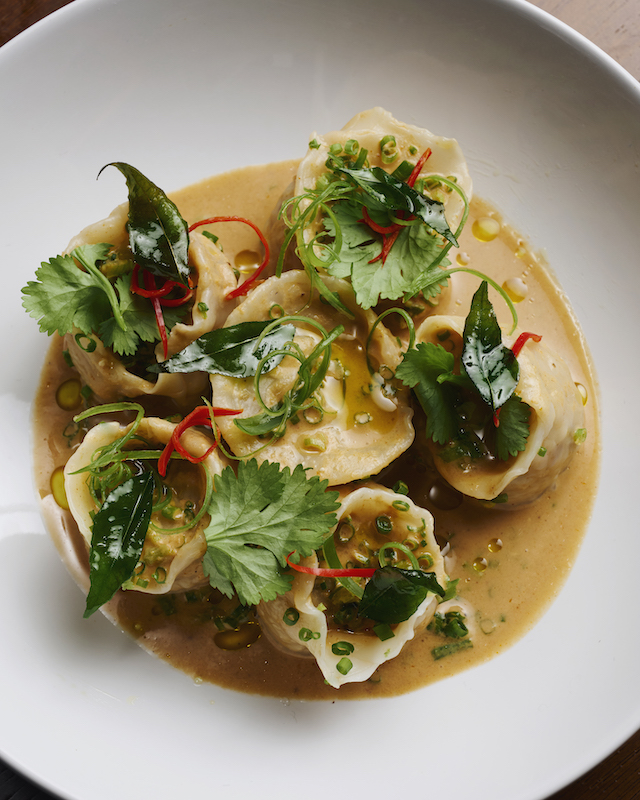
This particular menu rather speaks for itself, as well as to the comforting classics that have inspired him over the years. The Laksa Dumplings (P540) are sort of Walsh’s edible treatise on the quintessential Asian dumpling—a fun (but not too left-field) amalgamation of all the things that make the dough-wrapped delight what it is, with its filling of chicken and prawn and surrounding broth of punchy, unmistakably Asian flavors. It’s like if you had a lot of takeaway from different places and thought, “What if?”—except you didn’t, the chef beat you to it.
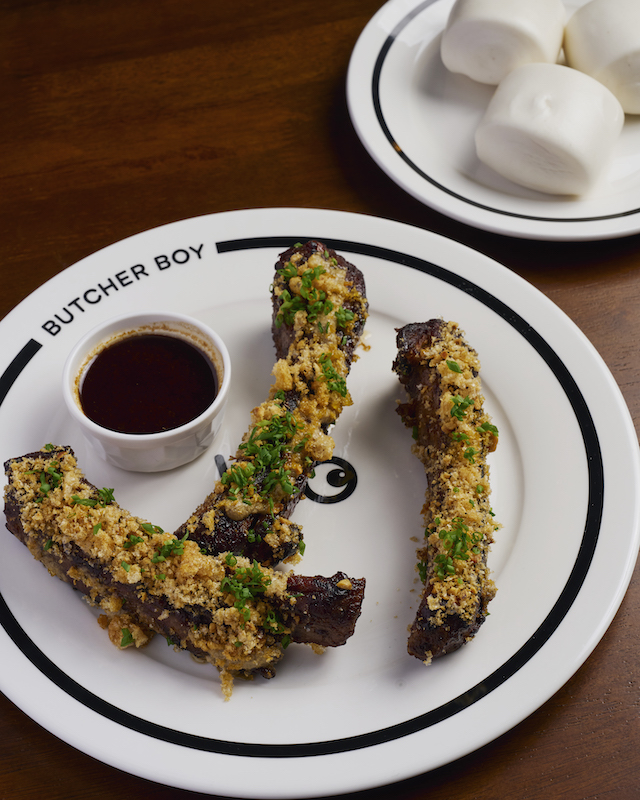
The nod to the new location was also a priority for team Butcher, found in the form of the Sticky Pork Adobo Bao (P1,510). It’s certainly not your lola’s adobo, and they’d be the last people to make such a claim, but it does carry all the characteristics of a good version. It’s familiar territory that doesn’t fear the new; it acknowledges the weight of the dish’s origins without carrying it around, and even adds a little whimsy in the chicken liver. (That’s… a phrase we never thought we’d be typing.)
Backing the Bars
But the thing to remember about Butcher Boy, especially in this new phase of its growth, is that it’s Walsh playing around. “My love for a good steak, along with bao buns and dumplings, form the backbone of Butcher Boy's menu,” he says. “I wanted it to be a good neighborhood restaurant, with a diverse crowd, and I feel lucky that we have that here.”
And while no one’s said anything about the menu being intrinsically wrapped around the drinks selection, it would be more than a little foolish to assume that a hard-working Irish boy should find himself in Southeast Asia without something to offer the drinking culture. Ultimately, we’re really talking bar chow, but it’s bar chow that could pass as a more-than-decent sit-down dinner.
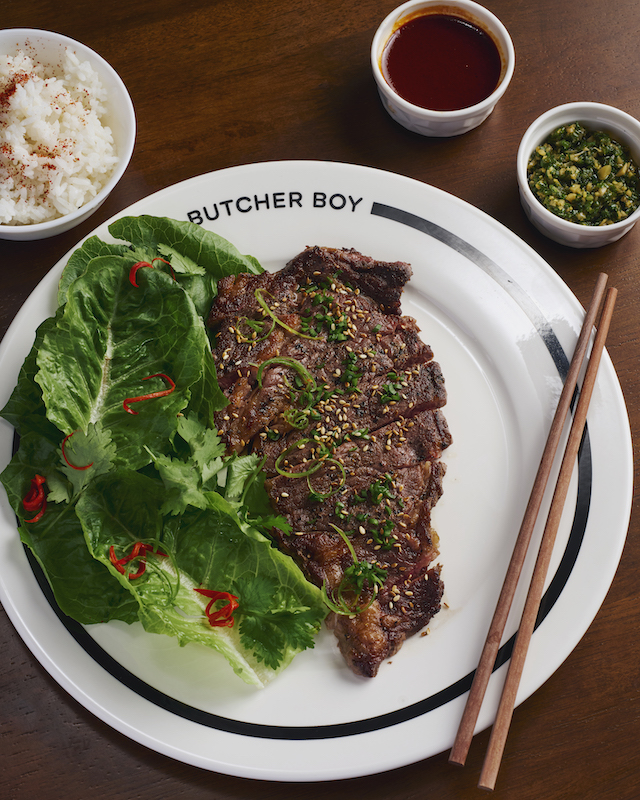
The steak in question, the Beef Bo Ssam, draws all that into focus. It’s not a huge leap from its lettuce-wrapped Korean namesake, but as the chef himself says, breaking new ground is hardly the primary objective here. What you get is tender ribeye—hard to go wrong, really—along with the telltale funky fragrance of bossam and scallions. Rather than a dish that transports the eater to its country of origins, it pulls one into the moment; whether it’s the act of assembling the perfect wrap or just the mix of scents and textures, it’s the sort of sensorial trip that just makes you glad to be where you are.
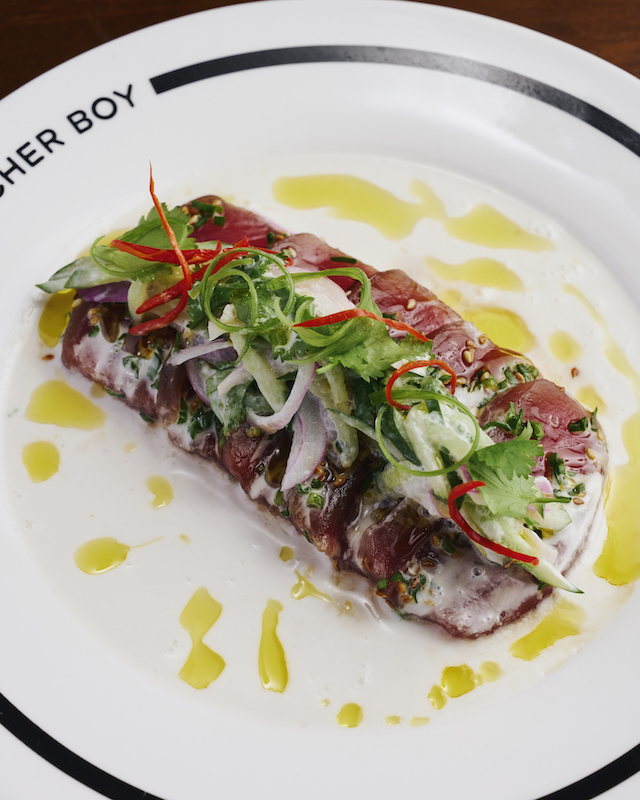
The Asian Caesar Salad (P670) alone eschews tradition in a way that doesn’t ruin every salad thereafter, but is certainly a welcome deviation. The miso-based dressing and crispy puffed rice in place of the anchovy-Dijon and croutons respectively are fun, and that’s all they have to be. Go ahead, follow it up with the Tuna Ceviche (P440) with its pleasantly grassy Vietnamese dressing, and the crunchy yet somehow refreshing Fried Chicken Bao (P310)—because of course.
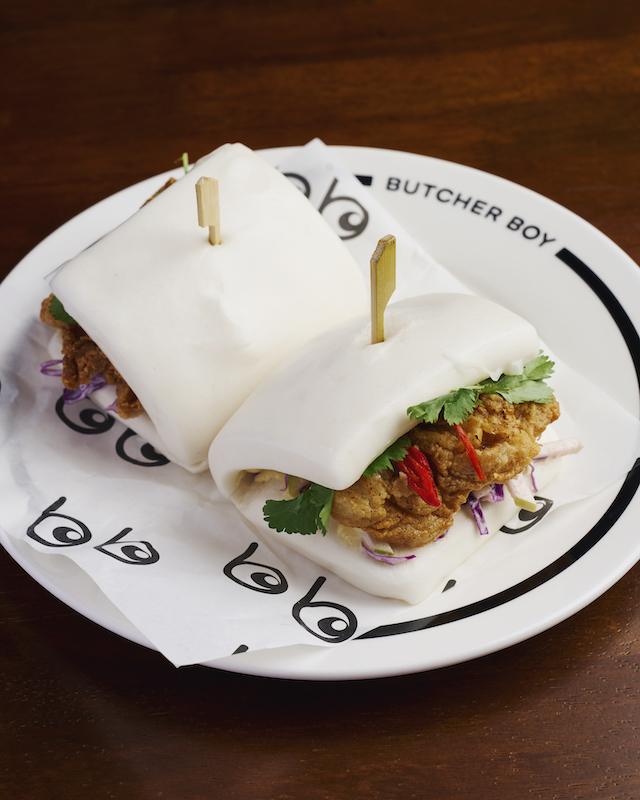
“Is it different? I guess,” shrugs Walsh. “But I think the important bit is that it embodies the kind of place I’d want to go, the food I’d want to eat after a long day at work, you know?” Walsh isn’t especially bothered about standing out; what he seems to have always aimed for is the act of simply—meaningfully—contributing.
Bistronomy as Biography
There’s been a pattern, it seems, of chefs shifting from years of avant-garde ideas and presentation back to the simple enjoyment of food—a return, essentially, to the best version of what works. That’s really what bistronomy is, to a point, and why we think Butcher Boy is settling in just fine in the culinary microcosm of Salcedo.
“It’s a great time to be opening a place in Manila, with all the emerging talent on all fronts,” shares Walsh. “Bartenders, baristas, other chefs… it’s something you can’t help but be excited to be a part of. I’ve been visiting for years and watching it all grow and unfold, and I think Butcher Boy fits in among all of that.”
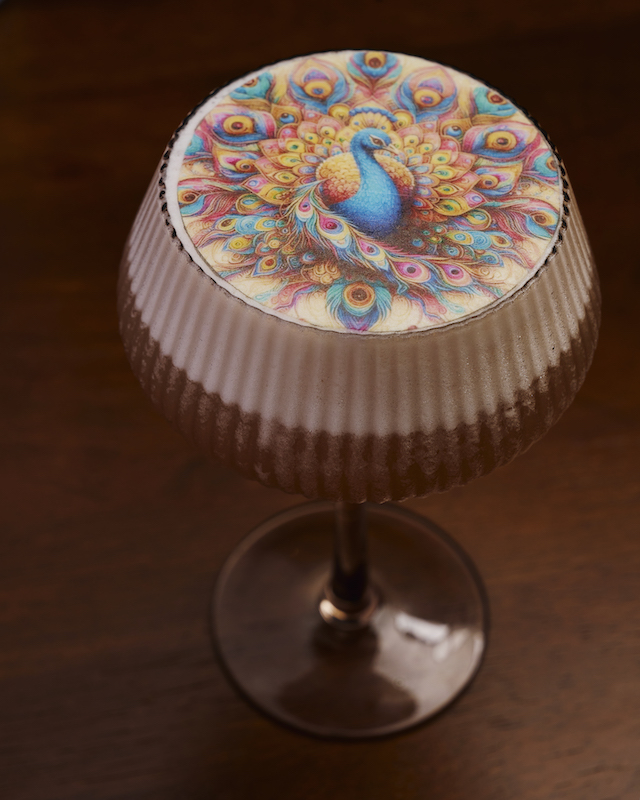
Strangely enough, we can see his point best in the cocktail that’s probably flooded everybody’s Instagram stories; the Bombay Sapphire-based Bird of a Feather (P510) is equal parts tart, fruity, and visually stunning. Some customers get portraits of people, others get the very apt peacock as we did—like the Philippine dining terrain, you can only be so prepared for what you’ll get.
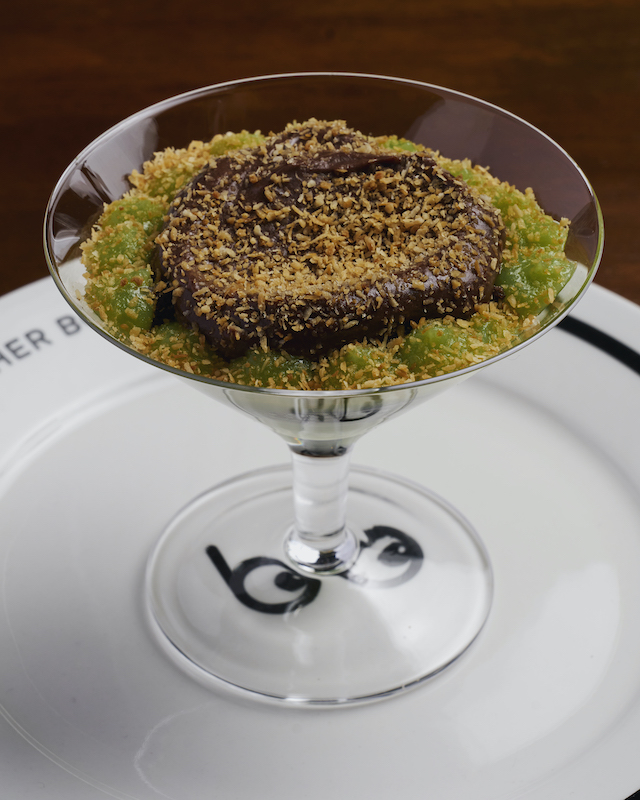
And while some may say that the second chapter of an existing hotspot doesn’t exactly scream novelty, it bears arguing: not everything has to be shiny and breathtaking. Case in point, the Chocolate and Pandan Curd (P490) tastes almost exactly like those iconic Iced Gem Biscuits—and by “iconic,” we do really mean “nostalgic,” which is just a nice way of saying this author is over 30—it’s not quite a Ratatouille flashback, but that’s not the end goal. It’s that it’s fun, and you can’t do it at home, and it’s as good an excuse as any for a night out—which makes sense, considering who and what the chef is. For himself and those whose work he values, inspiration isn’t always the singular, noble spark; at times it is simply what one loves deeply enough to do and make—and, well, eat—again and again.