

President Bongbong Marcos Vetoes Bill Seeking to Declare Pampanga as PH's Culinary Capital
Here's what folks on the Internet have to say.
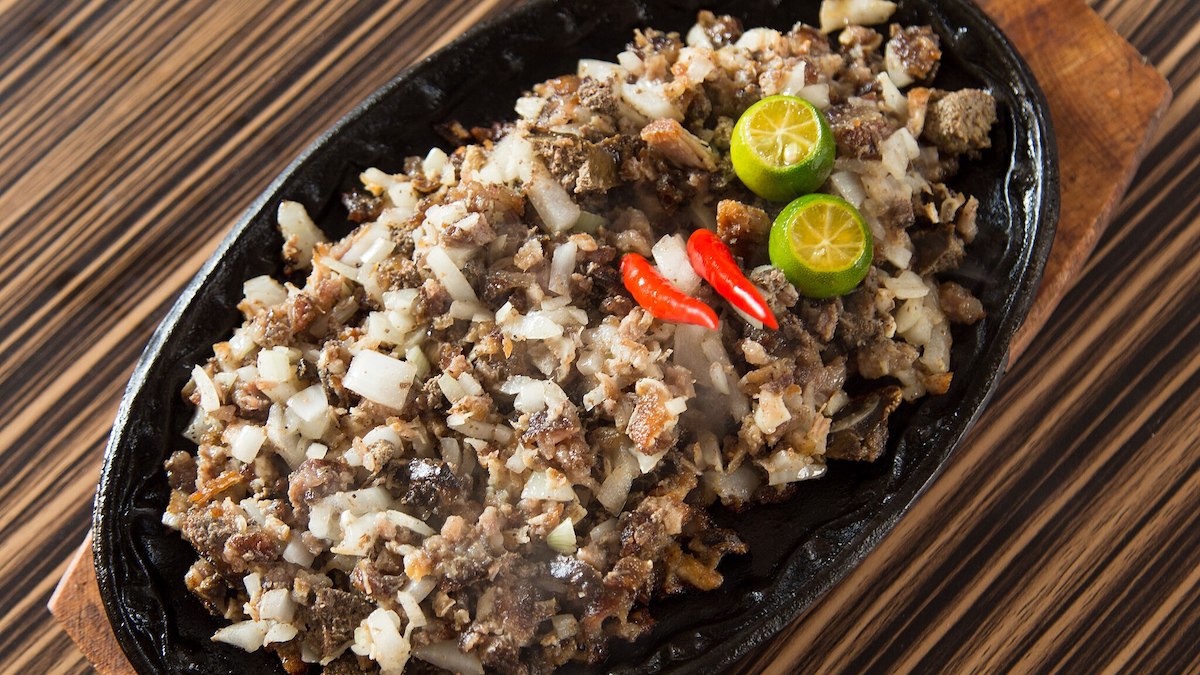
(SPOT.ph) In Filipino food news, President Bongbong Marcos on March 19 vetoed the bill looking to declare Pampanga the Philippines' culinary capital. His reasons include the "lack of historical basis" for such a declaration, calling instead to highlight the diversity of food traditions in the country.
Also read: Sleeping Beauty Awakes: Filipino Cuisine, Bourdain, Ramsay, and Us
President Bongbong Marcos on the bill to call Pampanga the Philippines' culinary capital
Marcos discussed the vetoing in a letter to leaders of Congress dated March 12. In it, he acknowledged Pampanga's "diverse and flavorful dishes, traditional cooking methods, [and] strong culture of food innovation," as well as the bill's consistency with the government policy to "conserve, promote, and popularize the nation's historical and cultural heritage and resources, as well as artistic creations."
While he recognizes the "noble intention" of the bill's author, PBBM points out the lack of a "thorough study that shows key performance indicators for such designation, and the possibility that the bill may offend sensibilities in other provinces that are equally proud of their culinary contributions."
"The Philippine culinary arts draws its origin from various cultures but displays regional characteristics. Our regions contribute their indigenous dishes with certain recipes that are best done in the areas of origin of their ingredients. All our culinary variations reflect the rich cultural diversity of a group of people scattered among the Philippine islands. Although the Filipino is derived from a common racial stock and a shared history that gave us our identity, our terrains and ethnic characteristics gave us certain differences," Marcos writes.
"I believe that one must travel our islands to identify the tastes and flavors that express our culture. Our regional variants and their recognizable nuances are what make the [palate] that is truly Filipino. All of our reputable culinary resources in the form of food literature and gastronomic professionals profess and celebrate the multitude and variety of our native recipes that are sourced from the different provinces and regions...Our culinary arts thrives in its diversity. This richness in terms of regional differences is the strength of our Filipino cuisine."
The Internet Reacts
Comments to the President's statement on Henares' Facebook post were mostly positive, with some echoing Marcos' call to instead celebrate the diversity within our local cuisine.
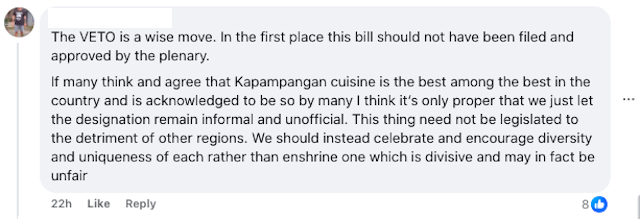

Some suggested the lawmakers instead aim to attain the title of UNESCO Creative City of Gastronomy (for Angeles City or one of the cities within the province, presumably).

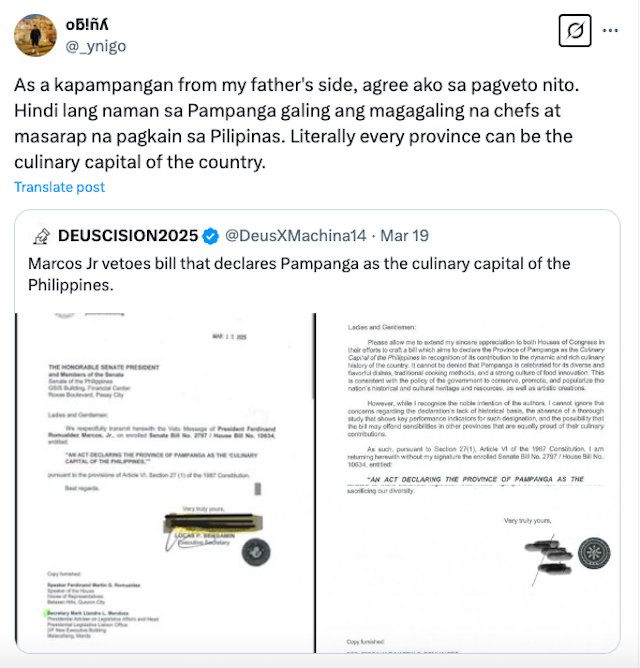
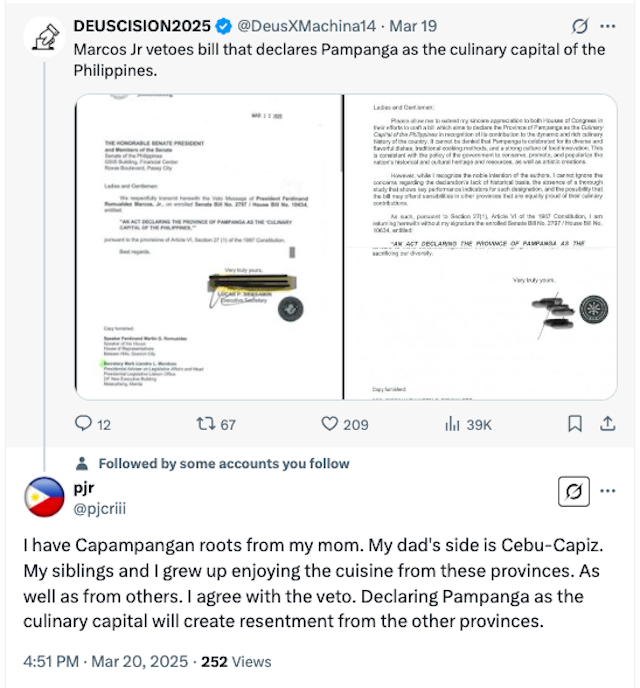
The sentiment is similar over on Twitter, even among Kapampangans themselves.
Finding the "Culinary Capital" of the Philippines
The bill was authored by lawmakers in Pampanga—among them Anna York Bondoc, Carmelo Lazatin II, Senior Deputy Speaker Aurelio Gonzales Jr., and former President Gloria Macapagal-Arroyo. In particular, Arroyo points out how it would benefit tourism, thus leading to job opportunities and economic growth in the area. "Pampanga as a culinary capital, will boost the country's culinary tourism industry, which in turn will provide livelihood to many Kapampangans," she said.
Perhaps there are ways to go about this goal that don't involve elevating just one area's food above others.
Ivan Henares, Secretary General of the UNESCO National Commission of the Philippines and Commissioner of the National Commission for Culture and the Arts, talks about the President's decision in a Facebook post published on March 20. "It is not saying that Kapampangan cuisine is not good. It just acknowledges that in a nation as diverse as ours, no one region can claim to have the best food. What l've realized from travelling the country is that our diversity is our strength," said Henares in the aforementioned Facebook post.
"We should not be competing with each other for bragging rights and empty titles. Focus on sustainable programs (such as policies on geographical indication), not just trivial things. Let's determine 'key performance indicators' and work towards those."
Henares brings up a quote from a recent Facebook post by Chef Jam Melchor, founder of the Philippine Culinary Heritage Movement and author of Kayumanggi: A Kaleidoscope of Filipino Flavors, where he writes: “While the recent veto of the Senate bill is acknowledged, Pampanga’s culinary heritage remains undisputed. More importantly, as a staunch advocate of Filipino food, I hope this moment sparks deeper conversations about the broader challenges in our food system.
I trust that Malacañang will address these pressing concerns, ensuring a stronger, more sustainable future for Filipino food and the communities that bring it to life."
Henares also reprints a relevant quote written a week before his post, by food historian Ige Ramos. “National cuisine is a contentious issue, particularly given the country's geographic and cultural diversity. It must be studied through various lenses, beginning with the hyperlocal and hyperfocused area. That's the only way one can understand a community's cooking and eating habits. NB. In a country as rich and diverse as ours, even designating one region as a culinary capital is contentious and not acceptable.”
this strange new world.