

Moonlight Over Pares Casts the Pares in Many Exciting Roles
Asian dishes like the banh mi, mee goreng, pho, etc. get a Pares-ian makeover.
Moonlight Over Pares
85 Oxford Street, Cubao, Quezon City
Open daily from 5 p.m.
Visit them on Instagram or Facebook, or call 0917-329-2253
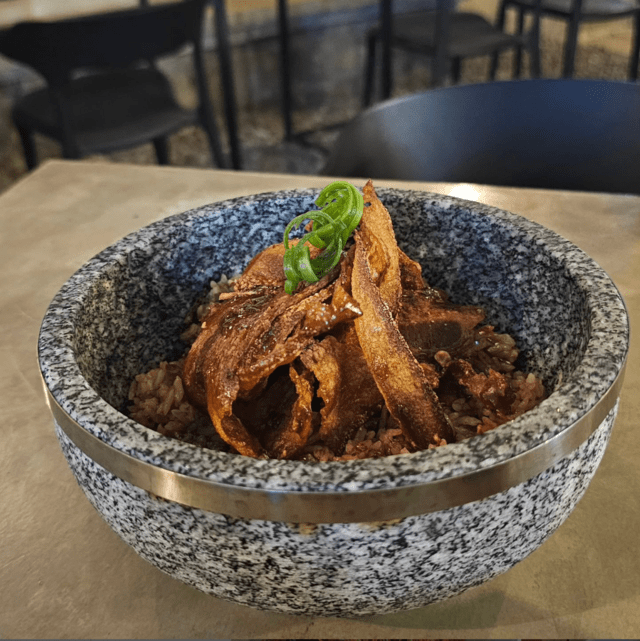
(SPOT.ph) On Oxford Street, Cubao, on the quiet strip between Ermin Garcia and New York, there is a paresan. But it isn’t just any paresan – this is Moonlight Over Pares, a little restaurant hidden in the back streets that is quietly expanding the idea of what the humble local street food can be.
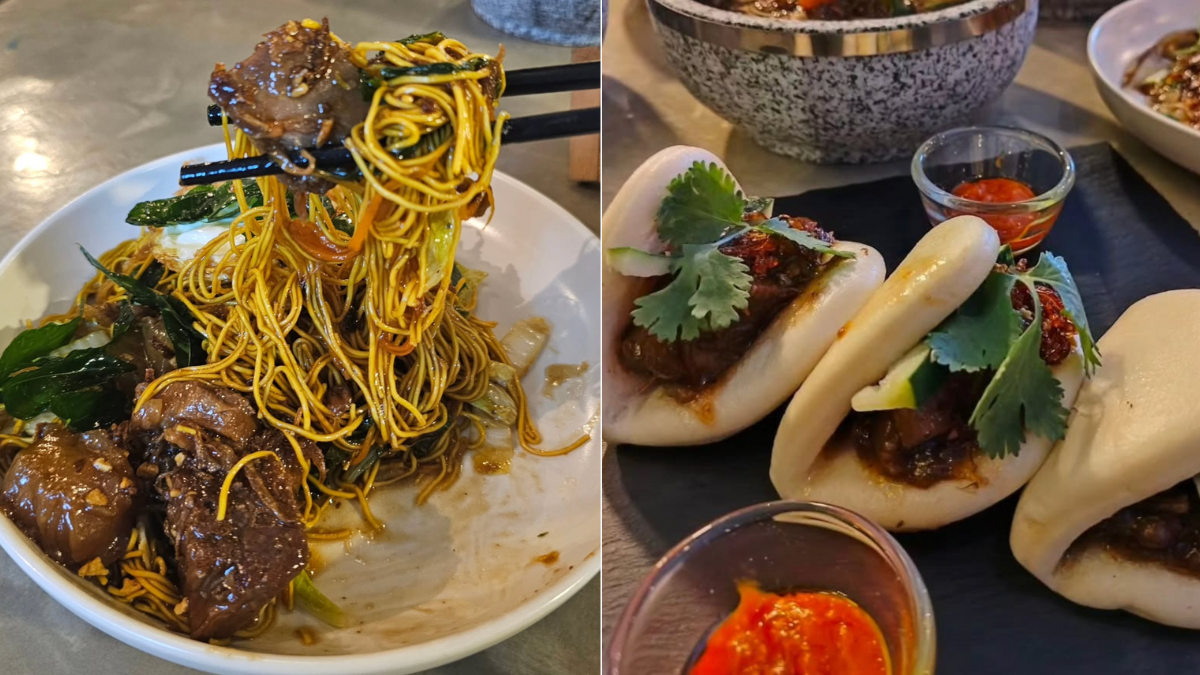
The menu goes well beyond serving the classic stewed beef with garlic rice, though you can get that, too. Here, pares becomes the protein in a version of banh mi, for example. It takes the place of stir fried beef strips in ho fan. It provides the meaty backbone in a pho, and the filling of a trio of bao.
The birth of a concept
“Pares is my comfort food,” explains chef Isaac Bravo. It all began in the pandemic, when he was deprived of being able to step out to go and enjoy his comfort food. He figured other people must be missing it, too. At the time, he was working as a chef for the Red Crab group, but decided that he could try building a pares business to fulfill people’s cravings during the lockdown.
Sometime in June of 2020, Bravo started producing his first batch of frozen tubs of pares. "After that, nagtuloy-tuloy na,” he says. This ended up becoming the chef's main source of income during the pandemic, and soon enough he expanded to other dishes: Kaldereta, Kare-kare, and Callos. On the third anniversary of his operations, he decided to open a restaurant.

“Nag-start kasi yung concept ng Moonlight Over Pares in a dream,” says Bravo. “Pre-pandemic time, I woke up and I told my wife na napaginipan ko na nagbukas ako ng paresan na parang Parisian cafe – fine dining ang style, naka-tuxedo yung mga staff and all – pero kalbo.”
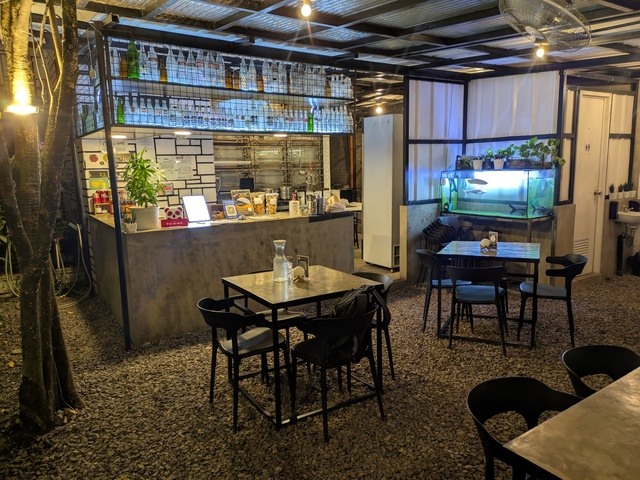
That dream is reflected in the restaurant’s signage, which has a bald man’s head floating over the Eiffel Tower. Cubao is no Paris, of course, and the restaurant’s space doesn’t quite conjure visions of French refinement. But there is plenty of charm in the eatery’s casual atmosphere. It is very Cubao – something that feels purposeful yet improvised at the same time. The floor is gravel, there is a wall of plants on one side, and an aquarium. One wall looks like it is set up for live music, with stools and music stands, and a moon projected on the wall. It’s a comfortable place; apt for a restaurant meant to showcase comfort food.
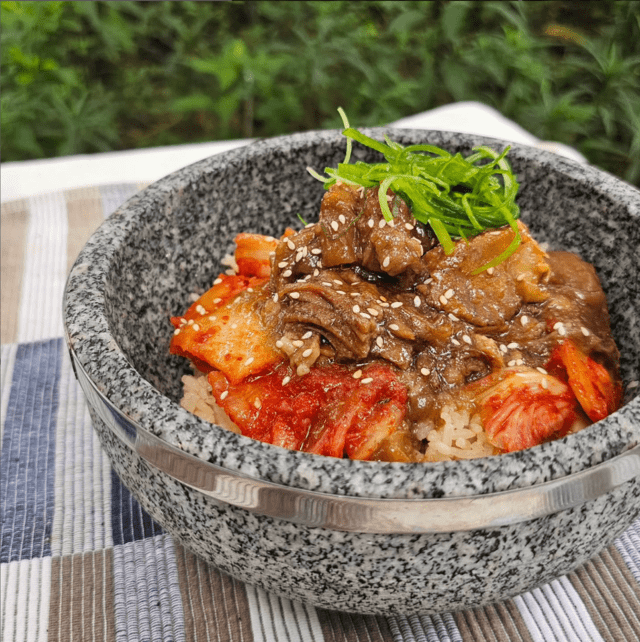
A lot goes into the restaurant’s pares – Bravo simmers beef belly and tendon separately for hours to make his version. And a lot more goes into his lotong – the sauce that gives pares its flavor — certainly more than the average street stall. The menu isn’t simply a matter of dumping pares on existing dishes and calling it a day. There’s clearly thought put into how pares works within new contexts, and how it might add something different to something familiar.
The other delightful ways to enjoy pares
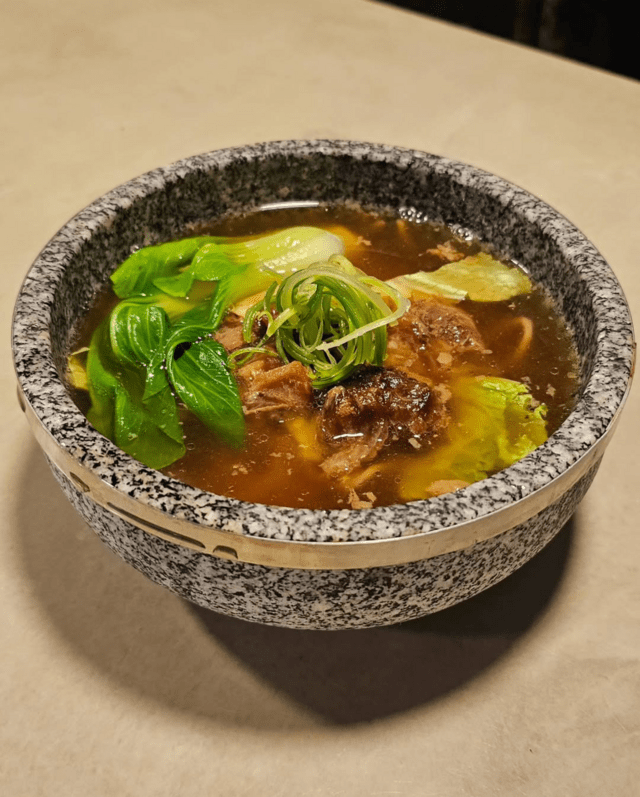
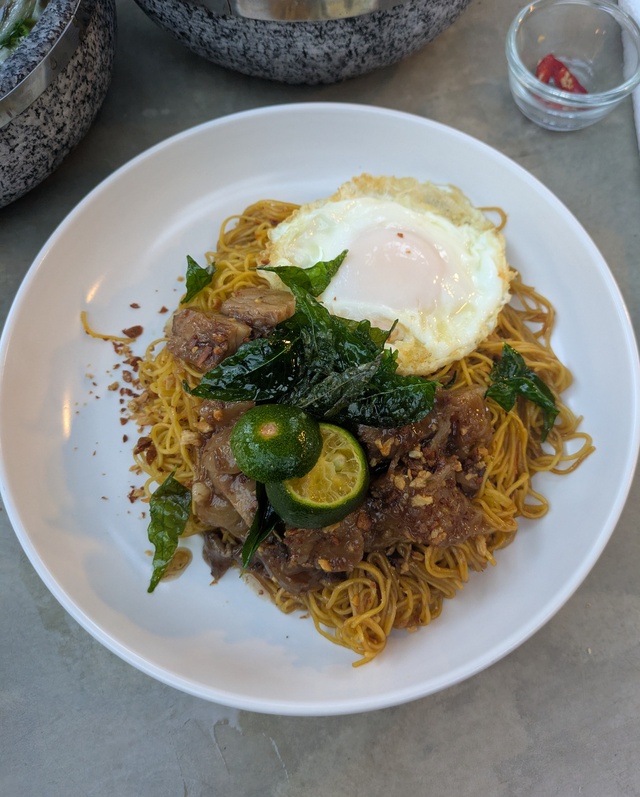
It’s certainly easy enough to see how pares might work in Bao (P195 for three) or Ho fan (P195), given these dishes has quasi-Chinese origins (the popular lore is that pares was invented by the Tius of Retiro, as a variation of Chinese braised beef). But the mix of belly and tendon also create a really interesting bite in the bao, and add a new, sticky aspect to the fried noodle dish. In the Beef Pho-res (P225), it adds a different level of unctuousness to the Vietnamese spiced broth. In Mee Goreng (P235), it feels like the beef takes the noodles deeper into a realm of late night snack greatness.
If there is a theme, it really is comfort. These are dishes meant to soothe the soul, in spite of their possibly deleterious effect on one’s blood pressure. This is probably best represented in Loujay’s Cheesepares Panini (P205), a take on the Philly cheesesteak named after Bravo’s chef mentor.
“Sabi niya sa akin dati,” Bravo says, “Kung gumawa ka ng sandwich, dapat bastos.”
And that’s accurate. It’s kind of a mess of a sandwich, but everything about it is satisfying. It pairs pares with roasted peppers and onions, and covers it all in cheese. And it is kind of sticky that you feel it in your ribs, the sandwich just adhering to every part of the body.
Bravo is still experimenting, too. And this is one of the most exciting things about Moonlight Over Pares – there are still new horizons to explore. What else can pares be in? What else can it add to familiar dishes from all over the world? Bravo has ideas, and he wants to share them with us.