
"Father of the Atomic Bomb": Here's the Real Story Behind Christopher Nolan's Oppenheimer
Who does Cillian Murphy play?

(SPOT.ph) Oppenheimer lands in local cinemas on Wednesday, July 19, but the pre-conceived success of this film wouldn’t have been possible if it weren’t for the real person who inspired this cautionary tale of scientific progress and moral consequences.
Next to Barbie, one of 2023's most anticipated movies is Oppenheimer, an epic biographical thriller film written, produced, and directed by Christopher Nolan. It follows the rise and fall of Julius Robert Oppenheimer, the brilliant physicist whose life was defined by his involvement in the development of the atomic bomb and the subsequent ethical dilemmas he faced. The film stars Cillian Murphy as the titular character, with a supporting ensemble including Emily Blunt, Matt Damon, Robert Downey Jr., Florence Pugh, Josh Hartnett, Casey Affleck, Rami Malek, and Kenneth Branagh. If the star-studded cast isn't enough to pull you in for a watch, maybe the fact that Nolan erupted an actual bomb to create a real nuclear explosion onscreen will.
Film critics who've already seen Oppenheimer are claiming it to be full of Oscar-worthy performances—which could be a first for Murphy if he manages to bag a trophy. It's apparently Nolan's "darkest, most somber movie" yet.
Watch the trailer below:
Let’s find out who the man at the center of Nolan’s latest movie release is. Read on if you're not afraid of spoilers! It is history, more or less, after all.
Who is Oppenheimer?
In 1904, Oppenheimer was born into a wealthy immigrant Jewish family in New York City.
Oppenheimer's intellectual prowess was clear the moment he began formal schooling. From Harvard University to the University of Cambridge, he entered college with intentions to become a chemist, but would shift his focus to physics later on. He went on to graduate summa cum laude in 1925. By 22, he had already obtained his PhD in the University of Gottingen.
At an early point in his career, he had already established himself as a prominent figure in the field of physics, working alongside other modern genuises like Albert Einstein. He contributed to the discovery of quantum theory with his groundbreaking work on neutron stars and black holes. He also briefly taught in the United States, training a whole new generation of U.S. physicists.
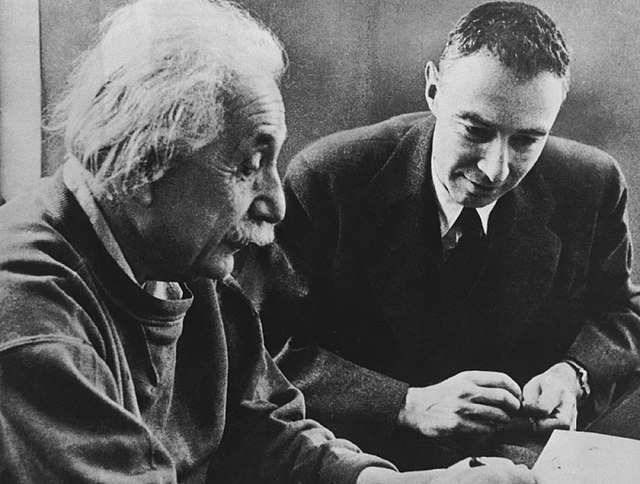
His interest in politics began during Adolf Hitler’s rise to the top. It’s unclear if Oppenheimer was ever part of the Communist Party, but he was said to be sympathetic to leftist politics for what the Germans did to his Jewish relatives and his romantic involvement with communist student Jean Tatlock.
According to Britannica, “After the invasion of Poland by Nazi Germany in 1939, the physicists Albert Einstein, Leo Szilard, and Eugene Wigner warned the U.S. government of the danger threatening all of humanity if the Nazis should be the first to make a nuclear bomb.” This is what prompted Oppenheimer and several other physicists to outpace the Nazis on this front.
Ultimately, it was his role in the Los Alamos Laboratory that thrust him into the limelight in the 1940s.
Also read: Pranksters, Beware: QC Wants Heftier Fines, Jail Time for Bomb Jokes
What happened at the Los Alamos Laboratory?
Majority of Nolan’s movie is said to be set at the Los Alamos Laboratory for obvious reasons. Arugably the most exciting albeit tumultuous part of Oppenheimer's life happened within those four walls.
Located near Santa Fe, New Mexico, the Los Alamos Laboratory was responsible for harnessing nuclear energy for military purposes—a project that the U.S. Army called the Manhattan Project (known as Project Y at that time), where Oppenheimer was selected to be the scientific director in 1942.
With Oppenheimer at the helm, the Los Alamos team of 3,000 scientists worked to create the world's first atomic bomb with World War II continuing on. The isolated location was also where his second child with botanist Katherine Puening was born. The group of scientists ended up creating three bombs: the Gadget (nuclear test device), Little Boy (uranium atomic bomb), and Fat Man (plutonium atomic bomb).
The first actual nuclear explosion happened in 1945—three years into the Manhattan Project—but at this time Germany had already surrendered. Oppenheimer’s work was finished, but the moral shadow that reportedly followed him was something he would not be able to get past.
In 1945, Little Boy and Fat Man were used on Hiroshima and Nagasaki in Japan, respectively, both of which are the only uses of nuclear weapons in human history. Oppenheimer resigned from his post that same year.
A particular verse in the Hindu scripture Bhagavad Gita came to his mind when he witnessed what his creation was capable of. Translated to English, it said: “Now I am become Death, the destroyer of worlds.” The quote has since become attributed to Oppenheimer.
What happened to Oppenheimer's legacy?
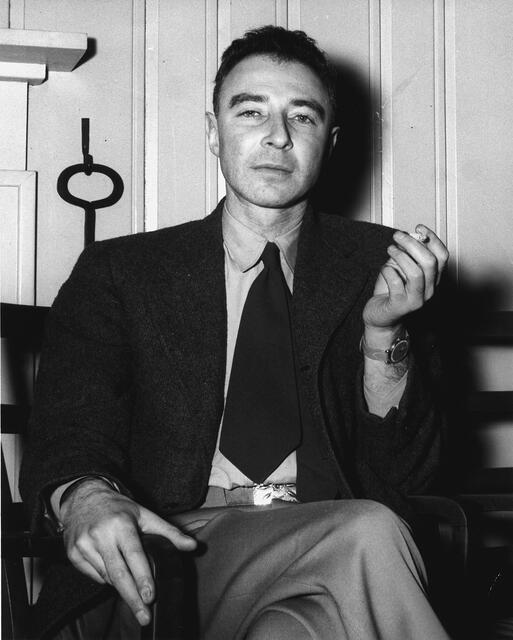
By 1949, there was a growing interest in the development of hydrogen bombs, which Oppenheimer warned against since he believed the weapon would only be used on human populations. Atomic Heritage Foundation wrote: "Oppenheimer had made political enemies by arguing against the development of the hydrogen bomb."
Oppenheimer's associations with communists in his past became the final blow to his career. Many started to believe he was part of the Communist Party, which resulted in the revocation of his security clearance from the U.S. Atomic Energy Commission.
Years after the Manhattan Project, Oppenheimer continued to grapple with the ethical implications of his work. He became an advocate for arms control and disarmament, urging restraint in the face of the escalating Cold War tensions. His perspective drew both awe and controversy from people in his field as he challenged the prevailing narrative on nuclear weapons at that time.
Oppenheimer died of throat cancer in 1967, but his contributions to nuclear research remain significant as ever.