

Sex in Movies: Is It Back?
Mainstream movies are exploring adult relationships and sexuality again.

(SPOT.ph) Back in the ‘80s and ‘90s, they seemed to be a fixed part of the Hollywood landscape. I’m talking about movies that unabashedly embraced sex: in their plotlines, in their portrayals, in their themes. For the purposes of this article, I’ll call them “adult” movies—adult not just because of their sexual content, but because their approach to that content is mature and decidedly not juvenile. (So, no, I’m not counting comedies like Porky’s or American Pie under this adult category.)
Europe had never really stopped portraying sex in their cinema, being a continent that is notoriously direct and laissez-faire about these things. But something about the hyper-materialistic ‘80s—where bodies, like other spoils of capitalism, were ripe for the taking—and the full onslaught of the AIDS pandemic in the ‘90s—where suddenly the only safe place to indulge in naughty fantasy was celluloid—really made Hollywood get its freak on.
Also read: Challengers in Sensual, Tactile, Overheated
Sex in movies in the '80s: The erotic thriller
It all started with the idea of the erotic thriller. Brian De Palma’s Dressed to Kill (1980) showed us there was a transgressive thrill to be had wading into the darker pockets of sexuality: voyeurism, prostitution, psychotic transgenderism—even the not-so-innocent alliance between a young nerd and a sexually confident woman. And then Lawrence Kasdan had the bright idea of turning subtext into text by injecting actual sweaty, lustful sex into film noir with 1981’s Body Heat.
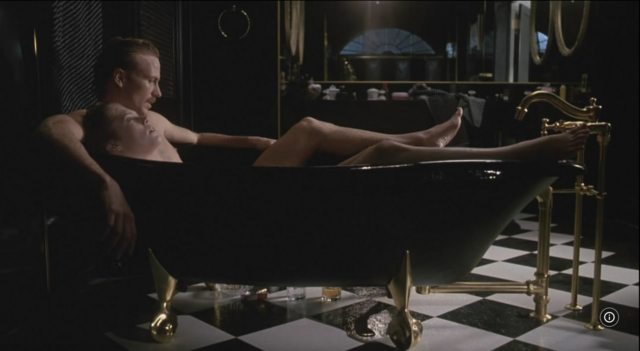
The floodgates were opened. Lady Chatterley’s Lover. Body Double. Bolero. Wild Orchid. With 1986’s 9 ½ Weeks, Adrian Lyne put the stakes on his leading lady’s self-esteem, and then proceeded to worship the actresses he worked with by flattering them with gorgeous lighting and immaculate makeup in Fatal Attraction (1987), Indecent Proposal (1993) and Unfaithful (2002).
In 1990, director Philip Kaufman tried to lay the patina of respectable literary drama over the sex with Henry & June and got slapped with Hollywood’s first NC-17 rating for his troubles. Two years later, the petite nymph Jane March made a splashy debut in The Lover, novelist Marguerite Duras’ semi-autobiographical tale of sexual awakening in 1920s colonial Indochina, only to then get overshadowed by a fleeting glimpse of Bruce Willis’ willy in 1994’s Dressed to Kill knock-off, The Color of Night.
And then there was Joe Eszterhas, the Hungarian-born screenwriter who, after getting his start in 1983’s Flashdance, made a cottage industry out of turning women into lethal femmes fatale or objects of the male gaze in Basic Instinct (1992), Sliver (1993), Jade (1995) and the so-bad-it’s-good Showgirls (1995).
Anyway, you get my point: If you wanted to get your rocks off during the Me Decade or the post-Cold War years, all you had to do was buy a movie ticket.
Sex in movies, Philippine-style
It’s no surprise that local cinema takes its cues from Hollywood. But in the rash of explicit films that dominated local cineplexes in the twilight of the first Marcos years and the dawn of the Cory Aquino administration, was it a case of straightforward copycatting? Or was there something about the uncertain transition from a dictatorship to a democracy that made the siren call of sex on celluloid so irresistible?
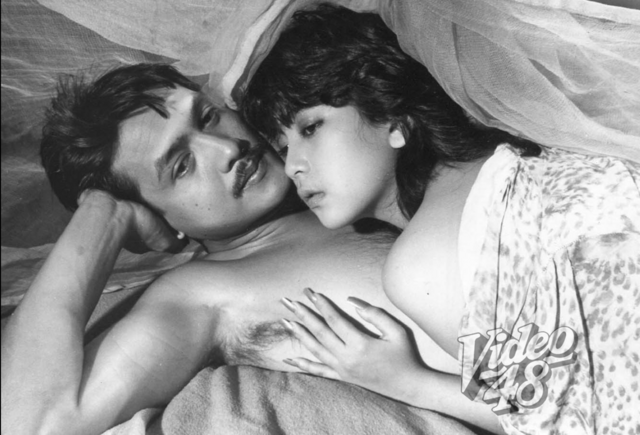
In any case, the 1980s saw even respected directors like Lino Brocka (1982’s Palipat-Lipat, Papalit-Palit, 1985’s White Slavery), Elwood Perez (1983’s Shame) and Mel Chionglo (1984’s Sinner or Saint) dip their toes into the flow of adult movies. Peque Gallaga gave his own spin on the dangers of voyeurism in the scorching Scorpio Nights (1985), and then explored the theme of obsession even further with the underrated Jomari Yllana-Giselle Töngi starrer Diliryo (1997).
Shame and Sinner or Saint also starred the Cebu-born Thelma Cabras Maloloy-on, who would rise to prominence as Claudia Zobel. She provided the blueprint for Filipina sirens whose lives would burn bright before abruptly being extinguished by tragedy. Stella Strada and the Rey dela Cruz-managed “Softdrink Beauty” Pepsi Paloma would follow in her footsteps to their untimely ends.
The 1990s saw the rise of the so-called “ST (for Sex Trip) movies”, heralded by the return of Gretchen Barretto—she started as a Regal Films teenybopper and was reinvented as a sensual leading lady in the Seiko Films-produced Ang Lihim ng Golden Buddha (1989). The sub-genre paved the way for more stars like her: Maui Taylor, Katya Santos, Priscilla Almeda, Joyce Jimenez...and most notably, Rosanna Roces, whose roots as a Seiko Films sexpot would unfortunately keep the industry from recognizing her work in films such as Carlos Siguion Reyna’s Ligaya ang Itawag Mo sa Akin (1997) and Ang Lalaki sa Buhay ni Selya (1998), and Chito Roño’s Curacha Ang Babaeng Walang Pahinga (1998).
Roces was a true star; at her late-‘90s peak, she had the box office numbers to show and the acting chops to display. But what drew audiences to her was her street smarts, a belief in her own power as a woman. Unlike tragic figures like Claudia Zobel and Pepsi Paloma, she was nobody’s fool and no man’s plaything. The Filipino moviegoer loved her, but the industry powers that be didn’t know what to do with her.
China had something to do with it
Then something shifted. In 2002—the same year Unfaithful was released—Sam Raimi’s first Spider-Man movie exploded at the box office. And just like that, the era of titillating cinema in Hollywood was over. As Hollywood watched Marvel stumble with two Hulk movies and then fly with the first Iron Man film in 2008, every studio was suddenly interested in mining their vaults or scooping up rights for the next superhero success story.
Even though comic book heroes would go on to dominate the box office for the next decade, studios realized they couldn’t live on caped crusaders alone. And so the words “intellectual property” (abbreviated into industry speak as “IP”) and “franchises” were born, signifying concepts that could be extended into sequels, prequels and even side-quels, and which arrived pre-packaged in moviegoers’ heads. Now, everyone from Hobbits to robot-transforming vehicles, Jedis to sentient apes could be milked for box office and merchandise sales.
Hollywood had another incentive to escalate the spectacle. According to The New York Times, by 2012, movie attendance had fallen into a decades-long decline and DVD sales were sputtering. The Obama administration helped Hollywood gain greater access to Chinese cinemas; got China to raise the annual quota of American movies allowed into the country from 20 to 34; and persuaded the Chinese authorities to increase studios’ share of ticket revenues from 13 percent to 25 percent. As a result, Hollywood had to pivot its content from dialogue-heavy dramas—including adult movies, which were not allowed by Chinese censors anyway—to visual effects-driven extravaganzas to appeal to Chinese ticket buyers.
Once again, the local film industry took the cue. In 2004, SM cinemas, the largest cineplex network in the country, announced that it would no longer exhibit movies classified R-18, effectively forcing local producers to abandon adult movies for more wholesome fare.
Philippine cinema couldn’t hope to replicate the gargantuan budgets needed to realize the visual effects extravaganzas that Hollywood was churning out. But what it lacked in IPs, it made up for with stars that audiences welcomed into their homes every day of the week through telenovelas. And so the era of Star Cinema’s dominance in film began: First with a spate of romantic dramas headlined by soap opera princesses Judy Ann Santos and Claudine Barretto, and then successive waves of love stories and romantic comedies topbilled by in-house talents like John Lloyd Cruz and Bea Alonzo, or Daniel Padilla and Kathryn Bernardo.
Sex in Hollywood
Ann Hornaday, chief film critic for The Washington Post, wrote in 2019 that sex in mainstream Hollywood movies was “pretty much gone.” The following year, a study by Playboy magazine found that only about 1.2 percent of films released between 2010 and 2020 contained an explicit sex scene, the lowest total in a decade since the 1960s. (FYI, the total peaked in the 1990s.)
But it seems the pandemic scrambled that equation. Rising tensions between Washington and Beijing—exacerbated by questions about the origin of COVID—have left Chinese audiences with a diminished appetite for American movies. In 2023, the revenue of Hollywood films in China was practically zero, down from about 5 billion yuan in 2019 and a high of about 8 billion yuan in 2018.
As Chinese moviegoers have increasingly turned away from Hollywood, this has allowed studios to remove them from the equation and explore a more specific range of topics. Including sex.
In the wake of the #MeToo movement, spurred by multiple accusations of sexual assault against powerful producer Harvey Weinstein in 2017, Hollywood studios have also taken to employing intimacy coordinators to make sure actors feel safe and comfortable filming sex scenes. According to producers, a more caring atmosphere on set has given actors more of an incentive to simulate intimacy on film.

Both those factors may have contributed to the torrent of sex in Hollywood movies over the past year. Poor Things saw Emma Stone moaning and gyrating over Mark Ruffalo, a fellow prostitute, and a bevy of clients in a Paris brothel. Saltburn saw Barry Keoghan slurp Jacob Elordi’s bathwater, hump his grave, and then dance in full frontal abandon through his English countryside estate. Even Christopher Nolan shot the first sex scene of his entire career in Oppenheimer, although it mostly involved Cillian Murphy and Florence Pugh lounging around naked in chairs.
Also read: Surviving Saltburn is All The Craze on TikTok—But is It Really Shocking?
And even when the sex in question was in R-rated comedies, there seemed to be a lot less giggling over adolescent hijinks. Anyone But You luxuriated in the impossibly gifted genetics of its lead stars Glen Powell and Sydney Sweeney (which is just as well, because the comedy was subpar). No Hard Feelings turned out to be an enjoyable coming-of-age romp because it spent as much time getting to know Jennifer Lawrence’s and Andrew Barth Feldman’s characters as it did getting down to their awkward gropings. And Bottoms, starring Ayo Edebiri and Rachel Sennott, put a refreshing lesbian spin on the old high-schoolers-losing-their-virginity conceit.
Sure, the recent upturn of cinematic libidos may just be a quirk of release schedules. But if you put these examples side by side, there also seems to be a movement away from the usual heterosexual dynamics that were the almost-exclusive domain of ‘80s and ‘90s adult movies.
Luca Guadagnino’s Challengers is as much about the sexual tension between Josh O’Connor and Mike Faist’s longtime friends/tennis rivals as it is about their competition for common love interest Zendaya. Apart from a sizzling almost-threesome in a motel room and a fevered tryst in the backseat of a car, there are scenes where the two actors share a phallic churro in a canteen and a sweaty conversation in a steam room. It is this nuanced portrayal of male sexuality—charged, conflicted, groaning under the baggage of societal preconception—that Challengers shares in common with Saltburn.
As an aside: Josh O’Connor is one of a current class of actors who have no qualms about baring skin...or even taking on more than one gay role in their filmography. O’Connor’s big break came playing a closeted sheep herder in God’s Own Country. He then showcased the family jewels in the period drama Mothering Sunday, and is next set to romance Paul Mescal in director Oliver Hermanus’s World War I love story The History of Sound. Mescal, for his part, is fresh from rolling around the sheets with Andrew Scott in the devastating All of Us Strangers. Scott, in turn, paraded around in skimpy trunks and bared his derriere in the Steven Zaillian reboot of Ripley for Netflix. It must be that European laissez-faire attitude towards sex.
Meanwhile, supporting actor Annie Mumolo tells Anne Hathaway in The Idea of You, a kind of gender-reversed Notting Hill, that “People hate a happy woman.” That statement about society’s aversion to a woman with agency gives the sex scenes between Hathaway, a fortysomething gallery owner who needs to immerse herself in something other than her soon-to-fly-the-nest daughter, and Nicholas Galitzine, playing a boy band member nearly half the age of Hathaway’s character, their subversive edge. Make no mistake: The Idea of You is an improbable fairy tale. But its message will resonate with every woman who has had to martyr her desires to the needs of everyone around her: There is no bigger middle finger to society than enjoying yourself.
(Oh, and Nicholas Galitzine? He’s ticking off his own gay bingo card too: After romancing Taylor Zakhar Perez in the steamy Red, White & Royal Blue, Galitzine also seduces Tony Curran’s King James I in the britches-ripping historical miniseries Mary & George. I swear, these Europeans and their penchant for gay sex!)
The coming of VivaMax

Oddly enough, this recent horny trend in mainstream cinema is one instance where Philippine movies has been ahead of the curve.
It all has to do with streaming, which really came into its own during the lockdown. Liberated from the policy demands of powerful cineplexes, and buoyed by direct availability to its audience, streaming seemed to be a perfect fit for adult movies.
Viva Communications rushed to make that fit by launching VivaMax at the end of January 2021. Casting its own roster of talent and keeping budgets to a minimum, VivaMax is, according to senior vice-president for content creation and development Valerie del Rosario, the platform for “risqué or more adult-themed and edgy content for mature audiences.”
VivaMax is a stroke of genius. Not only is streaming beyond the purview of theaters, it is also currently beyond the monitoring capabilities of the MTRCB. (But Viva president Vincent del Rosario is quick to put on his diplomatic cap, telling the Philippine Star that “When the MTRCB receives calls complaining about content or promotion of materials [on VivaMax], we always act on them.”)
It is also an undeniable success story. As of mid-last year, VivaMax has snagged seven million subscribers, with an eye toward reaching 10 million by the end of 2023. It has also attracted top-tier talent like Ricky Lee, Joey Reyes and Brillante Mendoza.
But if there is one wish I have, as a film critic, is that we—both Filipino filmmakers and audiences—once and for all unshackle ourselves from the bait-and-switch approach to sex. That we divorce ourselves from the default practice of presenting guilt as part and parcel of the pleasures of sex, of letting audiences wade in its delights then telling them it is wrong to do so.
And I don’t mean presenting sex as devoid of consequence, either. When it comes to human interaction, it is useless to pretend that there will be no repercussions or personal cost. But there don’t always have to be heaven-or-hell repercussions, or a life-or-death cost. Maybe—sometimes—the pain that comes with sex doesn’t always have to be the pain of death, but the pain of growth.
As Amy Pascal, one of the producers of Challengers, put it to The New York Times: “It absolutely feels like the pendulum has swung back toward filmmakers exploring adult relationships and sexuality in their projects. I welcome that.”
And so should we all.