
Review: The Kingdom is A Remarkable Achievement Despite Its Flaws
It has its flaws but they're easily forgivable.
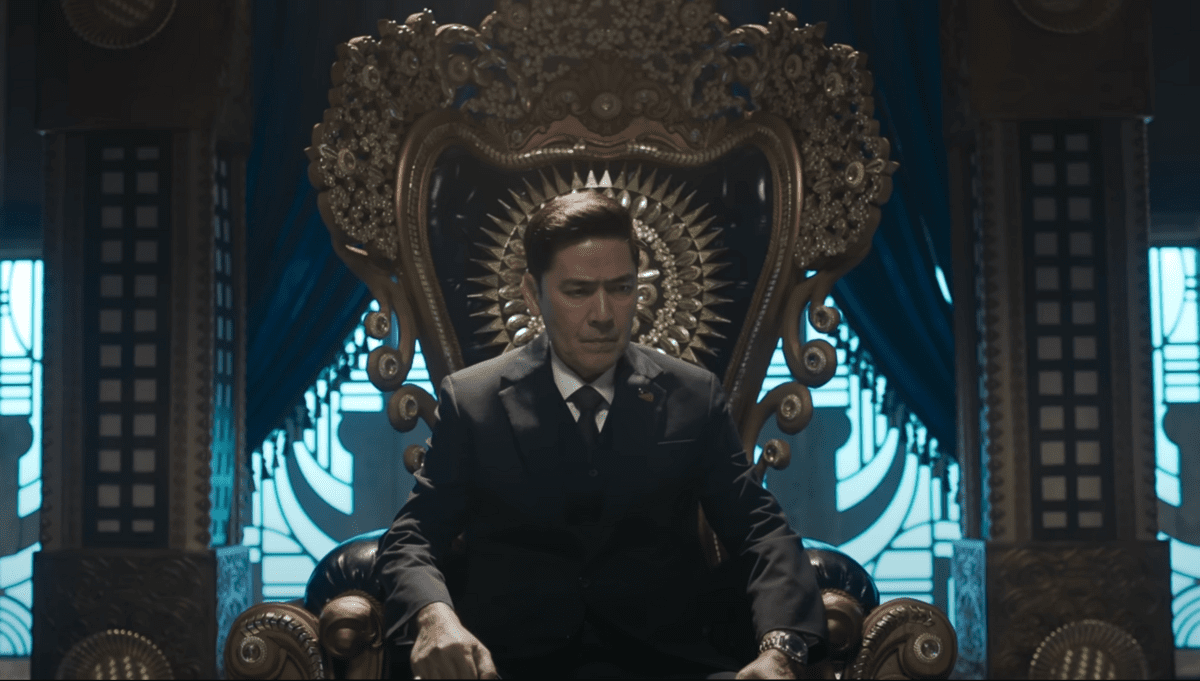
(SPOT.ph) The Kingdom announces what it’s going to be in the very first sequence: three fishermen on a small boat are being threatened by what seems to be an analogue for the Chinese Coast Guard. Cue the arrival of a warship from the Kingdom of Kalayaan, chasing off the harassers. It is a situation that doesn’t entirely make sense, but it plays at a fantasy of what the Philippines could have been.
The details get sketchy, and the plot at times feels disposable. But strong performances and evocative design inspire imagination, leading to a cinematic experience that makes one want to forgive the failings.

What the Philippines could have been
In this alternate timeline, Spain was never able to colonize the country. The leaders of the three islands banded together, and eventually united behind Lakandula, who became the first king of this nation that was named Kalayaan. The film takes place in the present, where the current ruler Makisig Nandula (Vic Sotto) is to name his successor. He has three children to choose from: Bagwis (Sid Lucero), who is short-tempered and prone to excess; Matimyas (Cristine Reyes), with whom he has a strained relationship, and his youngest Lualhati (Sue Ramirez), who is to be married off to the Thai royal family.
Also read: Review: Isang Himala is Technically Impressive, Wonderfully Acted
The plot mainly has to do with a kidnapping that sets the kingdom in crisis, revealing deep conspiracies that have to do with a group of secessionists. The narrative details are shaky at best. The movie is set in the present but there is a notable absence of technology in general. And a lot of this plot would be undone if anybody had a cell phone, or a camera, or access to the Internet.
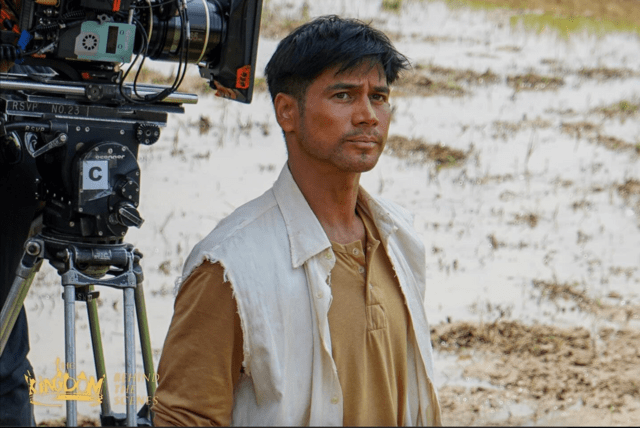
The movie might have explained this away as part of inequities inherent in this monarchy, but it doesn’t go that far. It just removes technology from the equation, even as it purports to reflect a contemporary setting.
But there is so much more here to chew on. The world they imagine is fascinating, even if it doesn’t entirely make sense. The movie imagines a version of our nation where violence is just baked into the culture: capital punishment is a regular occurrence, and human bloodsport just seems to be part of the day-to-day existence. It posits a religion that ties together several local mythologies, and is baked right into the system of power.
The Kingdom is an examination of power
The film smartly presents an alternate version of things that isn’t divorced completely from reality as we know it: Kalayaan is still a nation of inequities, but the primary sources of those inequities differ just a little bit.
The film ends up becoming this examination of power; a dissection of the means it not only corrupts, but imprisons those who bear it. It does so in a context that doesn’t always feel realistic, but somehow true to the culture that it reflects. To this end, Vic Sotto is terrific in the lead role, possessing a royal bearing that feels credible, while allowing for moments of vulnerability that show off the raw humanity of the human that has told all his life that he has a divine right to rule. The film tends to be best in scenes where Sotto is just in conversation with another member of a strong cast of actors, arguing over affairs of state, or confessing their wrongs to each other.
The flaws of The Kingdom are pretty apparent, but they are easy to forgive. You have to admire the ambition, and you end up marveling at the design of things. It’s just fun to imagine alongside the movie, filling in the details of the world with our own stories. This was originally meant to be a series, and one gets the sense that would have been the better form for all of this. Maybe it could have fleshed out the story a bit more, or given us more details about the history of this world. But as it is, it is a strong achievement that’s worthy of some attention.
Rating: 3 ½ stars.
Also read: Review: 'Green Bones' Prescribes a Better Way to See The World