

Review: 'The Brutalist' is Only Half a Masterpiece
The real tragedy of the film is its busy, haphazard second act.
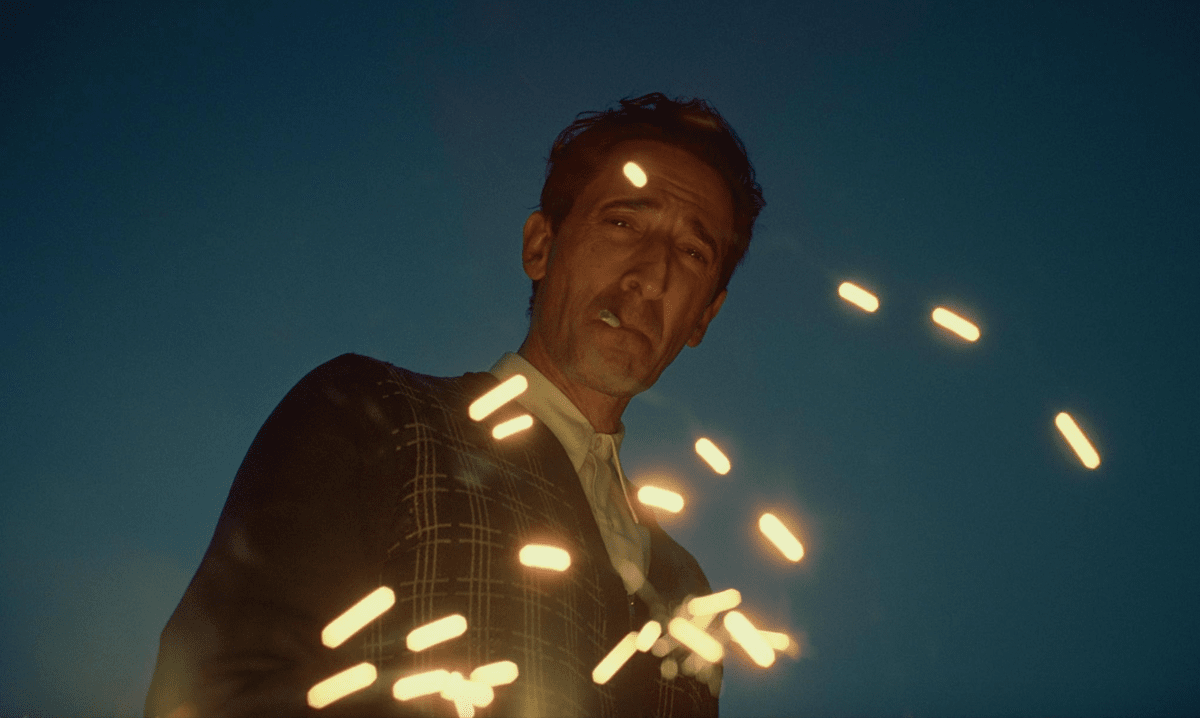
(SPOT.ph) In 2019, soon after the finale of Game of Thrones, a meme tracing the quality of its seasons started circulating. The meme was a drawing of a horse, the front half with its head and front legs drawn in exacting, exquisite detail...and then its back half scribbled in the lines of a child’s stick-figure drawing. The message was clear: Game of Thrones began as a beautifully drawn story finished in rushed, haphazard fashion. The same can be said of The Brutalist.
The Brutalist is a sprawling 215-minute epic (including a 15-minute intermission) following a Jewish-Hungarian architect named László Toth (Adrien Brody), who survives the Holocaust and then lights off for a new life in America. It is divided into two parts, the first titled “The Enigma of Arrival” and the second “The Hard Core of Beauty.” On only his third film, the director Brady Corbet uses a lot of formal artistic flourishes like this; apart from that old-fashioned intermission and the fact that he shot the film onto burdensome reels of practically obsolete VistaVision technology, these details are his way of telegraphing the old-fashioned gravitas of his story—his hero as the avatar of an entire artistic tradition, a divining rod for vast and ineffable truths about the purity of art clashing with the dark underbelly of the American dream.
Also read: Anora Goes Where Pretty Woman Didn't Dare Walk
A marvelous first half
“Arrival” is a marvel to behold, a behemoth that lurches at breakneck speed as it follows Toth’s bustling, frantic entrance into Ellis Island, the Statue of Liberty seen upside down as Daniel Blumberg’s booming score heightens that sense of giddy yet ominous potential. Worn down by his journey but alive to his new environment, Toth meets up with his cousin Attila (Alessandro Nivola), who owns a furniture store in Philadelphia. (With awkward bluntness, Toth calls the pieces “ugly.”)
Toth seems traumatized by his wartime experiences—he uses heroin as an escape, and Brody’s eyes are the sad, hooded eyes of a perpetually haunted man—and the opening voiceover reveals that he has left behind a wife named Erzsébet (Felicity Jones) and a niece (Raffey Cassidy) that he hopes to bring over. He is guilty that he had to leave them, but he is also determined to make a go of his new beginning.
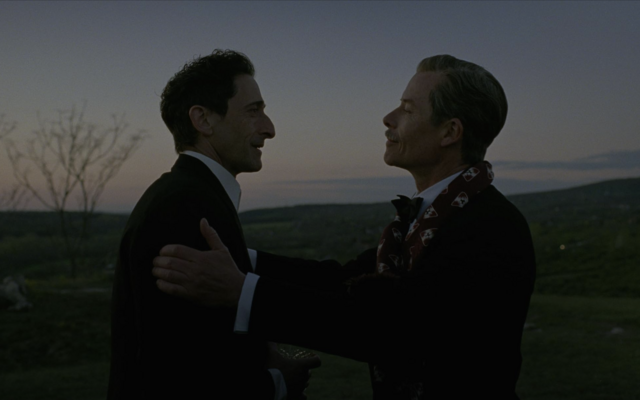
When Attila is commissioned to renovate a library in a country estate, Toth encounters the first patron to his hope of reviving his architectural practice: Harrison Lee Van Buren Sr. (Guy Pearce), a wealthy industrialist so impressed that the renovation caught the attention of the press, that he commissions Toth to build a community center on his property, a monument to his master-of-the-universe status. Corbet is counting on the audience’s built-in distrust of the wealthy to see through this patron-artist arrangement, but Van Buren’s interest is nonetheless exciting to Toth: Here at last is the promise of America made corporeal—the idea that, with talent and hard work, anyone can be vaulted from the poor, huddled masses into the ranks of the exalted.
Also read: Wicked is an Acceptable Spectacle
Of course, the arrangement runs into many conflicts—of taste, of temperament, of interest—and Corbet reveals the darker realities of how things work in Toth’s new home as the film progresses. The Brutalist is about America, its possibilities offset by compromise, its shining promise clouded by murky morality.
But it is also about art and its clashes with commerce. Here is Corbet’s great American epic, his argument for protecting the purity of art from the cynical pressures of money and the impulsive vanity of its benefactors. Even the whole exercise of making The Brutalist seems to be the statement of that thesis: Shot for 10 million dollars in Europe, half a world away from the studio system, Corbet seems to be crowing at Hollywood, “Look what I did without you!” Forget about Timothée Chalamet’s speech at the Screen Actors Guild Awards talking about aspiring to greatness—in The Brutalist’s exhilaratingly realized first half, Corbet is telling us that greatness has been achieved.
A plot-riddled second half
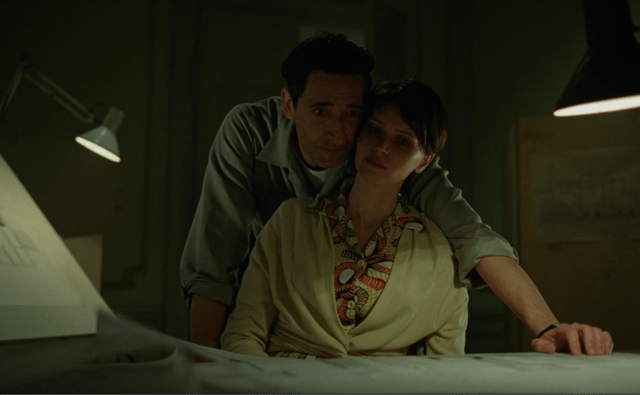
It's too bad that, ultimately, Corbet didn’t land this grand, ambitious behemoth with grace. The Brutalist’s second half is full of plot: Erzsébet finally arrives with his mute niece—both physically scarred by the Holocaust—and Toth’s professional relationship with Van Buren first breaks down, then curdles in horrific fashion. There is a lot happening—a shared addiction, a question of a possible rape offscreen, lives diverging, a project resuscitated, another rape clumsily executed—and yet there is a sense of listlessness, of plot points hurriedly disposed of before Corbet makes his final point. And when that point does come, in a coda that feels tacked on, it lands not so much as a moment of epiphany for the audience but a pat verbalization of all that came before.
What holds the whole thing together is Adrien Brody’s marvel of a performance. Fierce yet despondent, riddled with guilt but shot through with purpose, Brody submerges himself into the psyche of a man who survives a war and then must fight for every square-inch of acceptance. Guy Pearce feeds off the melancholy energy of Brody’s performance and matches it in self-importance and predatory instinct. Together, Brody and Pearce embody Corbet’s argument about the eternal tug-of-war between art and money. When Toth and Van Buren are sparring onscreen, The Brutalist fills the screen enough to justify its epic aspirations.
If only Corbet and Mona Fastvold’s script met those aspirations all the way. When it is unconcerned with the soap opera of its ancillary characters, when it is given the space to explore its central themes, Corbet and Fastvold’s script is a well-drawn diagram. But then in the second half, it becomes mired in offshoots and tangents, abrupt complications and hasty resolutions.
The Brutalist is half a masterpiece. It ultimately collapses under the weight of its ideas, just as a building will crumble upon a half-drawn blueprint.
--
The Brutalist opens exclusively in Ayala cinemas on Wednesday, March 5.