
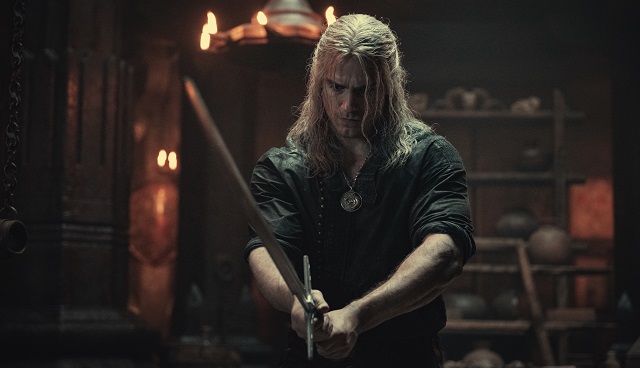
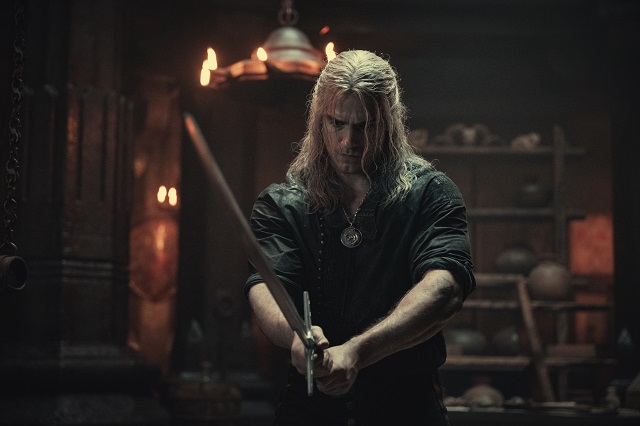
(SPOT.ph) While The Witcher didn’t sweep the globe and make geeks of us all the way some other fantasy franchises did, it’s definitely picking up speed now. With several gateways into the fandom (from the video games to the Netflix series to Henry Cavill’s Instagram, we could go on) it’s hard to ignore Andrzej Sapkowski’s excellent writing and strong sense of world-building. Note for the uninitiated: Polish fantasy writer Sapkowski is the mind responsible for The Witcher’s source text, a series of novels that started in the ‘90s.
Also read: Henry Cavill and Lauren Hissrich Bring The Witcher to Manila
Just as showrunner Lauren Schmidt Hissrich and her diverse team of writers bring a timely tone to the content, Cavill himself, playing the title character, acts as the set’s ‘Witcher Bible,’ according to co-star and recent Saturn Award nominee Freya Allen. Together, this team of nerds expertly mixes the moving shadows of reality with the glittering shine of fiction to give us all something tough but necessary to chew on.
So we got to sit down with the man, the myth, the thirst trap—we’re professional, not unfeeling—to talk about what audiences can expect from Geralt of Rivia in the second season. Warning: Minor spoilers ahead, and sadly, no screenshots of bathtub scenes.
The Witcher Season 2: What to Expect
SPOT: In the first episode, Geralt has to make the difficult decision to walk away from an old friend because the latter’s done something terrible. And this isn’t the same outcome across all Witcher media. Do you think he did the right thing?
HC: Do I think he did the right thing? That’s such a matter of perspective, because in the books, he does the opposite—doesn’t quite ‘turn his back.’ And that all depends on how one feels about the act, and that’s what’s so wonderful about Sapkowski’s writing. [Everything] is very much within that morally gray territory, and the reader won’t necessarily feel the same.
SPOT: It’s like one long moral thought experiment.
HC: Sort of? There are things Geralt does that make you go, ‘Hold on a second. What?’ Like, as I said, in the books, he supports [his friend] because of what he’s been through; Geralt actually believes he is remorseful for those terrible acts. And so it’s about forgiveness. In the show, it’s shown differently, because of the lens applied.
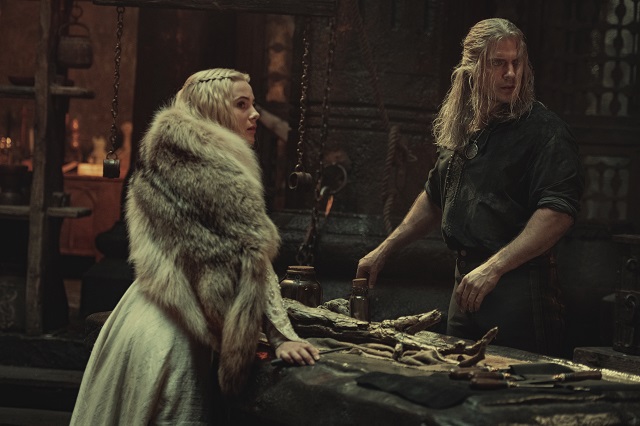
When asked about what makes Geralt stand out to him as a character, he says, “He’s definitely a hero, but he also does things, commits certain acts, says things in a certain way that don’t fit the classic hero type. […] For me, I really like that, I really enjoy that.” Cavill, whose bedtime stories of babyhood can find their roots in the same soil as those of Sapkowski’s work, would definitely know his tropes and how to subvert them—and this series is all about turning every stone and never letting old wives’ tales get the best of you. “Every time I go back to those books,” Cavill shares, “I am just wowed by the nuance and complexity in Sapkowski’s writing. The characters aren’t obvious, and we see bits of ourselves in them—you don’t just pick one [to identify with].”
And you, the audience, start to connect the dots as you watch. You may even forget how far they’ve come from the smaller, stitched stories of the first season, right alongside the characters. You almost feel like you’re making the choices right there with them, the writers sort of tapping lightly against the glass fourth wall—perhaps an inadvertent echo to the video games. More than the intense fight scenes and fantasy elements and the forty funny names your non-nerd friends will never remember, what will stick with fans old and new will be how close the tales come to real life—and not in a vague sense, either.
Among the cast and crew, the lines begin to blur. “Unfortunately, I guess, so many of the things Spakowski wrote about, even in the 1980s, I think he wrote [in the hope] that they could inspire change,” says showrunner Hissrich, on how well many of the smaller arcs line up with current events. “I would love to believe that a lot of [xenophobia, violence] has shifted in the last 35 years—well, it hasn’t. We know something’s timely when we write it, and in some ways hope that it’s not timely anymore.”
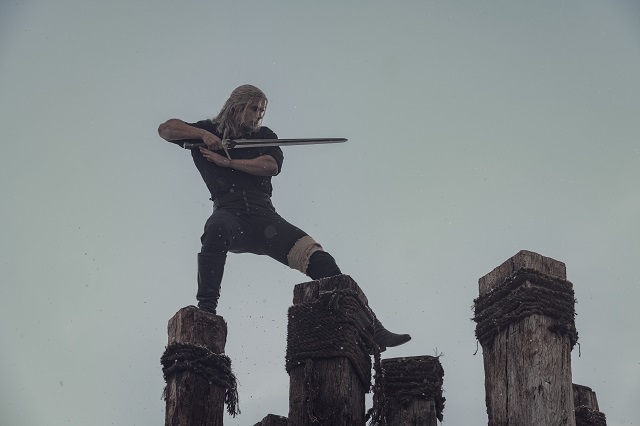
As Kim Bodnia, the Killing Eve alumnus who plays Geralt’s mentor Vessemir, says, “When you get to that age and you’re set up to play these [roles]... you know, in real life, I am a father. I have four children. So it’s difficult not to use that [very real part of your] brain.”
“I draw inspiration from all the women around me,” says Anya Chalotra, who plays the ambitious and clever Yennefer of Vengerberg. “And from the character, I take her confidence. [I don’t get recognized on the street or anything], but the strength I get from Yen can come in handy in odd ways.”
“Working as a musician outside of the show and [helping with] the songs for season two,” says Joey Batey, who appropriately portrays Jaskier the Bard, “I have a strong belief that any truth you reveal on screen has to come from a place of authenticity. [The most truthful performance] has elements of you in it.”
As for Cavill? What goes around seems to come back around.
SPOT: When last we spoke, you said—quite quickly, too—that if you could play anyone else in The Witcher universe, you’d be Regis. Given all the things you’ve taken up in quarantine, and Regis’ reputation as a polymath, we’d say that’s appropriate. Is there any particular affinity for the vampiric or vampire-adjacent?
HC: I don’t know… there’s something… there’s always that sort of allure to the vampiric! But what’s wonderful about Regis is that, in typical Sapkowski style, he’s non-typical. He’s done something really different in that, [instead of Regis struggling with not drinking blood], he’s chosen not to, and other vampires kind of poke fun at him for it. There’s always something really interesting, not just that he’s glamorous or sexy.
And if that doesn’t tell you that art imitates life and life imitates art, nothing will.
The Witcher Season 2 streams on Netflix on December 17.
this strange new world.