

As Student Suicide Rates Go Up, PGCA Points to a Need for 47,000 More Guidance Counselors
"We want to live."
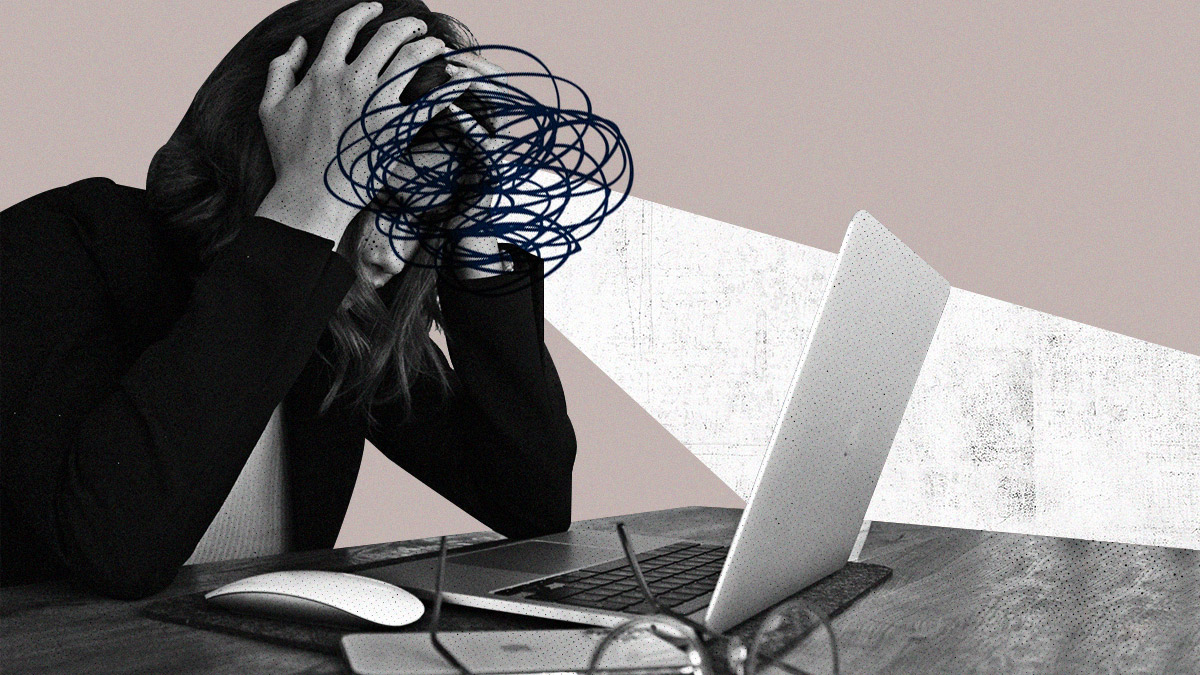
(SPOT.ph) A total of 404 students committed suicide in Academic Year 2021 to 2022, while another 2,147 attempted to, according to data from the Department of Education. There’s no sugarcoating it: the mental health of Filipino students has reached a shocking state, one exacerbated by the many stressors of the pandemic.
The passing of the Philippine Mental Health Law was monumental in placing the issue at the forefront of everyone’s minds. In particular, Section 24 of the Mental Health Act focuses on the mental health promotion in educational institutions, saying that schools of all kinds “shall develop policies and programs for students, educators, and other employees designed to: raise awareness on mental health issues, identified and provide support and services for individuals at risk, and facility access, including referral mechanisms of individual with mental health conditions to treatment and psychosocial support.” With these supports in place, one would think that students would have someone to turn to in times of distress, but DepEd’s statistics say otherwise.
Another study from the University of the Philippines Population Institute in 2021 showed that as much as 20% of young Filipinos have considered suicide. The people who hold plenty of responsibility in keeping these numbers low are our school’s guidance counselors, but how could they, when there are only an estimated 4,000 of them in the entire country?
Also read: You Can Reach Out to These Places for Free Mental Health Consultations
Rising cases of student suicides
Many have pointed to the shift in online learning as the main culprit for the rise in student suicides—and it is true to a certain extent. According to the World Health Organization, people aged 15 to 29 are the most vulnerable to mental health problems, which also happens to be the same age group that take online classes. However, the Department of Education (DepEd) has called on the public to stop connecting suicide cases to remote learning, stating that none of the incident reports at that time point back to the education woes as the primary cause.
The Philippine Guidance and Counseling Association President Sheila “Shake” Hocson said “online learning gave us the learning continuity plan” during the pandemic but it did little to acknowledge the several negative effects that come with it. Being exposed to the Internet for hours at a time will also influence people, especially the youth, in more ways than one. With online learning as the norm, most students didn’t really have the option to stay offline.
“Oversharing, sadfishing, and [other] negative postings can create a lot of emotional contagions kaya ang daming mental health problems. Nakakahawa siya,” Hocson said in an exchange with SPOT.ph. “It can change the character and value of an individual.”
Bullying also continues to remain a top contributor to student suicide, with the Philippines ranking the first in 70 countries with the most cases of bullying in public schools as per the Program for International Student Assessment. This translates to 40% to 60% of Filipino teens having experienced bullying at one point. If not in school, mental health is often challenged in the presence of difficult family members.
Instead of focusing on one problem to blame, Hocson likes to look at the mental health crisis from a macro perspective, as “an interplay of the environment, the family, and a lot of other factors”—a hark back to the Philippine Guidance and Counseling Association’s (PGCA) mission and vision to tackle mental health from a one-nation approach.
But of course, student help should first and foremost be found in schools.
Also read: It's a Pandemic of Sadness Too, Here's Why (And Where to Get Help)
Lack of support to guidance counselors
According to Hocson, the ideal ratio is to have one guidance counselor for every 500 students. This puts the number of required guidance counselors in elementary schools to around 47,000, of which the Philippines only has 4,474—and this doesn’t even include the students from the Commission on Higher Education yet.
There are two main reasons for this shortage in guidance counselors: the low salary and the high barrier to entry. Hocson said that the latter cannot be compromised since the very role of a guidance counselor carries a lot of weight, which isn’t exactly a role fit for anyone. When asked why the Philippine Guidance and Counseling Association (PGCA) is calling to improve compensation and career progression for guidance counselors, Hocson was succinct in her reply: “We have to live."
In the Philippines, a guidance counselor has a Salary Grade (SG) 11 or P25,000 a month—the same rate an entry-level teacher is expected to earn. It might not sound so bad, until it is put into context. To be a guidance counselor, one must take up a Bachelor’s Degree in psychology, human services, social work, or other similar fields, follow with a Master’s Degree in guidance and counseling, then finish off with a license exam. Only then will they be granted the title of a guidance counselor.
“The logic is ang taas ng requirement, pero ang baba ng sweldo. Bakit ang taas ng requirement? We’re handling the lives of the people. The curriculum of the Bachelor’s Degree hindi kaya magbigay ng malalim na skills and competencies to address a lot of problems in mental health,” Hocson said. “Imagine mo, fresh graduate ka, haharap sayo suicidal. Hindi enough ‘yung counseling competencies and techniques. Even abroad, the minimum is really a Master’s Degree.”
Ultimately, the lengthy process is meant to not only “entail competencies, but also maturity in handling the lives of people.” It’s one that Hocson said should also reflect in the pay. As such, the PCGA proposed for the Senate to raise the SG level from 11 to 16, (P38,000), which has since been included in Senate Bill No. 379.
“Lagi ‘yan nagsisimula sa taas—the policymaking, the strengthening of the mental health programs,” Hocson said, adding that scholarships will also be provided to encourage more people to go into the field of guidance and counseling.
While waiting for this bill to pass into law, Hocson is resolved to fill the current gap on the lack of guidance counselors with guidance associates instead of having teachers who aren’t at all qualified to take on this role. Guidance associates will only need a bachelor’s degree along with six subjects of guidance and counseling with training.
At the same time, placing the sole burden on guidance counselors and associates in schools isn’t the be-all and end-all solution to the mental health crisis. Hocson is a firm believer in a holistic and humanistic approach, where the family, school, community, and the country come together to work as one.
“Hindi lang kailangan professionals,” Hocson said. “Kaya we are also doing a community approach in the school, in the family. There are many stakeholders that can be involved in mental health.”
ALSO READ:
GUIDE: Mental Health Hotlines to Call While on Isolation, Quarantine
10 Mental-Health Services Available Online