

How to Check if a Website Has a Fake Login Page
Be careful about this scam.
(SPOT.ph) Received a text or email asking you to log in to your bank, e-wallet, or even social media accounts? It’s important to exercise caution as these could potentially be scams.
Scammers are known to create fake websites that closely resemble official websites, especially ones that are involved with financial transactions. It goes without saying that you shouldn’t enter your personal data, bank accounts, or credit card information on unverified websites, but how can you find out if it’s fake to begin with?
To protect yourself from falling victim to such traps, the Bangko Sentral ng Pilipinas (BSP) has issued some safety guidelines to follow whenever you’re being linked to a suspicious website.
Also read: GUIDE: Email and SMS Scams You Need to Know to Protect Your Money
How to spot a fake login page
BSP has recommended not to click links from random emails and text messages. Watch out for mistakes in spelling, punctuation, capitalization, and grammar in the URL or web address, which are usually present in fake websites.
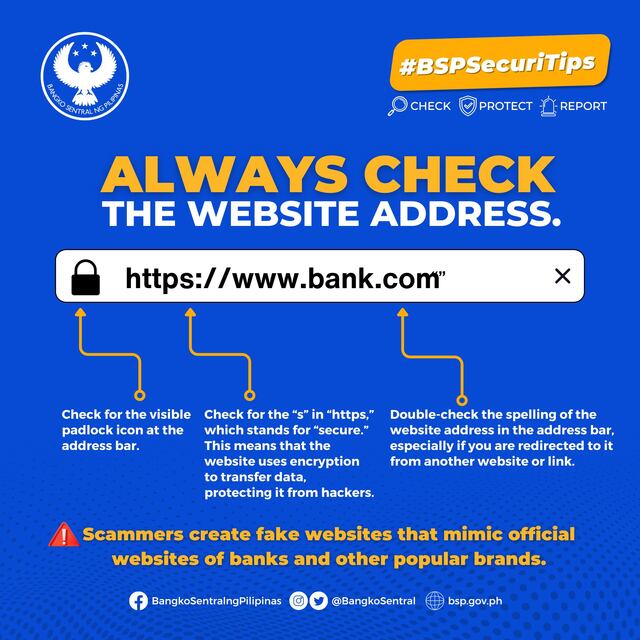
For example, www.bank.com on email or text messages may become www.bank-com.ti on the website address upon clicking. In this case, don't engage with the login page.
Even if it looks legit, it could still be a scam. BSP suggests to verify the authenticity of a website through Blue Coat or Virus Total. Simply paste the link on those websites to check.
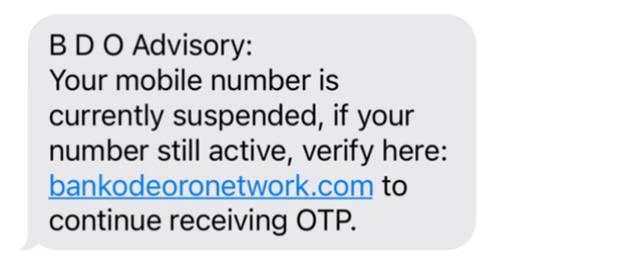
Take this example. A quick search on Google will reveal that BDO's official website is bdo.com.ph, not bankodeoronetwork.com.
If the text or email is pegged as important or urgent, it’s best to verify with the company if the website is legitimate. You can do so by calling the provided contact information to confirm the website from a customer service representative.
Report immediately to your bank or e-wallet provider through official channels if your account, credit card, e-wallet, or personal information has been compromised, BSP said. You can also contact the Philippine National Police or the National Bureau of Investigation to report scammers.
Also read: Missed a Call From an Unknown Number? It Could be a Scam, PNP Warns
How to report to the BSP
If your bank or financial institution is unable to address your complaint for whatever reason, you can also opt to report to the BSP through the following channels:
- Click on the BOB icon on the BSP website
- Chat on BSP Facebook Messenger
- For Globe subscribers, text 21582277