
That Traffic Violation Text Is a Phishing Scam, LTO Says
It's been flooding inboxes recently.
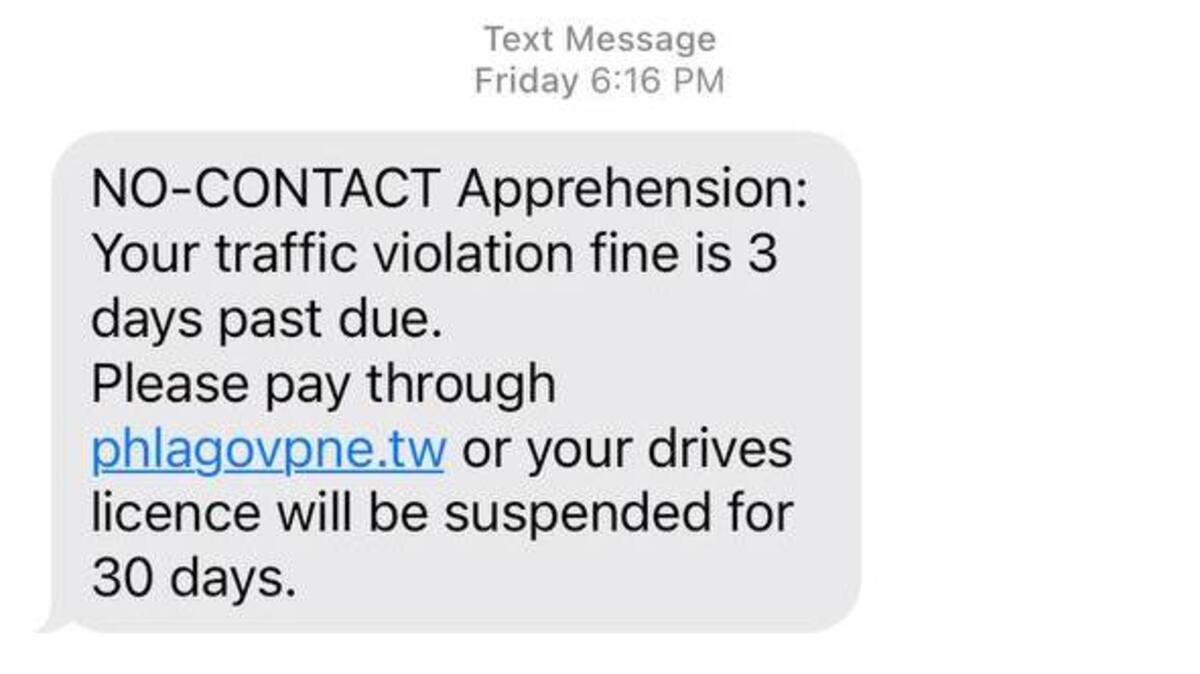
(SPOT.ph) Have you received a text about violating a traffic rule recently? Don’t panic, and definitely don't click on the link—it's a phishing scam.
Motorists and non-motorists alike are being targeted by text message scams that falsely claim they owe payment for overdue traffic fines, allegedly issued under the No Contact Apprehension Policy (NCAP). The scammers impersonate traffic authorities with a link to a bogus website that mimics the official Land Transportation Office (LTO) website. Unlike the real LTO site, these fraudulent sites do not end in ".gov.ph."
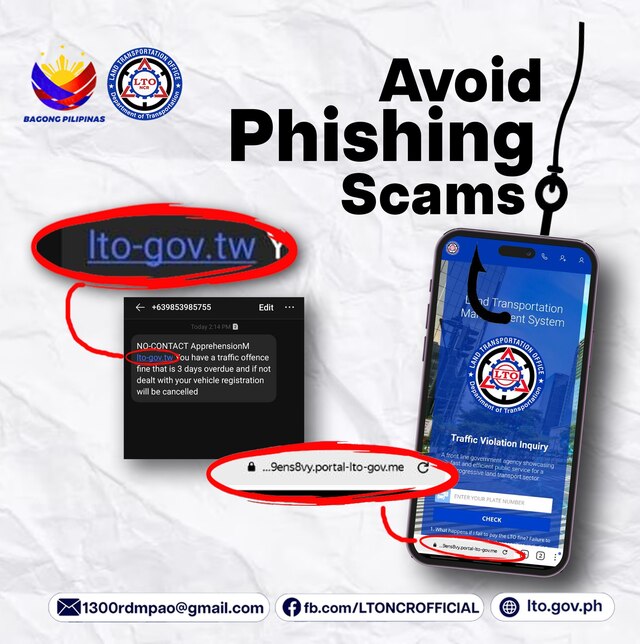
Reminder: the NCAP has been suspended since 2022. Both the LTO and Metropolitan Manila Development Authority (MMDA) have also confirmed that they do not contact motorists for fines in this manner.
“Hindi po nagse-send ng notice of violation ang inyong LTO. Ang ganitong sistema ay matagal ng hindi gumagana kaya anumang message na matatanggap ninyo ay tiyak na galing sa scammers,” LTO Chief Vigor Mendoza II said in a press release.
Also read: What's Happening With the MMDA's Single Ticketing System?
What happens when you click on a text scam from the “LTO” or “MMDA”?
Upon visiting these fake websites, motorists are asked to enter their vehicle plate number, which then generates a counterfeit violation notice. This fake notice appears to come from the MMDA, as it is complete with a summon number and detailed traffic offense, personalized with the motorist’s plate number to seem legitimate.
If anyone clicks through, they are led to a payment section where they are prompted to input their bank details, risking financial and personal data theft.
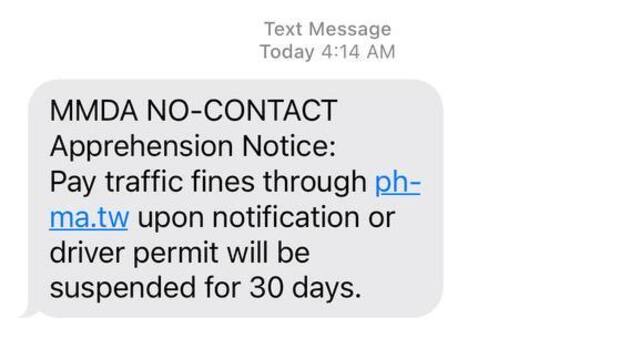
Here's another example of the text scam:
Also read: MMDA Suspends No Contact Apprehension, What's Next
How to report text scams
Motorists who encounter these or similar fraudulent messages are urged to report them to LTO’s new hotline “Aksyon on the Spot” at 0929-292-0865. This hotline is specifically designed to address complaints against phishing scams by cybercriminals impersonating the LTO with fake traffic violation notices, as well as reports of abusive motorists.
“Sa pamamagitan ng ating hotline, mabilis na matutugunan ng inyong LTO ang mga reklamo ng ating mga kababayan laban sa mga online scammers at mga pasaway na motorista,” Mendoza said.
Complaints can also be submitted through the National Telecommunications Commission’s (NTC) official website. The report should contain the user’s complete name, address, email, and contact number; the cell phone number of the scam texter; a screenshot of the text scam message with the sender’s mobile number; and a photo of any of the user’s government-issued IDs.