

How to Draw Personal Time Boundaries at Work When You're WFH
Here are some actionable steps you can take right away.

(SPOT.ph) So you’re one of the lucky few who are allowed to work from home on most, if not all, days. This freedom is exhilarating at first, but then you find yourself responding to emails at lunch or struggling to disconnect from work at night.
With the rise of remote work, the line between our personal and professional lives have never been more blurred. This constant overlap can often lead to burnout.
By establishing clear limits, you can protect your well-being before you get overwhelmed. Many how-to articles have already touched on this subject, but generic advice like “prioritize tasks” and “create a home office” aren’t particularly helpful. What you need are practical steps that you can implement right away without having to spend money.
Here are five practical strategies to help you achieve a work-life balance.
Also read: To be the Best Employee, I Gave Up Boundaries: Lessons From Corporate Slavery
How to set personal time boundaries at work
Turn off work notifications after hours

One notification can lead to hours of doomscrolling. Notifications are designed to capture your attention immediately. Each time you get one, your brain thinks this might just be a dopamine hit. As a Harvard article points out, "rewarding social stimuli" has been found to activate the brain's dopamine pathways—meaning that those "heart" and "haha" reacts are enough to keep you coming back for more.
This constant interruption, and continued hope that hey, maybe your boss liked a message you sent, can lead to increased stress and anxiety as your brain struggles to switch between work and personal time.
At the end of your workday, disable email and messaging notifications related to work on your phone and computer. This prevents work from intruding on your rest and relaxation time.
“Do Not Disturb” is there for a reason. Use the feature to silence all notifications as needed. Alternatively, you can also go to your phone’s settings, find the notifications section, and turn off notifications for selected work-related apps like Slack or Microsoft Outlook after work hours.
Establish a start and end time for your workday
Humans thrive on routine as it can help reduce our anxiety.
Decide on a clear start and end time for your workday. In doing so, you create a predictable structure that your brain can rely on. This structure helps your brain distinguish between work time and personal time, making it easier to switch off from work-related thoughts.
Having a defined work schedule also helps you set expectations with coworkers, reducing the pressure to be available at all times. They’ll eventually learn to respect your personal time the more you enforce it.
Try to extend this practice to the weekend, too. Commit to not checking work emails during the weekend. Set an out-of-office reply on Friday evening that informs recipients you will respond to emails on Monday.
Also read: Help! My Boss Calls Me During My Rest Hours
Create a transition ritual

Transition rituals are small, intentional activities that signal to your brain that it’s time to switch from work to rest. It can also lower stress levels by providing a structured way to relax. The consistency of such rituals can promote a sense of control over your schedule, contributing to better mental health.
We recommend two steps to create this physical and mental separation.
Set aside the last 30 minutes of your workday for winding down. Use this time to review your day and plan for tomorrow, such as organizing your tasks, clearing your desk, and setting goals for the next day. This way, you receive a sense of closure before timing out from work.
Follow up with a ritual that marks the transition from work to personal time more clearly, such as changing your clothes, taking a shower, going for a walk. Over time, the rituals will make the transition feel smoother and more automatic.
Practice saying no
You hear it everywhere because it’s true: Learning to say no is a crucial skill for setting personal time boundaries at work. It empowers you to prioritize your well-being without letting go of what is expected of you. You see, our brains have a limited capacity for handling tasks. Overcommitting by saying yes to every request increases cognitive load, which can lead to mental exhaustion.
When asked to take on additional tasks or attend meetings that you don’t have time for, politely reject or suggest an alternative time when you can give your full attention. That way, you are being honest with yourself and your colleague. Don’t feel guilty for maintaining your boundaries!
Here are some examples of saying no in a polite but firm way:
- “I’m currently focused on [specific task], but I can assist you with this on [alternative date].”
- “I’m not able to take this on right now, but [coworker’s name] might be able to help. Would you like me to connect you with them?”
- “I’m unable to attend this meeting due to other commitments, but I’d be happy to review the meeting notes or discuss the key points with you afterwards.”
When possible, always suggest a different time, person, or solution.
Also read: Creating Tech-Free Zones at Home: A Guide to Digital Detox
Use environmental cues
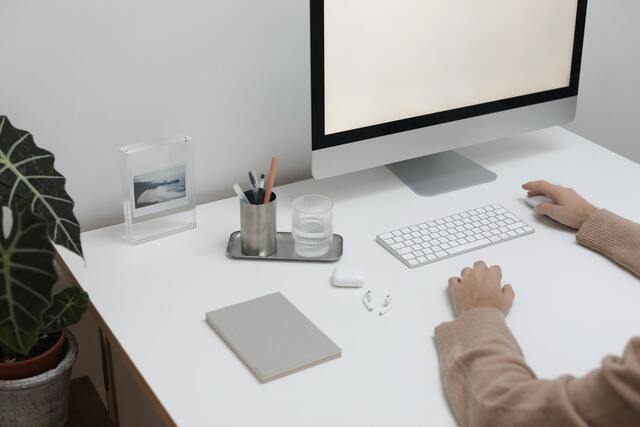
Our brains form associations between the environment and the activities we perform in those environments. Remember that one specific song that transport you back to a moment in high school? The same concept is applied here. By creating a dedicated workspace, your brain associates that specific area with work-related tasks. This helps improve productivity while you are in that space.
If you work from home, designate a specific area for work. Set up a desk, chair, and other necessary work tools in this space. By the end of your shift, leave this area and avoid returning to it until the next workday. This physical separation helps signal that work time is over.
Conversely, working in places like your bed can create conflicting associations, making it difficult for your brain to relax when it’s time to sleep. This is why you should avoid working in bed as much as possible.
Another way to rewire your brain without spending too much money is to use light and sounds. Switch the room lighting from cool white to warm yellow at the end of your workday. Cool white light can improve alertness and concentration, while warm yellow light can promote relaxation.
Listen to instrumental music while working, then queue nature sounds in the evening to help your brain transition to relaxation mode. It’s such a simple but effective way to create boundaries.
Also read: How to Create a Dedicated Workspace at Home