
GUIDE: How to Claim SSS Sickness Benefit
For when sick leaves run out.

(SPOT.ph) Health issues can strike unexpectedly—and you can be stuck sick for a long time. Employees in the private sector may have the luxury of having 12 to 15 sick leaves annually, but many sadly have far fewer.
In fact, there is no mention of sick leaves in the Labor Code of the Philippines. Instead, Article 95 of the Labor Code introduces the Service Incentive Leave (SIL). According to the Department of Labor and Employment’s (DOLE) 2022 Handbook on the Statutory Monetary Benefits, “every employee who has rendered at least one year of service is entitled to Service Incentive Leave of five days with pay.”
So what happens when your health requires more than five—or maybe even 15—days of sick leave? This is where the Social Security System (SSS) Sickness Benefit comes in.
Also read: Everything You Need to Know About Sick Leave Policies in the Philippines
Everything to know about the SSS Sickness Benefit
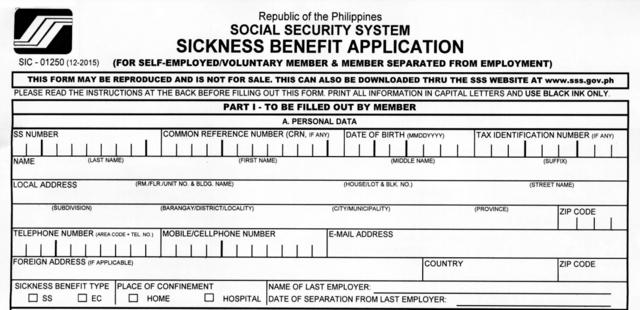
The SSS Sickness Benefit is a financial assistance program for qualified members who are unable to work due to sickness or injury.
In cases where an employee has exhausted all paid leaves, they can claim 90% of their regular salary from the SSS. Some companies might also allow employees to use up vacation leaves before progressing to the SSS Sickness Benefit.
Eligibility requirements
Here are the qualifying conditions for the SSS Sickness Benefit:
- Must be an SSS member
- Be unable to work for at least four days due to sickness or injury
- Be confined at home or in a hospital
- Must have paid at least three monthly contributions within the 12-month period before the sickness or injury
- Notify the SSS about the sickness or injury
Members in home confinement must submit the Sickness Benefit Application to SSS within five days of starting the confinement. On the other hand, members in hospital confinement must submit the Sickness Benefit Application within a year of discharge.
Also read: How Many Paid Leaves Are Workers Entitled to Under the PH Labor Code?
Benefit amount and duration
The benefit is 90% of the member's average daily salary credit (ADSC). This is calculated by taking the total of the six highest monthly salary credits (MSC) in the 12 months before the sickness and dividing by 180 days.
For instance, if your six highest MSCs are P16,000 each, the total MSC is P96,000. Dividing this by 180 days gives an ADSC of P533.33. The daily sickness allowance would be 90% of the ADSC, which is approximately P480. Multiplying this by the number of sick days gives you the total benefit amount.
This benefit will be paid each day the employee is unable to work, including weekends and holidays, but only for a maximum of 120 days in one year. If the incapacity extends beyond 240 days, it will be treated as an SSS Disability Benefit claim (which is a different process altogether).
Another thing to note is that your sickness claim may be reduced or denied if you file late. Specifically, your confinement will be considered to have started only five days before the notification date. Not following? For example, if you were confined at home from March 1 to 31 for a total of 31 days but you notified SSS two days late on March 8, then the compensable period will only be from March 3 to 31 for a total of 29 days.
How to apply for SSS Sickness Benefit
The process will vary depending on your employment, but the requirements are the same for everyone—the most important of which is that a licensed physician must certify that the member is unable to work due to sickness or injury.
Application requirements
- Sickness Benefit Application
- One valid government ID (driver’s license, passport, voter’s ID, NBI clearance, postal identity card) or two secondary IDs/documents with photo and signature
- Medical certificate from an SSS-accredited physician
- Other supporting documents such as a leave of absence certificate from the employer
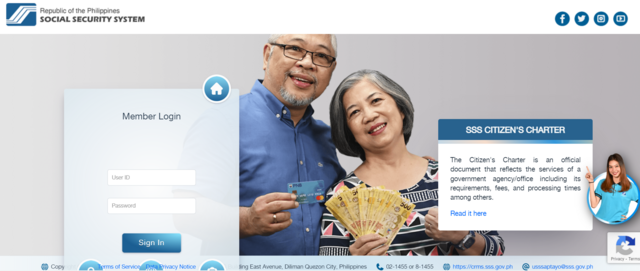
The SSS has facilitated the online processing of Sickness Benefit Applications, so employers and members can now submit applications and required documents through the My.SSS website.
Employed members
Employed members must notify their employer who will then inform the SSS.
The employer submits the Sickness Benefit Application and other supporting documents on behalf of the employee within five calendar days of notification. The employer advances the payment to the employee and then seeks reimbursement from the SSS.
The benefit amount will be paid to the employer, who then disburses it to the employee.
Self-employed and other voluntary members
Self-employed and other voluntary members must file the Sickness Benefit Application with the SSS directly within 10 calendar days of the start of sickness. This also includes overseas Filipino workers (OFWs), non-working spouses (NWS), and unemployed members.
A note for OFWs: OFW members are given a 30-day grace period beyond the existing five-day prescriptive period in the filing of Sickness Benefit Application as the nearest SSS foreign branch could be quite the distance. However, this additional 30-day grace period is only applied to cases that do not require hospital confinement.
The benefit amount can be disbursed either through participating banks, e-wallets, or remittance transfer companies (RTCs). You will be required to enroll and upload a proof of account of your selected payment method in the Disbursement Account Enrollment Module in the E-Services tab of the My.SSS website.
Members will then be notified by text or email when the benefit amount has been credited to the enrolled bank or e-wallet account or if payment is already available through RTCs.
Also read: Sick Leaves Are Your Right, Don't Feel Guilty Taking Them