

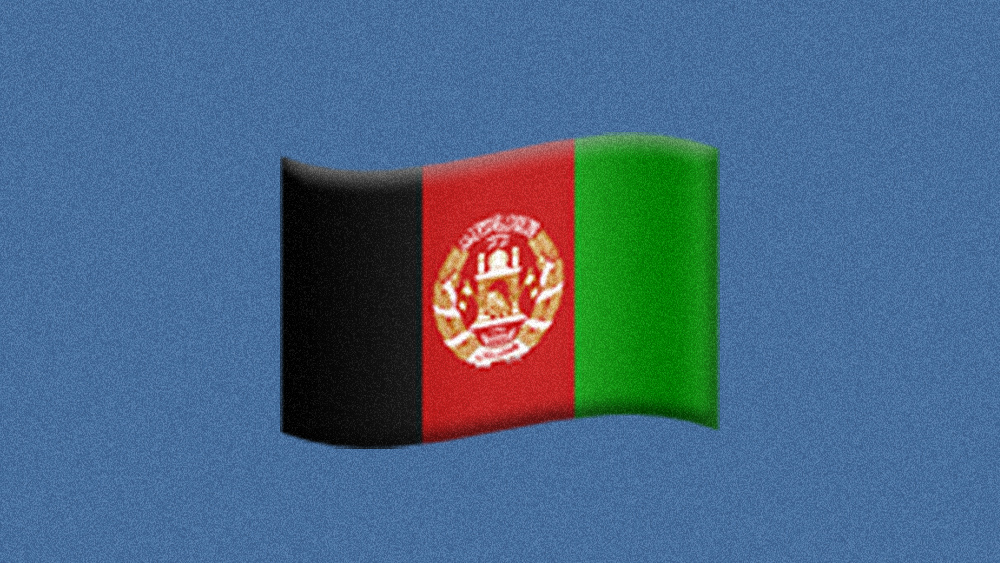
The world early this week watched in horror as the Taliban recaptured the seat of power in Afghanistan 20 years after they were ousted by a U.S.-led alliance. Women feared for their rights while hordes scrambled for space on flights out of the country.
The Taliban has signaled that it wanted peace and would give women more rights under Islamic law. For those expressing their opinions and sympathies on social media, there's one question that is being asked: what happens now to the Afghanistan flag emoji?
According to tracker Emojipedia, the emoji of a country's flag naturally changes if their official flag does. The decision rests on platform owners like Apple and Android, as implementing such a change needs decisive thinking, one that requires the nod of the international community.
In 2017, Mauritania made a minor change to its flag, voted via a refendum that effectively added a red stripe to its top and bottom. It was meant to commemorate the blood their country shed in their quest for feedom from their French colonizers.
Apple updated iOS to reflect the change in 2018 while Samsung updated its emoji font in 2019.
As of Aug. 18, the version of the Afghan flag reflected in the emoji still hasn't changed. It remains to be the one in vertical tricolor of black, red, and green, with the National Emblem of the Islamic Republic of Afghanistan in the middle.

Last Aug. 16, the Flag of Afghanistan Wikipedia page was revised to include the Taliban's defacto flag described as "Shahadah on a white flag". This means soon, as the Taliban government and its flag are legitimized, smartphones will have to accomodate the change.
"If the international community recognize this as the flag as legitimate moving forward, it's likely to come to phones in software updates over the coming years," Emojipedia said.

Why this matters
Such a change to the Afghanistan flag emoji may appear trivial, but in the grand scheme of things, this matters a lot, especially to the Afghan community.
There can only be one per flag per country according to Unicode rules, and so once changed, users are only offered one version of a flag.
Emojis are one way to make a person, a community, or in this case, a nation feel seen in an internet environment where representation has come to matter a lot.
In recent years, emoji keyboard additions such as the trans flag (for transgender people) and the diversified skin tone options were lauded for having made marginalized communities feel more accepted in today's highly technological environment.
Given the devastation that dawned upon those who reject Taliban rule, as seen in how Afghan citizens flocked the Kabul Airport (some reportedly hanged on to airplanes in desperation), a simple emoji change could mean so much more.
"This isn't just a question of technical implementation, but also how any such change would feel to Afghan users. It's not a trivial question, nor are there easy answers," Emojipedia said.