
What Should You Do When Someone Is Drowning?
A must-know for the summer season.

(SPOT.ph) It seems like everyone is at the beach this summer season, which means an increased risk for drowning for everyone who is enjoying one of the Philippines' 7,641 islands.
According to World Health Organization Philippines, there are more than 3,000 annual deaths from drowning in the country. In fact, drowning is a silent killer that can happen to even the best of swimmers. Nearly 80 people have died of drowning since the start of April—and we’re not even taking about casualities from typhoon flooding yet.
We turn to the Department of Health for guidelines on how Filipinos can provide first aid for those who have just experienced drowning.
Also read: What Is Heatstroke and How Can You Prevent It?
What you should do if someone is drowning
How to tell if someone is drowning
Drowning occurs when there is “respiratory impairment from submersion or immersion in liquid,” according to the World Health Organization (WHO).
Contrary to popular belief, real-life drowning is nowhere near how it is usually portrayed in television. For one, they won’t be able to call for help. British Red Cross said “drowning is quiet and quick.” The victim will likely thrash in the water, but it will still require vigilance on your end to spot someone who is drowning. Keep watch for any activity that might be out of place, including overt stillness.
How to give first aid for drowning person
First and foremost, do not attempt a rescue if you know you are a weak swimmer since this will also put you at risk of drowning with the victim. It’s always best to call for a lifeguard or medical help when available.
You might need to step in if no one is around to help, but make sure to bring a flotation device with you for support. Safe rescue and resuscitation is a two-way street that also applies to bystanders who are planning to rescue victims.
The drowning person will typically struggle for 20 to 60 seconds on the surface of the water before becoming submerged. You have until then to get them out of the water by extending a long object or pulling them to safety.
- Ensure an open airway in the mouth
- Keep a close eye on breathing to ensure that it has not stopped
- Tilt the head and lift the chin
- Check for breathing for up to 10 seconds
- If the victim is not breathing, provide rescue breathing
- Move on to full CPR as necessary
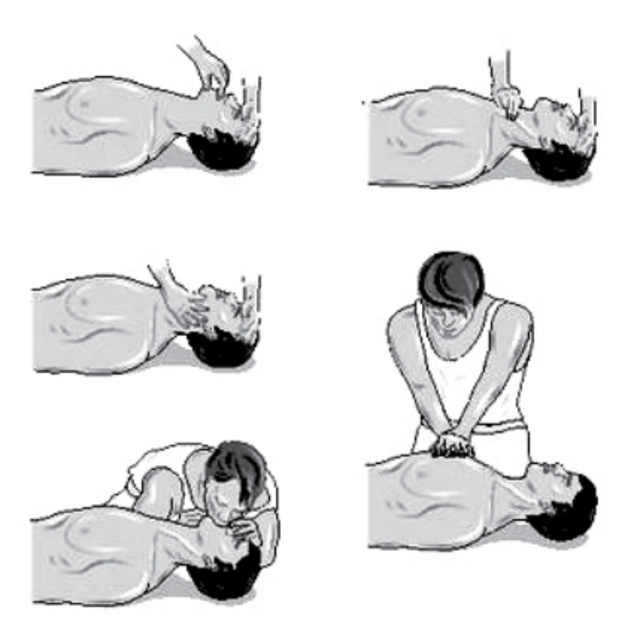
Other sources might instruct to give immediate chest compressions or abdominal thrusts to remove water from the lungs, but the Department of Health is highly recommending against starting with this. This is because people who just drowned are likely to have experienced cardiac arrest, which is usually respiratory in origin. Rescue breaths should be prioritized for resuscitation.
This is the same rule of thumb that European Resuscitation Council gives: “Most drowning victims will have sustained cardiac arrest secondary to hypoxia. In these patients, compression-only CPR is likely to be ineffective and should be avoided.”
British Red Cross said it is generally best to provide two rescue breaths then continue with cycles of 30 chest compressions and two rescue breaths until the person becomes responsive.
What to do if the drowning person vomits
Be prepared to be faced with vomit when rescuing a drowned person. It’s fairly common for them to bring up stomach contents after CPR is issued.
If the person vomits while you are resuscitating them, turn the person toward you and clear out the mouth before turning them on to the back to continue rescue breathing.
If the person vomits while in recovery position, clear out the mouth and keep a close eye on breathing to ensure that it has not stopped.
Also read: How Much Should You Actually Have in Emergency Funds?