
Get to Know DLSU PUSA, Where Campus Cats Found a Home at La Salle
Plus how to become a PUSApporter.

(SPOT.ph) Remember Archer, the beloved campus cat that snagged the hearts of those in and outside De La Salle University? Turns out, he wasn't the only furry campus friend looking for a furever home.
At the 5.4 hectare campus along the busy Taft Avenue in Manila lies DLSU Manila, a second home to not just students but also Marble, Paotsin, Milky, and Casper and a hundred more cats just waiting to find their hoomoms and dads—if they are willing to take them home. Providing them food and shelter and the love they need is DLSU PUSA (Professors for the Upliftment of Society's Animals), one of, if not the first group that formally established organizations solely for the care of campus cats.
"We started with the idea of helping the stray cats in the campus. We don't adopt from outside, it's part of our deal with admin that we do not bring in cats from outside because there are so many everywhere. And La Salle of course is not an animal shelter, but very kind enough to give us the permission to take care of the community cats," philosophy professor and DLSU PUSA founder Laureen Velasco told SPOT.ph.
Read more:
These Stress-Busting Cats of UP Can Be Your Emotional Support Friends, Too
These Lovable Stray Cats of St. Paul University Manila Are Looking for Their Furever Homes
How DLSU PUSA came to be
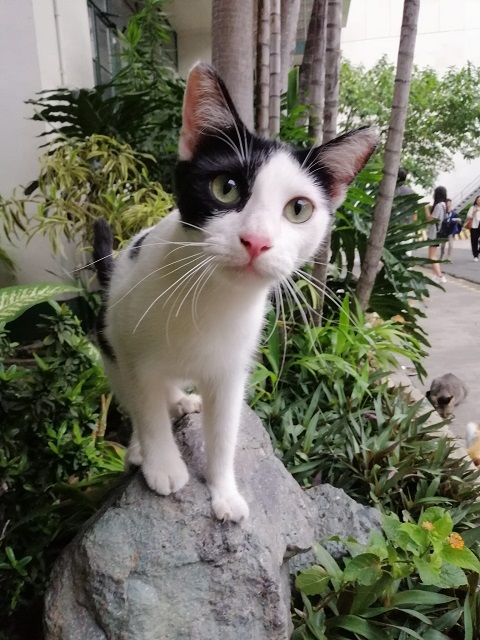
It started when self-confessed cat lover Velasco did her quarterly neuter-spay activity, or sterilization of cats, inside her subdivision in Dasmarinas, Cavite in 2014. Her department chair Jeane Peracullo visited and brought her two rescued cats. "That's when she got the idea, why don't we do the same thing in La Salle?"
While the idea of taking care of campus cats in La Salle wasn't new—after all, professors had been feeding them using their own money in their respective areas well before 2014—there was no established organization behind it.
Velasco, together with Peracullo from the Philosophy department, Maria Guadalupe Salanga and Laurene Chua-Garcia from the Psychology department, and Elaine Tolentino from the International Studies department formed DLSU-PUSA in 2015. Cesar Unson, who was also from the Philosophy department, was credited for coming up with the name "PUSA."
"We only wanted to quietly take care and feed the campus cats and then it just expanded and expanded."
From just DLSU professors and employees, Velasco started entertaining student volunteers. Back then, there were only four to five student volunteers who gave their time for the cause. Now, even non-La Sallians including parents are helping them out, she said.
Taking care of cats is no fun and games. Velasco admitted it was a struggle to juggle her time between home and DLSU that's why at the height of the pandemic, she moved from Cavite to her new home three blocks away from the Manila campus. While the rest of the world can't enter school premises at that time, Velasco had an ID allowing her to come in and out just so she can feed the cats.
She missed her father's birthdays, even left about 50 of her cats at home to the care of her yayas because while her pets have someone to take care of them, "sa La Salle, wala, especially during the pandemic."
"The PUSA chores alone is about 12 to 14 hours a day. I leave the campus at midnight practically every day. That's Monday to Sunday, 365 days a year. Walang holiday," said Velasco. "In between classes, sometimes, I have to go to the vet to bring some of the cats. Kulang 'yung 24 hours. Sometimes I'm sleep deprived, but you just got to do what you got to do."
"Something moved our souls, and we just responded. There was an invitation, an energy from the universe."
Aside from feeding the campus cats, the group also does trap-spay/neuter-return, considered one of the safest ways to manage felines and reduce their numbers. It also facilities vaccinations and adoption so these cats can safely find a fur parent who can take care of them outside campus. Despite earning a paw-some reputation of loving campus cats, it is still a learning institution and not a cat shelter or a pet hotel, so dumping of strays isn't allowed.
Also read: No, Abandoning Your Pet Isn't the Only Option
DLSU PUSA, a safe space for cats and cat lovers
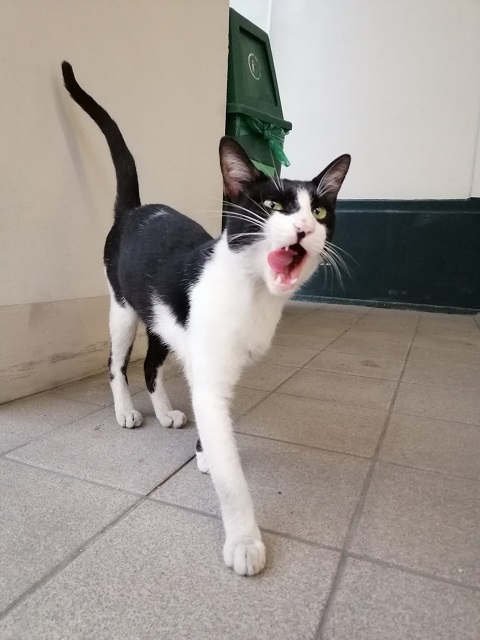
The outside world began to know more about DLSU PUSA and "widen the circle of compassion" when it created a Facebook group in 2017.
In this online group of more than 24,000 members, PUSApporters can follow the tales of beloved campus felines and their activities on campus. Fur parents who decided to open their homes to DLSU cats also update the group with what their fur babies are up to at home.
The group also became an avenue for outsiders to know the campus cats, and even become DLSU PUSA's eyes around and outside campus. Cat got hurt or scratched a student? The likes of such reports are posted in the Facebook group so DLSU PUSA will be informed.
Currently, DLSU PUSA takes care of more than 100 cats, including those in neighboring areas. Being the fur mom that she is, Velasco knows every last one of them, as she named most of them.
"What we do in La Salle is actually a drop in the bucket of what needs to be done. If you like a better planet, we better start doing things one step at a time, little things so this is little compared to what needs to be done and if you don't start now, I mean, when?"
Also read:
10 Useful Pet Essentials Under P250 Worth Adding to Cart ASAP
10 Travel-Friendly Essentials for Your Fur Baby
10 Pet Boarding Houses in QC for Your Fur Babies
How PUSApporters can help
Living in and around DLSU doesn't guarantee deep pockets and unlimited resources. Velasco said the group needs at least P25,000 a month for food alone, add to that the veterinary bills, vaccinations, and other expenses. More often than not, she shells out her own money for the cats' needs.
"You get the impression that we have a lot of money because we don't owe you. We don't owe anything at the vet clinic, and I said walang utang ang pusa sa'yo. Ang utang ng pusa sa akin... So 'pag nanghihingi ako ng donation, that means the well is running dry. Talagang sagad na sagad na."
"We would like to do more if we had the funding and neuter some more if we only had the money. Money is our biggest challenge in this advocacy."
Good news is, there are ways PUSApporters, even those outside campus, can help. Aside from adoption and donating time for these cats, monetary and in-kind donations are also accepted.
For monetary donations:
BDO
000420327932
Jessica Marie V. Galang
Land Bank
5277054894
Mary Laureen Velasco
GCash
09163500816
Thamania Keith Gumilao
For food donations:
Dry food: Meow Mix, Kitty Diet, Smartheart, Trendline, Reflex, RC Urinary, RC Indoor
Wet food: Feline Gourmet, Naturlife, Vitapet, Goodest, KitKat, Whiskas, Aristo-Cat
For supply donations:
Mats or towels, bed pans, heating pads, cat hammocks, syringes (1mL), cardboard boxes, litter boxes, storage boxes, tarpaulins, alcohol, cotton, napkins, tissues, kitchen towels, metal plates, dish rack, hangers, pails, basins, cleaning brush
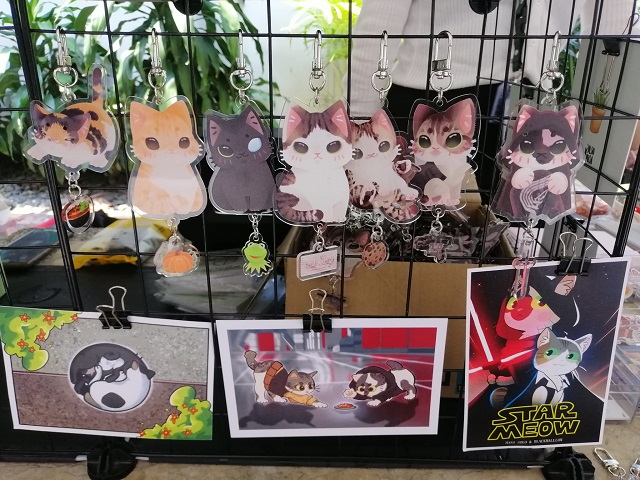
DLSU PUSA regularly holds fund-raising activities as well, with cute merchandise like keychains, stickers, and other item up for sale so the group can have enough funding for the campus cats.
Taking care of community cats may not be the priority of some, but for Velasco, learning how to coexist with cats (and other pets in that matter) is a kindness that should spread not just in DLSU, but in other campuses as well.
"If you do not have the passion for it, at least do not hurt them. You cannot force love. You cannot force compassion. But at least do not be cruel."
Get to know the cats of DLSU PUSA via its Facebook page and Facebook group.