
Here's What It's Like Inside the National Center for Mental Health in Mandaluyong
A look into the only mental hospital in Metro Manila.

(SPOT.ph) We’ve all heard the joke. Tell someone you’re off to Mandaluyong and they respond with “Sa loob o sa labas?” Of course, the "loob" they’re referring to is the inside of the National Center of Mental Health (NCMH), right in the heart of the city.
Today, the joke would not fly in public, but the assumptions remain within the four walls of the institution. As with all things, the assumptions are not entirely baseless.
When Senator Raffy Tulfo paid a surprise visit to the NCMH in March, he said in a press release that the patients were being treated “worse than animals.” He reported seeing patients sleeping on the bare floors without so much as a pillow or blanket. NCMH Director Dr. Bernardino Vicente explained in an interview with CNN Life that this is because beds are considered materials that could “harm themselves or harm others.”
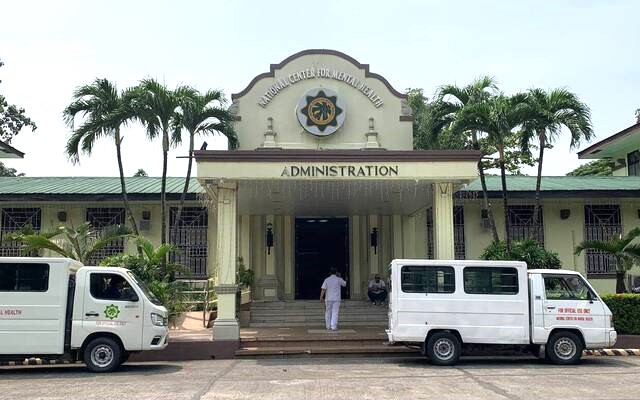
A few months later, the NCMH celebrated the World Mental Health Day in October. I took the chance to go on a guided tour of the premises to see how much of what we’ve heard—from the stigma to the urban myths to Tulfo’s statements—are real.
Also read: We Tried Calling Mental Health Hotlines in the Philippines—This Is What Happened
A look inside the National Center for Mental Health
I headed to the NCMH on a gloomy Friday morning for the event. As we were nearing the destination, the driver asked: “Ma’am, sa loob po ba tayo?” It was not for the purposes of small talk. He had a hint of uneasiness in his voice.
A bronze statue of Sisa and her children, Basilio and Crispin, stand tall to meet visitors at the entrance along Crisostomo Oval. On the plaque, it reads: “Sisa: Isang inang naging baliw dahil sa hirap at hapis ng kanyang tiniis. Inilarawan ng Pambansang Bayaning si Dr. Jose Rizal sa kanyang Noli Me Tangere.”
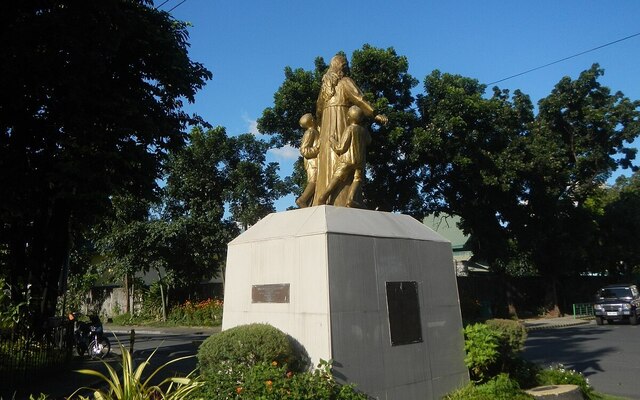
The NCMH houses 28 pavilions and 55 wards across its 46.7-hectare property. The premises are not dark and dreary like one would imagine—at least not initially. In fact, the NCMH is full of open spaces. We had to ride a vehicle to get around the property.
Patients are segregated into various pavilions based on their conditions, with male and female patients living separately. There’s the acute pavilion for newcomers who are still agitated from the sudden change, forensic pavilion for patients with court cases, the child and adolescent pavilion, and the geriatrics pavilion, to name a few. The more stable patients stay in Pavilion 9 and 10.
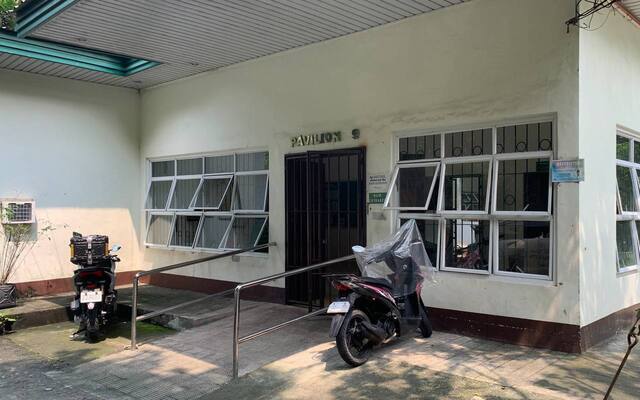
Several programs keep the manageable patients busy. After all, the journey is not just about the treatment but also about preparing them for life outside of the NCMH. They are taught vocational activities like crafting and sewing, selling bracelets, scrunchies, and tote bags to the community within the hospital property. The hope is to impart them with practical skills for when they are discharged from the hospital.

For minors, education plays a crucial role in the rehabilitation process. Patients who are 18 years old and below are enrolled in a satellite school within the premises from Monday to Friday, 9 a.m. to 11 a.m. The school only serves as a refresher course, which means students can’t move up to a higher level. They are grouped into either one of the two classes: the regular class and the special education class.
“School is very important. Hindi lang tayo hospital-based. Our goal here is to reintegrate them back into the community,” Kristine Abary of the Child and Adolescent Psychiatry said. “Kailangan kasi may trust ulit sila sa iba…from the staff. That’s what we try to strengthen.”
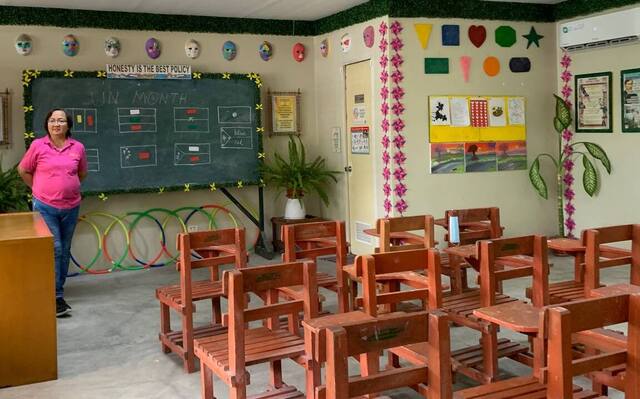
Educators will then have to batch them based on cognitive, social, and socioemotional abilities, taking note of dyslexia, ADHD, and other learning barriers that make this task even more challenging.
Over in Pavilion 9, there was a courtyard next to the ward, where the more stable patients could soak in the sunlight. Some of the older patients would smile and wave from behind the barred doors. One tried to strike up a conversation: “Taga saan kayo? First time niyo?” Her smile was like an older tita’s from the province who was glad to see you after so many years. It was almost comforting. The rest of them were just staring into space, almost unaware that they had a bunch of guests over. Maybe they just didn’t care. Either way, we weren’t allowed to take pictures inside to maintain the privacy of the patients.
The ward had the bare minimum: thin beds like the ones you’d see in public hospitals lined up by the tens. Those who are fortunate enough to have family care about them send over money for them to live in Pavilion 6. It’s a paid pavilion that charges a monthly fee, with perks like having fewer patients in the ward. There’s no such thing as free lunch—and even that is true here. The rest of the pavilions are paid for by the national budget allocation or charity organizations. According to the NCMH, the daily budget was at P623.84 per patient in 2023.
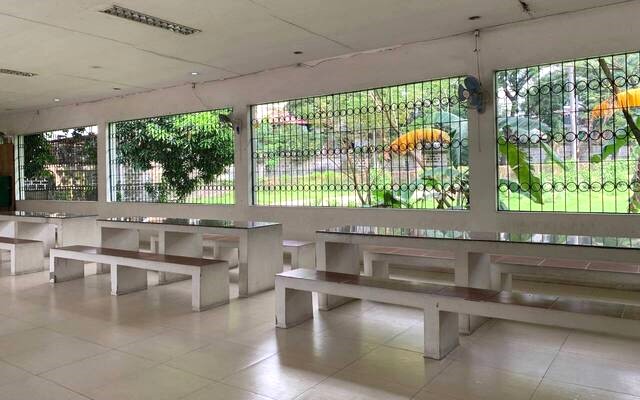
The contrast was stark in Pavilion 4 where the patients with forensic cases stayed. Only two ceiling fans were available for 50 patients in a space intended for 10, at least according to Tulfo. This prompted him to file Senate Resolution No. 562, urging the Senate Committee on Health to inspect NCMH facilities.
Is the NCMH enough?
Naturally, the visit I experienced was prearranged, with the staff prepared and only the most optimal facilities showcased in the tour. Still, there’s no sugarcoating the visit—taking everything in was tough. Many of the patients continue to struggle in these conditions, even with NCMH's programs in place. Others express this frustration with violence. This seems far-removed for many of us, but the reality is that any one of us could find ourselves facing similar challenges following an unexpected trauma or life-altering event.
How long someone will stay in the NCMH is dependent on the patient’s progress. It could take weeks, months, or even years. Chief Dr. Noel Reyes said it will usually take two years for someone to be “cured.” Patients who refuse to stay for treatment won’t have the liberty to walk away from this reality, as the decision-making is ultimately left in the hands of the legal guardian.
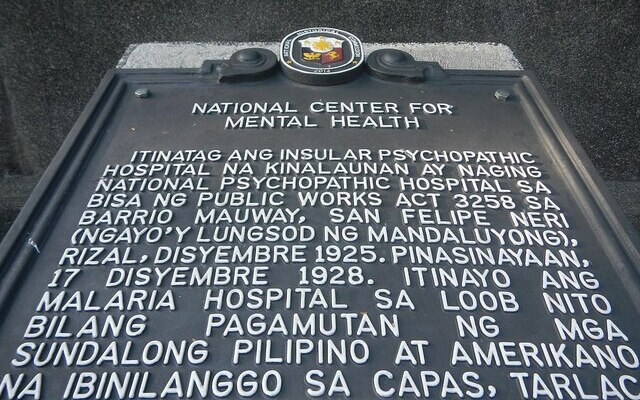
Even with all the uncertainty, this place likely stands as their last hope. It’s the only mental hospital in Metro Manila—the rest are just facilities that provide therapy, counseling, and other support services without the inpatient care. The NCMH’s structure is nearly 100 years old, having been witness to so much since it was erected in 1928.
The NCMH is lacking at best and abysmal at worst. But they are trying.
There are only 700 psychiatrists in the Philippines. Each one is stretched to serve around 200,000 people to accommodate our population of 112 million. This overwhelming ratio underscores the impracticality of relying on the NCMH for mental health care in the whole of Metro Manila. Yes, the NCMH is in dire need of improvement, but it's a piece of a much larger puzzle in the mental health landscape—one that extends far beyond the walls of any single institution.