
Living With PCOS Isn't Easy, Especially If You Want a Family
It's not as easy as it looks.
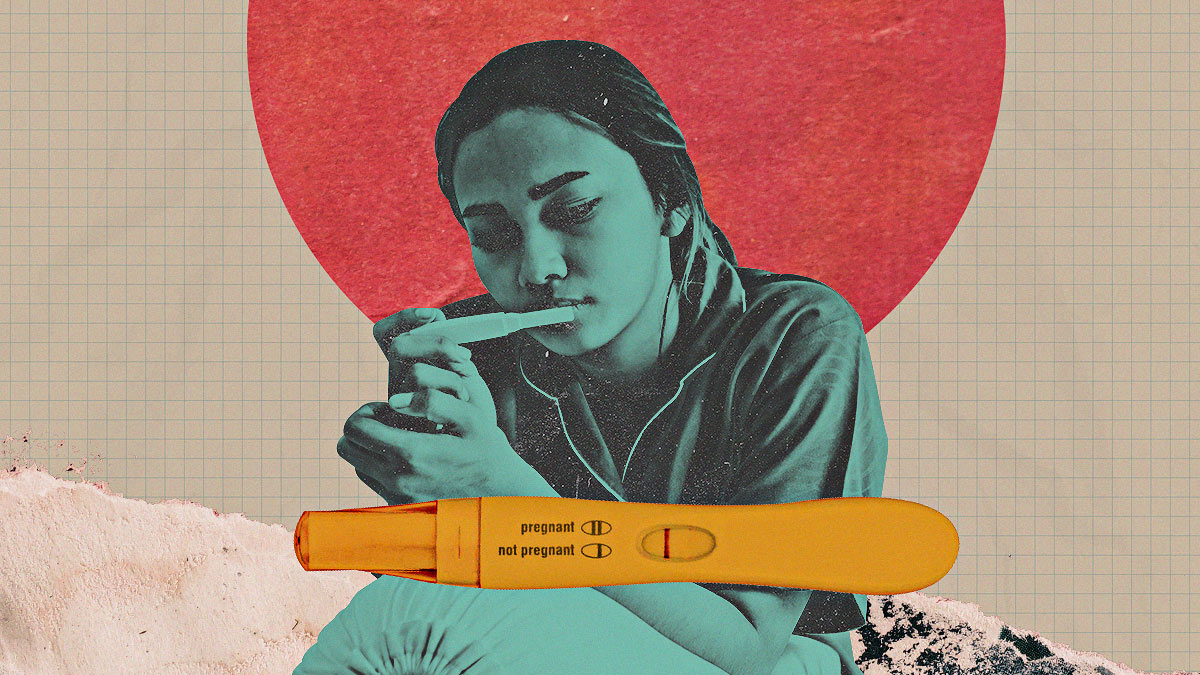
(SPOT.ph) “Kelan ka magkaka-anak?,” “Wala pa ba?,” and “Tumatanda ka na” are just a few examples of the dreaded statements I hear at every reunion, casual visit to a relative’s house, or any family occasion.
I get it, there are those that choose to delay having children, opting to enjoy married—or unmarried—life for a few years as a party of two, instead of three or more. There are also those that choose not to have kids at all. “In this economy?” some would say.
Me on the other hand? I want to be a mother, I want to someday answer my family’s questions and remarks—unsolicited and thoughtless as they may be—in the positive. Only, my reproductive system isn’t letting me. Thanks a lot, PCOS.
Also read: Dear Tita, Thanks for Your Concern. Here Are All the Reasons I'm Not Married
What is PCOS?
Polycystic ovary syndrome, or PCOS, is a chronic condition (yes, that means forever, and there’s no cure) that affects a woman’s reproductive system, according to The World Health Organization and Johns Hopkins Medicine. The affliction is characterized by the body producing an immense amount of androgen—male hormones that should otherwise only be found in small quantities in females. In some cases, women may or may not develop small sacs of fluid, also known as cysts, around one or both ovaries. There is no known cause for the condition but it has often been attributed to genetics and a person’s lifestyle.
Oh, and did I tell you its most damaging effect, to me, at least? PCOS is one of the leading causes of infertility in women. In 2023 alone, an estimated eight to 13% of women globally were recorded to have the hormonal condition, while at least 70% of affected women remain undiagnosed. Heck, most women trying to conceive won’t realize they have it until that first “official” visit to the OB-GYNE. You know the one that comes after a period of trying, when you start to ask if something’s wrong with you.
I get the old folks. In their heads, it’s an easy narrative: fall in love, get married, buy a house, have a family. It’s no longer that simple. Today’s world is different. My KPI’s and target growth rates are nothing like what my parents faced at work (if they even had that), they didn’t open the news or their social media feeds to headlines of global pandemics, threats of a new war regularly, a general feeling of unease at how terrible the world is becoming, all in the same mix as photos from a friend’s baby shower or child’s birthday.
Thing is, I learned about my having PCOS prior to getting married. At that time, I didn’t think much of it. Why should I, when my OB at that time—a much older, matronly woman—said that I didn’t have to worry about it since I’m unmarried. There was no prepping me for what was to come. Had she told me what having PCOS meant for my chances of getting pregnant, I would have advocated for myself to get it under control, ASAP. And so years later, I found myself suddenly realizing how unprepared I was for it all. Throw in all the questions I get, that feel a lot more like a questioning than plain questions, and it's all the worse.
It’s not as easy as it looks.
Getting married to the love of my life is one of the greatest moments of my life. One of. I’m making that point clear as I have a feeling that might change the moment I bring life into this world.
I thought it would be easy. And by “it”, I meant conceiving. After all, you’ve heard of countless stories of “accidental” pregnancies. I’ve also seen folks married and pregnant in the span of just a few months.
But boy was I wrong.
At first I felt excited, challenged even, to see if we could conceive within the first six months. Our relatives' questions were still more on the curious tone, and excitement about the prospect of grandchildren were at an all time high. Six months turned into seven, and yes, I was still hopeful but, unknowingly, it started to affect my mental health.
I couldn’t “live” even if I wanted to. I was cautious about everything, and in my line of work where my job is literally to enjoy life and tell other people about it, man was it hard. I couldn’t drink because of the possibility of having an embryo about to attach during the two-week wait, nor could I travel extensively or do more extreme activities in fear of a potential baby not “sticking.” I basically lived my life on a two-week cycle.
The questions I got were, and still are, the same, but as the two-week cycle I was living in—of hoping and then coming down crashing—began adding up to a year or more, the questions began feeling like an attack on my person. On my capability to bear a child. Sure, I could see where their questions are coming from, but their supposed concern is now causing more harm than good.
I’m “infertile”, now what?
It took a while for me to accept that word—infertile. It felt like an end to a chapter that’s barely begun. But what I’ve learned from trying to deal with it is that I can slowly learn to accept it. By acceptance, I don’t mean just admitting to it. What I mean is being proactive about it.
I changed doctors (to someone who is much younger and understanding!), tried a bunch of medicines and methods in the hopes of one working (still nothing in my uterus, by the way), and spent a chunk of my income from the past two years on hospital visits, laboratory work, and countless pregnancy tests on a regular basis. An uphill battle, if I ever saw one.
So you see, dear concerned relative, it’s not easy. But you can make it easier.
You want grandkids, I want a child. Instead of passing criticism as concern, why not help me help myself? You can start by not giving offhand remarks, or asking invasive questions; I’m not asking you not to speak to me about it, just don’t treat it so casually. Be better so I can feel better. Be supportive of me, and others in this difficult journey. Accept that it’s not easy so we—not just I—can learn to fully accept it as well. Who knows, that final bit of acceptance may be just what everyone needs so that “it” can finally happen.
Pat Villarica-Adriano is the Managing Editor of SPOT.ph. When she’s not worrying about the future and babies, you’ll often find her watching Formula 1 races as a quick-fix coping mechanism.
Also read:
We, The Eldest Daughters in a Filipino Household, Are Just Tired
I'm "Single" and Married