

Want To Love Books? Avoid The Classics
Stick to books your conservative English teacher would never approve of.
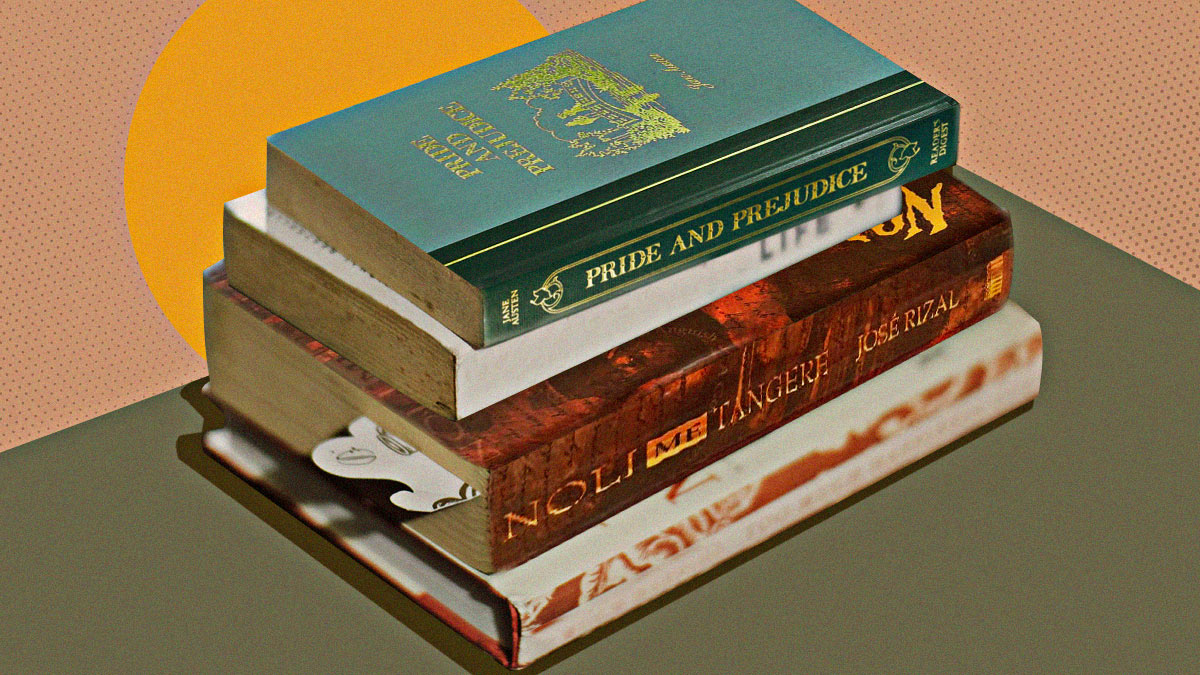
(SPOT.ph) There’s a TikTok video of a Pinay flipping through a Collins Classics edition of Pride and Prejudice. She’s smiling but it looks like one of those forced smiles of someone internally pleading, “Kill me now.” The caption is self-deprecating: “‘Yung bobo ka tapos ang lakas ng loob mo magbasa ng heavy classics pero ‘di naman keri ng reading comprehension mo.”
I might risk having my literature degree revoked for this piece of advice but if you want to start reading—and you want to fall in love with reading—avoid the classics, please. Unless you’re naturally inclined to enjoy them, you’ll likely end up feeling they’re a chore. Worse yet, you might come to hate reading altogether.
Also read: 10 Libraries in Manila That Are Open to The Public
3 reasons why it's best to avoid the classics
First, classics are often required reading in school. You’ll be tasked with reading them, or at least SparkNotes version of them, anyway. If you’re reading for enjoyment or pure love of it, you don’t want it to remind you of school deadlines. Part of the reading experience is its romantic or even rebellious vibe, so I suggest you stick to books that your, say, conservative English teacher would never approve of.
Second, I’m not saying you’re not smart enough to comprehend the classics. If you’ve survived your standard English education throughout your entire school life, you’ll more or less understand them, language- or narrative-wise. But take note: what we typically consider classics were written and/or published before Juan Ponce Enrile was born. If you can’t quite place when that was exactly, that’s the point. To fully appreciate a classic book, it pays to be aware of the historical, cultural, or sociopolitical context in which it was produced.
Pride and Prejudice, for example, was published in 1813. Is it only a love story between Elizabeth Bennet and Mr. Darcy? Not exactly, for the novel also challenges the restricted roles of women, particularly in marriage, by portraying Elizabeth as someone who values love over financial security. Although this idea might be common these days, it was quite radical during Regency-era England, where class hierarchies and gender expectations were exceptionally rigid. If you think about the novel this way, you’ll see how Pride and Prejudice, although written over two centuries ago, remains relevant. Jane Austen’s concerns echo ours.
Which brings me to my third and most important point: this full appreciation of the classics, or the complete enjoyment of reading, comes with maturity. Let’s take another classic novel, and this time Gustave Flaubert’s Madame Bovary, first published serially in 1856. I was able to get more from the novel because prior reading had acquainted me with some literary theory and history. Flaubert was a realist, and as such, his novel was a reaction to or against the Romanticism championed by other French artists of his time. This explains why the novel throws so much shade at romance tropes.
Also read: You Can Get Books For as Low as P80 Per Kilo At This Store
In one scene set at an agricultural show, when the womanizer Rodolphe Boulanger is rizzing up Emma Bovary with the eye-rolling line “And I’ve stayed with you, because I couldn’t tear myself away, though I’ve tried a hundred times,” the host of the event, not far away, shouts, “Manure!” Flaubert even literally kills our main character toward the end: after feeling betrayed by Rodolphe, the man she cheated on her husband with in pursuit of her misguided view of love, and disillusioned by the false promises of the romance novels she adores, Emma drinks arsenic and dies. Reading it this way, you’ll find the novel not only tragic—its standard interpretation—but also sharp and darkly funny.
Plus, I found even more enjoyment in Madame Bovary after realizing how it enriched my understanding of contemporary creative outputs involving infidelity. I noticed how Ha Jin’s novel Waiting, Wong Kar-Wai’s film In the Mood for Love, and even Taylor Swift’s song “illicit affairs” allude to and comment on Madame Bovary. Appreciating the entirety of a classic novel, or any artwork for that matter, occurs when your experience of it enhances your understanding of other works.
What Nick Joaquin said about reading Noli Me Tangere
Let’s not look too far and revisit our own Filipino classics, Jose Rizal’s Noli and Fili. Do you remember enjoying them? If not, then it’s likely for the reasons I discussed above. In his essay “The Novels of Rizal: An Appreciation,” Nick Joaquin laments that Rizal’s novels “have suffered sadly from his reputation as a patriot” because students are “made to read Rizal in a state of stupefied awe practically indistinguishable from boredom.”
But being a national hero shouldn’t preclude being hilarious. If anything, exposing religious hypocrisy by depicting Padre Damaso’s bad mood when served chicken neck and wings in his tinola is pure meme lord energy. Joaquin suggests: “Don’t read [Rizal’s novels] because you ought to. Read them […] knowing just what to expect but also knowing you’ll be surprised and delighted anew. Read them for laughs and, I assure you, you’ll find them great fun.”
The point is, if you’re just starting to read and find the classics challenging, that’s perfectly okay! It doesn’t mean you’re bobo. You’ll likely fare better with contemporary literature, novels you can relate to more. When you feel like you’ve already developed a love for reading, though, that’s the ideal time to venture into the classics. I assure you, as Joaquin does, you’ll find them great fun.
The ultimate goal then? When you’re ready, read widely. Anglophone literature is excellent for exploring the linguistic possibilities of English, but try delving into translated literature as well. Explore Latin American writers for the richness of their imagination, European writers for their profound exploration of the human condition, and Asian writers for the subtlety of their depiction of everyday life. And of course, don’t forget Filipino writers because, for starters, April is National Literature Month, and apart from every day, there’s no better time to read our own literature.
Jade Mark Capiñanes teaches media and writing and is the author of a collection of short fiction called How to Grieve published by Everything’s Fine.