
Inside Marikina Shoe Brand Zapateria Hub's Workshop
The culture of shoemaking is alive and well in the city.
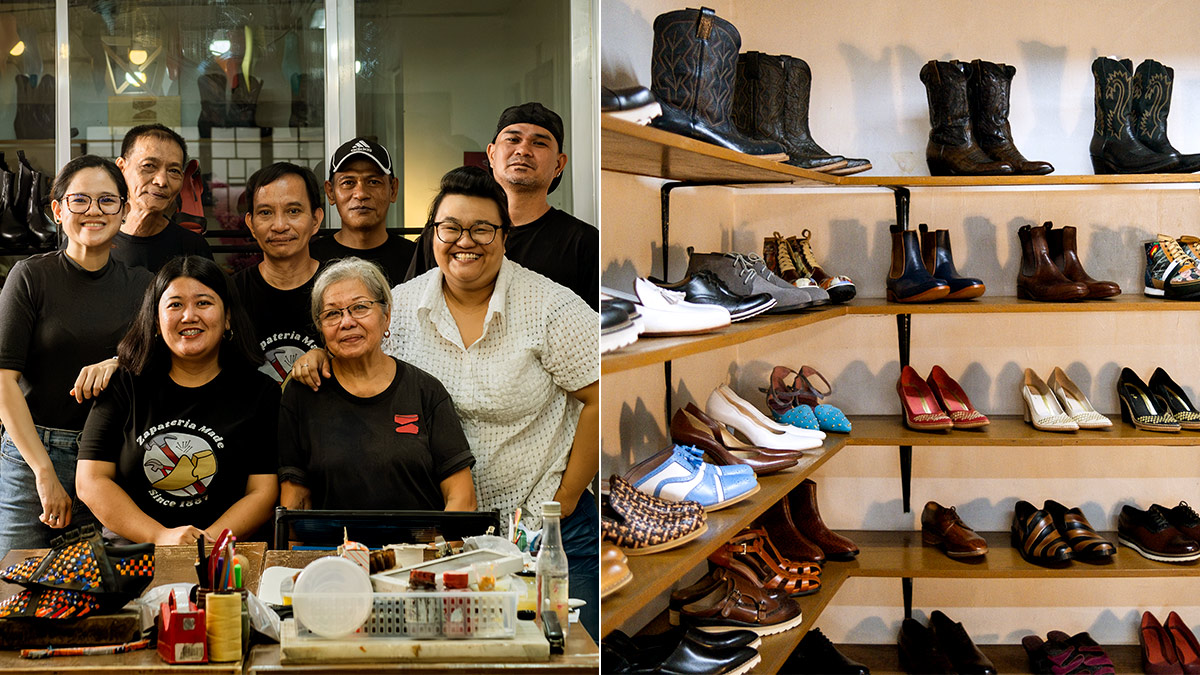
(SPOT.ph) Fresh out of college, Zapateria Managing Director Glice Batulan went in for a job interview with the brand knowing nothing about shoes. A Marikina native herself, she grew up aware of the city’s status as the Shoe Capital of the Philippines, without full comprehension of the hows and whys.
"When I applied here, I couldn't care less about shoes. I couldn't care less about Marikina. I was a fresh grad looking for a job. And I recall during my interview they asked me "Do you love shoes?" The only thing I can say is...I have shoes. But being so young, being surrounded by experienced veteran artisans, you begin to fall in love with the craft, which at some point became my purpose. Continuing my job here so that I can encourage more people like me, perhaps younger, perhaps older, to be part of this community and be part of making an impact by pushing the craft towards having a more sustainable and more bright future," Batulan says.
Also read: This Is How Marikina Refuses to Sink in the Face of Floods
What is Zapateria Hub?
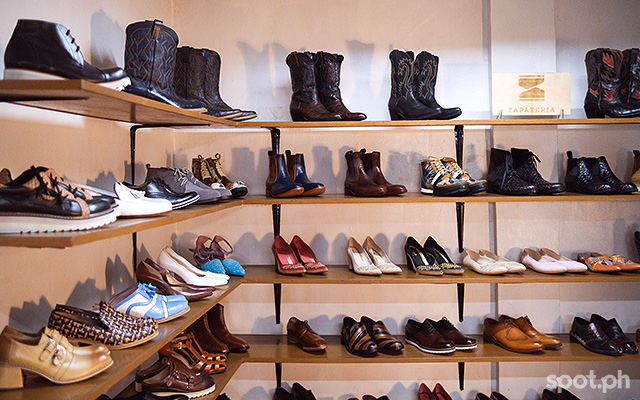
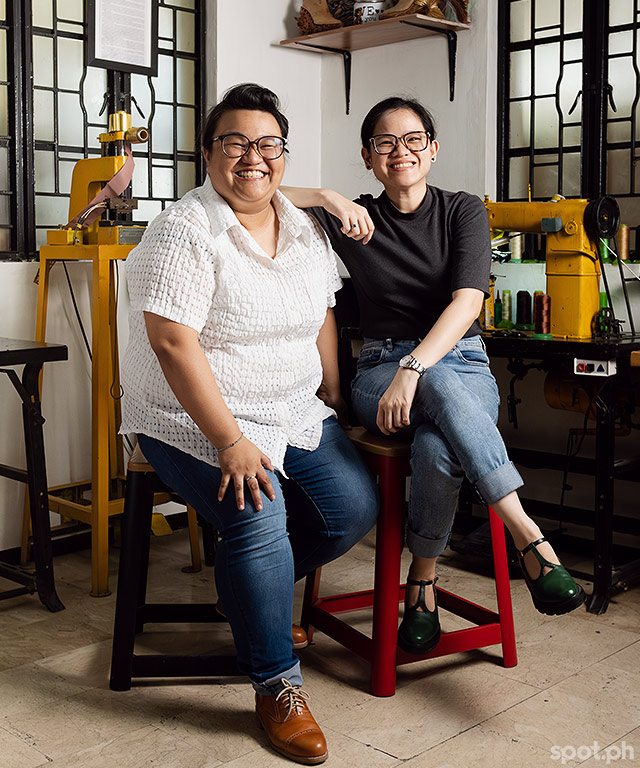
To the uninitiated, Zapateria is a Marikina shoe brand and a creative hub run by the Sta. Anas, a prominent family within the cobbler community in the city. They’ve been making shoes since 1887, for five generations now, with the late Rico Sta. Ana being a respected figure not just in the city, but in the country’s shoe industry. His daughter, Unyx Sta. Ana, survives him.
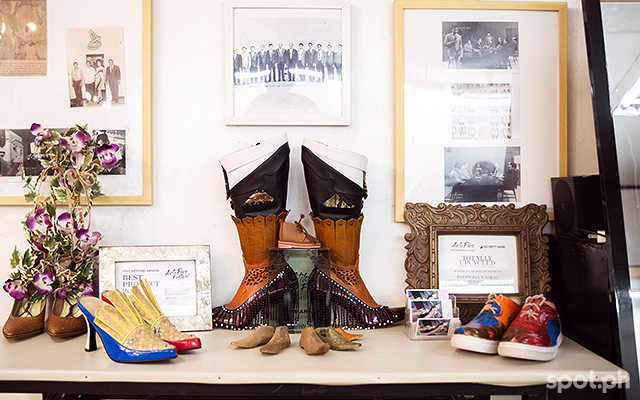
"She hails from a long line of shoe makers here in the city. So their family started and has been part of the shoe industry since its founding in 1887. Making us today 137 years into this in their community," Batulan explains.
"In 2016, Unyx's father, a fourth generation shoe maker and designer, Rico Sta. Ana got into an accident. He survived that accident, but it sparked an epiphany on Unix that after her dad, nobody else will continue this heritage."
The brand has ready-made silhouettes and styles in conventional sizes, but they specialize in custom-fit made-to-order pairs that hug your feet just right, even if you're missing a foot, they aren't even, or they run wider than most. Since everything is handmade, a pair can take about a month, or even longer if there’s a long waitlist. If you’re lucky, you can catch them at local fairs like Arte Fino peddling a limited number of pairs. Even Bretman Rock has given them the seal of approval.
Making things for humans is complicated, often marred by many trials and even more errors, with things never going the way as initially intended. Despite all the struggles, Batulan says they’ll never give up on anyone’s vision, even if it means taking longer than usual.
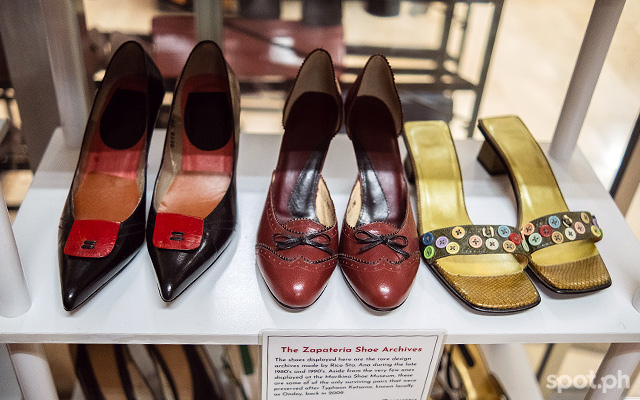
"There are so many challenges and puzzles that your curiosity is being tinkered with all the time. I don't think a lot of people understand that and kind of think that shoemaking is the last thing you will consider when you want to develop your critical thinking, but on our end we honestly believe that if you want to enhance your intelligence and even your your emotional maturity, go into footwear because it will really shape how you think how you deal with people. How you feel problems, how you deal with challenges, and provide solutions."
Making the shoes in Marikina
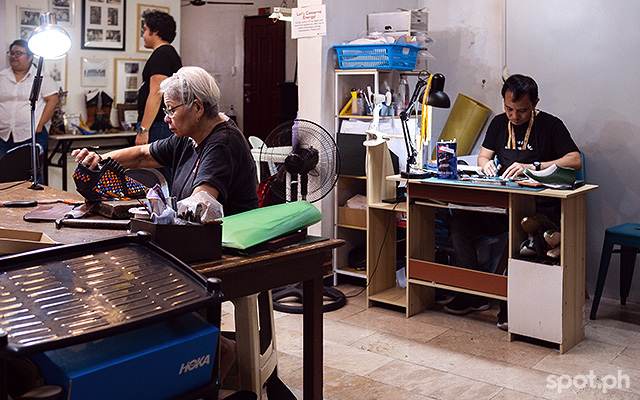
The workshop has nine interns from a Marikina college majoring in entrepreneurship with a focus on shoes and leather goods, five of which were present during our visit: Conchi Jabilgas, Carlo Tomes, Kimberlie Descallar, Teddy Vicencio, and Melrose Legacion. Conchi tours us around, and it’s in the side comments and banter that we see how the workshop is like a little family, with members from different generations cracking jokes and laughing from their stations.
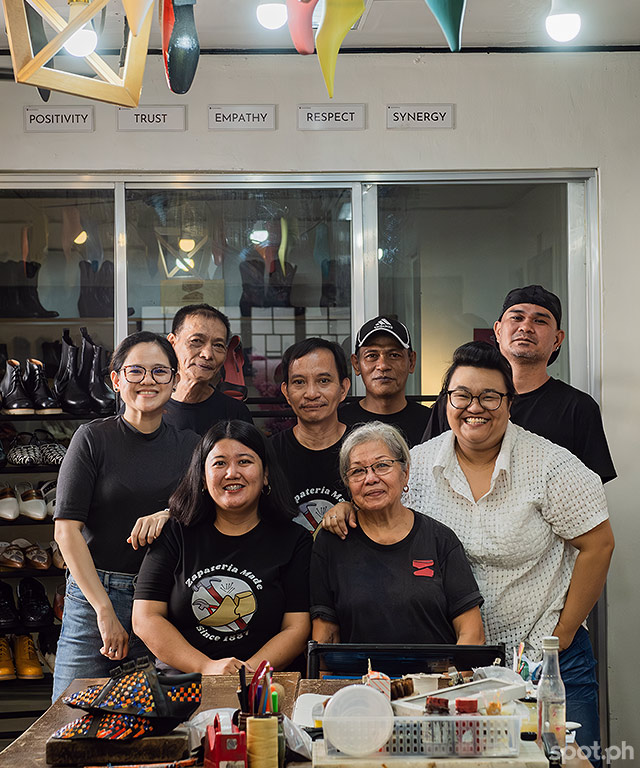
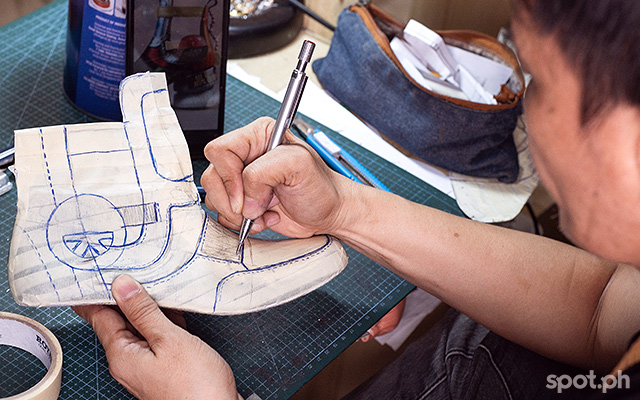
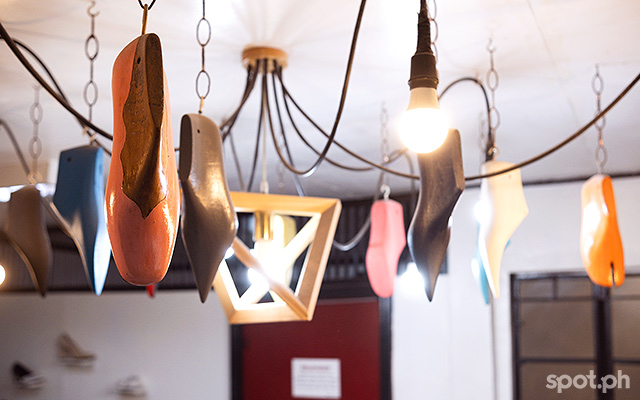
Zapateria has five full-time workers, each one handling a different step of the process. It starts with making a pattern that fits over a shoe last—a wooden mold that mimics the shape of a foot—which is then referenced the entire way through. Kuya Abet, Zapateria’s trusty architect of seven years, is responsible for creating the blueprint everyone follows.
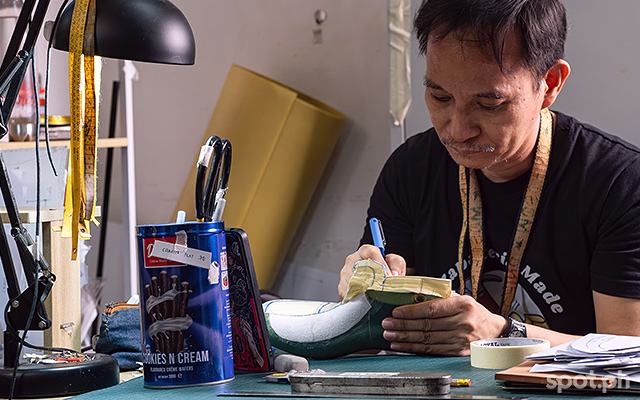
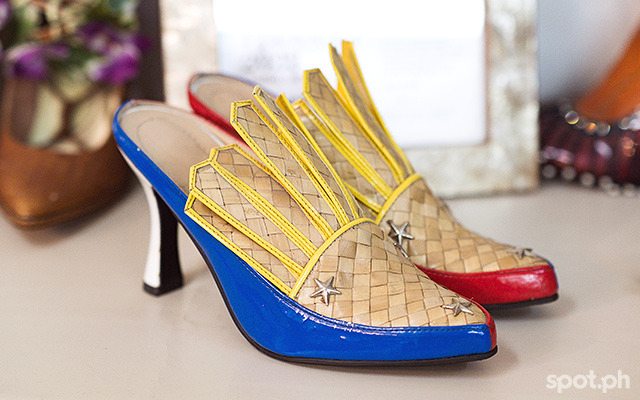
"Yung Tito ko nasa sapatos. Tinanong niya ako, baka gusto mo mag-aral ng shoe pattern-making." And here he is today. Right now he’s handling a complicated design; a jeepney-inspired heel from the imaginations of Batulan herself. We joke about how hard the task is, with Batulan pretending to keep a close eye on the jolly textile print artist turned pattern-maker, who only laughs with his boss. It has a lot of parts we’re not sure would even translate into a shoe, but it’s a regular Thursday afternoon for Kuya Abet, and he expects to finish the pattern eventually.
If he’s not making avant garde dreams come true, he’s creating patterns that can help clubfooted people walk more comfortably in style.
Once the masking-tape pattern is finished, it’s passed on to Nanay Ester, the workshop’s oldest and most tenured shoemaker. The lovely lady handles the creation of the upper, the entire part of the shoe that goes over your foot. Anything that doesn’t touch the soles of your feet, she’s in charge of. Think shape and point, how the back hugs your achilles, and how your toes are kept in place. She’s been making uppers since she was 16, getting better every year as she handles new silhouettes from different brands. She’s 73 now.
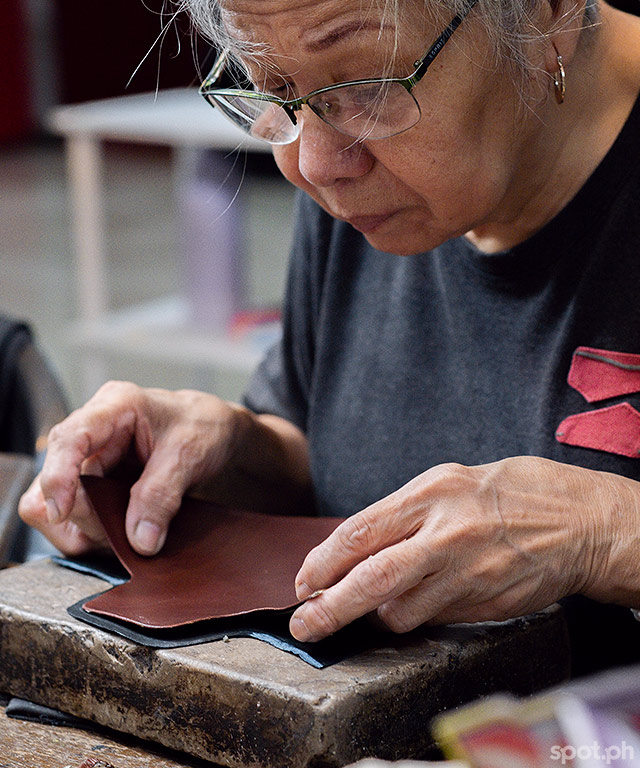
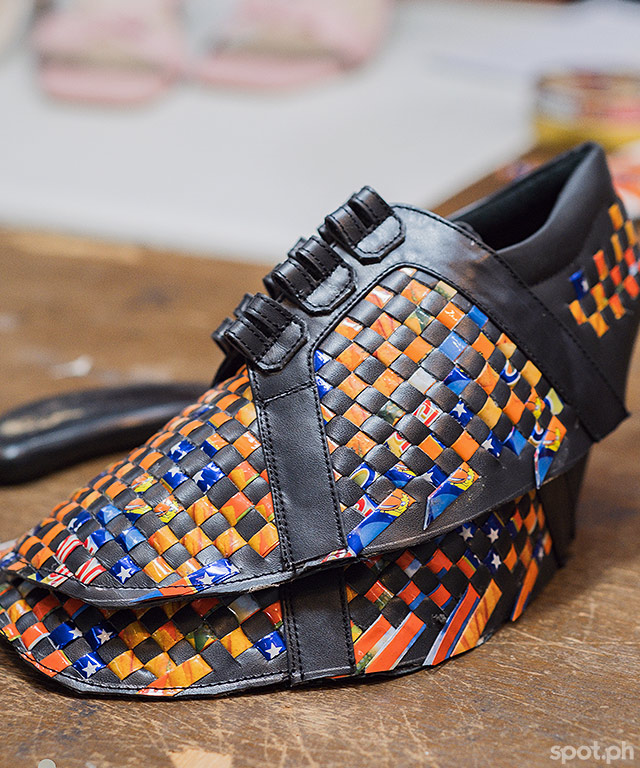
Still, there are some parts she initially dislikes, like a custom pair that takes forever to weave. But all that frustration dissipates once both uppers are complete, and she brandishes it towards us with joy.
Pretty smiles and pride in her work aside, Nanay Ester’s involvement in Zapateria is actually rather special. She’s the sister-in-law of Sir Rico, and has been working with the Sta. Ana family since forever, long before Zapateria even materialized. She imagines she’ll be gluing, sewing, and piecing together uppers for the rest of her life, like how she has this whole time.
The silence of the next two artisans stands in sharp contrast to the noise their step of the process generates. Kuya Eddie and Kuya Inggo handle the lasting in Zapateria, or the part of the process that sets the final shape and sole of the shoe. They stretch the upper over the last and hammer the overhanging material with nails for the right fit. They’re laser-focused as the sole is smoothly sliced down to size, and as each nail is manually placed, taken out if it pulls the leather wrong, and readjusted so it’s snug.
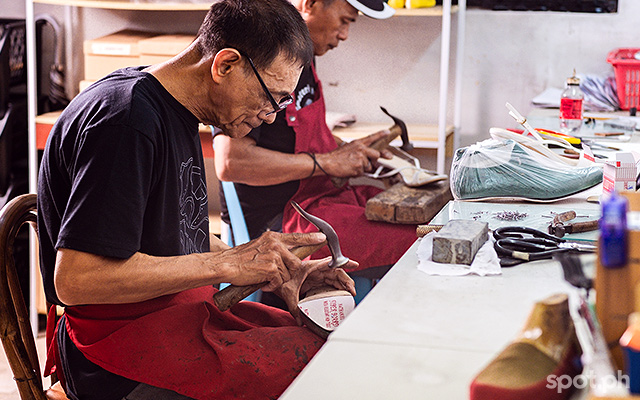
Kuya Eddie, the senior between the two, is a man of a few words as he deftly manipulates the last in his hands and evens out the upper. Everything is instinct for a man who’s been doing this for years, so even though he has little to say, he easily engages in conversation without hitting his thumbs.
Kuya Inggo specializes in different silhouettes, and it’s this teamwork that pushes the duo to get things done. There are some things one person cannot do, but the other is good at, and vice versa. Batulan jokes that they have no choice but to learn from each other, but their silent efficiency speaks of their dedication and understated friendship.
A pair of Zapateria’s Odettes accompanied me that day, a shoe I would later learn takes the duo longer than usual due to its three-part elevated sole that requires the reconstruction of ready-made materials. It’s an arduous process, one they might groan at, but ultimately find purpose in.
The Odette
No one knows contradiction better than Kuya Arnanie, who handles finishing. This is the final step before a pair is slipped into a box and handed over to its owner. Bits of dried glue that need to be shaved off are taken out here, along with a final polish, inspection, and brush. For more complicated pieces that demand more color, painting must be done. It’s the most difficult thing for Kuya Arnanie.
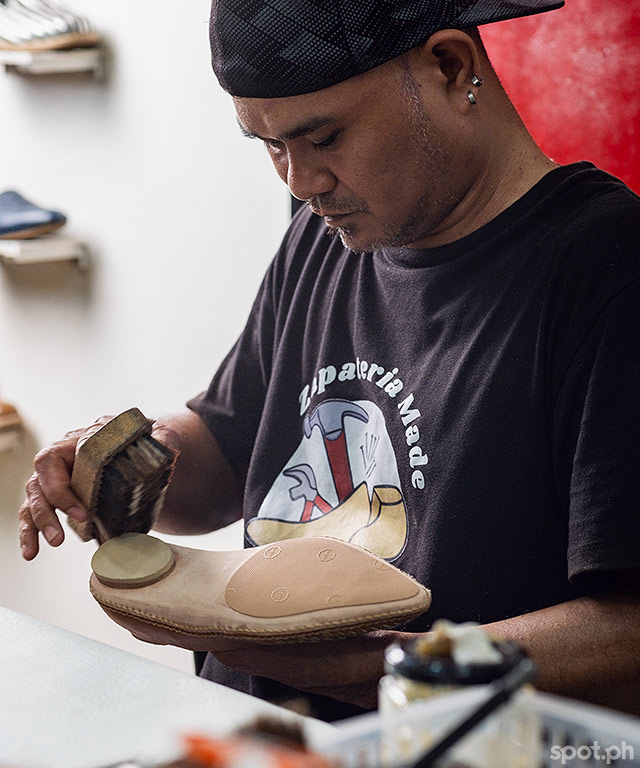
And yet ask him what he enjoys the most and he’s quick to reply: “Painting din.”
Shoe makers are built different. Ask them what their ideal shoe looks like and they’ll answer simple flats, slippers, or slip-on sandals, with sneakers reigning supreme. For a team of people who understand how a shoe is made inside-out, they walk each step knowing that the best shoe is the one you feel comfortable wearing, and that's what Zapateria hopes people feel when they get their hands—and feet—on a handmade pair.
The future of shoemaking
Marikina’s shoe industry has evolved over the years despite all the competition, floods, and changing times. While plenty of the practices that constitute a quality shoe remain, Zapateria, along with other shoe brands in the valley city are undergoing their own metamorphosis to foster healthy environments for artisans so they can continue to create well-made shoes that mirror Filipino creativity and ingenuity.
"Despite common notions that it's a declining [industry], it's actually thriving. There are more manufacturers and shoe makers now than there were 10 years ago and that is greatly due to the efforts of our local city government and private organizations that have been pushing for more people to be part of it unfortunately the reality still stands in terms of our craft our artisans are aging, and a lot of their expertise are going with them as the pass along," Batulan says.
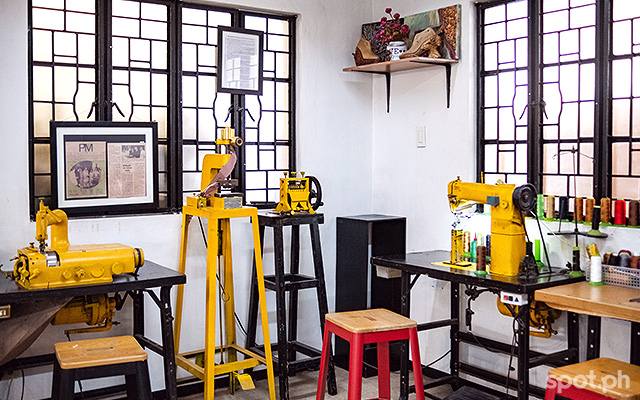
And though Zapateria is the country’s first creative hub for footwear design and development aimed at nurturing the new generation of shoemakers, they know it will take a village beyond their little studio to see a future where a Marikina and Filipino shoe industry can thrive and be known as its own.
"That's why, on our end, at Zapateria we want to ignite that sense of creativity and ingenuity of the younger folks. That they will be immersed in this culture, learn from the people who've spent decades or almost majority of their lives doing this craft so that we can make a better future for it."
Also read: The Attic Yarn and Hobby Studio in Marikina Is an Artist’s Haven
Zapateria Hub is at 56 Dragon Street, Midtown Subd. Phase 1, San Roque, Marikina City. Zapateria Hub also available online. For more information, visit the official Zapateria Hub Instagram.