

What's It Like Inside Ubisoft Philippines in BGC?
A glimpse at how games like Assassin's Creed: Mirage are created.

(SPOT.ph) Any gamer would be familiar with Ubisoft.
Ubisoft is behind some of the most popular video game franchises across various genres, including Assassin’s Creed (AC), Far Cry, Just Dance, and the recently released Skull and Bones—and a huge part that fuels that success is thanks to our very own Ubisoft Philippines.
Ubisoft Philippines has been around in Laguna since it opened in 2016, but it has recently relocated its office to The Finance Center in Bonifacio Global City (BGC) to become more accessible to top talents in the country.


With this major change comes a desire to open itself up to the public. After all, much of game development has been shrouded in mystery.
Let’s look at what it takes to build a game at Ubisoft Philippines.
Also read: Meet the Filipinos Behind One of the World’s Biggest Video-Game Companies
Inside Ubisoft Philippines’ game development studio in BGC
Ubisoft Philippines is exactly how you would expect a game development studio to look like—and we mean that in the best way possible: office desks overflowing with action figures, game memorabilia, and random gadgets; colorful murals to inspire creativity; and a recreation area with a variety of games for employees to unwind.
Everything can fit because Ubisoft Philippines has the entire floor to itself.

Upon entering the studio, you are welcomed by a hand-carved statue of Ezio Auditore, the protagonist from AC Brotherhood. All around him are scene depictions of other AC franchises, a visual showcase of Ubisoft’s legacy in the gaming industry.

Turning left to the hallway reveals a row of high-end gaming computers. It’s not just for show either—I was told the area is open for public use. Inside the actual office, you’ll find employees huddled together in front of the TV playing games. Here, playing is celebrated, if not encouraged.
The highlight of the studio was easily the wooden bookshelf that displayed a treasure trove of gaming memorabilia. You’d think that was it, until one of the employees pulls it open and reveals a meeting room behind the shelves.


But the workspace is really where the magic happens.
As mentioned earlier, Ubisoft Philippines has been pivotal in co-developing several AAA titles, including the upcoming "Assassin’s Creed: Shadows." Its team of around 120 employees—mostly millennials—has been instrumental in various aspects of game development.
Assassin's Creed: Mirage is set in 9th Century Baghdad during the Islamic Golden Age. The employees have never been to a desert city, much less one that was from hundreds of years ago, so that was the biggest challenge for the Philippine team.
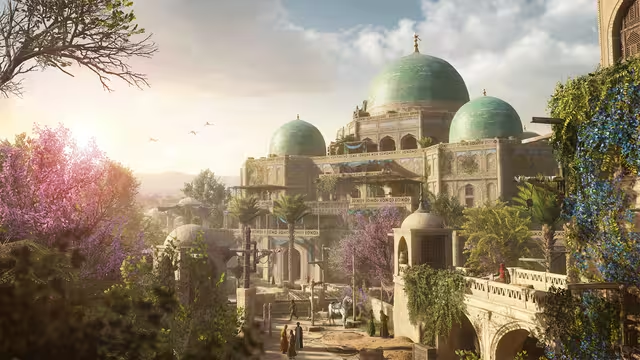
Lead Game Designer Michael Tan said they worked with historians from the field, consulting with ancient text to piece everything together. He’s not just referring to the architecture of the city, but what the people are like. How do they think? What materials were available to them at that time? What construction methods did they know at that time? According to Tan, staying faithful to the facts allowed the product “the most accurate depiction of 9th Century Baghdad today.”

All that heavy research then goes into the world-building. There’s a ton of collaboration that goes into bringing the games to life—level design, gameplay programming, and everything else to create a cohesive player experience.
“If you point to any part of the game and you ask an artist on the Philippine team to recreate it brick by brick, they would be able to do so. That is how deep we go—and that is just the tip of the iceberg. We have to turn it into a game, something you can interact with,” Associate Lead Artist Philip Nery said.
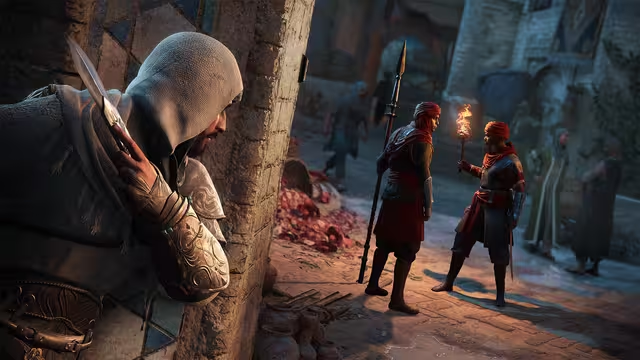
Then there are the smaller bits that tend to go unnoticed. Lead Programmer Dennis Li and Lead Animator Ave Espelita gave us a glimpse of just how much programming goes into the smallest of tasks.
Case in point: The integration of AC’s pickpocket mechanics, allowing the main character, Basim, to steal from non-playable characters (NPCs). It isn’t just a matter of pushing a button to effectively sneak up on someone. NPC reactions depend on the player's success. If caught, NPCs might call guards, but a quick player can get away unnoticed.
“This may sound simple, but there are a lot of small moving parts for us programmers. It happens in like five seconds,” Dennis said. His team also helped create the largest collection of Assassin Tools in the franchise's history. These tools provide players with various options, like throwing knives or deploying smoke bombs to escape tight situations.

The process is no less meticulous even in a fantastical setting like Skull and Bones, where a player navigates unruly seas and battles rival crews to become the most feared pirate. This newer game also happens to be closer to home, with much of the piracy warfare taking place in Southeast Asia.
Several iterations of the pirate ship sets were put on the table for players to be able to customize the vessel. From conceptualization to 3D, the Philippine team was involved in every step of the way.

All this to tell us that game development is no easy task. Designing a small building can take weeks, if not months, to complete with several teams on board.
So next time you explore the bustling streets of 9th Century Baghdad in Assassin's Creed: Mirage or set sail in Skull and Bones, remember that a part of that magic is crafted right here in the Philippines.
Also read: Why Gaming Hubs Matter in Esports