
After Raygun Brouhaha, Maybe Breaking Needs to Take a Break
The sport can take a breather to recalibrate the rules and messages it wants to send.
(SPOT.ph) The Norwegian swimmer who raved about the chocolate muffins in the OIympic village. The Korean shooter who looked like she stepped straight out of an anime and the Turkish shooter who looked like he wandered in on his way to the Eiffel Tower. The bespectacled American gymnast who transforms into Superman the moment he mounts a pommel horse. The French pole vaulter whose crotch betrayed his podium dreams.
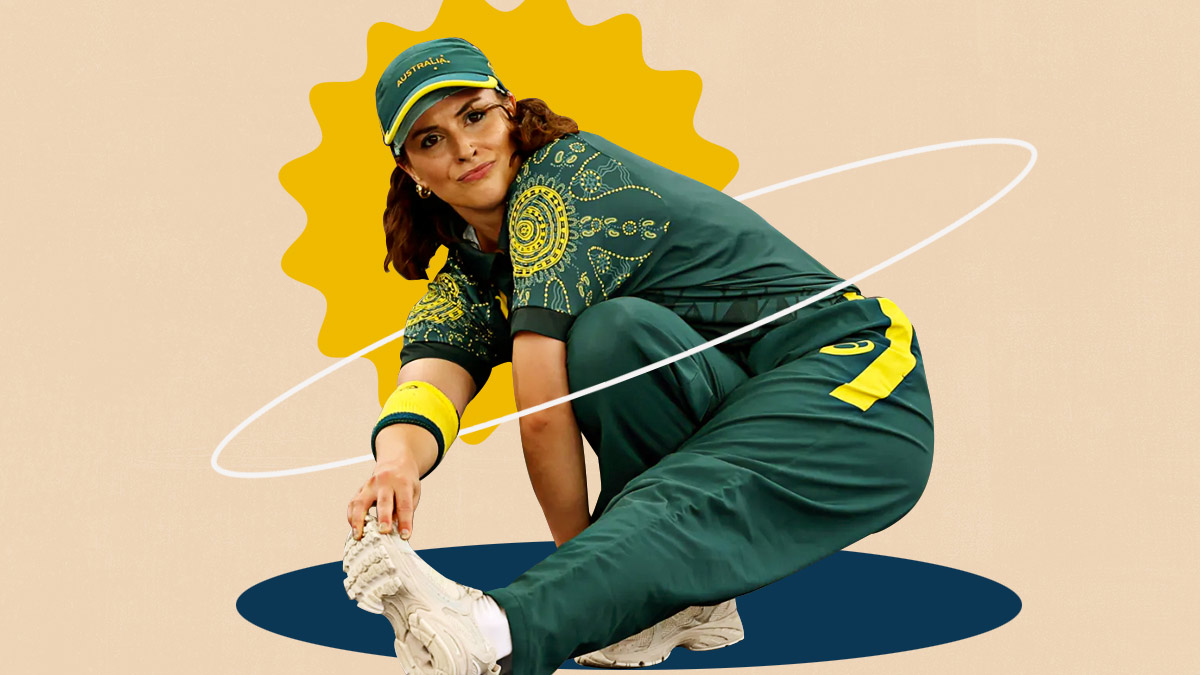
The Paris 2024 Olympics gave us a wealth of athletes who achieved instant meme stardom. And, as if the riches weren’t embarrassing enough, it offered us one more during the homestretch: the sight of Australian B-girl Raygun (real name: Rachael Gunn) regaling the judges with her Aussie wildlife-inspired routine during breaking’s inauguration as an Olympic sport—and promptly getting a resounding zero score.
Memes ridiculing Gunn popped up instantly. She was less inspired by the fauna of her homeland than a dog convulsing on the lawn. Saturday Night Live’s resident chameleon Chloe Fineman did an impersonation as a reel. SNL alum Rachel Dratch interrupted Jimmy Fallon’s opening monologue to do her own dialogue-free shtick. TikTokers wondered if Gunn had gotten onto the roster by mistake.
But unlike her meme-worthy fellow Olympians, whose claims to fame elicit one uncomplicated emotion, B-Girl Raygun’s notoriety comes with levels of subtext that go far beyond the knee-jerk impulse of ridicule.
What is breaking and how did it get into the Olympics?
For starters, don’t mistake breaking for breakdancing. “If you call it breakdancing, you’re not a breaker,” emphatically declares Sunny Choi, aka B-girl Sunny, who competed for the United States in Paris 2024. One of the core pillars of hip hop, breaking got its name during the 1970s, when partygoers in the upper Manhattan borough of the Bronx would hit the dance floor during the instrumental interludes—or breaks—of the dance records being played.
Since then, breaking has undergone massive changes. “[People] have all these stereotypes of what breaking was back in the day,” says Victor Montalvo, aka B-boy Victor, who would go on to win bronze in Paris. “Dancing on the cardboard, doing butt spins. But it’s evolved. The dance is stronger. The moves are bigger. It’s more defined and structured.”
Breaking faded from the pop culture consciousness in the late-1980s, but competitions around the world continued to thrive, giving the dance an aura of specialization and athleticism. According to TIME Magazine, the International Olympic Committee added breaking to the Youth Olympic Games in 2018, held in Buenos Aires. The experiment was a success, and in December 2020, the IOC announced that breaking would be added to the Olympic program in Paris, a city with its own robust breaking scene.
How is breaking scored and why did B-girl Raygun score so poorly?
A panel of nine judges score breakers on a combination of five equally weighted factors. First is technique, which includes athleticism and body control. Particularly important here are “freezes”, in which dancers pause in the middle of a routine, often in a difficult position on their head or hands.
Second is vocabulary, or the variety of a dancer’s moves. Third is execution, in which the higher-scoring competitor, according to the World DanceSport Federation rulebook, “demonstrates a greater ability to perform their moves distinctly and to a high degree of cleanliness, minimizing slips, falls, or crashes.” The fourth is musicality, where breakers are judged according to rhythm and movements synchronized to music that they don’t get to pick (so no rehearsals!). And finally, there is originality, where spontaneity, innovation and the competitor’s personality come into play.
Gunn, who is a 36-year-old PhD holder in cultural studies and a professor in Sydney’s Macquarie University Faculty of Arts, has long held a fascination for, according to her LinkedIn page, “the cultural politics of breaking.” She published a paper on how the breaking scene has erased (or, in her terminology, “invisibilized”) the contributions of b-girls to the sport. But even she admitted that her wealth of academic knowledge may not have been enough to match her competitors’ energy.
“I was never going to beat these girls on what they do best—their power moves,” Gunn said after she had been eliminated. “What I bring is creativity.”
Casual spectators laughed at what they saw, while the breaking community cringed: Many feared that her clunky routine, platformed as it was on the Olympic stage, would turn breaking into a laughingstock.
“It’s almost like they are mocking the genre,” lamented one user on X.
Ridicule overshadowing achievement
Gunn’s zero score in the first round robin eliminations point to a weak breaking scene in Oceania, says New Zealand Breaking Olympic Association co-leader Dujon Cullingford. In a Facebook post after B-girl Raygun’s performance, he complained of the difficulty in finding sponsorship and community support.
“Breaking participation is low in Oceania,” Cullingford wrote. “It is easier to finger-point at Raygun’s performance than find out what led us to the lack of B-girls down [in Paris]... Until we invest serious resource into the dance sport, we will not see the infrastructure needed to support our dancers to flourish on the world stage IMO.”
And, admittedly, all the attention piled upon Gunn’s performance has overshadowed the winners of the B-girls division: gold medal winner Ami Yuasa from Japan, silver medalist Dominika Banevič from Lithuania, and China’s bronze winner Liu Qingyi.
Questions of appropriation
There is no question that these competitors are world-class. Japan’s Ami has been winning international events for the better part of a decade, becoming the first Red Bull BC One b-girl champion. Sunny Choi is a longtime contender whose breakout win was in Outbreak Europe in 2015.
And as the nationality of the winners show, with medalists coming from Asia, Europe and the Americas, the breaking community spans the world. “Breaking is awesome because it's part of hip-hop culture and [in] hip-hop culture, it doesn't matter what color you are, who you are, where you're from, it's inclusive,” says Montalvo. “That's what I love about breaking and that's what I want to show to the world. It's all about peace, love, unity, and having fun.”
But as The Athletic, The New York Times sports outlet, said: “The notion of cultural appropriation of a genre invented by young Black and Latino men and women by others always simmers beneath the surface, taking away the history of both breaking and hip hop.”
Gunn’s participation instantly sparked accusations of “white privilege,” a charge Cullingford immediately quashed when asked about it by New Zealand’s Pacific Media Network: “The battles are strictly skill-based and the decision-making process is completely outsourced to a strict panel of nine international judges who judge each battle across the five criteria until a champion emerges.”
Meanwhile, eagle-eyed viewers were quick to call out Lithuania’s 17-year-old silver medalist Banevič, aka “Nicka,” for wearing a durag during each of her battles. Durags were once worn by enslaved Africans to tie up their hair during manual labor. They became a fashionable symbol of Black pride in the 1960s and 70s; in the 1990s and early 2000s, they were integrated into hip hop style.
The spectacle of a white Eastern European teenager turning a potent symbol of Black heritage into a casual accessory rubbed a segment of the audience the wrong way. “Why is this child wearing a durag?” asked Late Night with Seth Meyers writer Amber Ruffin. “Wait, how is her name pronounced? Is it Nicka? As in Nicka, please take off that durag?”
Breaking not coming back
The challenge was to bring hip hop culture to an international audience, many of whom were skeptical about the dance form even being a sport.
Others feared the subculture being co-opted by Olympic officials, put through the wringer of a rigid judging structure, then packaged as a commodity, when the spirit of breaking has always been rooted in local communities, centered around spontaneous battles on street corners and in block parties.
And even though breaking garnered headlines and made a splash in social media, not everyone thinks it was a success. The hijinks in the B-girl division “may have alienated too many new viewers to garner the anticipated response from our Olympic premiere,” said Zack Slusser, vice president of Breaking for Gold USA and USA Dance.
In the shadow of all these controversies comes news that Los Angeles has opted not to bring back breaking for the summer games in 2028—a decision it made in conjunction with the IOC once it was awarded host city status back in 2017.
It’s a sad development, considering that the U.S. is the birthplace of breaking. Perhaps the sport can take this breather to recalibrate the rules and messages it wants to send to the spectator. And you, as a spectator, may want to take a breath from laughing to realize that breaking is, well, serious.