

Supreme Court: Hostile Workplaces Leading to Forced Resignations Are Illegal
"Constructive dismissal can happen in any number of ways."
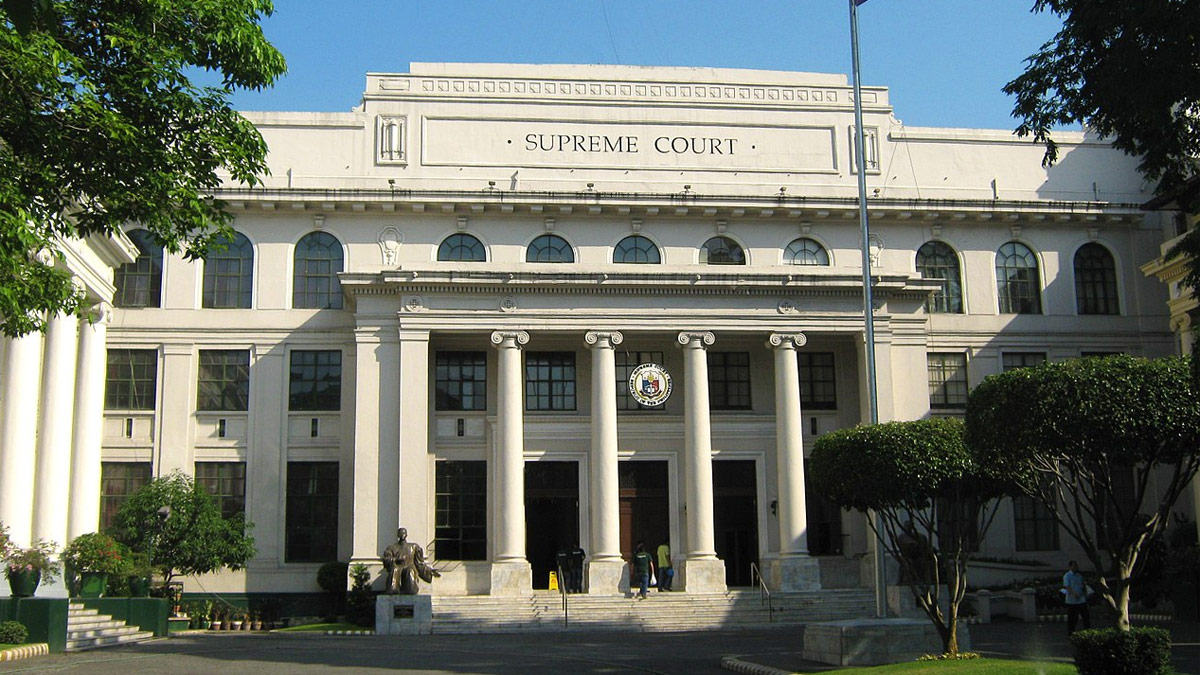
(SPOT.ph) The Supreme Court of the Philippines has declared that demotion, verbal abuse, and hostile behavior by an employer forcing an employee to resign qualify as constructive dismissal.
This is following the Supreme Court's 20-page decision on the case of a marketing professional trainee who was hired in March 2009 at a car dealership in Quezon City. Over the years, his relationship with the company worsened, culminating in a series of incidents that began with frequent absences and a subsequent suspension in 2015.
During a meeting in January 2016, according to the SC account, he was humiliated by the dealership president for bringing legal representation—his sibling—to a disciplinary meeting. To make things worse, his requests for an investigation into a workplace incident were sarcastically dismissed by the group retail manager.
The situation escalated when his accounts were suddenly transferred to another employee and he was moved to a different team without explanation. In the new team, he was asked by his new manager if he planned to resign. This series of actions made it clear to him that the environment was being made intolerably hostile, pushing him towards resignation that same year.
Also read: Lewd Remarks in Work Chats Can Get You Terminated, Supreme Court Rules
When is it considered a constructive dismissal by the Supreme Court?
Constructive dismissal isn't explicitly mentioned in the Labor Code of the Philippines but it's a well-established legal concept in case law and judicial interpretations.
“Illegal dismissal is readily shown by the act of the employer in openly seeking the termination of an employee while constructive dismissal is not readily indicated by any similar act of the employer that would openly and expressly show its desire and intent to terminate the employment relationship,” the Supreme Court explained in Torreda vs Investment and Capital Corporation of The Philippines (G.R. No. 229881, September 05, 2018).
“Thus, constructive dismissal can happen in any number of ways. At its core, however, is the gratuitous, unjustified, or unwarranted nature of the employer’s action.”
Essentially, constructive dismissal occurs when an employer makes an employee's working conditions so intolerable that the employee feels compelled to resign. In effect, it's a dismissal in disguise—one that is not directly initiated by the employer but is instead forced by creating an unbearable work environment.
Initially, lower courts had differing reactions to the marketing professional trainee's case, with the Labor Arbiter and the National Labor Relations Commission recognizing the situation as constructive dismissal, while the Court of Appeals believed he had resigned voluntarily.
The Supreme Court overturned the Court of Appeals' decision, reinstating the original rulings that favored the employee: that his resignation was not voluntary but a forced decision due to an increasingly hostile work environment orchestrated by the car dealership's senior management. The Supreme Court described the employer's actions as "acts of disdain and hostile behavior," which include demotion, uttering insulting words, and creating an apathetic work environment. Such conditions made his employment so unbearable that resignation, according to the ruling, was his only viable option.
“These actions collectively indicated that they were pushing [him] out, leaving him with no choice but to resign from his employment... [He] would not have intended to resign from the company without the officials’ hostile actions,” the Supreme Court wrote in its 20-page ruling.
The Supreme Court ordered the car dealership to compensate the employee for backpay, separation pay, attorney's fees, and other damages for constructive dismissal.
Also read: Abandoning Your Family Can Be Grounds for Annulment, Supreme Court Rules