
AFAM Supremacy? More Filipinos Are Marrying Foreigners
The majority are women.

(SPOT.ph) Love knows no borders—and Filipinos marrying AFAMs are living proof of that. The number of us tying the knot with foreigners has been steadily on the rise, according to the Commission on Filipinos Overseas (CFO).
In a recent PTV briefing, CFO Chairperson Romulo Arugay said the trend has been on the rise since 2007 but saw a slight dip during the COVID-19 pandemic due to travel restrictions. However, the numbers are now starting to pick up again.
Over 6,800 marriages between Filipinos and foreign nationals were recorded in 2022 alone—a 20% to 30% increase from 2020—with the majority involving Filipino women. Only 600 of the 6,800 were men.
As for who they’re marrying? Americans top the list in 2022, followed by Japanese, Germans, Canadians, and Australians.
Arugay pointed out that social media plays a major role in these marriages. Friends play matchmaker, letters get exchanged, and the next thing you know, wedding bells are ringing.
Also read: Sugar, Spice, and Everything Nice: What's It Like Being a Sugar Baby in the Philippines?
Our taste for AFAMS
AFAM is originally a term used for “a foreigner assigned in Manila,” but it’s now broadly used to refer to any foreigner. As lifestyle writer Cate de Leon observed in her PhilStar piece: “It has come to label a dating demographic for Filipinos—so much so that even when we’re abroad and meeting them in other parts of the world, we still call them AFAM—no longer in relation to Manila, but in relation to ourselves.”
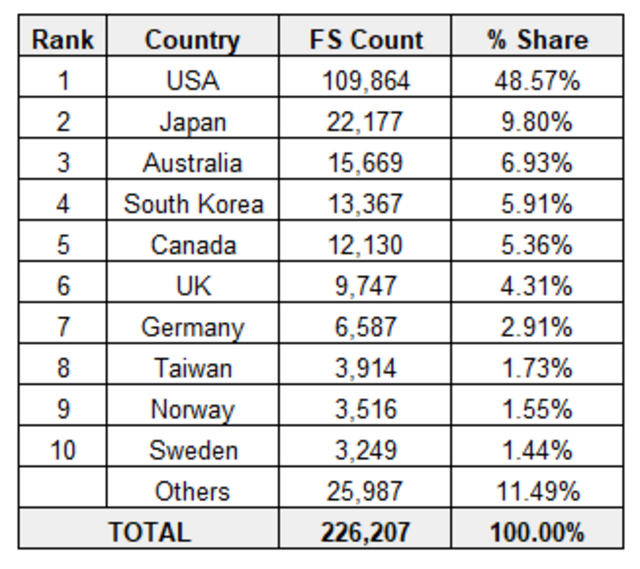
From 2009 to 2019, the CFO registered 226,207 Filipinos married to foreign nationals. Data shows that Filipinos have a clear preference for AFAMs from the United States, as it accounts for almost half of the marriages at 48.57%.
Japan and Australia are also ranked among the top choices during this period at 9.80% and 6.93%, respectively.
CFO programs are also in place to aid Filipinos in moving abroad, as well as identify potential victims of human trafficking through fake marriages.
Filipinos marrying foreigners are required to complete the CFO’s guidance and counseling program before they can leave the country. This includes securing all necessary documentation and preparing for cultural adjustments in their new home.
Without the required CFO certificate, Filipinos could face delays or be denied departure, as the program is a safeguard against potential exploitation.
Also read: Why Foreign Vloggers Love to Feature the Philippines