

NEDA Expects 'Very Good Holiday' as Inflation Is Lowest in Years
Can you feel it?

(SPOT.ph) It’s almost the most beautiful time of the year… which also happens to be the most expensive with all the gift shopping and get-togethers we have to prepare for. But there's less cause for worry though, as the National Economic and Development Authority (NEDA) believes the Philippines is set for a “very good” Christmas as inflation eases and the labor market continues to strengthen.
As of September, inflation fell to 1.9%—the lowest in over four years—a figure that’s even lower than the Bangko Sentral ng Pilipinas (BSP) forecast of 2% to 2.8%. NEDA Undersecretary Rosemarie Edillon is painting a bright picture, saying in a recent briefing that "we’re in for a very good holiday season" as prices ease.
Edillon explained that the continued slowdown in inflation will likely encourage consumers to spend more. This, in turn, could lead to more jobs and better employment opportunities as businesses expand to meet rising demand, especially in the wholesale and retail trade.
"Maganda ang ating hinaharap. Magtuloy-tuloy sana," Edillion said.
From January to September, inflation averaged 3.4%, which is well within the government's target range of 2% to 4% for 2024. For context, this comes just after inflation surged at its fastest pace in 14 years in early 2023.
Things seem to be looking up on the employment front, too. The Philippine Statistics Authority (PSA) reported that the unemployment rate fell from 4.7% in July to 4% in August.
Also read: How to Budget P1,000, P500, P100 for Food as Inflation Soars
Lower inflation = less hardship?
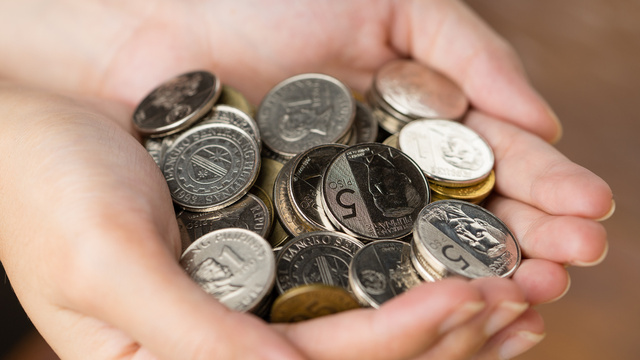
The situation is more complicated for many Filipino families, of course. A national survey by the Social Weather Stations (SWS) conducted from September 14 to 23, 2024 revealed that 59% of Filipino families still consider themselves poor. This means about 16.3 million Filipino families—a 300,000 increase from 16 million in the previous quarter—see themselves as struggling.
In addition, 9.1% of families now classify themselves as “Newly Poor,” meaning they did not see themselves as poor one to four years ago. This equates to over two million families who have recently fallen into hardship.
Also read: Yay, You Got a Raise! Does it Keep Up with Inflation?