

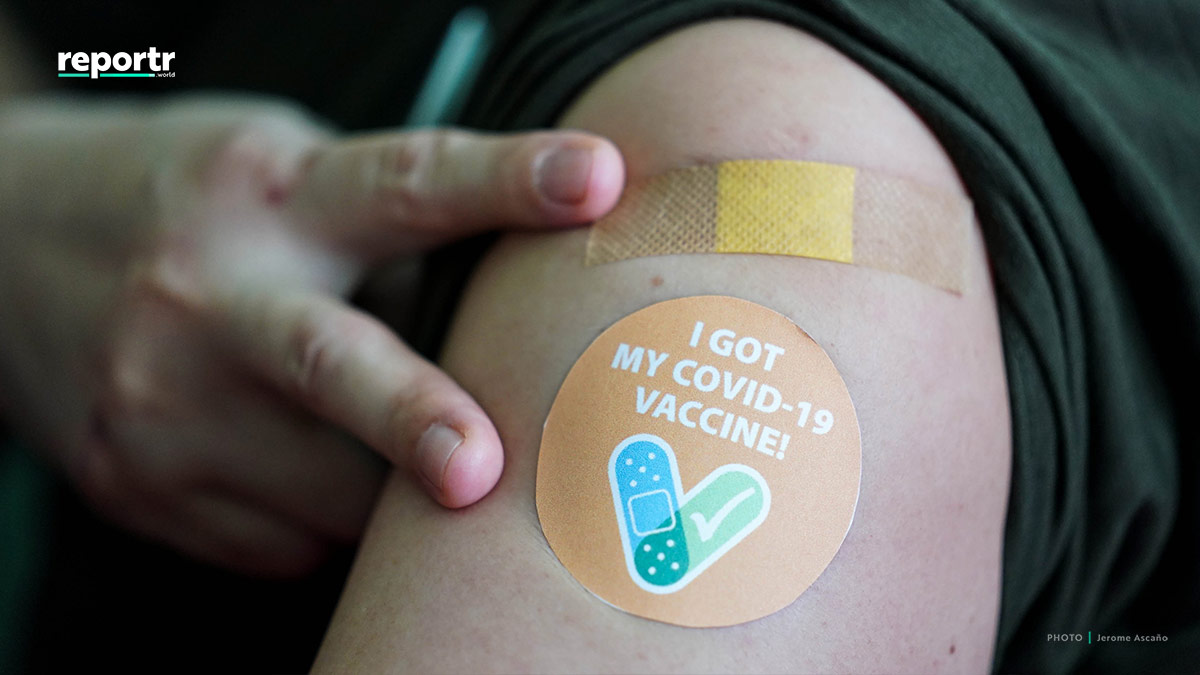
As the COVID-19 pandemic persists, the risk of contracting the rapidly spreading virus remains which is why getting protection from the disease is a top global priority.
That's where vaccines come in -- to protect us from severe COVID-19, said Dr. Anna Ong-Lim of the Department of Health Technical Advisory Group.
If you're having doubts about getting a COVID-19 vaccine, keep in mind that the risk of contracting the disease is much, much higher than getting an adverse side effect from the jab.
As the DOH puts it: "Millions of people around the world have received the vaccine, and evidence continues to show that the benefit of vaccination outweighs the risk of severe disease and death caused by COVID-19."
Here are some information to help you better understand COVID-19 vaccines and why you should get one:
How do COVID-19 vaccines work?
Like any other vaccine developed in the past, the jabs act as the body's "shield" or "soldiers" to fight the virus should it enter the body.
"It’s basically allowing our immune systems to train on something so it’s ready to act or protect when the real thing comes around," Ong-Lim said in a webinar with Summit Media.
Why should you get vaccinated?
Ong-Lim said it's to protect your body from COVID-19 and to help put an end to the pandemic that has disrupted the way of life.
"Vaccines actually aim to protect our bodies by stimulating the immune system and creating antibodies," she said.
"Vaccination is going to have to be a necessary component for an efficient response," she added.
There are different technologies used for different COVID-19 vaccines. And while there are differences, Ong-Lim said the goal is the same: to protect the body from the virus.
Here are the different technologies used in COVID-19 vaccines:
Whole virus
It contains a weakened or inactivated version of the COVID-19 virus. Examples are Chinese jabs Sinovac, and Sinopharm.
Protein subunit
It uses pieces of the COVID-19 virus -- sometimes fragments of the "spike" protein. An example is Novavax.
mRNA vaccines
These contain a synthetic version of part of COVID-19’s genetic code (messenger RNA). Examples are U.S. vaccines Pfizer and BioNTech, and Moderna.
Viral vector
It uses a harmless virus which is altered to contain part of COVID-19’s genetic code. Examples are UK's AstraZeneca, Russia's Sputnik V, and Johnson & Johnson of the United States.
So once a COVID-19 vaccine becomes available to you, Dr. Ong-Lim advises to immediately get vaccinated to protect your body.
MORE ON COVID-19 VACCINES:
Essential Workers Could Get Vaccines by May: Official
The Blood Clot Risk From AstraZeneca's Vaccine is This Rare
The Best Vaccine You Can Get, According to the DOH