

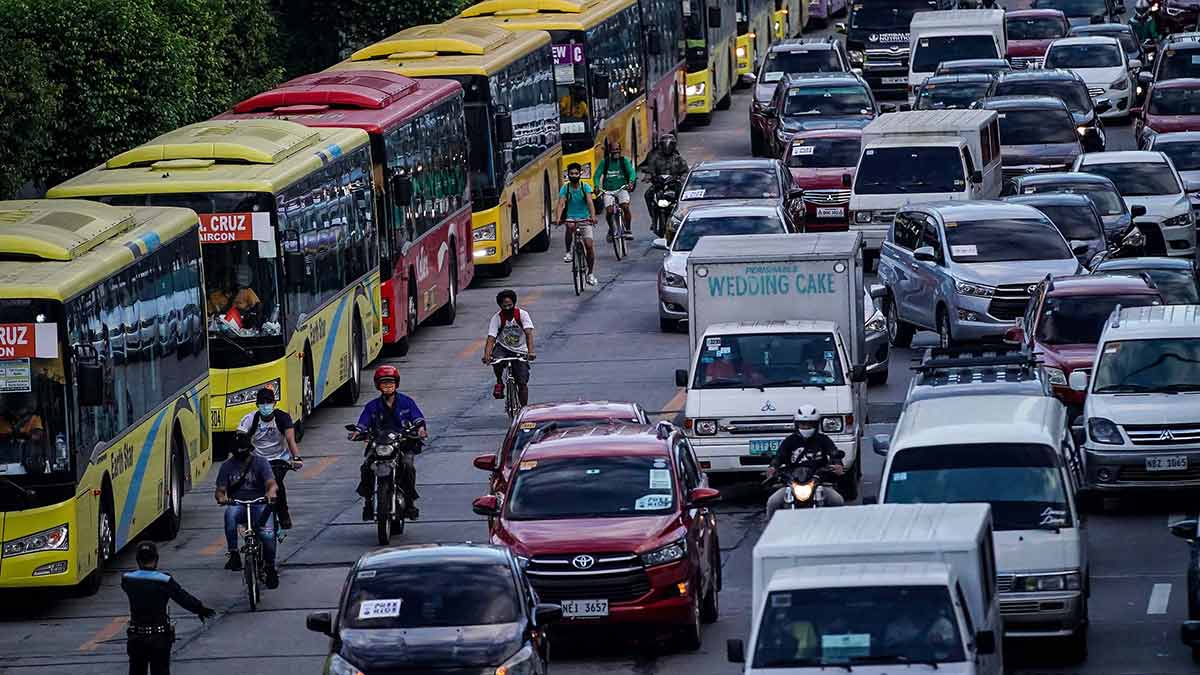
Welcome to the first day of the general community quarantine (GCQ). There's no vaccine or cure for COVID-19 just yet, but restrictions were eased so employees could head back to work and hopefully jumpstart the economy.
Mass transport was also suspended during the two-month pause. However, as people return to work, getting to places is of paramount importance. The Department of Transportation (DOTr), along with the Manila Light Rail Transit System (LRTA) and the Manila Metro Rail Transit System (MRT) have resumed transport operations on limited capacity and it's hard to believe that so much has changed because of COVID-19.
If you're still at home working and you have no idea what the outside world is like now that people are allowed to go out again, have a look at how social distancing looks like in country's busiest roads, terminals, and stations.
Trains
You've seen the Philippine National Police simulate a typical commute day during GCQ, but here's how it actually looks like.
Social distance must be maintained even as passengers line up.
Face masks and thermal scans are required before being allowed to go to the platform.
Platforms will only accommodate a limited number of people.
Plastic barriers separate passengers on the train.
Buses
If you can't take the train, taking a bus is your best bet. The DOTr and the MRT-3 have rolled out the bus augmentation program to make up for the train system's limited capacity.
Point to Point (P2P) buses, bikes, and cars share the road. There is no dedicated bike lane yet.
Each ride is P25.
Passengers are required to wear a face mask and undergo a thermal scan before riding the bus.
A non-permeable transparent barrier separates the driver and the passengers.
No seatmates allowed.
Photos by Jerome Ascaño