

What Happens When You Open an Aircraft Door Midair?
We take a look into the science and legalities.
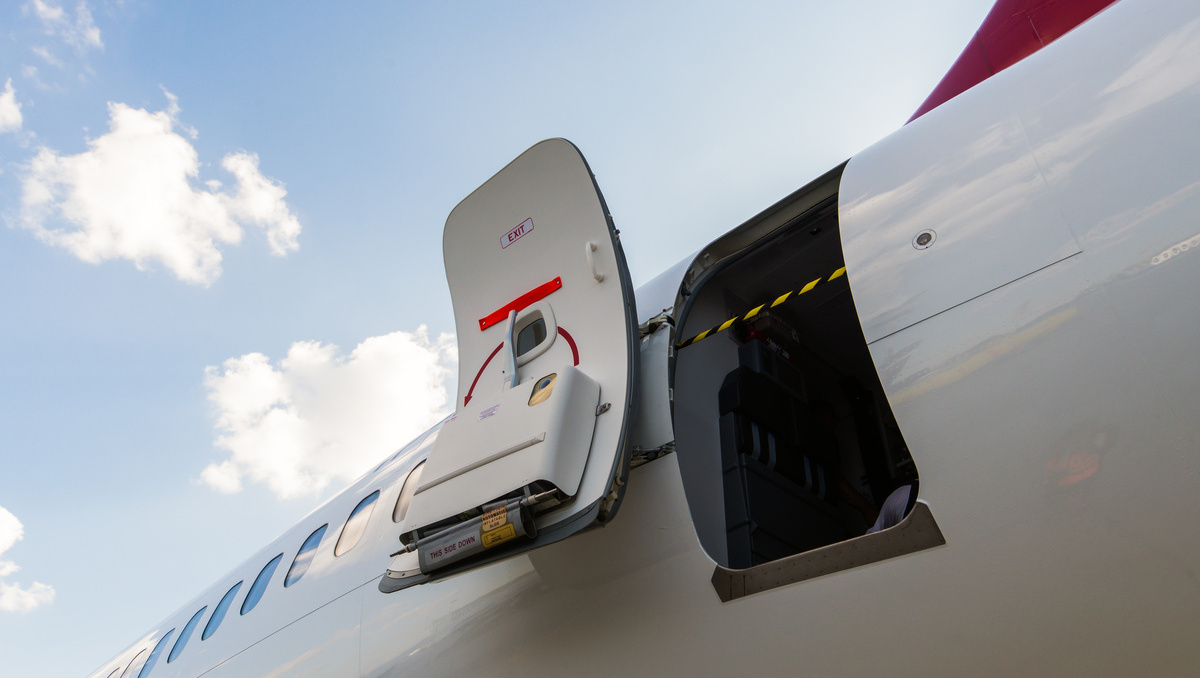
(SPOT.ph) Opening an aircraft door in midair is a scenario that sparks intrigue and concern; danger is, of course, a given. We've all seen it in movies or heard stories of people attempting such a daring act. However, the reality is quite different from what popular culture might portray. You may have heard about the recent news of a Korean airliner passenger who opened an aircraft door while the plane was about to land, especially with clips going around on Twitter thankfully showing no one getting sucked out like the movies had said they'd be. In this article, I will explain what actually happens when someone opens an aircraft door during a flight, addressing the consequences and dispelling common misconceptions.
Also read: Which Is More Dangerous When Flying: Takeoff or Landing?
What happens if an airplane door is opened in the air?
Cabin Pressure & Physics
One of the fundamental principles behind aircraft design is maintaining controlled cabin pressure. The pressurized environment inside the aircraft allows passengers to breathe comfortably despite the thin air at high altitudes. Opening a door during flight would lead to an instantaneous and drastic change in pressure, resulting in severe consequences.
As soon as an aircraft door is opened during flight (say at an altitude of less than 10,000 feet), a powerful and turbulent rush of air occurs due to the pressure difference between the pressurized cabin and the low-pressure conditions outside. The force of this airflow can be incredibly strong, making it nearly impossible to maintain a grip on the door, let alone keep it open.
Cabin pressure is a crucial aspect of aircraft design that ensures the comfort and safety of passengers and crew members during flight. Understanding the physics behind cabin pressure helps shed light on why opening an aircraft door midair can have significant consequences.
Pressure is the force exerted by a fluid (such as air) on a given area. In the Earth's atmosphere, air pressure decreases as altitude increases. The higher you go, the lower the air pressure becomes due to the decreasing density of air molecules.
To maintain a habitable environment inside the aircraft, modern airplanes are equipped with pressurization systems. These systems actively control the air pressure inside the cabin to simulate conditions similar to those experienced at lower altitudes.
Typically, aircraft draws in outside air at lower altitudes using engine-driven compressors. This compressed air is then cooled and circulated into the cabin, creating a controlled pressurized environment. In some aircraft, a combination of engine bleed air and air conditioning packs provides the necessary supply of compressed air.
To regulate the cabin pressure, aircraft are equipped with outflow valves. These valves allow a controlled release of air from the cabin to maintain a specific pressure differential between the inside of the aircraft and the outside environment. The cabin pressure is usually set to simulate an altitude of around 6,000 feet to 8,000 feet, even when the aircraft is flying at much higher altitudes.
When an aircraft climbs to a higher altitude, the outside air pressure decreases. To prevent discomfort and health issues caused by this pressure differential, the cabin pressure is continuously adjusted by the pressurization system to equalize with the outside pressure. This adjustment occurs automatically and keeps the pressure inside the cabin at a safe and comfortable level.
Aircraft doors, windows, and other openings have pressure seals to prevent the loss of pressurized air. These seals ensure that the pressure inside the cabin remains constant, allowing passengers and crew to breathe comfortably and preventing the ingress of uncontrolled air.
To prevent excessive pressure differentials that could potentially damage the aircraft structure, safety valves are installed in the cabin. These valves automatically open to release excess pressure or relieve any pressure buildup that might occur due to system malfunctions.
Onboard Safety
Aircraft doors are designed with several safety measures to prevent accidental or unauthorized openings. These safety features often include latches, locks, and multiple mechanisms that require deliberate actions to disengage them. In addition, the interior pressure of the cabin itself acts as a barrier against external forces that could inadvertently open the door.
While it may be possible to open certain aircraft doors during the flight—such as those leading to emergency escape slides—these doors are specifically designed to be opened in case of an emergency and possess different operational mechanisms compared to main cabin doors. Even in these cases, the pilot and cabin crew are responsible for initiating the evacuation process, ensuring passenger safety.
Contrary to popular belief, opening an aircraft door in midair does not result in the immediate destruction of the aircraft. Modern aircraft are designed to withstand external pressures and maintain their structural integrity even if a door is opened during flight. The structural components and systems are engineered to distribute loads and maintain overall stability.
What Is Rapid Decompression?
The most significant danger of opening an aircraft door in midair is rapid decompression. A sudden loss of cabin pressure can cause a range of issues, including extreme temperature drops, oxygen deprivation, and the potential for physical harm. Passengers and crew members not secured with oxygen masks may experience hypoxia, a condition caused by insufficient oxygen supply to the body.
If, by some rare circumstance, an aircraft door were to open during flight, pilots are trained to initiate emergency procedures promptly. These procedures involve descending to a lower altitude where the air is denser, reducing the effects of rapid decompression. The flight crew would also communicate with air traffic control to coordinate an emergency landing at the nearest suitable airport.
Also read: Scared of Flying? Here's Why Turbulence Is Not Always a Big Deal
Legal Implications of Unauthorized Aircraft Door Operations
Unauthorized aircraft door operations, such as opening a door midair without proper authorization, carry significant legal implications. These actions can jeopardize the safety of passengers, crew members, and the aircraft itself.
Opening an aircraft door without proper authorization violates aviation regulations and laws established by national and international governing bodies. These regulations are in place to ensure the safety and security of air travel. Unauthorized door operations can lead to penalties, fines, and potential criminal charges as aviation authorities and law enforcement agencies view these actions as potential threats to the safety of passengers and crew members.
In the Philippines, intentionally opening a door midair can be interpreted as an act that endangers the aircraft and its occupants, potentially leading to charges related to terrorism (which is punishable by up to 12 years imprisonment ) or aviation security breaches. Violators may also face criminal charges related to endangerment, reckless behavior, or negligence especially if the illegal act resulted in damage to the aircraft or its components.
Passengers on commercial flights are bound by airline policies and contractual agreements. These agreements typically include clauses that prohibit interfering with the aircraft's operations, compromising the safety of the flight, or engaging in disruptive behavior. Opening an aircraft door without authorization would violate these agreements, subjecting the individual to legal consequences and potential civil liability.
Opening an aircraft door without authorization can cause panic and distress among passengers and crew members. This disruptive behavior not only violates aviation regulations but also disturbs the peace and order of the flight. Authorities may pursue charges related to disorderly conduct, creating a disturbance, or interfering with the duties of the flight crew.
Though nothing directly similar has occurred in the Philippines in recent history, it has happened before. On May 25, 2000, Reginald Chua hijacked Philippine Airlines (PAL) flight PR812 (Davao to Manila) just as the plane was about to land at the NAIA. Armed with a handgun and a grenade, he initially demanded to be given access to the cockpit. When this was denied, he commanded the flight’s passengers to place their valuables in a bag. At an altitude of 5,900 feet, he asked one of the cabin crew to open the rear aircraft door and jumped off with a homemade parachute. He was later found dead with his body buried in the mud within the vicinity of Real, Quezon—his homemade parachute failed. The rest of the crew and passengers landed safely.
Opening an aircraft door in midair is a highly dangerous and practically impossible act due to the design features and safety measures in place. The idea of being sucked out of an aircraft through an open door, as depicted in movies, is largely fictional. While it's essential to understand the risks and consequences of such actions, rest assured that modern aircraft are built to withstand a range of challenges, including an open door during flight.
Robert “Bob” Reyes is an AvGeek (aviation enthusiast), planespotter (an AvGeek who loves taking photos of planes), and technologist (who represents the global non-profit Mozilla in the Philippines). He spent more than two decades of his life as an aviation support professional for a conglomerate and CTO of an aviation college. Follow him on Twitter @bobreyes.