
Cable Cars in Baguio City? BCDA Conducts Feasibility Study
Here's what we know so far.
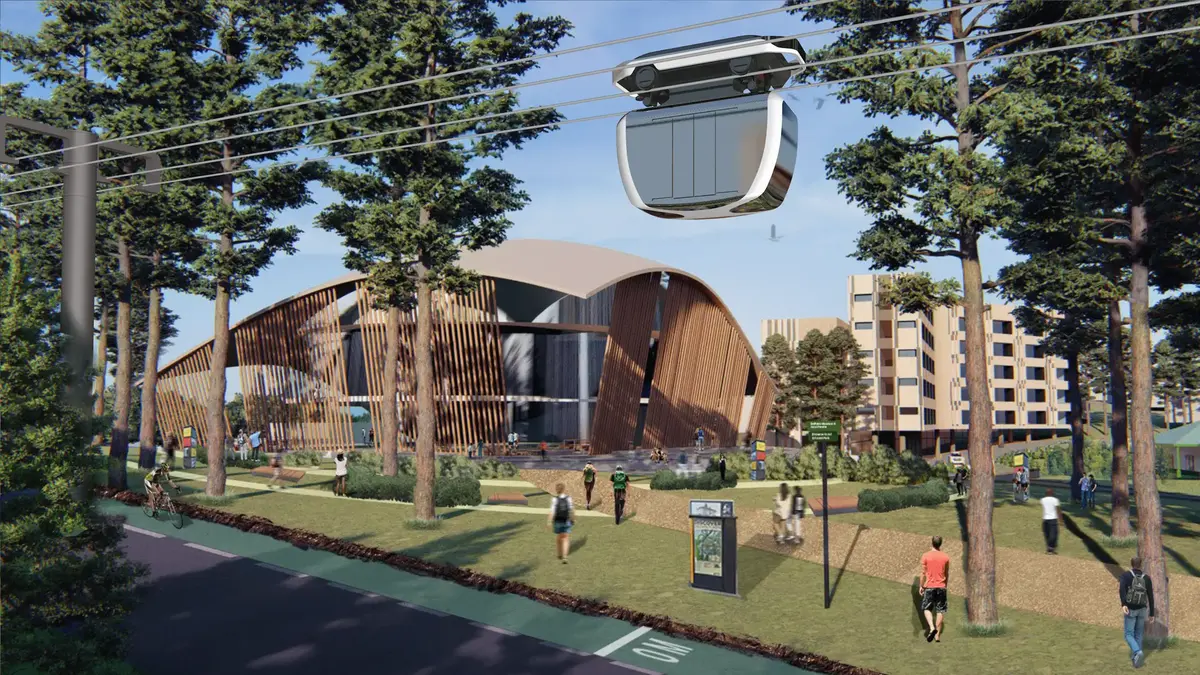
(SPOT.ph) Imagine riding a cable car through the picturesque hills of Camp John Hay in Baguio City. Well, that could soon be a reality—or a cause for raised eyebrows—as the Bases Conversion and Development Authority (BCDA) has teamed up with Japanese company Zip Infrastructure Co. to explore this futuristic transportation option.
During a visit to Tokyo, BCDA President Joshua Bingcang and Zip Infrastructure CEO Takamasa Suchi signed an agreement to assess the feasibility of introducing Zippar, a self-driven cable car system, in Camp John Hay. This initiative aims to provide an alternative transportation solution to ease traffic congestion in the area.
Zippar is designed to navigate curves and branches while being controlled from a centralized hub. According to the BCDA, this technology could enhance urban mobility and promote environmentally sustainable transportation solutions within Camp John Hay.
The Zippar "could be a game-changer for urban public transport while presenting an ideal green transport model. But we choose to temper our excitement with the need to first undertake the requisite feasibility studies. We hope to determine the possibility of adopting Zippar to a highly congested metropolis like Metro Manila," Transportation Secretary Jaime Bautista said in a statement.
Also read: Would You Pay? Baguio City Eyes P250 Congestion Fee for Cars
What is Zippar?
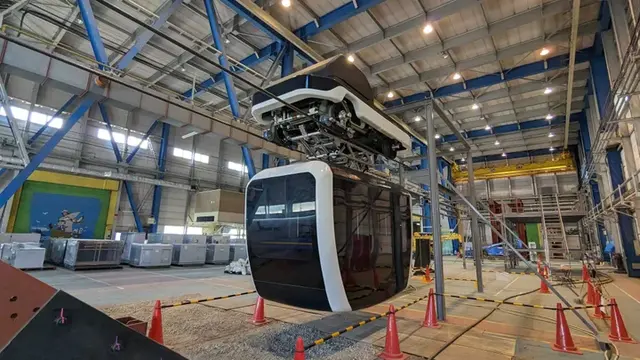
Zip Infrastructure first launched Zippar in 2018. It is a system of capsule cars running on zip lines to alleviate traffic congestion, and is positioned as a more cost-effective alternative to traditional, more expensive railway systems.
It is currently being tested in Odawara City, Kanagawa Prefecture, Japan. These tests are crucial for assessing the system's practicality and performance in real-world conditions. If successful, Zippar could be implemented in various urban settings by 2025.
Not the first time cable cars are proposed as a transportation solution in the Philippines
Cable cars as a solution to the Philippines' transportation woes have been in the talks since 2018 under President Rodrigo Duterte’s administration. The idea gained renewed attention when Senator Robin Padilla advocated for the revival of the Manila Urban Car Cable Project in 2022.
The Manila Urban Car Cable Project is a 4.5-kilometer cable car system that will link Marikina City to Pasig City. There are six stations in the proposal:
- LRT-2 Santolan Station, Marikina City
- Libis, Quezon City
- Eastwood, Quezon City
- Santolan, Pasig City
- Manggahan, Pasig City
- Rosario, Pasig City
DOTr endorsed the Manila Urban Car Cable to the NEDA-ICC in 2021, but it is still awaiting evaluation and approval, with no updates since then.
Only time will tell if Zippar makes it out of the planning stage.
Also read: Skytrains, Cable Cars, and Other Philippine Transport Projects to Keep Watch On