

The Funny Side of Pope Francis
The Pope's wit, warmth, and humanity shone throughout his 2015 visit.
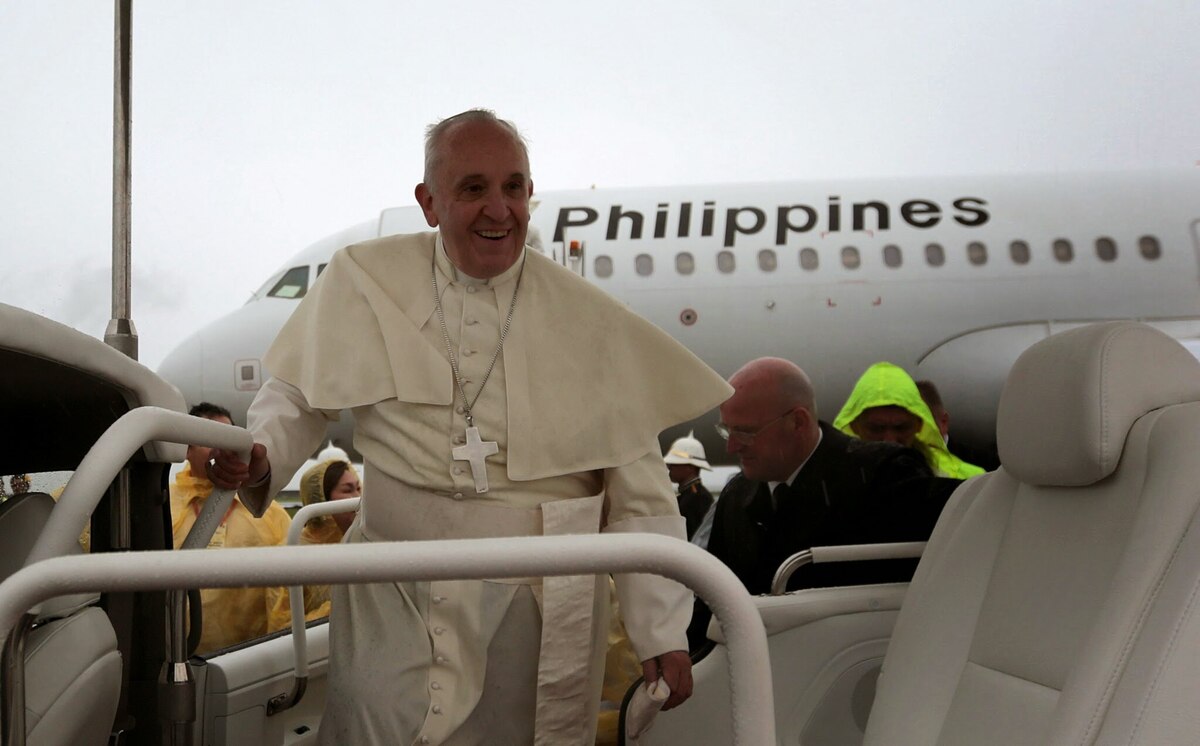
(SPOT.ph) As the only Filipino print journalist accredited by the Vatican media bureau to cover Pope Francis’s momentous 2015 apostolic visit to Sri Lanka and the Philippines, I had the privilege of joining the media pool aboard the papal plane from Rome to Colombo, Colombo to Manila, Manila to Tacloban, and finally back to Rome. The trip—exhausting yet exhilarating—offered an up-close view of the Argentinian pontiff’s charisma, humor, and deep humanity.
Upon his arrival in Colombo, Pope Francis greeted the crowd with his trademark smile—but it was the 40 colorfully adorned elephants lining the road that truly delighted him. A namesake of St. Francis of Assisi, the patron saint of animals, the Pope beamed and gestured playfully at the pachyderms, as if offering a blessing. Days later, when 40 Jesuits visited him at the Apostolic Nunciature in Manila, their provincial mentioned the elephants. The Pope grinned and quipped, “Yes—but the elephants were better dressed.”
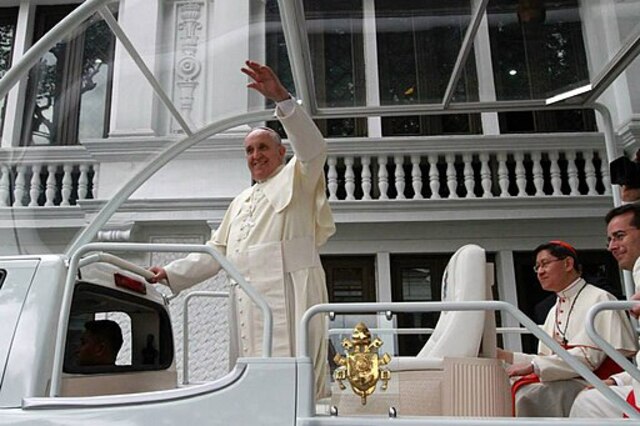
Flight to Manila
During the flight to Manila, Pope Francis spoke warmly about his surprise visit to a Buddhist temple in Sri Lanka. “There are relics of two of the Buddha’s disciples… good,” he said. At the Madhu shrine, he praised the natural unity of the Sri Lankan people, noting, “The people are never wrong.” Reflecting on old religious prejudices, he smiled and recalled, “All Protestants were going to hell… That’s what we were told!” His humor, as always, carried a deeper message: that respect is the starting point of true conversion.
The Pope also condemned the Charlie Hebdo killings in Paris, calling them an “aberration.” But with his signature wit, he illustrated the balance between freedom and responsibility: “If my good friend Dr. Gasbarri here insults my mother, he’ll get punched for it!” he said, throwing a mock jab. “It’s normal!” he added, to laughter. His point: free expression is essential—but so is respect, especially for faith and family. Even popes, it seems, draw the line at mom jokes.
"Do you love me?"
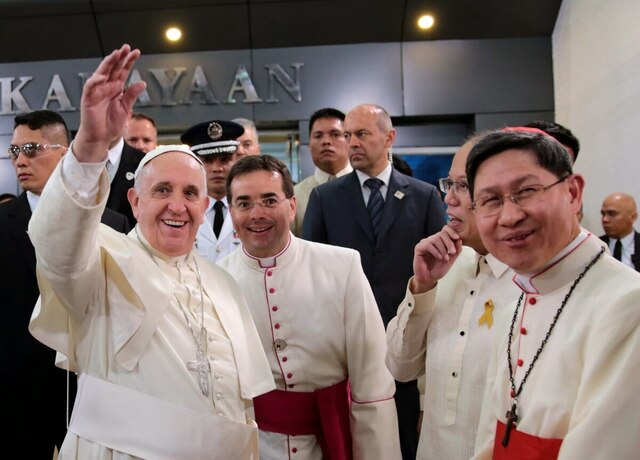
At Manila Cathedral, the Pope blended humor and tenderness. After quoting Jesus’s question “Do you love me?” and hearing a resounding “Yes!” from the crowd, he chuckled, “Thank you, but I was reading the word of Jesus!” Addressing priests and religious, he reminded them, “All pastoral ministry is born of love,” urging them to live simply: “Only by becoming poor ourselves... will we be able to identify with the least.” He honored elderly missionaries and encouraged young religious to “share the joy of Christ,” even amid poverty and corruption. “Be present to the broken,” he said. “Christ died for all.”
At the University of Santo Tomas, the Pope’s spontaneity took center stage. Setting aside his prepared English speech, he asked the crowd if he could speak in Spanish. “When I speak spontaneously, I do it in Spanish. No? Because I don’t know the English language. May I do it?” he asked, to loud cheers. Moved by the tears of a young girl who asked why children suffer, he replied, “She asked the one question that doesn’t have an answer… Why do children suffer?” Then he challenged the youth: “Learn how to weep. Only love can make (suffering) bear fruit.”
Heading back to Rome
On the Philippine Airlines flight back to Rome, Pope Francis was asked about corruption. “Corruption is the order of the day,” he said, “and the corrupt attitude easily finds a nest in institutions.” He added, “We must ask pardon for Catholics who scandalize with their corruption. It’s a wound in the Church.”
He shared a story from his time as auxiliary bishop of Buenos Aires in 1994. Two officials offered a large donation for the poor—but with a catch: once deposited, he was to return half. “I was listening, because when the offer is very big, even the saint is challenged,” he said, to laughter. “I thought, do I insult him, kick him where the sun doesn’t shine, or play dumb?” More laughter. He declined, saying his vicariate had no bank account and referred them to the archdiocese. “And they left,” he added dryly.
Pope Francis decried corruption as a form of “state terrorism,” linking it to the “throwaway culture”—a recurring theme in his pontificate. Responding to a journalist’s observation about Manila’s street children and Colombo’s Tamil slums, he said, “Poor people are the victims of the throwaway culture. This is true today: they don’t just discard paper and leftovers—we throw away people. And discrimination is a form of throwing away.”
The gestures from the heart
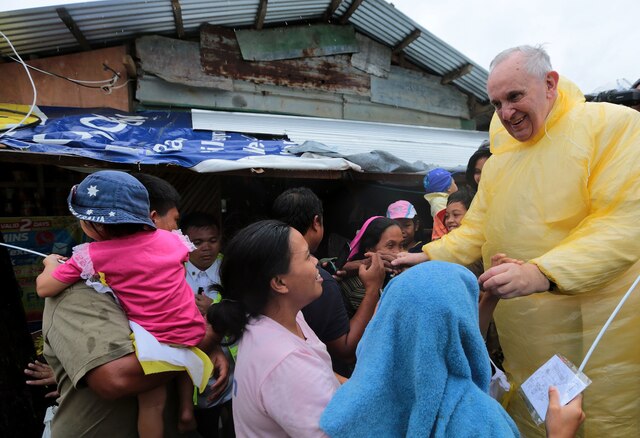
Reflecting on his Philippine visit, Pope Francis said it was not the ceremonies that moved him, but the gestures “that come from the heart.” He recalled fathers lifting their children for a papal blessing—“as if to say, ‘this is my treasure.’” The unfeigned joy of volunteers in rain-soaked Tacloban left a mark. He was also struck by mothers who presented their sick children without shame. “A people that knows how to suffer, and is capable of getting up,” he said, clearly moved.
Before embarking on the trip, Pope Francis visited the Basilica di Santa Maria Maggiore in Rome, offering roses and prayers to the Madonna amid heightened security concerns. It was a ritual of trust and continuity—one he had repeated before every major journey. Upon returning to Rome, he visited the basilica again in quiet thanksgiving.
These Marian pilgrimages reveal his deep devotion to Our Lady—and his humility. In his last will and testament, Pope Francis expressed a wish to be buried not beneath the grand dome of St. Peter’s Basilica, but in a simple crypt at Santa Maria Maggiore, where his journeys always began and ended in prayer.
Lito B. Zulueta, professor of journalism at the UST Faculty of Arts & Letters, has covered key Vatican events such as the funeral of Pope John Paul II and the conclave that elected Pope Benedict XVI in 2005, the resignation of Benedict and the election of Pope Francis in 2013, and the double-canonization of Popes John XXIII and John Paul II in 2014.