
What Happens When You Threaten the Philippine President?
This is what Philippine law has to say.
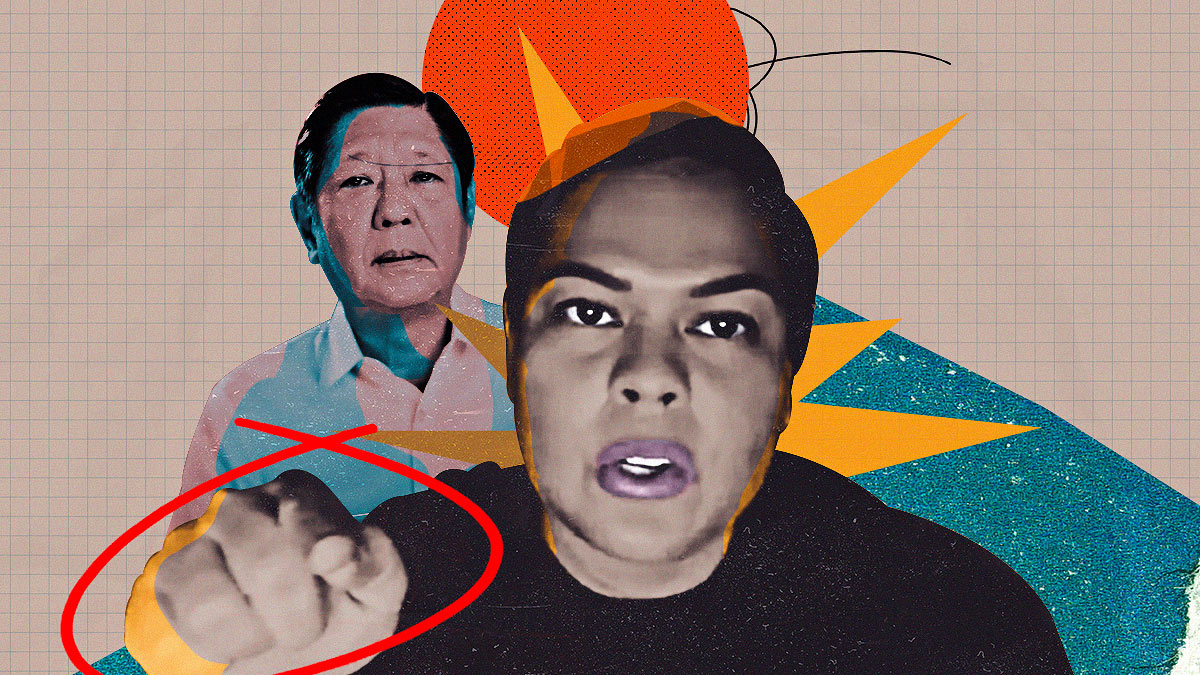
(SPOT.ph) In Philippine history, only a handful of running mates have won the presidency and vice presidency together in the same election and that includes the erstwhile Uniteam tandem: President Ferdinand “Bongbong” Marcos Jr. and Vice President Sara Duterte.
Now, the pair has made another record: this is the first time in Philippine history that a vice president has openly threatened the life of a sitting president.
Duterte’s unexpected public threat to have President Ferdinand “Bongbong” Marcos Jr., First Lady Liza Araneta-Marcos, and House Speaker Martin Romualdez assassinated, if she herself were killed, has thrown the country into chaos the past few days. To quote VP Duterte herself—this is “no joke, no joke.”
Her tirades against Marcos have put presidential security on high alert, with National Security Adviser Eduardo Año calling “any and all threats against the life of the president... a matter of national security.”
The Armed Forces of the Philippines Chief of Staff, General Romeo Brawner has since emphasized the military's loyalty to "the Constitution and the Chain of Command," and called for "calm and resolve, and for everyone to hold on to our values of respect and nationalism."
Meanwhile, the government is compelled to track down the “contract killer” supposedly tapped by Duterte, the Justice department said.
“We are tapping our law enforcement agents to investigate the whereabouts and the identity of this person or persons who may be plotting against the President,” Justice Undersecretary Jesse Andres told the press.
All these have raised a serious question: what happens when someone, even a high-ranking official, threatens the president? We turn to the Revised Penal Code for answers.
What are the consequences of threatening the Philippine president?
Making threats against the President is no trivial matter, as Philippine law outlines serious consequences depending on the intent and nature of the threat.
At its least severe, such actions can fall under grave threats, which involve serious declarations to harm a person, such as causing physical injury, death, or significant damage to property. These are covered under Article 282 of the Revised Penal Code, with penalties ranging from a few months to years in prison. The classification of grave threats alone may not seem severe but its context—especially when directed at the highest office in the land—can elevate the gravity of the offense.
If a threat is made with the intent to stir hatred, violence, or rebellion against the government, it qualifies as inciting to sedition under Article 142 of the Revised Penal Code. Those convicted face prision mayor, which means imprisonment for 6 years to 12 years.
If the threat involves urging others to overthrow the government or harm the president through rebellion or insurrection, it could escalate to inciting rebellion under Article 138 of the Revised Penal Code, which also carries penalties of prision mayor.

When threats are made over the internet (which is what the Vice President has done via Zoom call), they fall under the Cybercrime Prevention Act of 2012. This law also applies stricter penalties for cyber threats or cyber libel, which is typically one degree higher than traditional offenses. For example, if an offline crime is punishable by prision correccional (6 months to 6 years) under the Revised Penal Code, the online version of the same crime would be punishable by prision mayor.
Yes, all of these apply even if the threat is coming from inside the house. The more severe the intent and potential consequences, the graver the legal repercussions.
Also read: The P10-M Question: Why Does VP Duterte's Isang Kaibigan Have A Hefty Budget?
Investigations are ongoing
Justice Undersecretary Jesse Andres said the investigation on the threat will be handled with the “full force of the law,” considering that it involves the life of the highest official of the land. Authorities like the Department of Justice (DOJ), the National Bureau of Investigation (NBI), and the National Prosecution Service (NPS) are already on the case as we speak.
For now, NBI Director Jaime Santiago has confirmed that Duterte would not be immediately arrested out of respect for her position as vice president. Instead, she will be issued a subpoena on November 26, to explain her statements during the Zoom call.
“We are giving her the chance, due process, to answer... ‘yung binibintang sa kanya. We will ask her to appear before our office within five days from today,” Santiago said in a press conference.
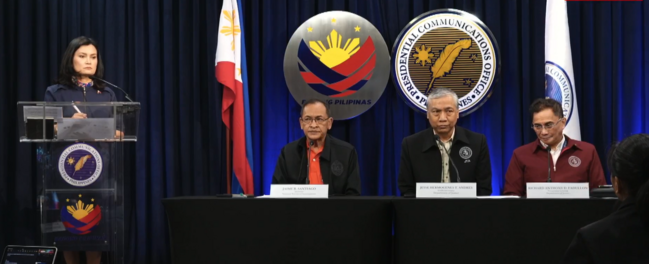
To this, Duterte responded by saying that she was being “maliciously taken out of logical context.”
Duterte’s relationship with Marcos has been strained for months, culminating in her resignation from the Cabinet in July over policy disagreements. Tensions escalated in October when Duterte intensified her criticism of the administration, accusing it of corruption and incompetence, even saying she had imagined beheading Marcos.
In addition to potential charges of grave threats and sedition, Santiago said Duterte could also face disbarment proceedings for acting as her chief of staff Zuleika Lopez’s legal representative during the House investigation into the Office of the Vice President’s (OVP) alleged misuse of funds—but that’s a story for another day.
Also read: What Happens Now That VP Sara Duterte Has Resigned From the Marcos Cabinet?
Who else has threatened a Philippine president?
Not everyone has been afforded the same courtesy of due process as Duterte.
In May 2020, Zambales public school teacher Ronnel Mas posted a tweet offering a P50 million reward to anyone who would assassinate then-President Rodrigo Duterte. This tweet quickly gained attention, prompting the NBI to arrest Mas without a warrant.
Mas was charged with inciting to sedition under the Revised Penal Code and violating the Cybercrime Prevention Act of 2012. During his arrest, he expressed remorse, stating that his tweet was a joke.
The following month in June 2020, the Olongapo City court dismissed the case against Mas. The court ruled that his confession was inadmissible because it was made without the presence of legal counsel, which violated his constitutional rights. Two subsequent attempts to prosecute Mas in February and June 2021 also failed.
Also read: 'Diktadurang Marcos' to Just ‘Diktadura': What's With the DepEd Curriculum Change?
While freedom of expression is a fundamental right, it comes with responsibilities and clear boundaries. Threatening the president crosses a legal and ethical line, carrying serious consequences under the law.