

Road Accidents Kill Thousands in the PH Yearly: What Can We Do?
Laws exist but enforcement is weak or inconsistently applied.

(SPOT.ph) Eighty full airplanes. That’s how many Airbus A320s have to crash to get to 12,000—which was the Department of Health’s estimated number of road traffic deaths every year.
The urgency of this issue was made heartbreakingly clear in the past few days. At NAIA Terminal 1, an SUV plowed into passengers waiting at the arrival bay, killing two and injuring four. Days prior, a multi-vehicle collision in a toll plaza killed 10 people and injured several others after a bus driver reportedly fell asleep at the wheel.
Is it startling that awful things happen once in a while? Not really. But what is startling is our seeming indifference to 12,000 deaths a year. If eighty airplanes crashed each year, we would close down NAIA. Anton Siy, a transport advocate and former head of Pasig Transport, argues that our situation now is nothing short of a public health disaster.
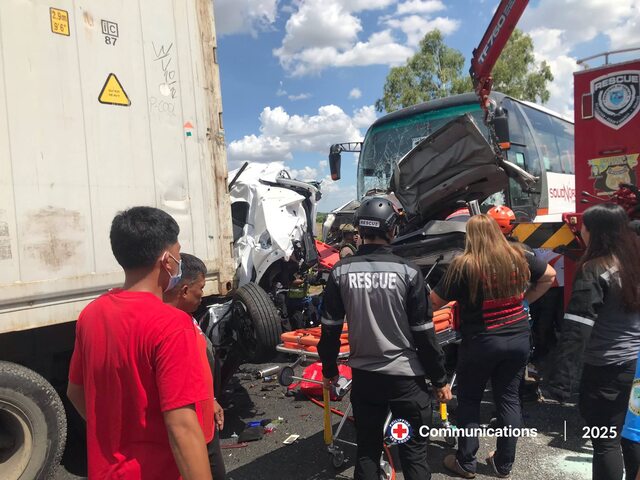
“If we consider typhoons that kill thousands as public health disasters, then shouldn’t we revisit these issues we’ve learned to ignore—that kill tens of thousands?” asks Anton.
Speed does much of the killing
The annual death toll consists of a variety of tragedies: Poor children on the street hit by speeding vehicles. Cyclists hit by speeding vehicles. Pedestrians hit by speeding vehicles. Those living in close proximity to our national highways hit by speeding vehicles. People driving speeding vehicles… hit by speeding vehicles. Replay these incidents in your head thousands of times and you’ll get the number of gruesome deaths a year.
We specify “speeding” vehicles because speed does much of the killing. People hit by cars going 30 kph have a 90% chance of survival. At 45 kph, this number plummets to below 50%. At 80 kph, the chance of survival reaches 0%.
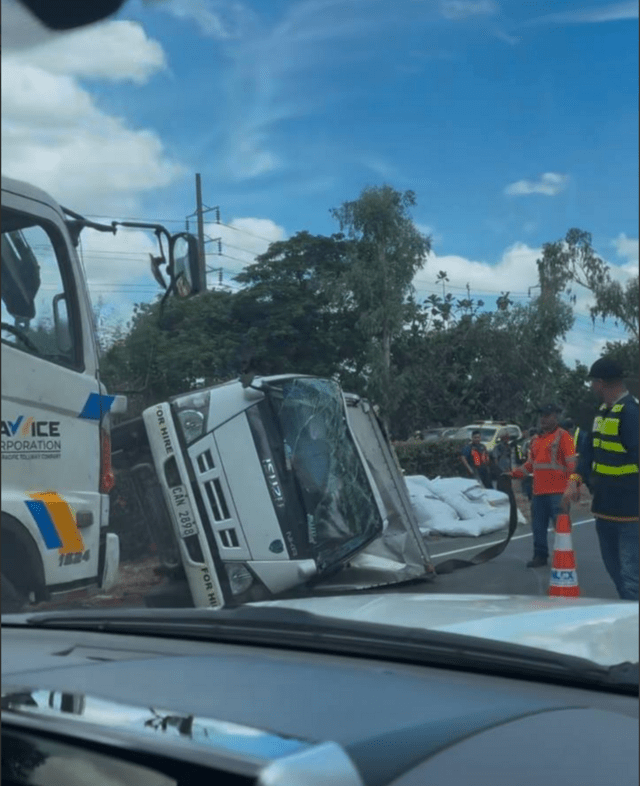
SUVs and trucks are also more lethal than their smaller car siblings. They are 50% more likely to kill and 98% more likely to cause severe torso injuries. Cars typically sweep a person’s legs and have them slide up the hood. But SUVs and trucks are taller—meaning they hit the pelvis or the chest, not the legs. Getting hit by a car also diminishes some of the impact as the victim slides onto the hood or windshield, while SUVs and trucks are more likely to throw victims to the ground and run them over.
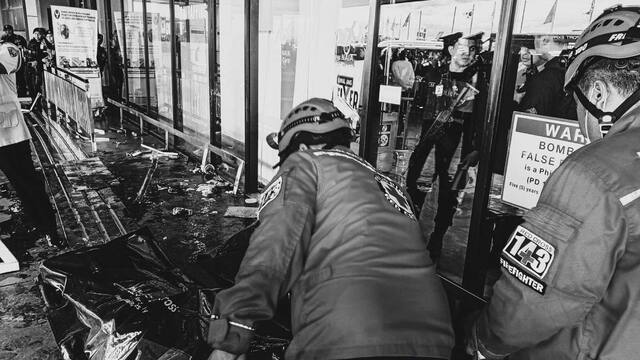
“There is so much good science on SUVs,” says Anton. “They have a lot of safety issues. People buy them because they make you feel safe, but the risk of SUVs rolling over is actually higher because they’re taller and narrower.”
Motorcycles, too, play a deadly role in this epidemic. They are the most common vehicle involved in road crash fatalities in the Philippines. Despite laws on helmet use and licensing, enforcement remains spotty—especially in the provinces, where tricycles and motorbikes often carry entire families unprotected. Riders and their passengers account for a disproportionate number of the dead and injured—not only because of speed, but because of a lack of protective infrastructure. The Asian Transport Observatory reported that, as of 2024, only 14% of Philippine roads have safety ratings of three stars or better for motorcyclists.
Of course, we can’t ignore buses, jeepneys, and taxis. This is actually where the astounding income inequality in the Philippines enters the conversation. Many have pointed a finger at the boundary system, which basically guarantees income for the operators, while putting drivers at risk of making zero money despite an entire day’s work.
Anton Siy’s dad—himself an economist and an urban planning professional—wrote a column about how this system hurts road safety:
“If we compensate bus and jeepney drivers based on how much fares they collect, it brings a host of problems related to “on-street competition” among drivers: racing to catch the next passenger, lingering at bus stops, stopping to pick up passengers even away from stops, and working long hours to achieve the daily target revenue.
The cost of maintaining this business model is not only reflected in increased traffic congestion and worsening mobility, but also measured in lives lost and injuries suffered because of crashes involving PUVs.”
Reflecting our nation's deficiencies
The more one looks into the road safety issue, the more one realizes that it’s an unappetizing stew of our nation’s deficiencies. A car hitting a person is only the last step in a sequence of avoidable failures.
Few people know this more than Mirick Paala. He has spent so much time on overpasses, setting up cameras and just watching. He would go to high-risk sites in Metro Manila to look at how everything interacts with everything—the cars, the buses, the jeepneys, the commuters, the barkers. He would estimate the speed at which vehicles traveled, observe how people move, and note the traffic mix. He would go to Recto, Ortigas, and Commonwealth to count accidents that almost happened.
The work was part of Paala’s Masters Dissertation at the University of Leeds—an effort to find “the nature of conflicts and crashes in three distinct high-risk sites.” The insights he gathered have helped widen the lens through which we view the problem of road safety, which is perhaps a clue about why this is all so difficult. He argues, for example, that road safety is also an inequality issue.
“Kapag bata ang biktima, iniisip ng karamihan na sila ‘yung mga pumapasok sa school,” Paala says. “Pero ang nakita ko sa Recto ay ‘yung mga batang barker—‘yung nagdi-direct ng traffic—not necessarily ‘yung mga pumapasok sa school. Pag may hinahabol silang taxi, bigla silang tatawid. ‘Yun ang nagbibigay ng vulnerability sa kanila.”
“Malaki ang epekto ng socio-economics sa road safety,” he continues. “Hindi lang siya about disiplina o road infrastructure. Pati ‘yung socio-economic condition ng tao—it informs kung ano ang uri ng mobility nila, which informs kung vulnerable sila sa road. Hindi naman magbubuwis ng buhay ang mga bata sa Recto kung hindi nila kailangan ‘yun gawin for their livelihood. Dapat nga hindi sila nagtatrabaho ‘di ba?”
These incidents may well be the perfect example of how inequality kills, and an indicator of the urgency of this nation’s income inequality situation. Some other discoveries were counter-intuitive or unusual-sounding—such as Paala’s observation that no pedestrian lane is an island.
“Zebra crossings can actually be a safety hazard,” Paala says. “Lalo na kung zebra crossing lang siya—because it gives a false impression that it’s safe to cross. It gives confidence, which is great, ‘di ba? But if the cars don’t see any signal that there’s a zebra crossing ahead—dahil walang traffic light or whatnot—that’s the kind of combination that can result in a fatal crash.”
“Hindi sapat gumawa ng pedestrian crossing. Dapat may traffic calming. Ang model for a good pedestrian crossing ay ‘yung tinatawag na Wombat Crossing—mas mataas siya from the ground. Maganda ‘yun dahil forced bumagal ‘yung sasakyan, kahit nagmamadali siya.”
Are there things we can do tomorrow to improve road safety?
Road safety involves so many intersecting disciplines, which means that reducing the 12,000 annual death toll will take a lot of work on many different fronts. But are there things we can do tomorrow that can make a dent on this number? Paala’s answer is yes.
“Majority of fatal crashes happen on national roads,” says Paala. “Maraming head-on crashes na nangyayari doon during attempted overtakes. Ang isa sa mga pwedeng gawin ng DPWH ay maglagay ng audio tactile markings para maramdaman na agad ng road user na ‘bawal ako dito’.”
“Sidewalks din,” Paala continues. “Cost-effective pa ito. Ang usual thinking kasi is that crashes happen because there are no crossings. But if you look at the data, at least for some areas of the Philippines, maraming nafo-force maglakad sa gilid ng daan. Sila ‘yung nasasagi ng mga speeding na sasakyan.”
Too often, accountability is missing from the picture. Laws exist—on speeding, drunk driving, even pedestrian safety—but enforcement is weak or inconsistently applied. Drivers who kill are rarely prosecuted, and habitual offenders go unchecked. The result is a sense that traffic deaths are unfortunate, but inevitable—which only perpetuates the cycle.
Even a little will go a long way
Road safety is not the sexiest advocacy. And the solutions that we are offered—sidewalks, wombat crossings, speed limits and audio tactile markings, among others—also seem like retail solutions. But the casualty count from road incidents should make us feel duty-bound to direct a little more support towards the work done by transport advocates—both in the government and in civil society.
AltMobility, for example, is an organization of transport experts, professionals, and academics, who have been campaigning for better, safer transport. ImagineLaw, a non-profit law organization, has been working with the government to help enact and enforce speed limits laws. The Move As One Coalition, whose logo is a Technicolor pedestrian lane, has united diverse organizations around the common interest of safer, humane, and more inclusive transport.
The Department of Transportation, under new Secretary Vince Dizon, has shown early signs of openness to dialogue with these groups, which is an open door to reform. In response to the recent tragedies, Dizon also announced new regulations: mandatory regular drug testing for PUV drivers, reliever drivers for trips lasting six hours or more, and stricter standards for driver’s education.
Some might argue that accidents happen regardless—and that this 12,000 figure will never go down to zero. After all, people die in road crashes all around the world. But even some degree of harm reduction would be amazing. Based on the World Bank data, if we match the success of the Netherlands, we could save 8,000 lives a year. If we reach the level of South Korea we could save 6,000.
We must ask ourselves: What does failure look like? If we try and fail and save only fifty lives in the process, wouldn’t that rival the work of even some of our best surgeons? There aren’t many advocacies where you can fail your way into saving a life.
The good thing is that the voices calling for safer and more dignified transport are rising in volume. But having voices is not enough. These days, it isn’t just pedestrians who have to abide by the age-old wisdom. All of us have to stop. All of us have to look. All of us have to listen.