

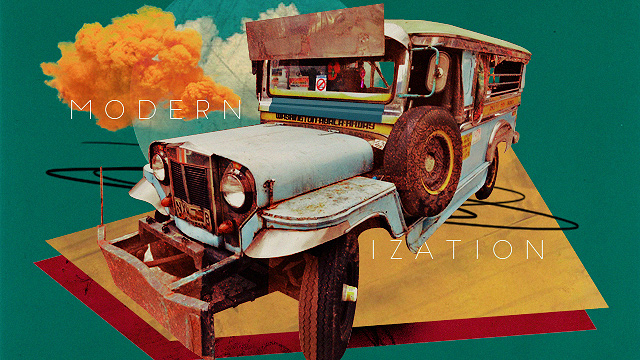

(SPOT.ph) The public utility vehicle modernization program of the government has generated much controversy recently, resulting in two days of work called off by no less than Malacañang. While many Filipinos relish the idea of commuting in shiny, brand-new vehicles, opponents of the program have argued that it promises higher fares, impoverished jeepney drivers, or (curiously) both. The conflict over proceeding with the program reveals the inextricable link between modernization of the actual vehicles and modernization of the public utility vehicle (PUV) business model. It is impossible to tackle one without the other, and while the dream of technologically-advanced public transport is exciting, far grittier work will have to be done in modernizing the PUV business model.
A Modernized Private System: The Omnibus Franchising Guidelines
In June, the Land Transportation Franchising and Regulatory Board issued the Omnibus Franchising Guidelines as the first step towards modernization of the PUV regulatory framework. The Omnibus Franchising Guidelines contains the following changes relevant to PUV business:
- Routes will be determined by LGU-generated Local Public Transport Route Plans, as opposed to being proposed by franchise applicants. Upon receipt of these LGU plans, the Land Transportation Franchising and Regulatory Board (LTFRB) will select operators to serve the plans using an “open and transparent process.” The exact mechanics of the selection process have yet to be determined, but the LTFRB has said LGUs may provide input on technical standards, such as desired emissions levels for vehicles.
- Routes will be classified according to anticipated ridership. Higher-ridership and longer-distance routes will be served by larger vehicles, such as buses. Smaller, jeepney-sized vehicles will serve “collector” or “feeder” routes.
- The LTFRB will be pushing for industry consolidation in order to eliminate on-street competition among operators and to achieve more efficient and coordinated fleet operation. Small, individual operators will be forced to merge and consolidate under a single legal entity in order to be eligible for a route franchise.
The Omnibus Franchising Guidelines aim to address a number of problems with the current system. First, by allowing LGUs to develop their own route plans, the LTFRB is allowing LGUs to provide input into the
While the Omnibus Franchising Guidelines propose improvements over the historical
Alternatives: Service Contracting
As an alternative, the government may reckon with service contracting to address problems not solved by the Omnibus Franchising Guidelines. Unlike full-on nationalization, the involvement of the private sector in service contracting should create a natural incentive to provide competitive service offerings, lest firms lose out on tenders entirely. Broadly, two models are used for public transport: net cost and gross cost contracting.
Net Cost Contracting
Under a net cost tendering system, the government defines routes, service levels, operating standards, and fares. Firms then study the commercial potential of a route based on how much they can earn versus how much it would cost to operate the required service, thus submitting a bid to the government of their required costs net of what they anticipate to earn from fares. A net cost tendering system was used to award the LRT-1 Cavite Extension PPP
To bid for a net cost contract, a firm must project ridership on routes far in
Gross Cost Contracting
The government may also choose to award gross cost contracts. Under gross cost contracting, the government defines routes and operating timetables, which imply a requirement of bus-kilometers (bus-
In a gross cost system, firms are free from ridership
Both types of
The Next Steps in Modernization
While the Omnibus Franchising Guidelines have not solved all issues in PUV modernization, their issuance represents significant progress over the traditional framework and will make a transition to a more advanced system much smoother. Whether the government will choose net-cost contracting, gross-cost contracting, or nationalization is something that must be resolved.
Many more issues remain even after an acceptable procurement structure is identified. In addition to determining a suitable risk-sharing arrangement, the government must also consider whether further devolution in transit planning authority is warranted. Should the LTFRB give more authority to LGUs to do their own public transport planning? How should the government procure service for urban “megacities” like Metro Manila, Metro Cebu, and Metro Davao? How much
Robert Anthony Siy is a consulting transport economist who currently manages public transport projects in Pasig City.