
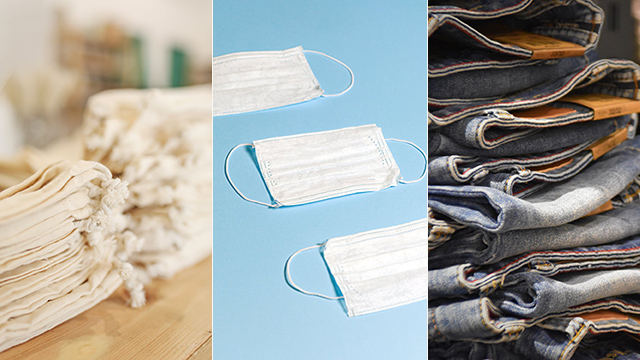
With the shortage of personal protective equipment or PPEs around the world amidst the pandemic, many have resorted to making DIY protective face masks or using cloth face coverings when going out, which was made mandatory. Some local brands have also tried to aid in relief efforts amidst by making their own versions of the the protective gear. While experts have established that these alternatives are not as effective as surgical masks, others have also noted that wearing even a makeshift mask is “better than nothing.” If you’re planning to make your own face mask as a precautionary measure against COVID-19, be sure to choose the material you will use carefully.
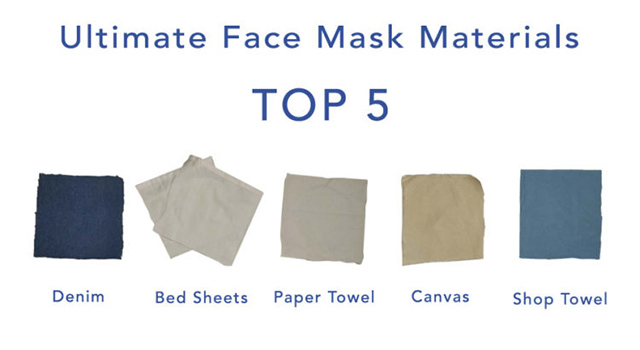
Smart Air, a social enterprise that manufactures cost-effective air purifiers and filters, recently released the results of their study on DIY face mask materials in which they tested over 30 different materials to check which ones are most effective in filtering coronavirus-sized microparticles while still providing breathability. They narrowed down the top five choices to denim, bed sheets, paper towel, canvas, and shop towel.
Other materials that were also tested include bra pads, coffee filters, pillowcases, electrostatic cloths, cotton T-shirts, wool, bedsheets, polyester, and bandanas, to name a few. "There is a huge demand for information worldwide right now about what makes a safe and effective DIY face mask, but there is also a lot of fear and misinformation," says Smart Air CEO and aeronautical engineer Paddy Robertson in an interview with HuffPost. "By releasing this data, and continuing to be totally transparent about our methodology, we hope to help individuals, institutions and potentially even governments make good, data-backed decisions about how to make face masks that will actually protect them."
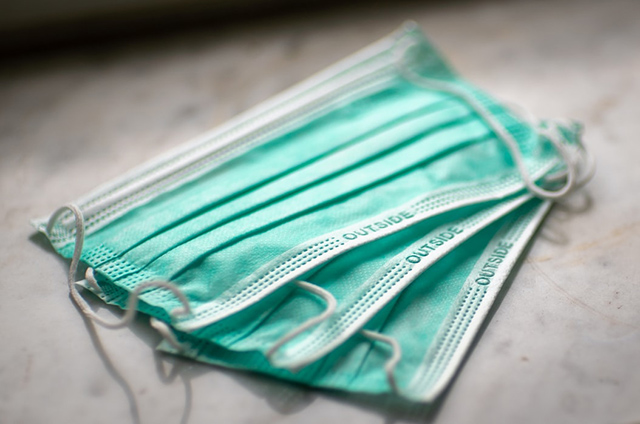
In a blog post on their official site, Smart Air says that they tested for large particles (1 micron) and small (0.3) micron particles. Large particles are approximately the size of the Ebola virus, while small particles are the size of the smallpox virus. Meanwhile, COVID-19 particles measure around 0.06 to 0.14 microns in size, but 5-10 microns in respiratory droplets. The company found that the best masks, which balanced breathability and filtration are paper towels, denim (10 oz), and 100% cotton bed sheets (with 80-120 thread count). In addition, bra pads also performed well, "filtering 14% of 0.3-micron particles, and 76% of 1.0 microns."
Another material you might want to consider is thick canvas (around 0.4 to 0.5 millimeters). Smart Air notes that it is easier to breathe through than surgical masks and "still performed fairly well at filtering particles." It even performed better than the 100% cotton T-shirt, according to the study. If you don’t have access to thick fabrics, Smart Air says a 100% cotton T-shirt, when layered up, can become an effective option for DIY masks.
The Key to Effective Filtration
According to Professor Ivan Hung of the University of Hong Kong’s Li Ka Shing Faculty of Medicine, the key to effective filtration, more than layering, is the fit of the mask. Wearing masks on top of each other will affect its fit and obstruct your breathing. Filters that are derived from other household items may also obstruct breathing, said Professor Hung.
For their study, Smart Air mimicked the setup used by Cambridge University researchers, known as a Henderson apparatus where a fan blows air and particles through the mask material. A laser particle counter then measures the number of particles that penetrate the mask material.
Worst Materials for DIY Face Masks
While most of the materials that they tested were effective at filtering particles, some of the best ones were also the hardest to breathe through. "That makes sense," Smart Air notes. "A really dense, thick coffee filter can capture particles well, but it won’t let much air through."
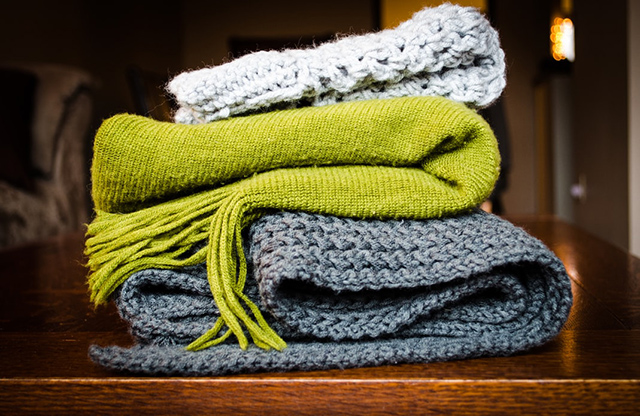
Scarves also failed at capturing smaller-sized particles. The worst scarf material is a 100% ramie (similar to linen) scarf which filtered just 2.8% of the particles. Natural fibers, like cotton and paper, performed better at filtration than synthetic fibers (e.g. polyester and polypropylene)
Bandanas, neckwarmers, wool scarves, quick-dry T-shirts, and synthetic brocade sheets also performed poorly in terms of filtration.
How to Test Fabrics at Home
Of course, materials in our homes (like shirts and bedsheets) are different—some are thicker, some are thinner. Also, not everyone has a laser particle counter at home.
To estimate the effectiveness of your DIY face mask, Smart Air recommends you do the following:
- Hold your material up to the light.
- See how much light passes through it.
- Compare it to this rubric to estimate the effectiveness of your material.
While Smart Air’s study is extensive, wearing face masks—whether DIY or medical-grade—still does not guarantee that you will be protected from COVID-19. However, face masks can be useful when you’re going to crowded places like grocery stores, markets, and pharmacies. It can also help individuals who are positive with COVID-19 but are asymptomatic and unknowingly passing along the virus.
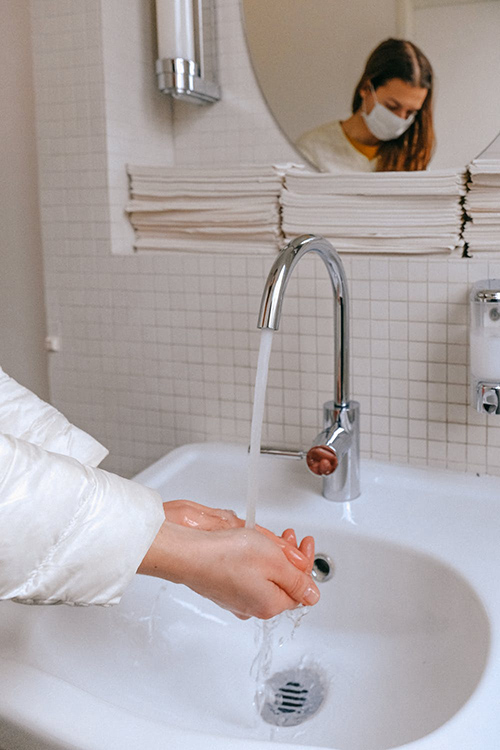
Think of face masks as an add-on. We should still maintain physical distancing and other preventive measures like frequent handwashing. These are still the best ways to stop the spread of the virus.