
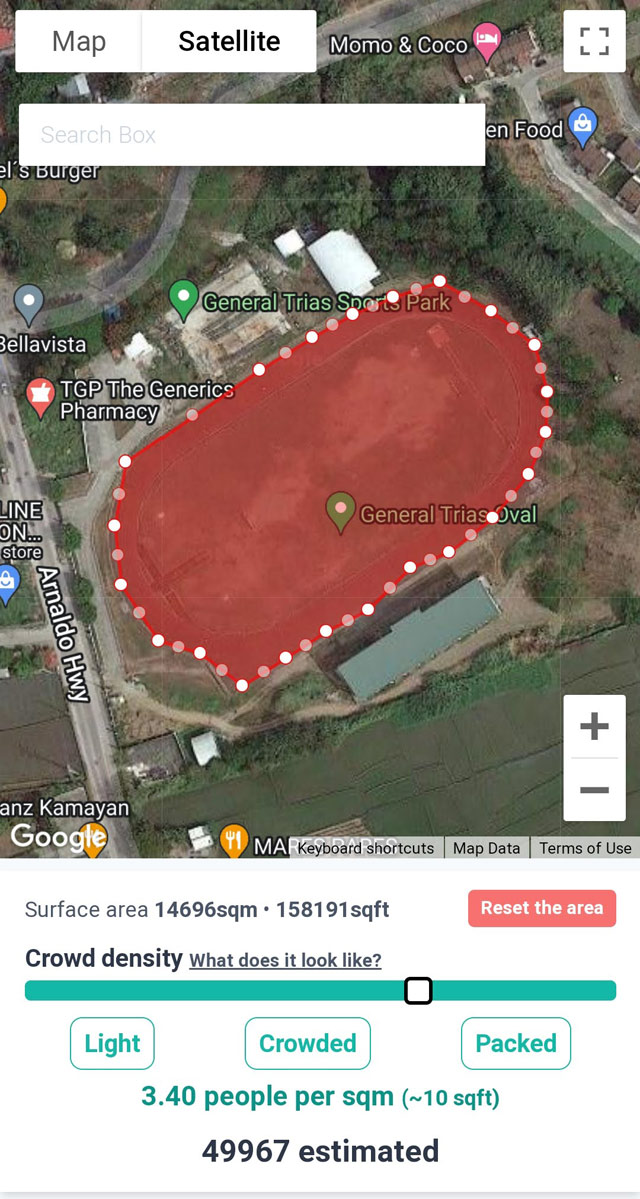
(SPOT.ph) Aside from red-tagging and allegedly abusing supporters, Cavite Representative Boying Remulla also questioned the claim of 47,000 attendees during Leni Robredo's campaign rally in General Trias, Cavite on March 4. "Alam mo 'yong exaggeration lang ng dami ng pumunta sa rally, hindi ako maniniwala sa dami na 'yon. Kabisado ko 'yong lugar, hindi kakasya ang 47,000 people do'n. Exaggeration na 'yon, sobra na," he told Karmina Constantino in an interview on ANC on March 7.
Also read:
Dear Kuya: Younger Remulla Calls Out Brother on National-Anthem Gaffe
Crowd Crush vs Stampede, How to Survive After Itaewon
Which leads us to ask: So how do we know the capacity of various venues? An absolute tangent, trust us. Most of the time, especially for indoor arenas and stadiums, the seating capacity is published online through official channels. Philippine Arena—for example—has a seating capacity of 51,000, according to the website of its main contractor, Hanwha Engineering and Construction. SM Mall of Asia Arena has a seating capacity of 15,000 with a full-house capacity of 20,000, according to its official website. Take note, however, that these numbers are based on the seats along the bleachers—and not necessarily on the floor area of these venues.
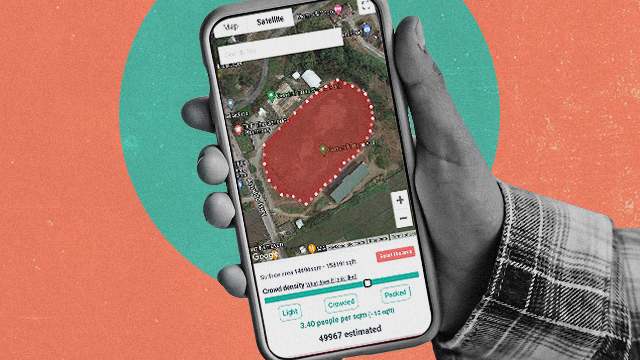
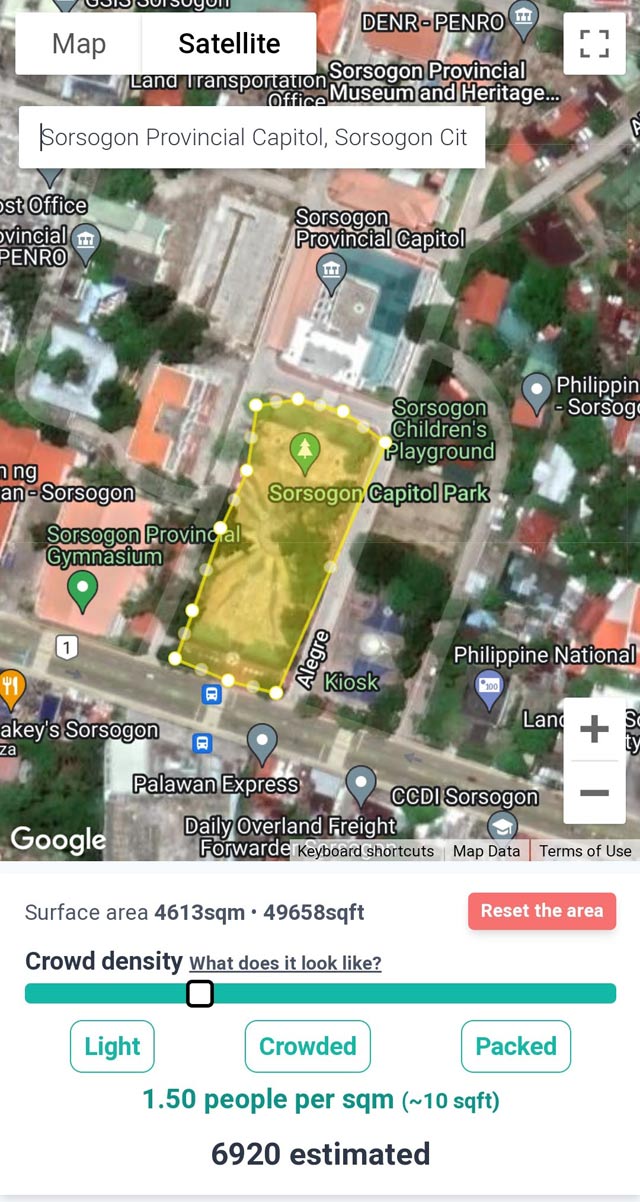
For other places where people are standing, you can use MapChecking.com, a free-for-all website that "helps you estimate and fact-check the maximum number of people standing in a given area." Its coding is housed in GitHub, which is a "provider of Internet hosting for software development and version control using Git."
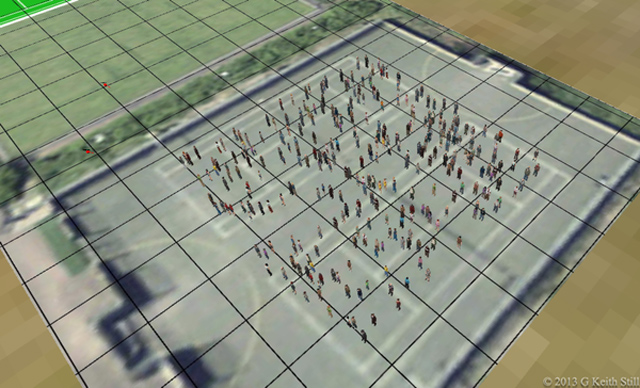
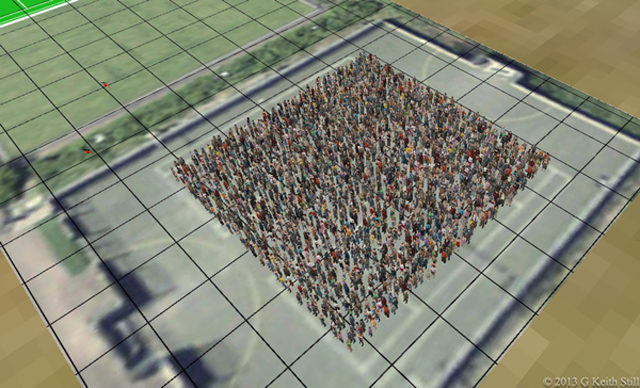
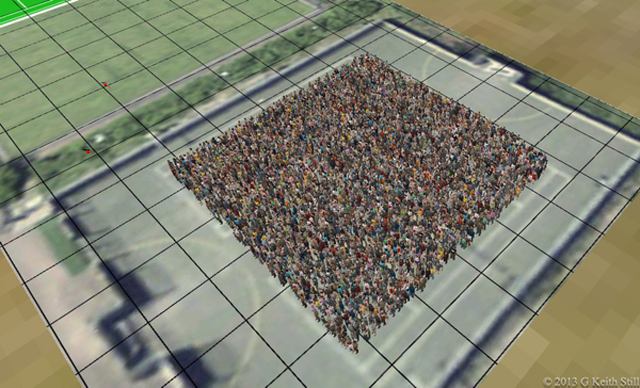
The math and science of it are based on Crowd Safety and Crowd Risk Analysis by Prof. Dr. G. Keith Still, one of the world's leading experts in crowd science. Still, according to his website, "has trained numerous operational leaders across the public and private sector in crowd science, crowd dynamics, and crowd movement to help them safely manage their mass gatherings around the world." To give some idea of the scale he's using, you can check out how crowd density is estimated on a 625-square-meter area. The number of warm bodies is shown per square meter, ranging from a lightly packed space to a very crowded space.
Here's how to use MapChecking.com for checking crowd capacity:
- Through the Google-provided map, look for the space you want to check.
- Draw a border around the area you want to estimate for crowd capacity. MapChecking.com automatically gives you surface area both in square meters and square feet.
- Use the slider to determine crowd capacity: Light density means you have one person per square meter while a Packed density means you have at most five people per square meter.
- The final answer is a crowd estimate based on the delimited area and the crowd density you have provided.
Hey, Spotters! Check us out on Viber to join our Community and subscribe to our Chatbot.