

EXPLAINER: How Will U.S. Election Results Affect the Philippines?
Political analysts weigh in on a Donald Trump vs Kamala Harris future.
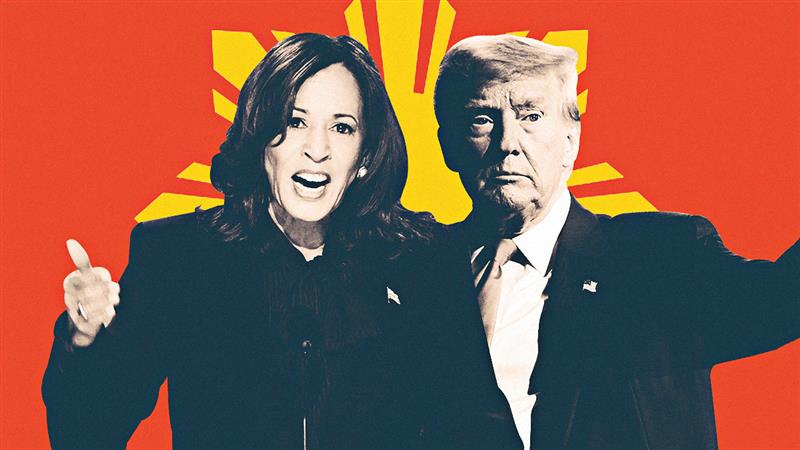
(SPOT.ph) As the counting continues in what’s being called the “Ultimate Election Year” in the U.S.—with record-breaking turnout and a tight race in key battleground states—there’s more reason than ever for the world to pay attention. We know the result of this election is bound to create ripple effects but why should we care from our side of the world?
American thinktank Brookings Institution noted how “of all the Southeast Asian countries, America’s strategic position is the strongest in the Philippines." For one, the US, the group said, are our main ally in defending our sovereignty as outlined in the Mutual Defense Treaty (MDT)—the agreement of the U.S. and the Philippines to support each other in case of an armed attack—which is especially important as tensions rise in the West Philippine Sea with China.
Brookings Institution outlined two possibilities for the Philippines:
If Vice President Kamala Harris wins, her administration is likely to focus on strengthening alliances and promoting human rights and democratic values. This could mean closer ties with the Philippines, but her emphasis on human rights might lead to some tension due to the ongoing war on drugs investigations.
If former U.S. President Donald Trump wins, he might lean towards a give-and-take approach, possibly questioning the Philippines' contributions to the alliance, which could strain the commitment under the MDT. At the same time, a Trump administration could adopt a stronger stance on regional security, potentially increasing support for the Philippines in its disputes with China.
Kamala Harris vs Donald Trump
West Philippine Sea
For Chester Cabalza, founder and president of the Manila think tank International Development and Security Cooperation (IDSC), a status quo is more or less expected with a Harris victory as she builds on the current Biden-Marcos administration ties. Geopolitical analyst Richard Heydarian noted that Harris would likely offer a “more humane, compassionate” extension of Biden’s policies.
When it comes to the West Philippine Sea in particular, it can be recalled that Harris took a strong stance in support of the Philippines’ sovereignty during her visit to Palawan in 2022.
“As an ally, the United States stands with the Philippines in the face of intimidation and coercion in the South China Sea,” Harris said. “We will continue to rally our allies and partners against unlawful and irresponsible behavior. When the international rules-based order is threatened somewhere, it is threatened everywhere.”
Meanwhile, both experts suggested in separate interviews that Trump’s return could potentially mean more direct support for the Philippines.
“We know that with Trump, he’s gonna be more aggressive on China... A lot of Trump guys are saying... key countries like the Philippines should get all the help they need. So I’m not surprised a lot of Filipinos are very excited about the potential return of Trump to the presidency, but that’s just the bilateral relationship,” Heydarian told One News PH.
However, Heydarian also warned about the possibility of getting “a more unpredictable version of Trump,” especially if he becomes entangled in other surprise conflicts that could compromise his support to the Philippines.
“Either way, I think there are a lot of pluses that the Philippines can look at. With Trump, there could be more plus, but there could also be more minuses. It’s a much bigger strategic gamble,” Heydarian said.
Immigration
When it comes to immigration, both Harris and Trump have differing views. Harris aims for reforms with legal pathways to citizenship, while Trump proposes a large-scale deportation plan that could limit immigration opportunities. There are 4.1 million Filipino-Americans living in the U.S. as of 2022.
“A lot of Filipino-Americans residing in the U.S. in a legal gray area could get hurt very bad. Maybe going to the U.S. will be much more difficult for a lot of Filipinos… [Trump’s immigration policy is] one area where we have to curb our enthusiasm,” Heydarian said.
Economy
On the economic front, financial strategist Jonathan Ravelas told BusinessWorld Harris’ less restrictive trade policies could benefit Philippine exports and the business process outsourcing (BPO) sector.
In contrast, Trump’s protectionist stance, including potential universal tariffs and higher trade restrictions, could raise U.S. interest rates, and in turn, hurt the Philippine peso.
“A Trump presidency could introduce more economic uncertainty and potential challenges for the Philippines, while a Harris presidency might offer more stability and continuity in economic policies,” Ravelas said.
Also read: The SPOT.ph Guide to Applying for a U.S. Visa
Who do Filipinos favor over the two?
A WR Numero survey revealed Trump has a slight edge at 18.2% over Harris at 13.9% among Filipinos—but most respondents are still on the fence. Meanwhile, 51.9% said they weren’t familiar enough with either candidate to make a call.
WR Numero President Cleve Arguelles told the South China Morning Post that Trump’s slight edge might be due to his higher name recognition as a former president and businessman. Not to mention his tough talk on China—a very welcome stance for the Philippines.
Interestingly, 16.1% of Filipinos surveyed said it wouldn’t make much difference for the Philippines who wins, suggesting a bit of skepticism about the impact of U.S. politics on local matters.
Should we be worried?
Regardless of who takes the seat in the White House, top diplomats from both countries have expressed that the U.S.-Philippines alliance will stay strong regardless. U.S. Ambassador MaryKay Carlson had told attendees at the U.S. Embassy’s election watch party in Manila on November 6 that the U.S.-Philippines partnership is “steadfast and iron-clad,” with solid support from both Democrats and Republicans.
“Even if things go south under the next president, I think we’ll be the first-class cabin in a sinking Titanic ship,” Heydarian said. Perhaps it's true what the Asia Times headline says, after all: “Harris or Trump, Philippines sitting pretty with America.”
Also read: "No Magic Checklist”: Debunking U.S. Visa Application Myths You Might Still Believe