

EXPLAINER: What Are the Rewards and Responsibilities of Miss Universe?
Wearing a crown is just the beginning.

(SPOT.ph) When the crown is placed and the glitter is settled, Miss Universe's responsibilities go far beyond parading in bikinis and evening gowns. Winning the competition is just the beginning—the real work starts the moment she removes the sash and steps off the stage.
There's no other way to put it: being Miss Universe is a full-time job.
According to the official website, Miss Universe is expected to (1) transform lives by empowering women worldwide, (2) create prosperity by providing opportunities for personal and professional growth, and (3) serve humanity with equality and without distinction by celebrating diversity and inclusion. But what exactly does this entail?
Also read: LOOK: Miss Universe Unveils First Crown From the Philippines
What does Miss Universe do?
Founded in 1952, the Miss Universe Organization initially celebrated physical beauty and stage presence. Over the decades, it has evolved to become more than a pageant but also a platform.
That said, winners are expected to embody the values of the organization: beauty, empowerment, and humanitarian advocacy. Central to her role is serving as an ambassador for causes like education, mental health, gender equality, or environmental conservation. This is usually up to her choosing. Let’s take recent Philippine winners Pia Wurtzbach and Catriona Gray as examples.
As Miss Universe 2015, Wurtzbach focused on HIV/AIDS awareness and LGBT rights. She was a UNAIDS Goodwill Ambassador who helped reduce the stigma attached to having HIV, even organizing public HIV screenings in the Philippines. Beyond her HIV advocacy, Wurtzbach has called on the Senate to pass the SOGIE Equality Bill in 2018.

As Miss Universe 2018, Gray championed education and children’s welfare through Young Focus Philippines, creating opportunities for underprivileged kids in the slums of Tondo. She also worked with Smile Train for cleft palate surgeries, served as an ambassador for LoveYourself Philippines' HIV initiatives, and promoted cultural preservation as an NCCA Arts Ambassador. During the COVID-19 pandemic, Gray also supported Philippine Red Cross campaigns.

However, there are instances where a Miss Universe is unable to fulfill her responsibilities due to resignation, dethronement, or other reasons. When this happens, the first runner-up in the competition takes over the title, but this is not always the case. The Miss Universe Organization reserves the right to make decisions based on the circumstances.
In 1952, Armi Kuusela from Finland resigned from her title to get married but no successor was named. However, in 2002, first runner-up Justine Pasek from Panama stepped in as Miss Universe when winner Oxana Fedorova from Russia was dethroned for not fulfilling her obligations.
Also read: Who Is Chelsea Manalo, Our Miss Universe Philippines 2024?
What does Miss Universe win?
Everything isn't glitz and glamor for Miss Universe, but it does come with pretty sweet rewards.
Miss Universe is famously provided with a rent-free, fully furnished luxury apartment in New York City to serve as her homebase for activities. Financial compensation is part of the package, with reports claiming a prize money of $250,000 on top of an annual six-figure salary, though exact figures can vary.
Miss Universe also receives comprehensive support from the Miss Universe Organization during her reign. This includes provisions for groceries, clothing, accessories, transportation, and other essentials, allowing her to focus on her responsibilities without concern for daily expenses.

Of course, one of the most iconic rewards of Miss Universe is the crown itself.
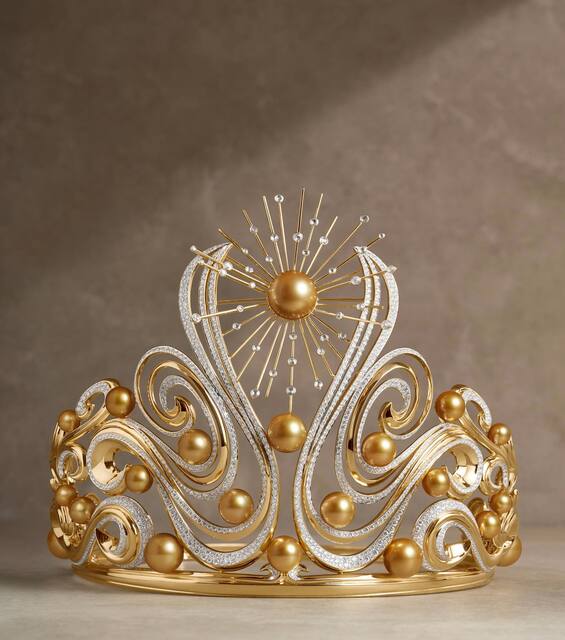
The latest Miss Universe crown is “Lumière de l'Infini” or the “Light of Infinity,” which features 23 South Sea pearls from the waters of Palawan by local luxury brand Jewelmer. The exact value of the crown has not been publicly disclosed, but Jewelmer’s previous “La Mer en Majeste” crown for Miss Universe Philippines was valued at approximately P3 million, so it’s safe to say this one is worth much more.
Although the Miss Universe winner won't actually get to keep the crown after her reign, she's free to wear it whenever she likes.
Since her schedule is packed with public appearances, interviews, and charity events, traveling becomes a significant part of her role. She might find herself in Thailand hosting a charity gala, in South Africa advocating for wildlife conservation, or in the Philippines supporting children’s education initiatives. Whether she’s walking the red carpet at a fashion event or visiting schools in rural communities, her travels are always with purpose—and all expenses, from flights to accommodations, are covered by the Miss Universe Organization.
Along the way, she also receives sponsorships and endorsements from various brands in fashion, beauty, and lifestyle, even long after she gives up her title.
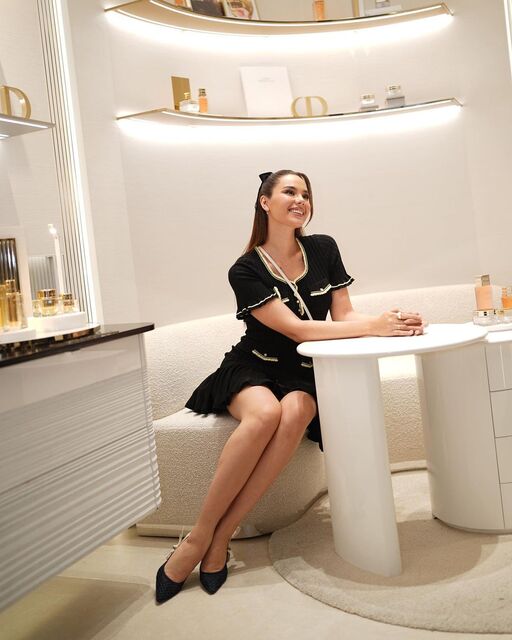
Case in point: Wurtzbach represented Cream Silk, Philippine Airlines, Olay, PLDT Home, and BDO Unibank, while Gray was the ambassador for Dior Beauty, Bvlgari, Chanel, Gucci, Michael Cinco, and Belo Beauty. Many of these brands they still work with up to this day.
Perhaps the biggest benefit of winning the crown is one that isn't seen or experienced right away. No doubt about it—this kind of exposure builds lasting popularity that can lead to opportunities beyond traditional pageantry, all thanks to the global platform Miss Universe provides.
In fact, many Miss Universe winners have gone on to use their reign as a launchpad for varied careers. Look no further than Wurtzbach and Gray: the former went into acting and writing, while the latter expanded her work in music and cultural promotion. Both continue to thrive in their respective fields.
Let’s just say winning Miss Universe sets the winner up for life.