

What Heidi Mendoza Taught Us About Coalitions—By Breaking One
Although the events of the past few days were tense and painful, there may be a silver lining.
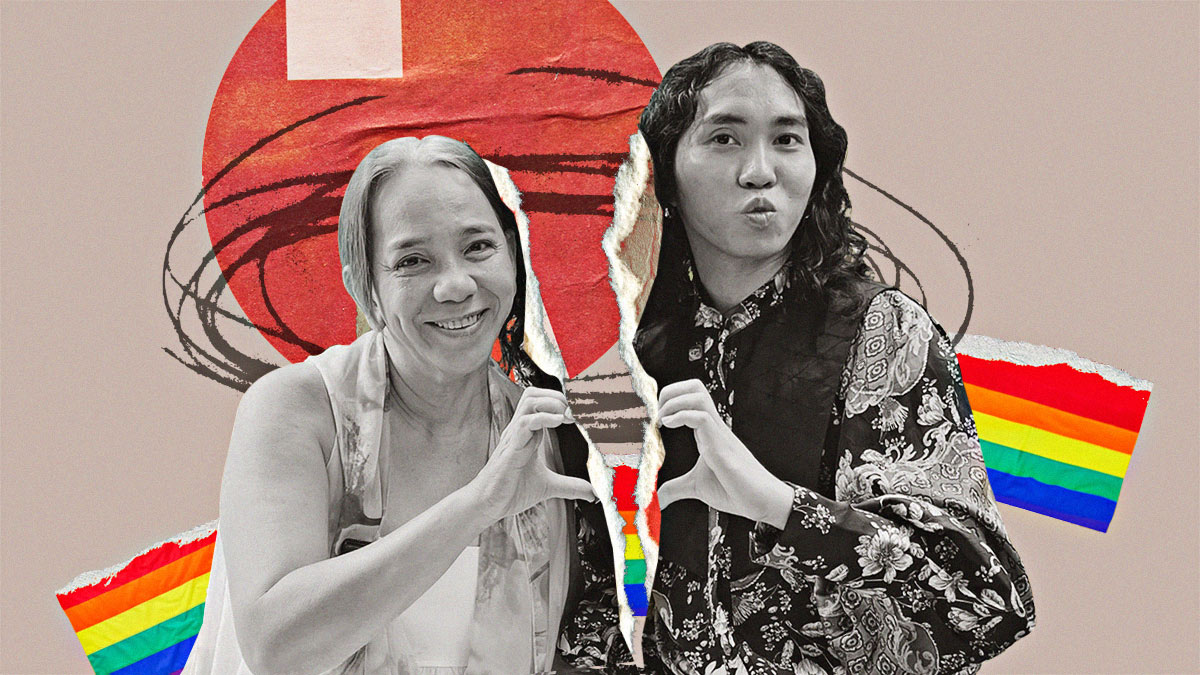
(SPOT.ph) I still remember the first time I saw Heidi Mendoza. Our government office was monitoring a committee hearing on TV about corruption in the Armed Forces, and there was this witness—a state auditor—talking about anomalies, ghost purchases, and alleged millions of pesos in pabaon for retiring chiefs of staff in our military.
“I appear before this committee… to tell our Filipino people,” she said—with her voice shaking. “...hindi lahat ng Pilipino ay corrupt.”
The year 2011 is hazy for me now, but one of the things I recall clearly was watching her on the screen and hearing my colleagues say, again and again: “I’m so scared for her.”
Every year, Transparency International releases the Corruption Perceptions Index. And every year, it shows that the Philippines is among the top 35% of the world’s most corrupt countries. For a nation like ours, Heidi Mendoza’s Senate campaign makes so much sense. In fact, our best performance on the index was in 2014—when she was still in COA—and we ranked 85th out of 180 countries. Not to mention that Mendoza also spent four years as the United Nations’ chief auditor, evaluator, and investigator.
Also read: Heidi Mendoza Was The Progressive's Choice—Until This Happened
But when one runs for national office, even the most technocratic identities are somehow made whole. Mendoza has been no exception. When asked whether she supported same-sex marriage, she said “no.” When asked about divorce, she said true love endures—and suggests counseling or temporary separation for those in abusive relationships.
For her oldest admirers—myself included—this tarnished the moral clarity of voting for Heidi Mendoza with a familiar murk. A bright spot in the candidate list somehow became just another lesser evil. And it burdened many of us with a kind of moral discomfort—how is it that she was ready to give her life for the cause of truth, accountability, and justice, but have a less clear resolve when it comes to those who might be trapped in an abusive marriage, or those asking to marry who they love?
It took a day or two, but her recent apology breathed color into what was becoming an increasingly bleak campaign. In a statement addressed to the LGBTQIA+ community, she said: “Narinig ko kayo. Hindi sapat ang intensyon kung may tunay na epekto ang salita. For that, I offer my sincere apology and my full attention.” She committed not to stand in the way of same-sex unions becoming law. And she vowed to educate herself on inclusive policy-making, and to continue listening to the community.
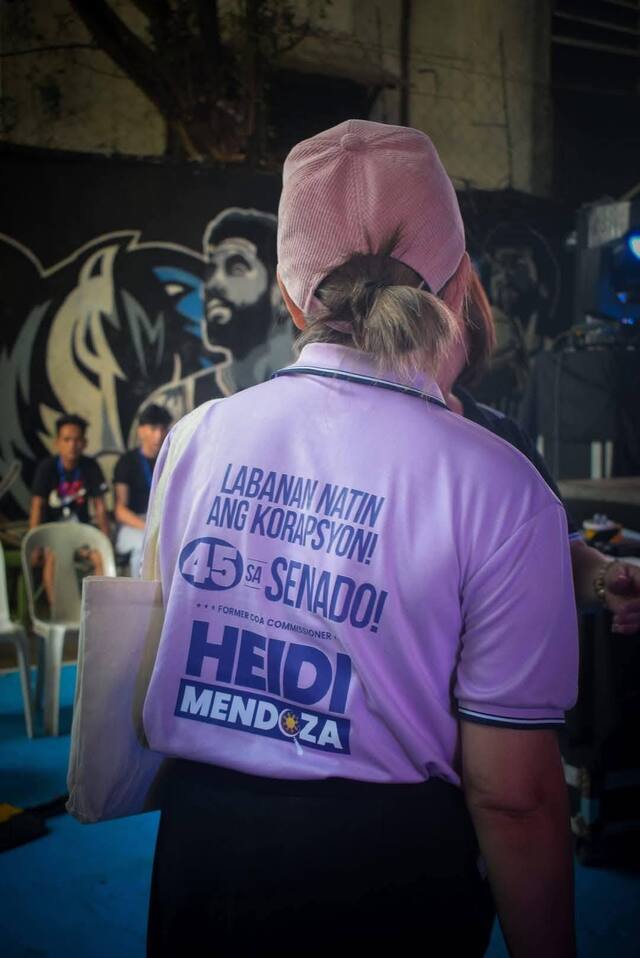
The resolution might feel neat, but it was stressful. The debate in recent days revealed just how difficult coalition building can be. Stances were hardened. The LGBTQIA+ community was understandably incensed. Some were quick to lecture them about “cancel culture” and seeking perfect candidates. And sadly, many saw this as an opportunity to express their homophobia in public.
How do we build coalitions?
Across the world, progressives struggle with this. How do we build coalitions when the causes dearest to us feel sacrosanct? When every debate feels like a potential dealbreaker? Can we work on climate change with someone who’s an anti-vaxxer? Or support a marriage equality advocate who’s suspiciously into crypto? Or… how about an anti-corruption crusader who opposes same-sex marriage and divorce?
Just to be clear: I will not ask the queer community to vote for Heidi Mendoza—because I also know what it feels like to be hurt by widely respected public figures. I, a Chinese-Filipino, have seen Winnie Monsod write, in her controversial 2018 column "Why Filipinos distrust China," how she often observed "that a Chinese-Filipino will never ever state unequivocally that he/she is a Filipino first, and a Chinese second (meaning his loyalty is to the Philippines)." I’ve seen the late F. Sionil Jose argue that all Chinese schools in the Philippines should be closed down. I would have never voted for these people, no matter how distinguished. So I am in no position to lecture queer people about considering Heidi Mendoza.
What I am saying is we need a coalition wide enough—and compassionate enough—such that we can step in for one another when the conversation feels too targeted or difficult. A coalition where climate activists speak up for survivors of abuse. Where champions of media freedom stand with persons with disabilities. Where men show up for women and queer communities—knowing that our liberation is tied to each other’s.
I say this because this isn’t the last time this will happen, especially if our goal is to build something large and real enough to challenge entrenched dynasties. Heidi Mendoza, for all the talk about her these past few days, is still polling at 2-3%—and she needs about 35% to win. We need more ways to maximize the vote for honest-to-goodness public servants, without erasing the pain of the communities in the margins. That means a bigger tent—ten times bigger than now, in fact. And ten times noisier.
There are many people in these tents. There are advocates—many of us know how to be one. It’s natural to espouse the virtues of our positions: income equality, reproductive health, marriage equality, climate action. There are pragmatists too—they count the votes; they study regional politics; they’re willing to work with “lesser evils” for a larger good.
But the most forgotten role in coalitions, I find, is the peacekeeper—the personality hire. The one who softens the discourse. Who makes sure no one feels completely invisible. Who chases the person who walks out of the room—maybe just to have a cigarette with them. That matters too. Because they’re often the ones who help us wake up the next morning and keep fighting.
Although the events of the past few days were tense and painful, there may be a silver lining. The Heidi Mendoza issue drew all these people out—advocates, pragmatists, peacekeepers. We had essays about ideals, and essays about strategy, and essays about who deserves our vote. It was one of the more vibrant democratic moments we've had in a long while. That part was heartening.
I just wish it didn’t have to come at the cost of harming our queer allies again.
I won’t pretend to know what it takes to build a bigger, stronger coalition. But I can say that I see the beginnings in the duality of Heidi Mendoza. In her best moments, she was brave enough to speak on corruption and injustices, even if her adversaries controlled the military. And in her more errant ones, she stated what she believed, and—in the face of strong disagreement—sat down, and listened. I admit that it isn’t the most thorough of plans, but perhaps it is a good place to begin.