
Yes, You Can Ask to Visit Manuel Quezon's Tomb Under the QC Circle Shrine
Here's a reminder to casual parkgoers.
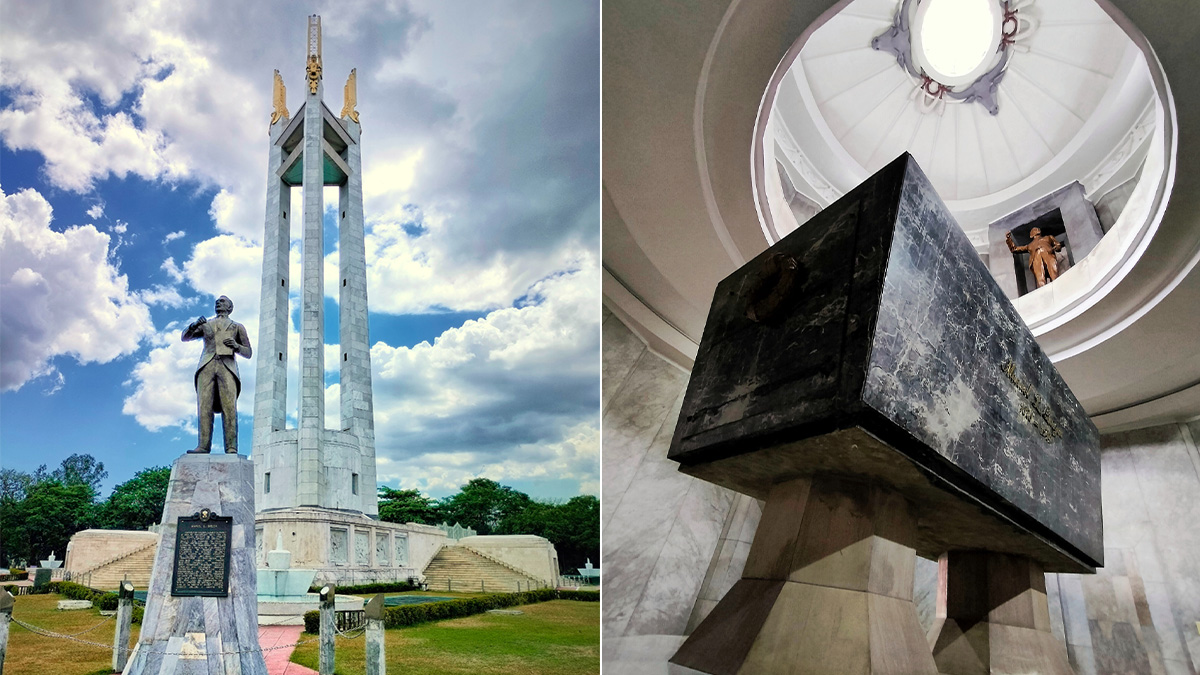
Apparently, many people are not aware of what's under the Quezon Memorial Circle, or more specifically, the Quezon Memorial Shrine. This place of immense historical significance is often overlooked by parkgoers.
After visiting the Presidential Car Museum, I made my way to the center of the circle to take pictures of the landmark. A quick background about The Quezon Memorial Circle is that it was meant to be a park at the center of the nation's capital—back when Quezon City was the capital of the Philippines. Republic Act No. 333, enacted on July 17, 1948, made Quezon City the country's capital until President Ferdinand Marcos decreed in 1976 that it should, in fact, be Manila. Quezon City's urban plan was designed so that major government offices and facilities were located around the circle: The Department of Agriculture, the DENR, the Philippine Heart Center, the Lung Center of the Philippines, the Central Bank, Land Bank of the Philippines, and more.
Also read:
15 Facts You Might Not Have Known About Manuel Quezon
Of Boats, Jews, and Origin Stories: A Lesser-Known Tale of the Philippines
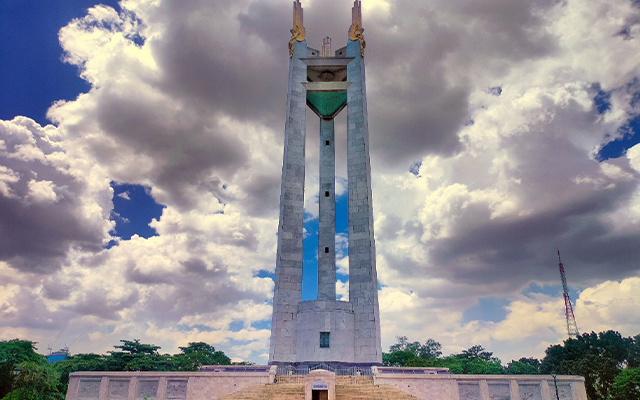
The Quezon Memorial Shrine at the center of the Quezon Memorial Circle is the most prominent landmark in the city. Steeped in history and heritage, the park was first envisioned in 1941 to honor the legacy of President Manuel Luis Quezon, the first president of the Philippine Commonwealth under American rule.
Unfortunately, these plans were scuttled because of World War II, when Japan invaded the Philippines. It would be much later, in 1950, when President Elpidio Quirino revived the plans to erect a memorial for Quezon. In 1951, he launched a nationwide contest for designing the monument.
Architect Federico S. Ilustre's design won: It featured a 66-meter shrine composed of three pylons covered with white Carrara marble from Italy. The pylons' height represents Quezons age when he died at 65 years old.
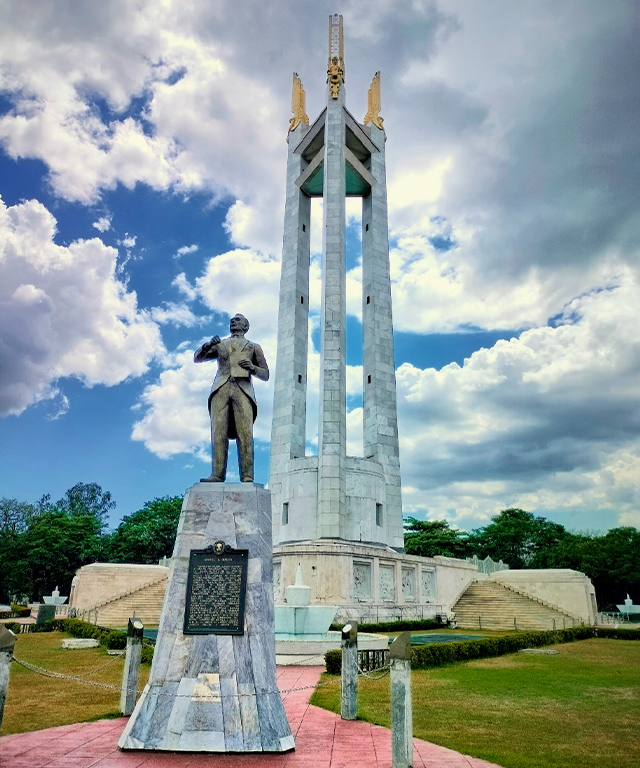
Below the towering pylons are bas-reliefs depicting the history of the Philippine archipelago.
What's Under the Quezon Memorial Shrine?
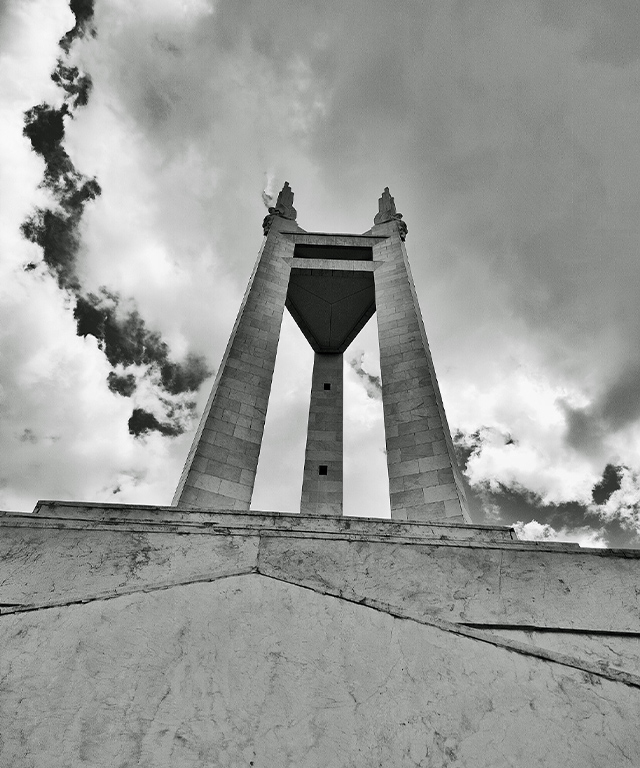
After taking photos of the historic landmark, I noticed there was an entrance below the pylons. I knew the tomb of President Manuel Quezon was underneath the shrine, so I asked the guards if I could see it.
To my surprise, they opened the sealed chamber for me.
It felt surreal being alone in the crypt. Here was the tomb of the man who wanted to save 10,000 Jews from the Holocaust.
Before taking photos or videos, I offered a prayer for the departed.
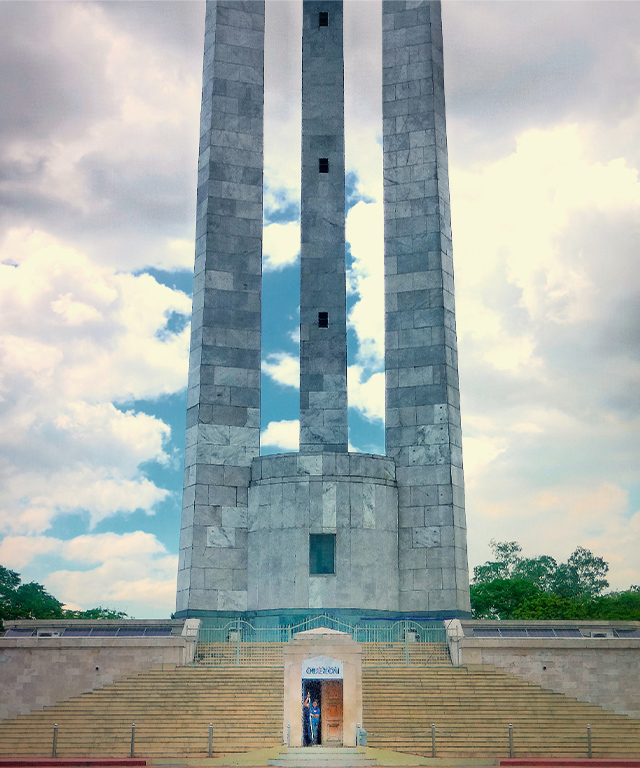
Inside is a circular room with Quezon's sarcophagus in the center, elevated on a marble plinth. When Quezon died of tuberculosis in the U.S. in 1944 during World War II, it took two years for his remains to be returned to the Philippines on 27 July 1946. He was buried at the North Cemetery in Manila. It was only on August 19, 1978, on the 100th anniversary of his death, that his remains were transferred to their permanent resting place at the memorial that bears his name.
In a niche on the side of the room is the tomb of Aurora Quezon, the President's wife. Aurora Quezon was assassinated in 1949 while she was traveling through the mountains to Baler. In 2005, the remains of were transferred from the North Cemetery in Manila to the Quezon Memorial Shrine.
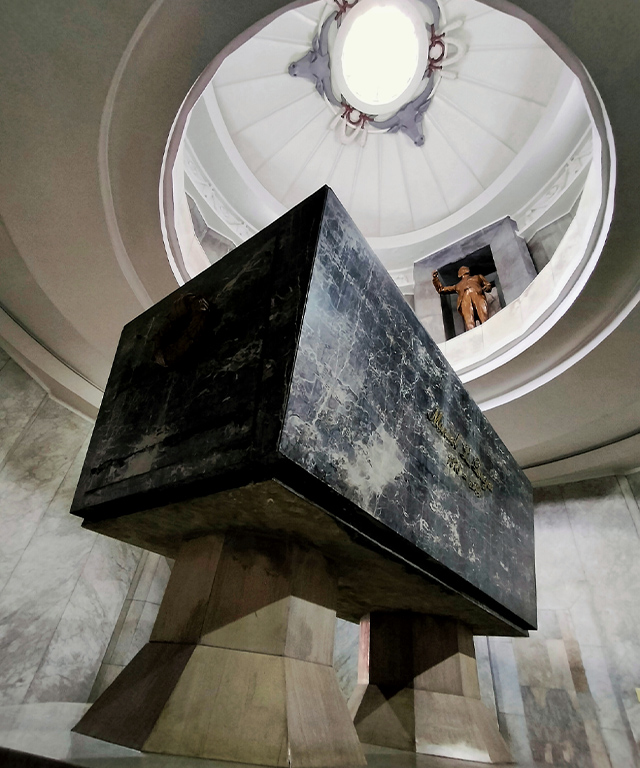
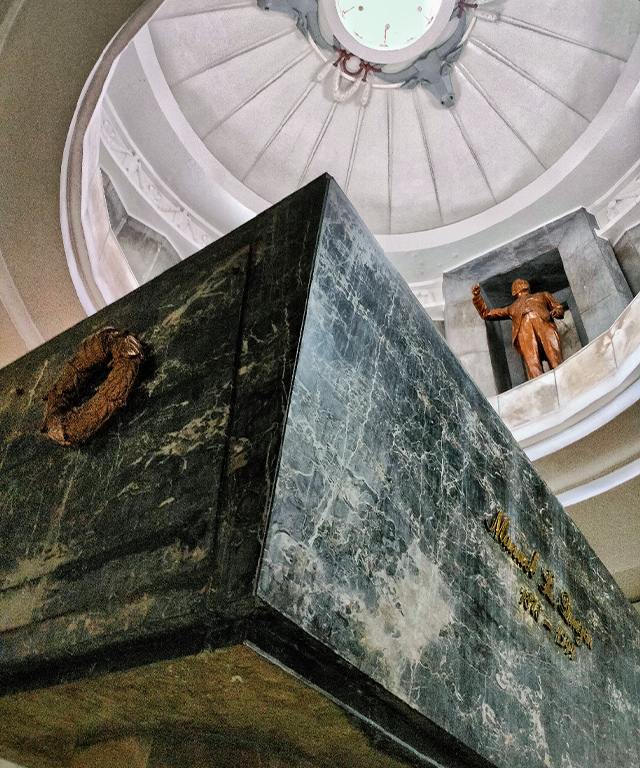
On a second level above the circular crypt is a niche on which a statue of Quezon sculpted by National Artist Guillermo Tolentino stands. The statue depicts Quezon delivering his fiery speech when he was elected President of the Commonwealth.
Curiously, there are three heads of carabaos surrounding the dome's oculus directly above President Quezon's sarcophagus. The carabaos were mounted on the oculus in 1958, while the statue of Quezon was placed on the niche 20 years later in 1978.
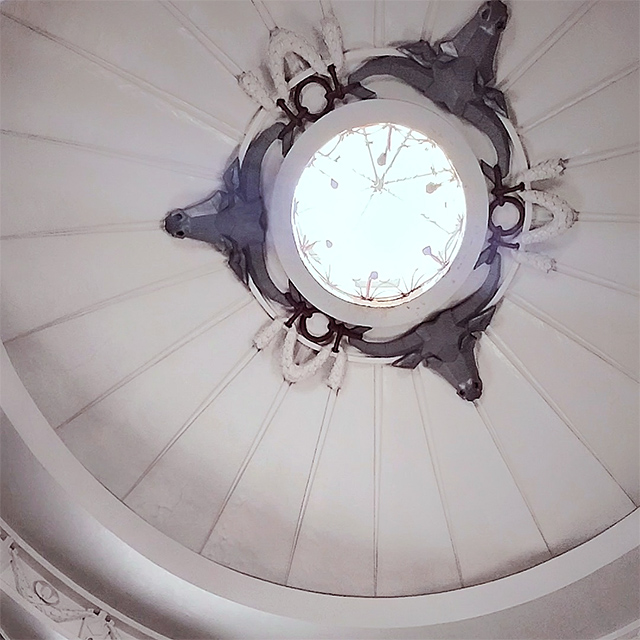
Monti, who sculpted the Three Muses on the three pylons of the shrine, is believed to be the artist behind these carabao heads framing the oculus skylight.
Below is a short video of what's under the Quezon Memorial Shrine.