
Taiwan: 10 Must-Visit Destinations in Taiwan
Perfect for a quick trip out of the country.
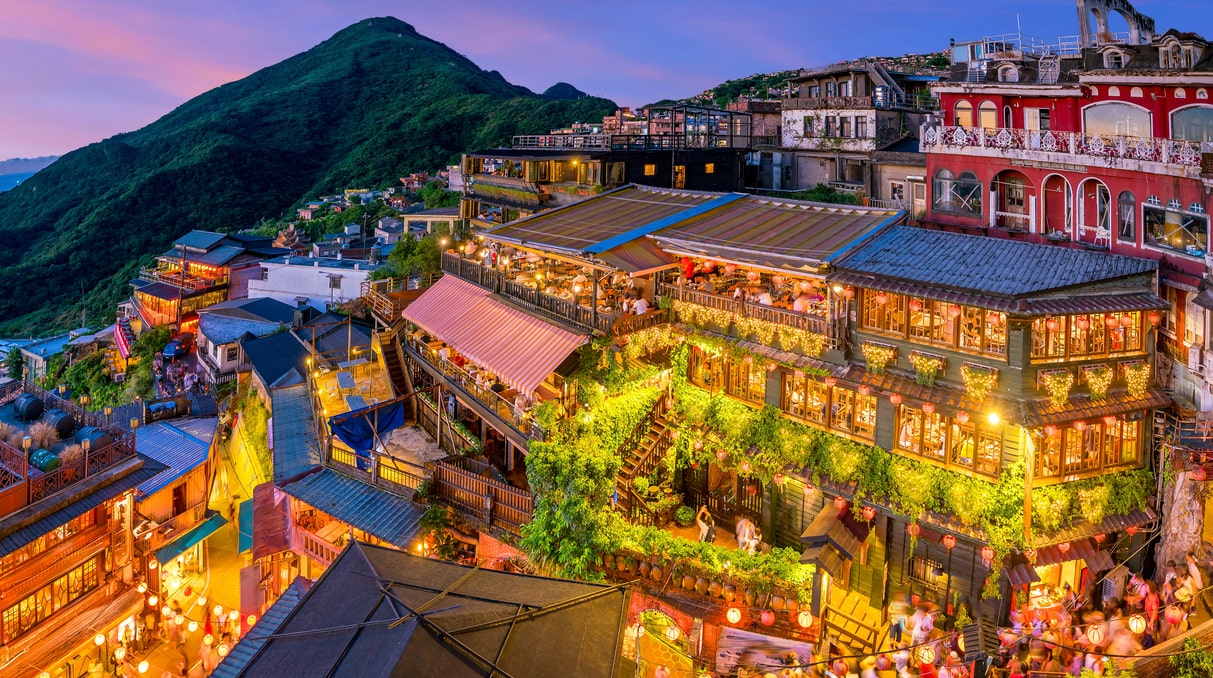
(SPOT.ph) Approximately 200 kilometers off the northernmost coast of Batanes lies Taiwan, one of the smallest countries in Asia. Its total area is only around 36,000 square kilometers, comparable to the size of Netherlands, but with a population of 23 million people—making Taiwan more populous than 75% of the countries in the world. With its close proximity to the Philippines and its high population density, Taiwan is a convenient and enjoyable place to visit for us
Filipinos, especially if you are looking to have a fun long-weekend trip.
What makes planning the trip even more seamless is that Filipinos can enter Taiwan visa-free for 14 days—a privilege that has been extended up until July 31, 2024. This is your sign to book those tickets stat!
Also read: LOOK: Taiwan's Lantern Festival 2024
Accessibility is not only the selling point of Taiwan; its history is full of color. Long ago, Taiwan was a self-governing nation before it became the colony of the Netherlands for about 40 years in the 16th century. In the 17th century up until 1895, China gained control of the country. With the Sino-Japanese war happening in 1895, however, Taiwan became a colony of Japan. It was only in 1945 when Nationalist Chinese regained control of Taiwan. But briefly after this, Mao Zedong’s Chinese Communist Party in mainland China defeated Chiang Kai-shek’s Nationalist forces and established the People’s Republic of China in the mainland. This urged the Nationalist government to leave, thus separating Taiwan and China again. In the 1980s, the relationship became more stable as Taiwan relaxed the rules of visit and investment in China and in 1991, Taiwan proclaimed that its war with China was finally over. China then proposed the “one country, two systems” option to both Hong Kong and Taiwan to bring them back to Beijing’s control and at the same time, allow significant autonomy to these countries. Hong Kong accepted the offer while Taiwan rejected it.
Here’s a rundown of landmarks you shouldn’t not miss on your trip to Taiwan:
Taipei 101 Observatory

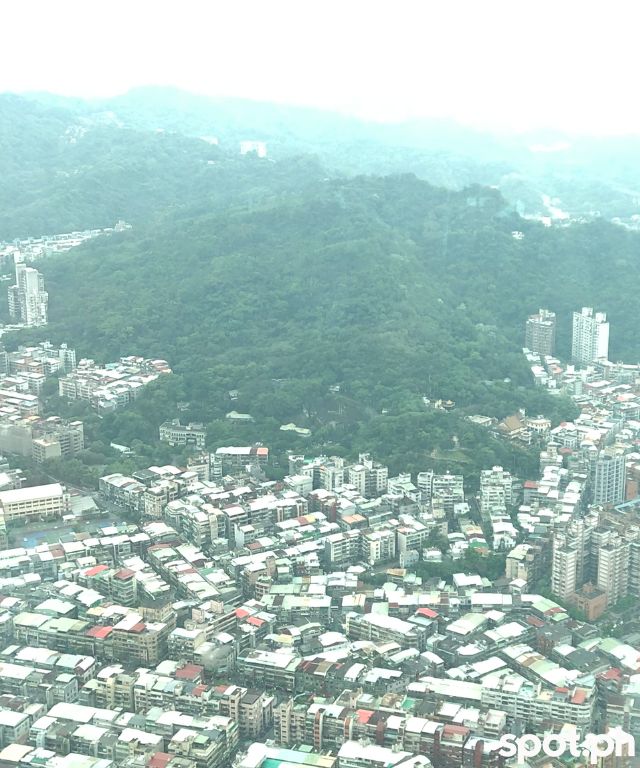
Fondly taken as an iconic symbol for Taiwan because it remained as the tallest building in the world from 2004 to 2010 before it was overtaken by Burj Khalifa, Taipei 101 is an office building designed by C.Y. Lee & Partners. True to its name, it has 101 stories and towers at 508 meters high.
The public observatories are found at floors 89 to 91, with the 89th “CityView 360” floor having an indoor one and the 91st “The Horizon” floor having an outdoor one. The topmost floor, called Skyline 460, is another indoor observatory and is only reserved for VIP parties and meetings. Inside the observatory, you will see the mirror effect of the floor, creating an illusion of an infinite horizon. There is also the wind damping ball that keeps the building from swaying due to strong winds. The elevators leading to the top floors are high-speed and it takes only 37 seconds to go from the 5th to the 89th floor.
There are also other instagrammable spots in the observatory such as the Secret Garden in the Clouds and the Rainbow Light Zone.
Taipei 101 is at 7, Sec. 5, Xinyi Road, Xinyi District. The observatory is open from 10 a.m. to 9 p.m. daily entrance fee costs NT$600 (P1,080 pesos) per person.
Chiang Kai-shek Memorial Hall
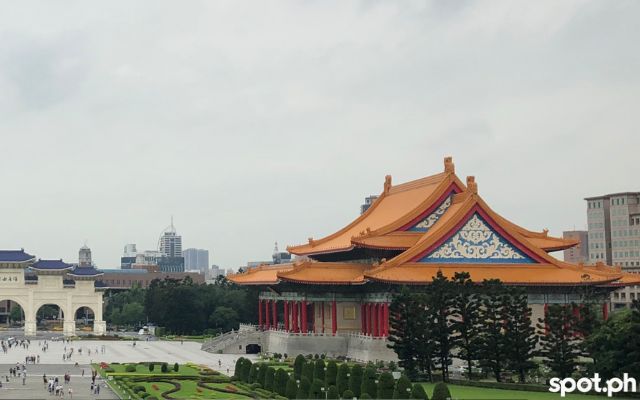
As mentioned earlier, Chiang Kai-shek was the leader who established a Chinese government in Taiwan when it was overthrown by the Chinese Communist Party in mainland China. So when he died in 1975, the Executive Yuan built the Chiang Kai-shek Memorial Hall in his memory. There are contrasting opinions as to commemorating Chiang Kai-shek as a hero. Although he was hailed as “the savior of mankind”, “a great man of the world”, “a beacon of
freedom” and “the Great Wall of the nation”, many also argued that his authoritarian regime allowed for the violation of human rights. The ruling authorities suppressed opinions, froze the Constitution and expanded the power of the President.
The whole complex consists of various buildings such as the CKS Memorial Hall, the Gates of Great Loyalty and Great Piety, Democracy Boulevard, Democracy Square, the National Concert Hall, National Theater, and The Archway. Permanent exhibitions include the “Taiwan long walk to freedom of speech” and “Chiang Kai-shek and the Republic of China”.
Chiang Kai-Shek Memorial Hall is at 21, Zhongshan S.Road, Zhongzheng District.
The hall is open from 9 a.m. to 6 p.m. daily while the memorial park is open from 5 a.m. to 12 a.m. daily. Entrance to the grounds is free.
Sun Yat-sen Memorial Hall
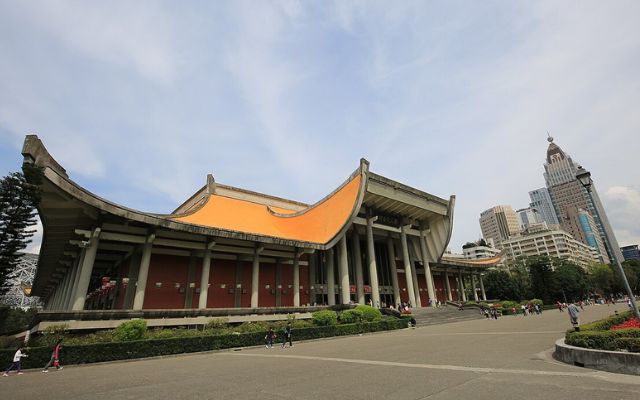
Dr. Sun Yat-sen is commemorated as the national founding father so the Republic government built his memorial hall in 1964. He was the leader of the Chinese Nationalist Party that overthrew the Qing Dynasty in 1912 and served as the first provisional president of the Republic of China.
In 1965, President Chiang Kai-shek presided over the foundation laying ceremonies of the grounds. It was completed in 1972, designed by the famous architect Wang Da-hung. The hall’s activities also centers around the doctor’s ideologies of “Greater Love”, “The World is for All People”, and “The Purpose of Life Is to Serve Others” to foster greater respect among the Taiwanese. The hall was recognized as the “city-designated historic site” by Taipei City Government on May 2019.
Sun Yat-sen Memorial Hall is at 505, Sec.4, Ren-ai Road. The grounds are open
to the public from 9 a.m. to 6 p.m. daily.
Longshan Temple
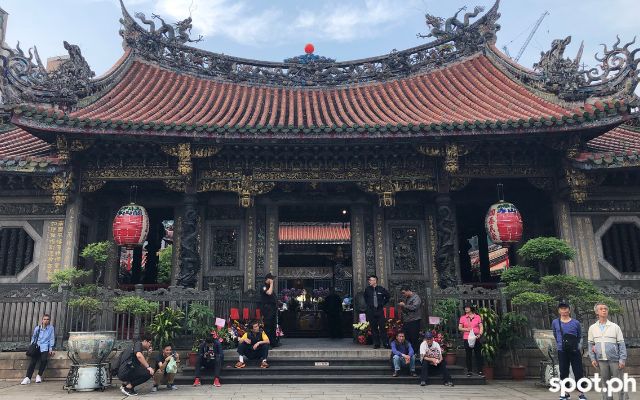
Situated in Taipei’s most historic neighborhood, the Longshan Temple was built as early as 1738 to serve as a temple for several religions—the Taoist, Buddhist and Confucian faiths. The temple has also stood the test of time and survived the most destructive raid during World War II. In May 1945, 3,800 bombs were dropped in the city and the temple was severely damaged. Luckily, the statue of Guanyin remained standing. The temple has been rebuilt several times after every earthquake, flood and fire by the residents. Yue Lao is considered one of the most famous gods in the temple because it is believed that single locals that pray to them will marry their true love and stay with them forever.
The Longshan Temple is at No. 211, Guangzhou Street, Wanhua District. It is open
from 6 a.m. to 9:30 p.m. daily and entrance is free. It’s best to wear modest clothing during your visit.
Ximending Night Market
Ximending Night Market is the place to be if you want to taste really good Taiwanese street food, go shopping, and have some fun! This is considered the coolest neigborhood because it’s frequented by both young Taiwanese locals and tourists. The market was built as an entertainment area just outside the Wanhua district of Old Taipei City and existed since the Japanese era.
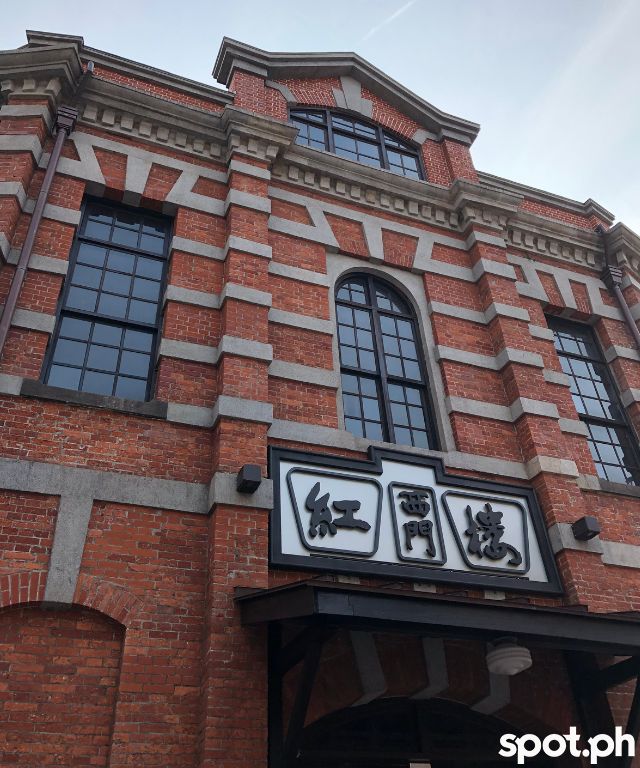
One of the things you will see in the area is street art at Graffiti Lane, created by artists such as Mr. Ogay and Alex Face. You will also stumble upon the Ximen Red House, where you can take a peek at history with old photographs from the founding days of Ximending and also attend weekend art markets. For the main attraction of the night market, you can explore a variety of souvenir shops, theaters and restaurants found at neon-lit bustling streets of Ximending Pedestrian Zone. Some of the most popular food recommendations include the Ay Chung Flour-Rice Noodle, Hot Star Large Fried Chicken, Snow King ice cream with interesting flavors, Taiwan’s best craft beer at Driftwood, pearl milk tea, beef balls, sesame oil chicken, tomato candy and the original tofu pudding. Alternatively, you can even get a tattoo or your souvenirs from a game machine system.
The Ximending Night Market is at No. 127, Hanzhong Street, Wanhua District. Most stores in the market close around 9 p.m. or 10 p.m. while others close at midnight.
Yangmingshan National Park
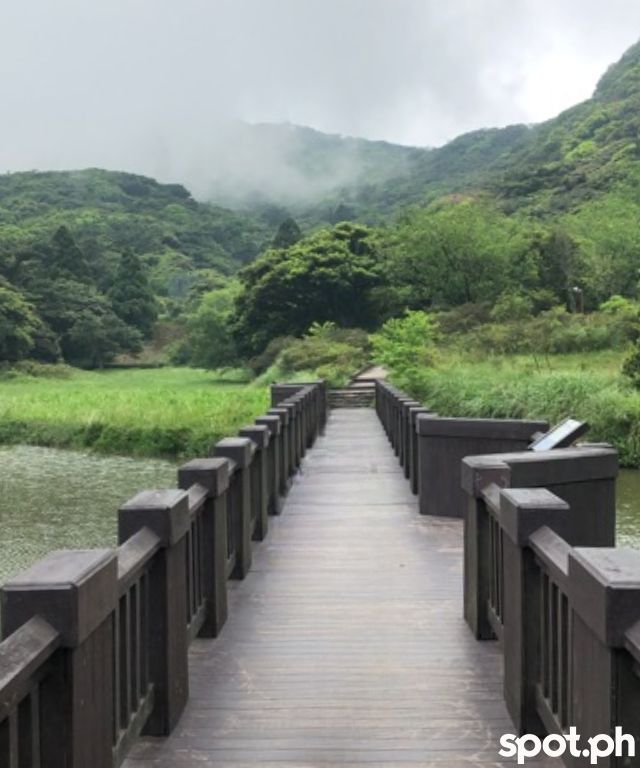
Dubbed one of Taiwan’s most beautiful national parks because of its hot springs and sulfur crystals, Yangmingshan National Park is popular among the tourists. In 1950, the park was renamed from Daiton National Park to Yangmingshan by Chiang Kai-shek in memory of the Ming Dynasty scholar Wang Yangming. In 1962, it was transformed into the park that it is today.
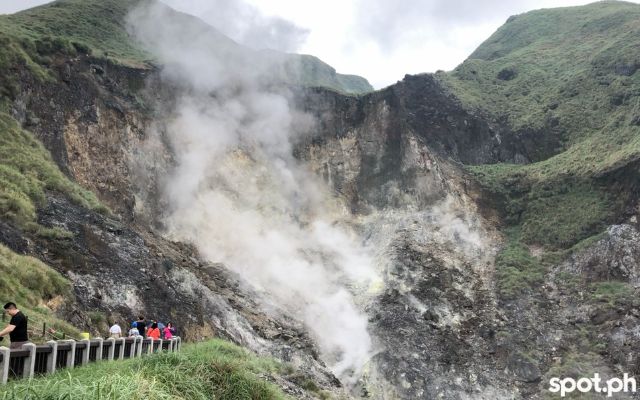
The six frequently-visited scenic spots are Yangmingshuwu, Xiaoyoukeng, Erziping, Datun Nature Park, Lengshuikeng and Qingtiangang. Yangmingshuwu was the summer home for Chiang Kai-shek and is an interesting experience for those interested in the history of the park. At Xiaoyoukeng, you will see the sulphur deposits and the trail that leads to the top of Mt. Qixing. Erziping has a nice path through the area lined with forests and some ponds. Datun Naure Park, on the other hand, has the visitor center that includes an exhibition on early human life found at the park. Lengshuikeng has an indoor bathing area to soak your feet after a long walk. And last but not the least, for less active tourists, Qingtiangang is where you can enjoy the view without having to hike that far.
Yangmingshan National Park is at 110024, 4F, No.1, City Hall Road, Xinyi District. It is open from 9 a.m. to 4:30 p.m. daily. Entrance is free.
Yehliu Geopark
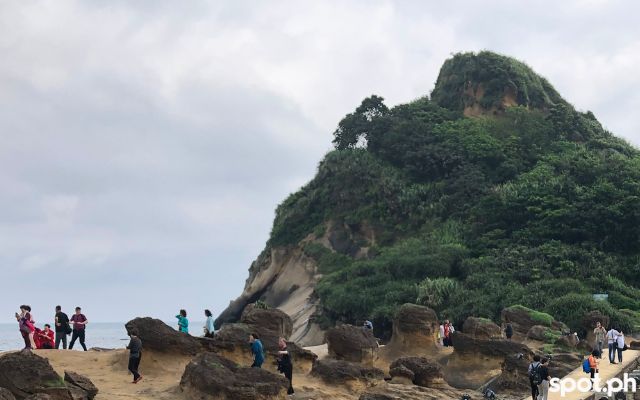
On the northern cost of Taiwan, you will find this picturesque natural landscape called Yehliu Geopark. These oddly shaped rock formations that formed on the Datun Mountains was a result of continuous wind and sea erosion. You will see the place differently from various angles. From the top, it looks like a giant turtle sinking into the sea. From the ground, you will see several rock formations, the famous one being the Queen’s Head. There are three sections to the park, with the first two featuring the popular limestone rock formations such as Queen’s
Head, Fairy’s Shoe, Mushroom Rock and Ice Cream Rock.
Yehliu Geopark is at No.167-1, Kantung Rd., Yehliu Village, Wanli District. It is open from 8 a.m. to 5 p.m. daily. Entrance is at NT $80 (P145) per person. The prime
time to visit the place is early in the morning to avoid the crowds or at sunset to get a spectacular view. Visitors are prohibited from touching the rocks.
Jiufen Old Street
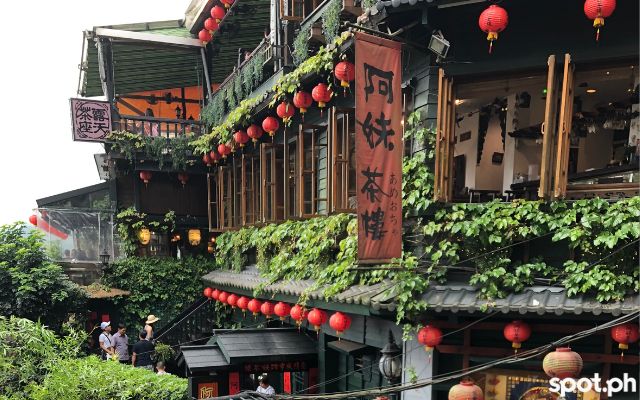
A town not far from Yehliu Geopark is Jiufen. The origin of the name “Jiufen”, means nine units for the original families who resided here. Eventually, it became a mining town when looking for gold was lucrative in the area.
Today, Jiufen Old Street is popular for its teahouses with Amei Teahouse as the renowned one, souvenir shops and food stalls. You can get a tea set at Amei Teahouse—choose between hot or iced tea and pair it with treats such as brown sugar mochi, green bean cake, sesame crackers and sweet plums—and have the best view on the top floor. The tea is high mountain tea and is served kung-fu style. This area is also believed to be the inspiration for Spirited Away, a Japanese animated film by Hayao Miyazaki. After that, you can also take a look at Shengping Theater and rent a traditional Chinese qipao for your photos. Some of the famous Taiwanese street food that you can find here are taro and sweet potato balls, herbal rice cakes, taro cakes, peanut ice cream roll, fish ball soup, tofu triangles stuffed with meat and you cong guo.
Jiufen Old Street is at Jishan Street, Ruifang District. It is open from 10 a.m.
to 9 p.m. and the best time to visit is from before noon when the crowds are moderate.
Shifen Old Street
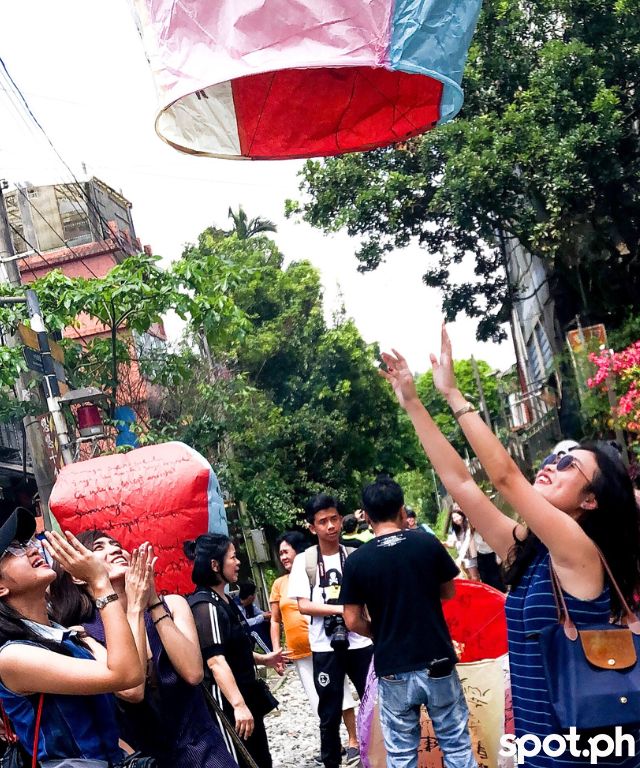
Known as the spot for Taiwan’s well-known lanterns, Shifen Old Street, only about 300 meters long, has the Pingxi Railway Line where tourists write their wishes on sky lanterns and release them to the sky. Shifen means ten portions, similar to Jiufen. Back in the day, the Japanese built the railway line in 1918 to transport coal from the mines of Pingxi Valley. When coal production ended, people here shifted to tourism as their source of business. The custom of
releasing sky lanterns came from the practice of people from Fujian, China, the people who first inhabited Taiwan.
Shifen Old Street is at 81, Shifen Street, Pingxi District. Sky lanterns are at NT $200 (P360) for single-color ones, NT $250 (P450) for four-color ones
and NT $300 (P540) for eight-color ones, with each color having a different meaning. You can also opt eco-friendly lanterns for NT $450 (P810) each.
Elephant Mountain
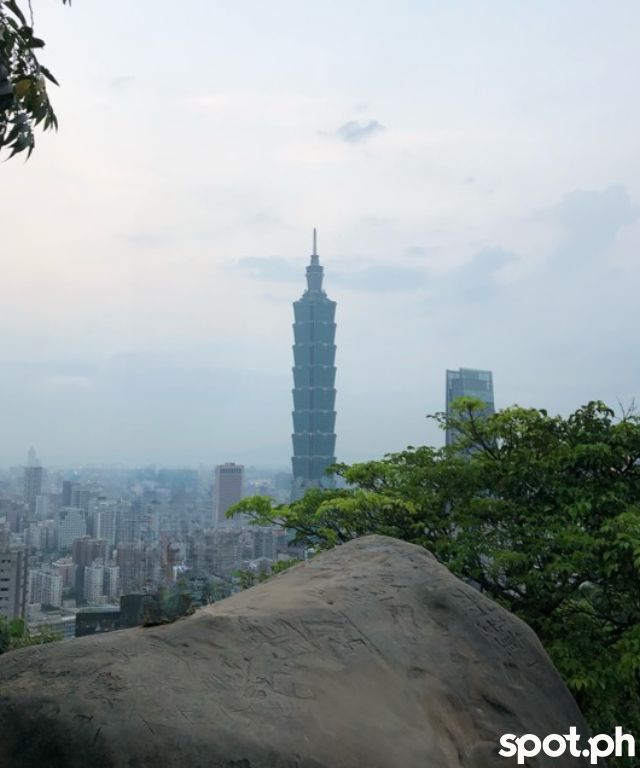
The Elephant Mountain is a mountain in eastern Taipei City and is a 184-meter short hike. It is one of the “Four Beasts”of Nangang Mountain including Lion Mountain, Leopard Mountain and Tiger Mountain. The Elephant Mountain is most visited as it is the closest to Xinyi district and Taipei 101. In total, it takes almost 1.5 hours for hikers to finish the entire trail back and forth. During the hike, the optimal spots to take a photo would be the Xiangshan Photographer’s Platform for a close view of the Taipei 101 and the Xiangshan Six Boulders Observation Deck for great views of the city.
The Elephant Mountain hiking trail is at 110024, 4F, No.1, City Hall Road, Xinyi District. The best time to do the hike would be early morning and as the sun sets late afternoon.