
Guide to Japan's Toyama Prefecture: What to Do and Where to Eat
Here's why you should visit this Japanese countryside.
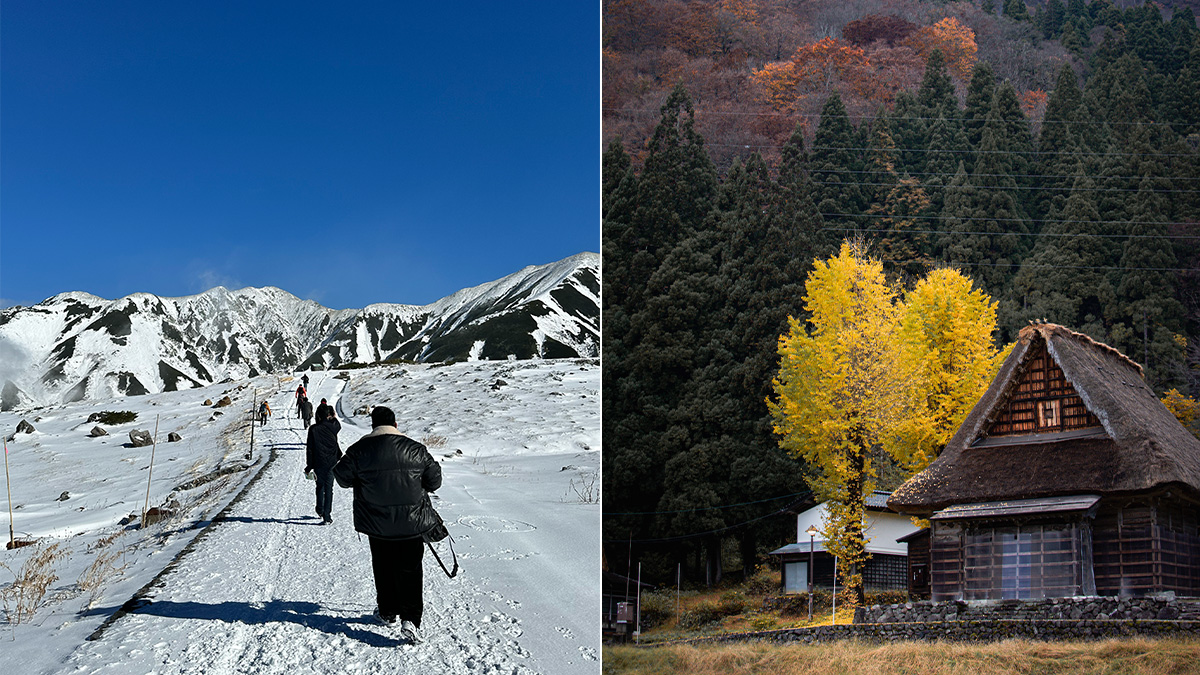
(SPOT.ph) These days, it seems like everyone is jetting off to Japan—whether for the modern bustle of Tokyo, Kyoto's heritage charm, or Sapporo's powdery slopes. But with 47 prefectures and over 970 cities, isn’t it time we looked beyond the usual spots?
A recent trip to Japan brought us to the picturesque Toyama Prefecture. This under-the-radar gem in Central Japan boasts dramatic alpine landscapes, centuries-old villages, and so much more, proving that there's more to Japan than its most Instagrammed cities. Here's what we found in Toyama and why this should be your next adventure.
What to know about the Toyama Prefecture:
Located in Central Japan in the Hokuriku region, Toyama is an unhurried destination filled to the brim with idyllic scenery, authentic cultural experiences, and the freshest seafood. Bordered to the north by the Sea of Japan and framed by the Tateyama Mountain Range, there's lots to do here for every type of traveler. Itching for a change of scenery? Go for a solo adventure up the mountains and get lost in nature. Need to relax? Visit onsen hotels and get your much-needed R&R. Craving the flavors of Japan? Toyama has a smorgasbord of eats. Looking for a creative output? Take part in the many handicraft workshops available. The region has it all: a Goldilocks amount of bustle, balanced with quintessential countryside living. Here modern creature comforts blend with elements of slow-living, making Toyama a great spot to include on your next trip.
What to do in Toyama, Japan:
Explore the Tateyama-Kurobe Alpine Route.
The Tateyama-Kurobe Alpine Route is one of the world's most famous mountain tourist sites. It traverses the Japanese Alps and boasts scenery that could rival the snow-capped mountains of the Swiss Alps. This is your best bet if you're looking for a dose of a tundra, winter landscape.
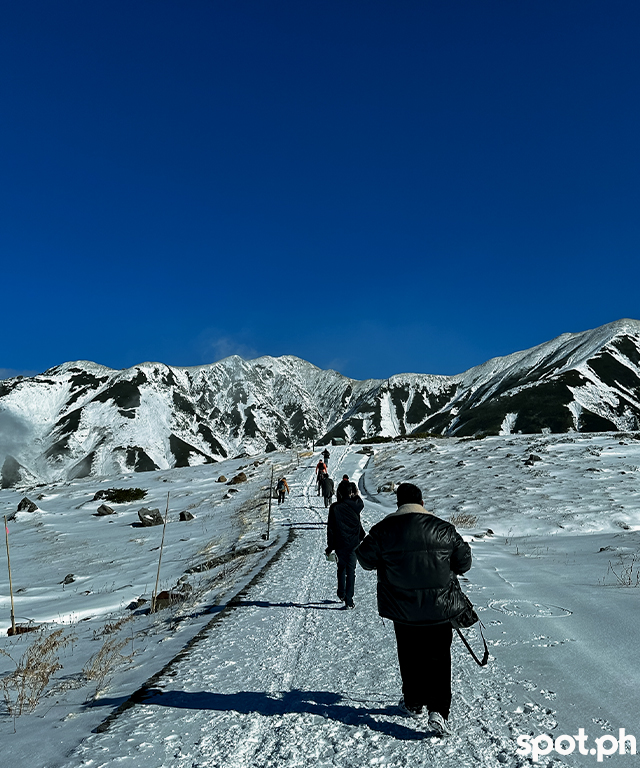
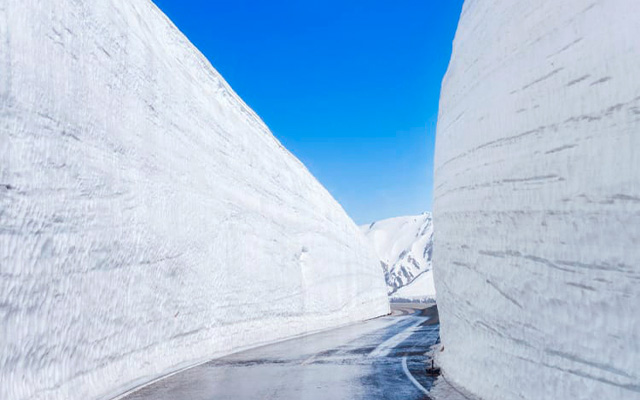
Dubbed the "Roof of Japan," the Tateyama-Kurobe Alpine Route is a full 90 kilometer course with an elevation change of 2,400 meters. Guests are treated to a variety of sights including a rare man-made snow wall during spring, a distant glimpse of Shomyo Falls, and a new vantage point for the Kurobe Gorge.
At the Kurobe side of the route, guests can marvel at the Kurobe Dam, Japan's tallest dam. Aside from being a functional dam that supports the hydropower plant powering the Kansai region, the Kurobe Dam is also a great viewpoint for the Kurobe Lake and the surrounding mountains, giving guests another panoramic view along the Tateyama-Kurobe Alpine route.
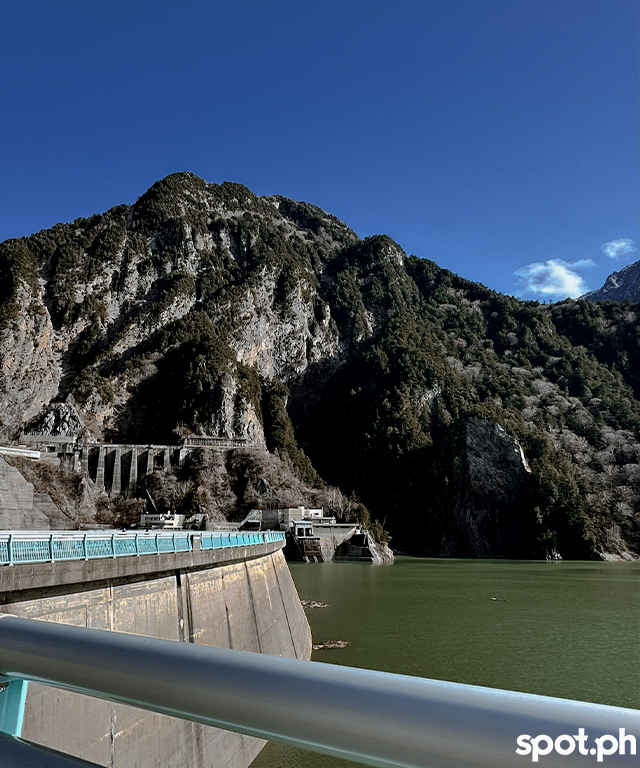
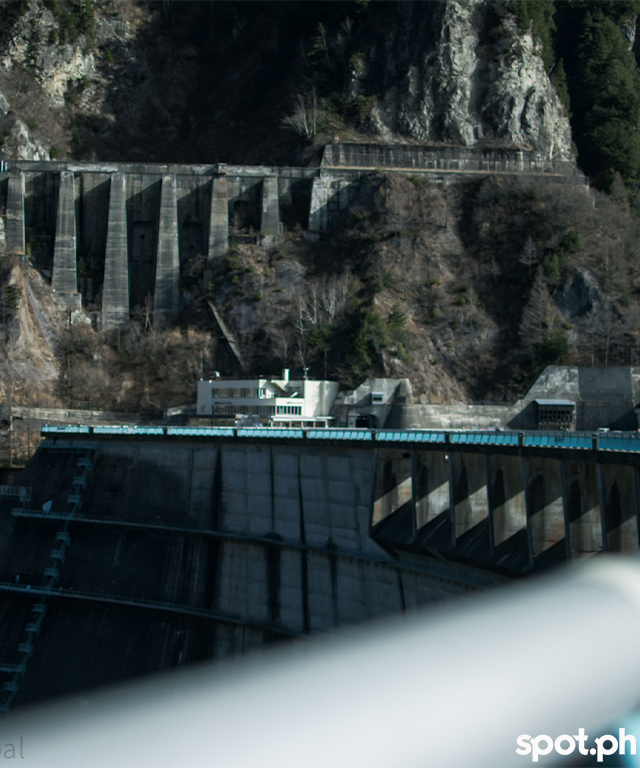
Pro tip: Have lunch at the Kurobe Dam rest house. This spot has a great plate of Japanese green curry that's only available at this stop. Plus, the restaurant has a great view of the surrounding areas, making this a fantastic way to soak in the landscape.
In addition to its scenic route, the Tateyama-Kurobe Alpine Route can also be enjoyed by enthusiasts of Japanese transport. To reach the different points on the route, visitors must ride buses, cable cars, and ropeways, showcasing the innovation and convenience of mobility in Japan.
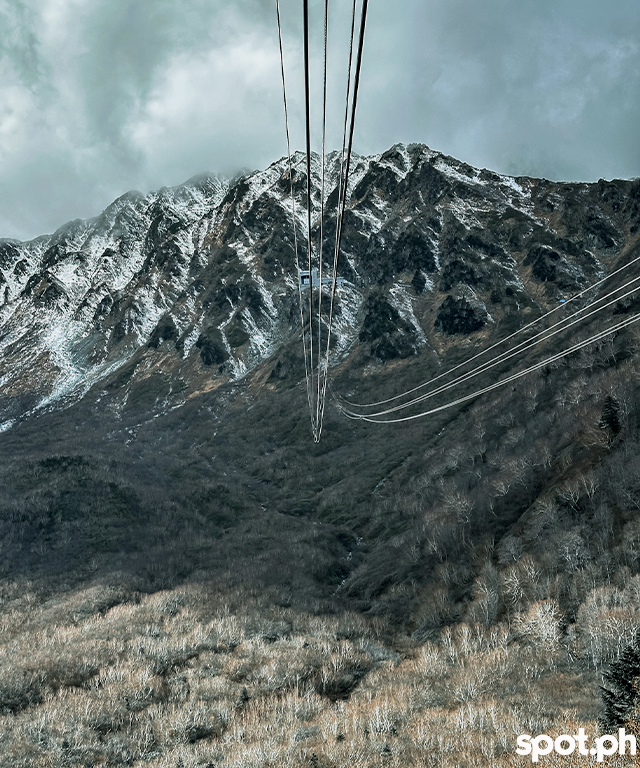
Access: Tateyama Station is the jump-off point for the Tateyama-Kurobe Alpine Route. It is one hour away by train from Dentetsu Toyama Station.
For more information, visit the Tateyama-Kurobe Alpine Route's website.
Go on a train ride around the Kurobe Gorge.
What was once a vital transport line for workers and materials building power plants and dams has now transformed into one of Toyama’s most scenic train journeys. The Kurobe Gorge Railway takes travelers on a leisurely 20-kilometer ride from Unazuki Station to Keyakidaira Station, gliding through deep ravines, lush forests, and rugged mountain landscapes at a relaxed pace to give you plenty of time to soak in the views.
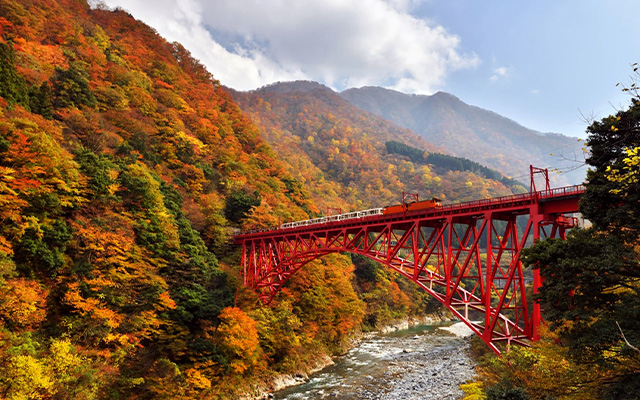
You'll be treated to amazing, picture-perfect panoramas regardless of which side of the open-air train you sit on. So make sure you keep your cameras on hand—with lots of memory space—to take hundreds of pictures of the natural beauty all around.
Access: Head to Unazuki Station. This is 20 minutes away from Shin-Kurobe Station along the Hokuriku Shinkansen route. Alternatively, you can also take a two-hour local train to Unazuki Station from Toyama Station.
For more information, visit the Kurobe Gorge Railway's website.
Get lost in the modern yet tranquil vibes of Toyama City at Kansui Park.
Who doesn't love a day in a park? If people watching and a slow day in a green oasis within the city center is your idea of a good time, then a visit to Kansui Park is perfect for you.
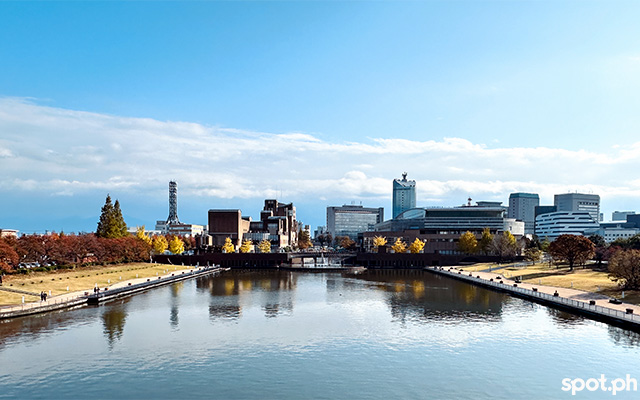
Thanks to its many picturesque points, this garden oasis is the perfect spot for an afternoon picnic or an early morning walk. The observation towers offer 360-degree views of the surrounding Tomiwa Canal and its tree-lined riverbank, as well as uninterrupted views of the Tateyama Mountain Range on clear, cloudless days.
Also within Kansui Park is what is dubbed "the Most Beautiful Starbucks in the World." This particular branch of the popular coffee chain has floor-to-ceiling 180-degree views of Tomiwa Canal and its surrounding foliage, including several cherry blossom trees that drape over the waterway, providing a beautiful backdrop for drinking your cup of joe.
Access: Kansui Park is a 10-minute walk away from Toyama Station.
For more information, visit Kansui Park's website.
Bask in the beautifully curated art pieces at the Toyama Prefectural Art Museum.
The Toyama Prefectural Museum of Art and Design is located across Kansui Park. It houses permanent and temporary displays from a wide variety of art and design styles, including works by Picasso and Chagall.
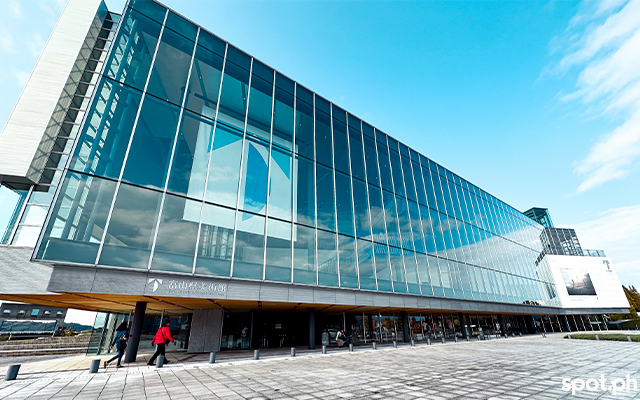

It also boasts stunning architecture with an entire floor-to-ceiling glass wall facing toward Kansui Park, the Tomiwa Canal, and, if you're lucky, the Tateyama Mountains. Here, you can take a slow day to appreciate the artworks on display, take fun kid-friendly workshops, and people watch—er, enjoy the view.
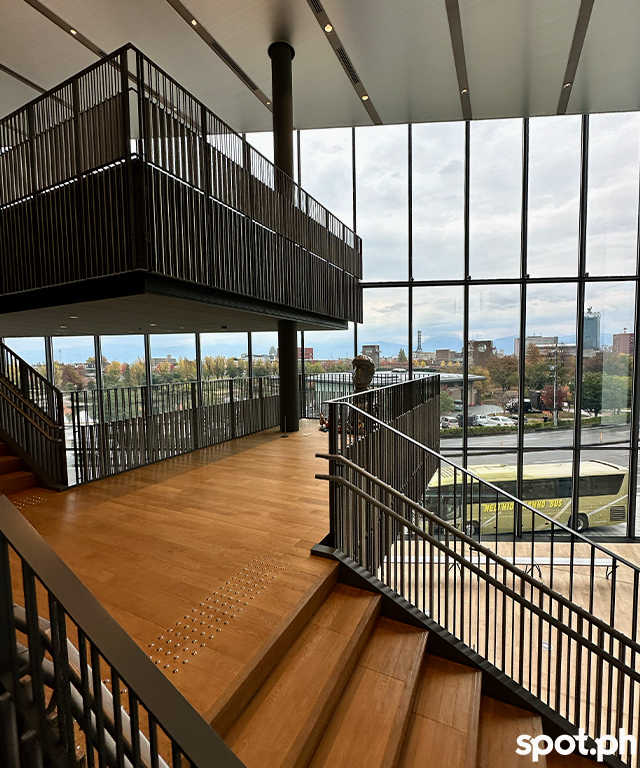
Pro tip: If you get hungry while touring the museum, there is an in-house restaurant, BiBiBi & JURULi. Here, you can take part in Art and Eat; not only will you be able to taste dishes made with Toyama-grown/caught ingredients, but you'll also be using Toyama-crafted tableware, such as wooden plates, cast metal, ceramics, porcelain, and glassware.
Access: Take a five-minute taxi ride to the Toyama Prefectural Art Museum from Toyama Station.
For more information, visit the Toyama Prefectural Art Museum's website.
Handcraft sake cups at one of Japan's best wood-carving towns.
Nanto City's Iba is one of Japan's most famous woodcarving areas. This traditional village in the countryside near the historic town of Inami is a great place to experience and observe traditional woodcarving products and processes. Pro tip: Go to the visitor center and get a tourist map. These will show you notable carvings around the village. There's even a cat carving scavenger hunt activity for kids (or cat-loving adults).
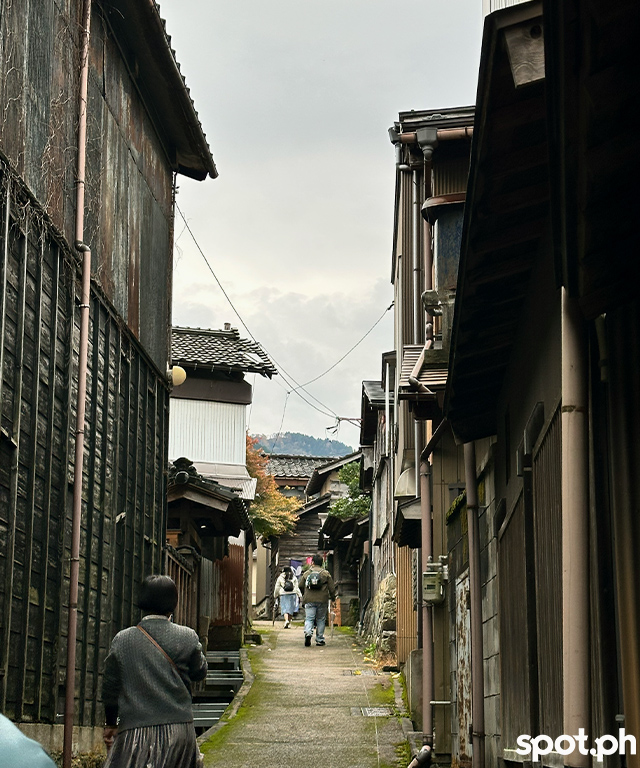
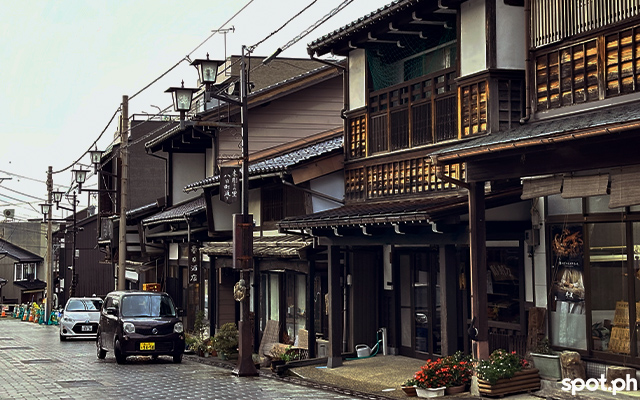
Aside from looking around and shopping for carvings, a fun, unique activity in this area is to hand-carve something yourself. As the area is home to many sake breweries, it's a good idea to make your own wooden sake cup to use for sake-tasting experiences, which are also available in the area.
For just JPY3,500 (roughly P1,300), you can make Cyprus sake cups of different designs under the watchful eye of expert carvers. After making a cup, head over to the Wakakoma Sake Brewery and put your cup to the test by tasting different sake varieties made by this local shop. You can even buy bottles of your favorite drink and take them home with you.
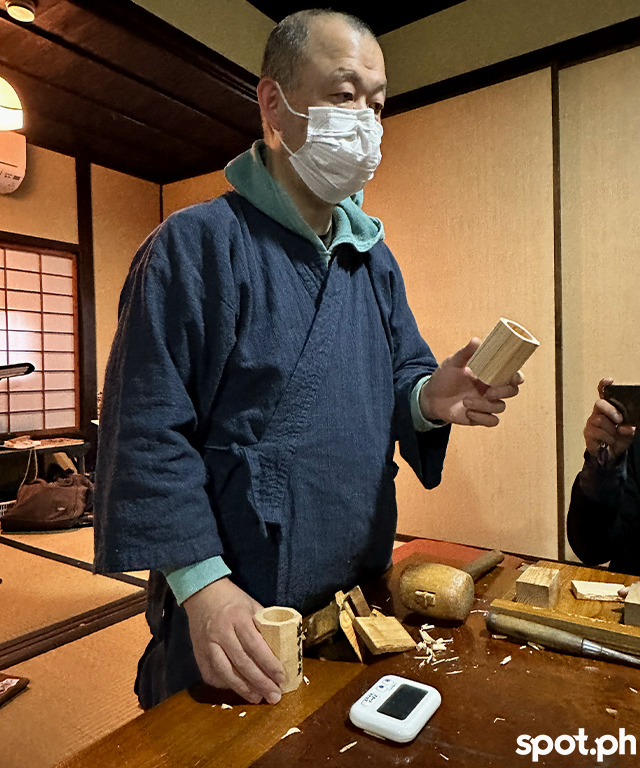
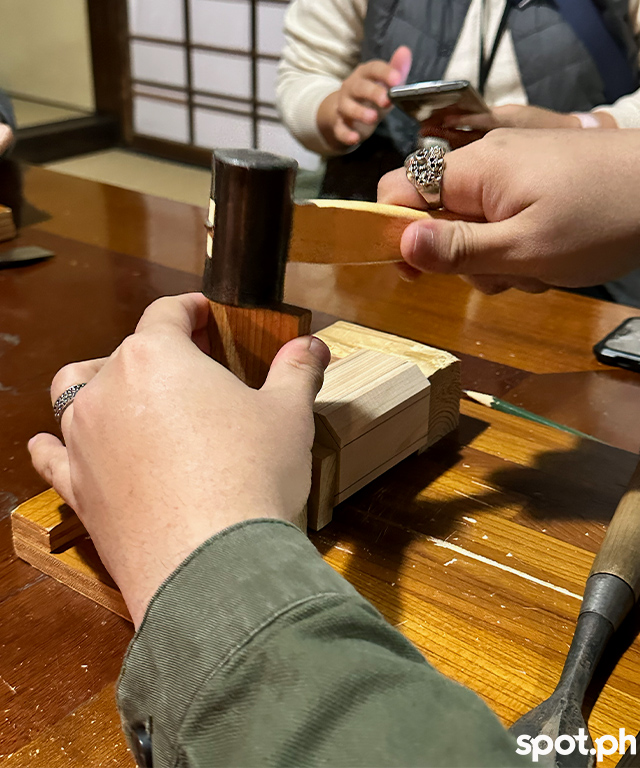
Access: The town of Iba is easily accessible through Fukuno Station. From here, you can head to the Inami Woodcarving Experience studio by taking a 10-minute taxi ride.
For more information, visit the Nantabi Tour website.
Make your own Gokayama Japanese washi paper.
Japan is renowned worldwide for having some of the best stationery products, especially when it comes to paper. Here in Gokayama, you can try your hand at making the traditional fibrous yet sturdy, textured washi paper.
Made from the Gokayama mulberry, Gokayama washi paper was traditionally used to create shoji screens. Today, the product is used in a variety of ways, from stationery to fashion accessories.
At Gokayama Washi no Sato, guests can embark on an educational experience to see how washi paper is made and try crafting it themselves in a quick workshop. Don't worry. The workshop is fun and provides an overview of the process, but there won't be any hard labor. In fact, the activity is quite simple, and young children (as young as those in primary school) are allowed to try it.
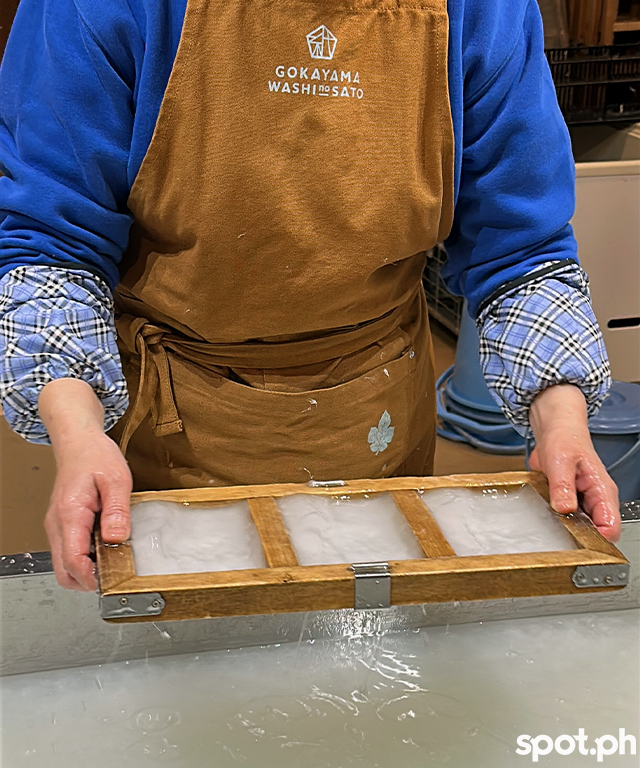
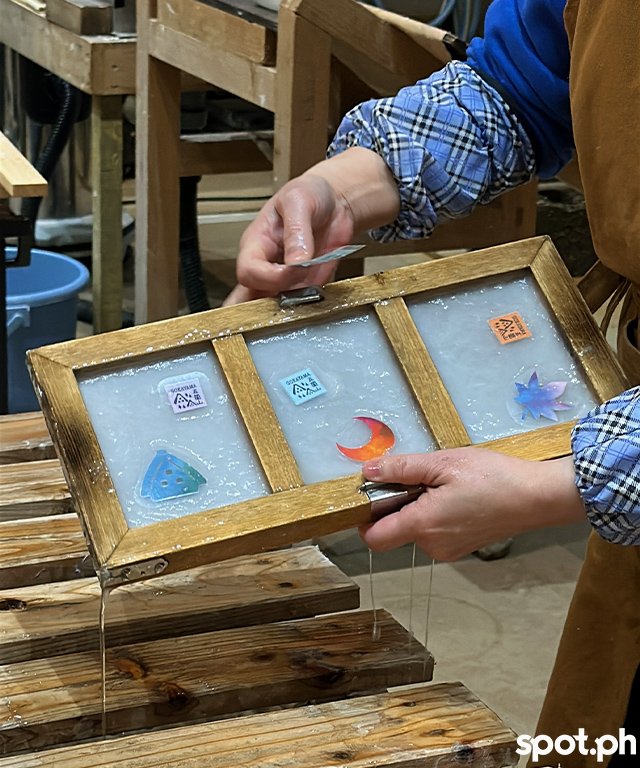
Plus, you'll get to bring home the washi postcard you make, an instant souvenir.
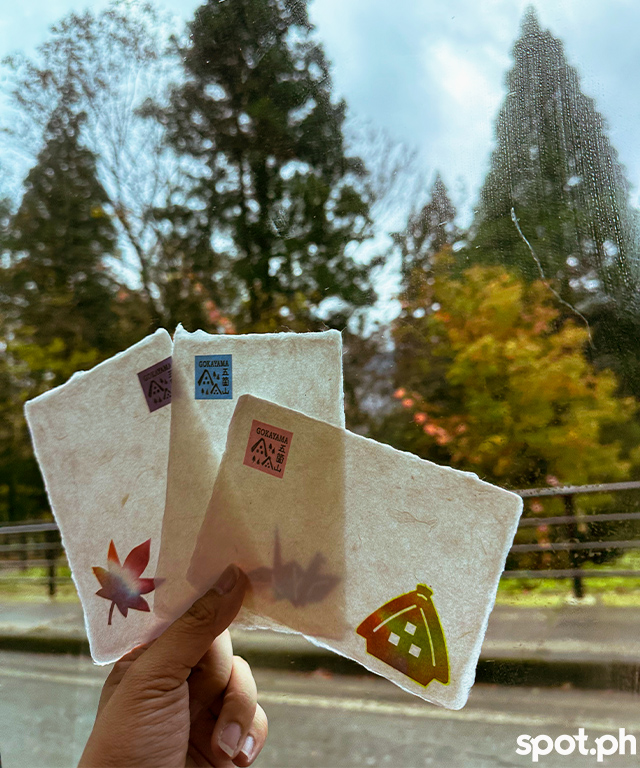
After trying your hand at papermaking, you can buy washi products at the shop and bring home trinkets, paper, and all kinds of other bits and bobs.
The Washi Paper Postcard Making experience requires a reservation, which you can make on their website. The fee is JPY 1,000 or roughly P388.
Access: Gokayama Washi no Sato is 55 minutes away from Shintakaoka Station.
For more information, visit the Gokayama Washi no Sato website.
Walk through the Gokayama Gassho Villages.
Shirakawa-go isn't the only place where you'll be able to see the gassho-style houses of Japan. Gokayama in Toyama is another UNESCO World Heritage-designated mountainous area showcasing this.
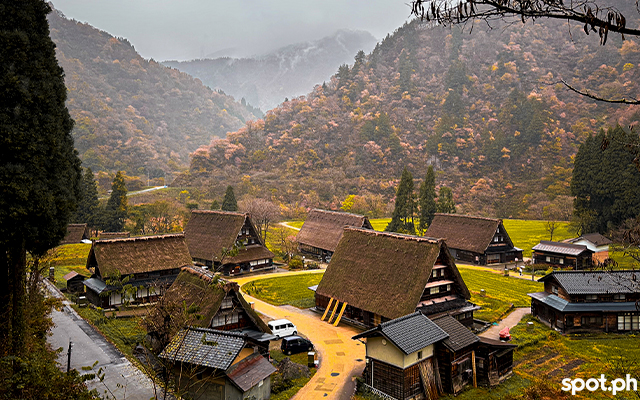
As a "sister site" to Shirakawa-go, this area also boasts small villages with roofs likened to praying hands. These picturesque thatched buildings, born of the land's geography and climate, highlight the region's enduring tradition and craftsmanship.
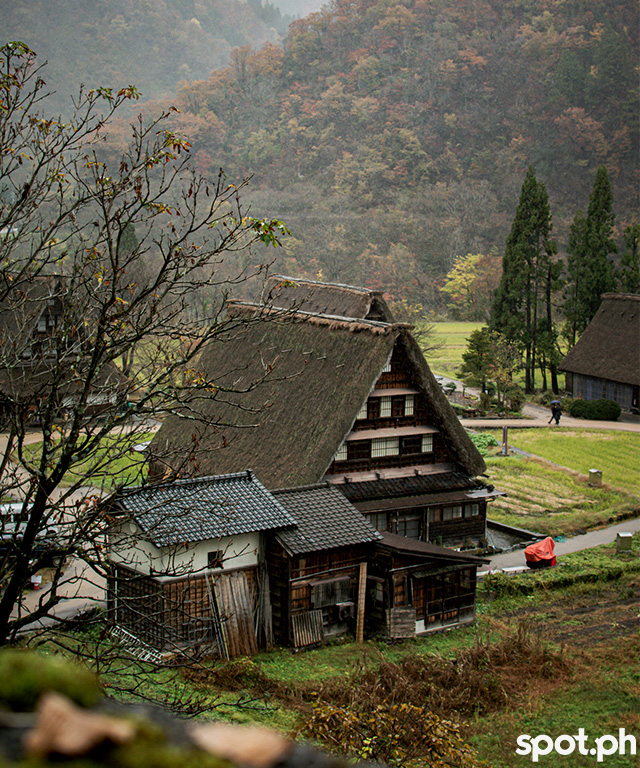
Gokayama's Gassho Villages aren't just there for show. The site is actually one of the rare inhabited UNESCO World Heritage sites with some houses still being used as homes, shops, and even restaurants. Case in point, if you ever visit Gokayama, make a stop at one of the restaurant-homes, Tempura Yohachi. Not only will you be able to experience the atmosphere of a traditional Japanese home, but you'll also be treated to warm, hearty bowls of tempura and soba noodles as well as other Gokayama eats.
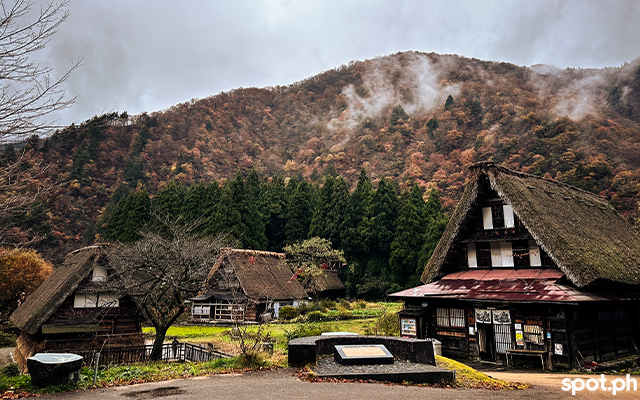
The Shirakawa-go and Gokayama sites are very similar, but if you prefer a more quiet, less crowded option, Gokayama might be your best bet.
Access: Both Suganuma and Ainokura Gassyo Villages are accessible via JR Takaoka Station. From here, you can take a one-hour and 15-minute taxi ride to both sites.
For more information, visit the Gokayama Official Travel Guide website.
What to eat in Toyama, Japan:
Toyama's culinary scene is as diverse as its landscape, but it is celebrated for the freshest, most succulent seafood sourced directly from Toyama Bay, a.k.a. Japan's natural fish tank.
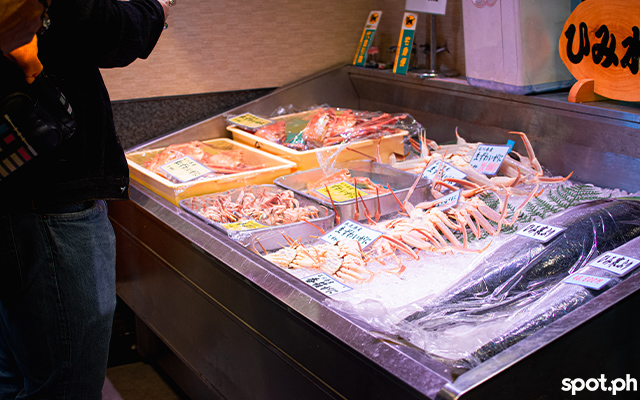
In Toyama, make a beeline for the local markets, especially the ones in the Himi area. This area boasts a treasure trove of gourmet-ready, high-quality seafood that is deemed "the best in Japan." Visit the Himi Fishing Port Market, where a variety of seafood lands every morning from various fishing ports in the area. Try to be in the market as early as you can. Aside from buying seafood for yourself, you can also catch the daily fish auction. Himi’s fish auction is Toyama’s answer to Tokyo’s famed tuna auction—but with a local twist. Unlike its bigger, busier counterpart, this auction deals exclusively in fish caught right in Himi’s waters, guaranteeing that every catch is as fresh as it gets.
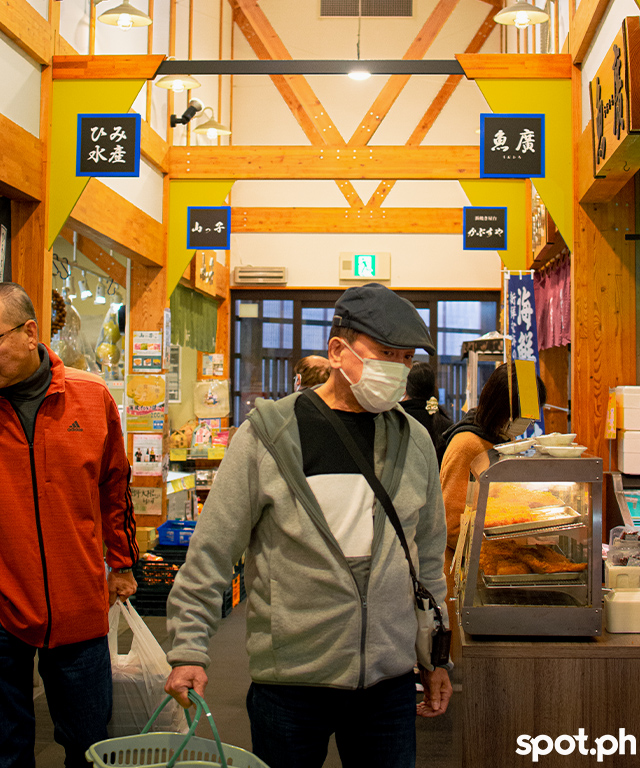
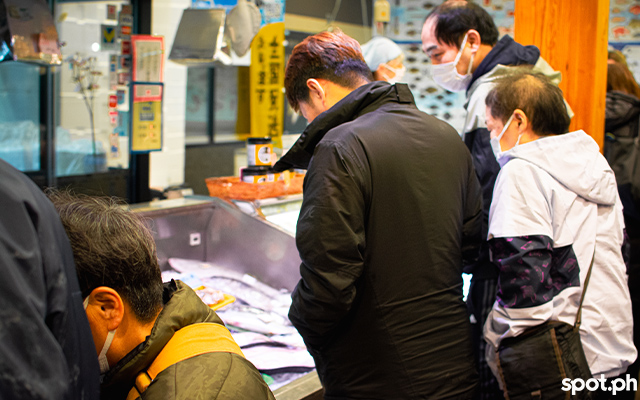
Fill your baskets with the best winter yellowtail tuna (kanburi), firefly squid (hotaruika), Japanese glass shrimp (shiroebi), and the Queen of Toyama's Cuisine, the red snow crab.
In addition to seafood, you must also try Toyama's signature ramen, the Black Ramen. As its name suggests, this dish is an umami-rich bowl with a soy sauce broth left to simmer for long periods of time, resulting in its signature dark color. Like other ramen varieties, this dish is topped with pork slices, nori, eggs, and other ingredients. Hit up Daiki and Nishicho Taiki, the OG restaurants that created the dish. It has several branches around the prefecture, but its main branch is in Nishicho, Toyama City.
How to get to Toyama, Japan:
Although there are no direct flights to the Toyama Prefecture from the Philippines, don't let that stop you from discovering the area. Toyama is easily accessible from Tokyo. You can reach Toyama by taking a quick one-hour domestic flight or a roughly two-hour bullet train ride.
Alternatively, you can start your journey to Toyama from Osaka/Kyoto. It takes approximately two to two and a half hours to reach Toyama from the Kansai region by train, with one transfer at Tsuruga.
Express Bus rides from Tokyo and Kansai are also available but will take more than five hours one way.
When is the best time to visit the Toyama Prefecture?
It goes without saying that Japan is beautiful all-year round. But the best time to go would depend on what you want to experience.
The Tateyama Kurobe Alpine Route is best viewed in spring. While winter might be the obvious choice for many, the area gets too cold with too much snow during the season. Shops and services are also typically closed during this time. Instead, springtime (around April) is when the prefecture is at its most beautiful. Guests who visit at this time will be able to spot the man-made ice wall showing just how much snow covers the ground during winter. And you don't have to worry about losing the winter wonderland vibe in spring. The snow in this area usually remains until early June.
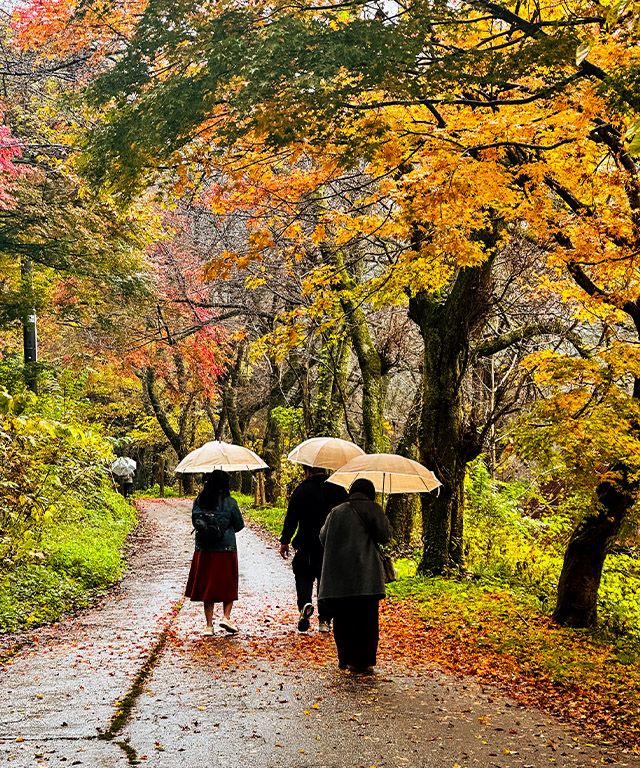
For those who want to experience momijari or leaf-peeping season in autumn, Toyama is also a great spot for that. The prefecture's mountainsides brighten with gold and yellow foliage around this time, creating a beautiful, dramatic, sienna ambiance. This is best seen around October to late November.
For more information, visit the Official Toyama Prefecture Tourism website.
Also read:
The SPOT.ph Guide to Applying for a Japanese Visa
LIST: Must-Visit Hidden Gems in Osaka, Nara, and Kyoto
Hey, Spotters! Check us out on Viber to join our Community and subscribe to our Chatbot.