

Mark Justiniani’s Infinity Works at the Ateneo Art Gallery
His exhibit Void of Spectacles runs until July 6.

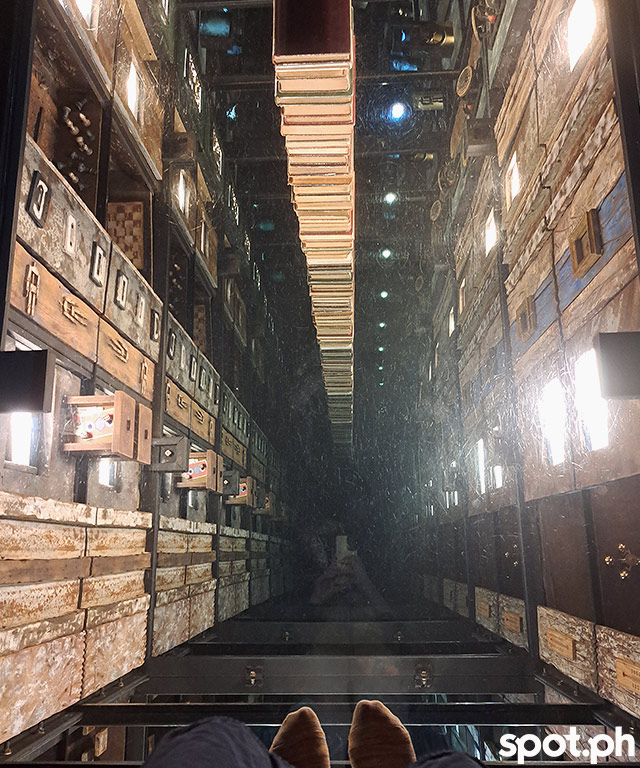
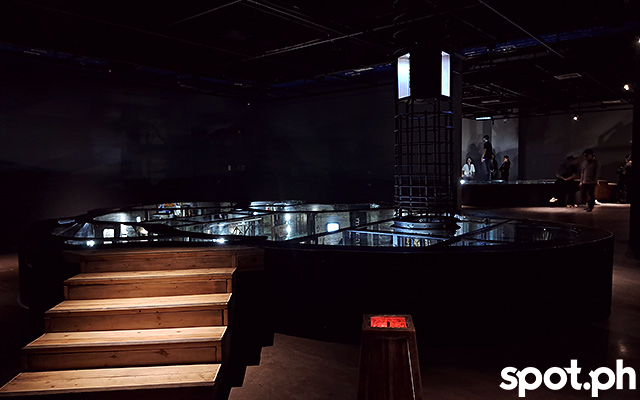
(SPOT.ph) Stepping into Mark Justiniani's Firewalk is an eerie and surreal experience. The sensation of falling is apparent despite knowing the infinite patterns are but illusions. The unease and restlessness are real, even with the understanding of how the installation worked. It takes a while to get used to the sensation, perhaps after a module or two. Or, in my case, at least a second time to experience and behold the exhibition from start to finish.
This is Justiniani's latest exhibition, Void of Spectacles: Reflections on Passages Through Time and History, which features three infinity works: Firewalk, Arkipelago, and Well. All of which were previously presented on the international stage for different art exhibitions and biennales. It runs until July 6 at the Ateneo Art Gallery in Quezon City.
Question of Spectacle in Mark Justiniani's Infinity Works
Several questions arise about what is gained and lost in a highly visual and tactile exhibition, as pointed out by Justiniani himself after he received criticism on the ‘spectacle’ of the work. The modules point toward the many complexities and complications in Philippine history and contemporary life—folk belief, worker’s struggles, colonization, neo-colonization, wartime, dictatorships, poverty, climate change and Anthropocene, and the overall precarity of life. As the audience, do we get the impact of his message through the highly spectacular work, or do we lose sight of what he is trying to do as we ooh and ahh at the experience?
Honestly, both are possibilities—but that is true of most artworks. Yet experiencing the works, even perhaps at its most surface level and missing the sociopolitical nuance entirely, is not a real loss. The sensation and wonder are present, leading the audience to experience the potency of feeling. The possibility of leading into something more—deeply felt or novel ideas—formed through artistic experience is still much-gained ground.
Falling into Fire
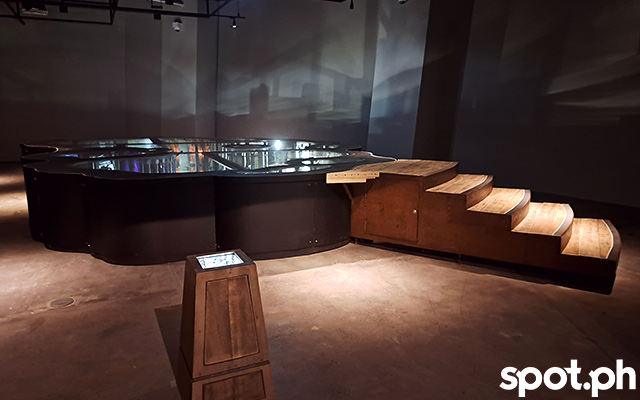
Closer observation, on your own, or through the help of highly trained invigilators, create a layered experience. Firewalk is quiet and contemplative—it leads you towards the other module, but at the same time, it is the most challenging, especially for most Filipinos who are literally walking on his works for the first time.
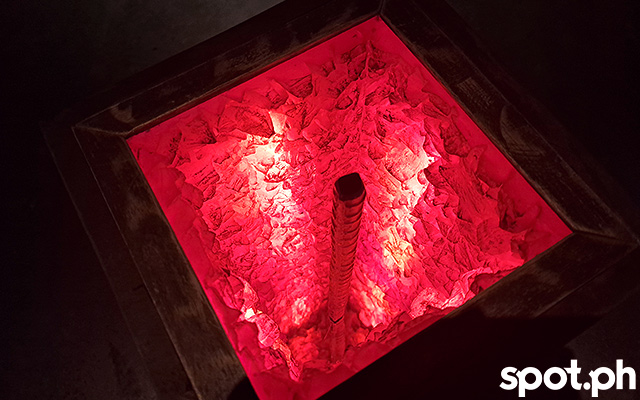
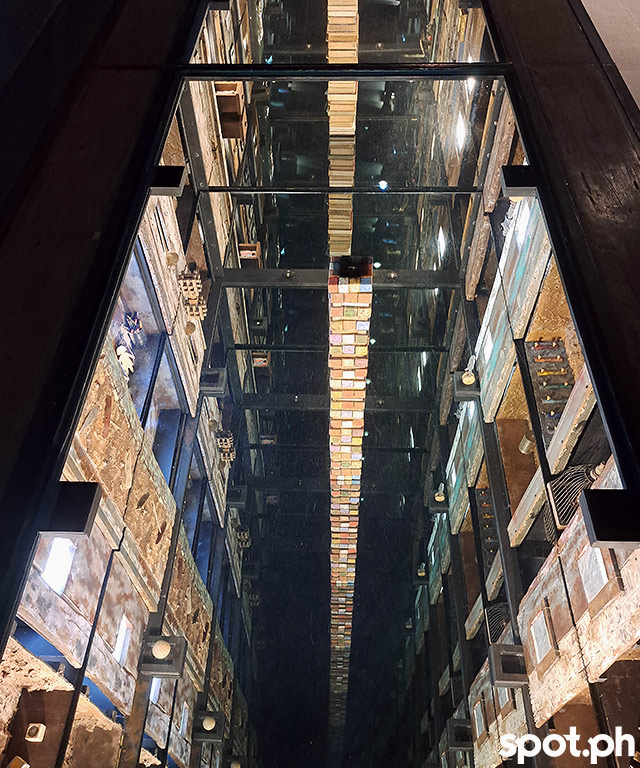
All the modules were initially exhibited in other countries—Singapore, Italy, and Germany—and debuted locally in this particular show. The title prepares us for what is to come—the exhibition’s own walk on fire as a rite of passage, and the Filipinos’ metaphorical walk on fire as a part of everyday life. The struggle, the sensation of falling, the lack of support—these are very real things that we Filipinos contend with and a good introduction to what is to come.
Unjust Labor Conditions in the Provinces
The second module for the audience to climb up and walk on is the first part of the Arkipelago series, "Province." It resonates with Justiniani’s background, growing up in Negros province, as well as the folk beliefs that remained in the Philippines. Folk medicine, which remains in the present, is represented in various bottles and vials similar to what is given and sold in provincial spaces and along the folds of the city, such as in the Quiapo area. More interesting are the transitions of the sugar cane, from the pristine tubo, the blades used for harvesting, to the fiery transitions of the tubo, and even the crystals representing the sugar as a final product.
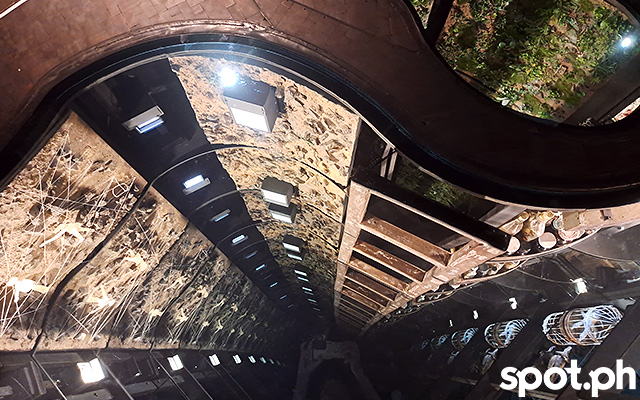
Those familiar with the history of Negros would know of its wealth because of the sugar plantations—with many colonial mansions still standing as remnants of such wealth. Yet, with immense wealth comes unjust labor practices—in this case, the life and injustice for the sakadas, the sugar farmers. This came to a head during the Marcos authoritarian rule, the mismanagement of the sugar market, and the international market crash that led to immense poverty and suffering, especially among the children of Negros.
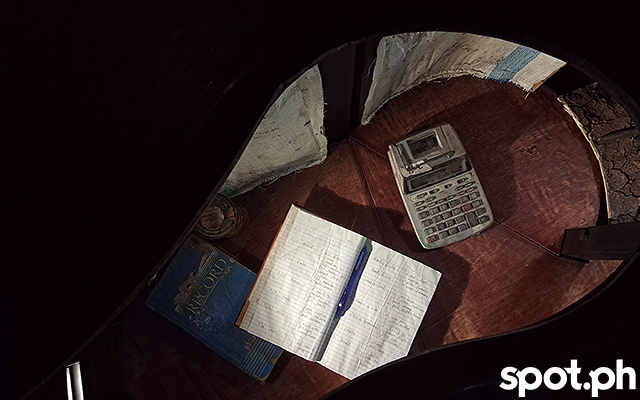
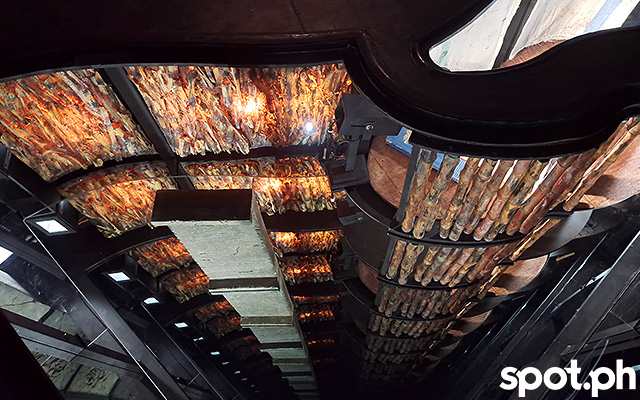
Justiniani shares growing up with a more privileged but not wealthy background. As a child in his father’s shop, he observed the sugar farmers, coming and going, conscious of the difference between his middle class and their underprivileged background. This was a starting point in his activism and early social realist paintings—that eventually evolved into his more subtle, nonetheless powerful installations. The inequalities, even in the time of wealth for the sugar barons, are apparent. There is much suffering steeped in the sweetness of the sugar industry. His first module looks into the province, both as an idealized past and a moment of injustice that is carried over until the present day.
Colonization and Dictatorship
The next module, the largest in the series and featuring the biggest piece of glass, is entitled "Capital." Here, we’re looking at the center of power and Justiniani’s allusions to the oppression of Marcos's rule. The largest part features a void—something that many Filipinos still find themselves in after the endless cycle of abuse and oppression. The featured balcony, where the last public appearances of the Marcoses before flying off to Hawaii, reflected endlessly towards the void. He also touched on myths, where the frogs amidst a broken chair pertain to the lack of generosity towards those in need.
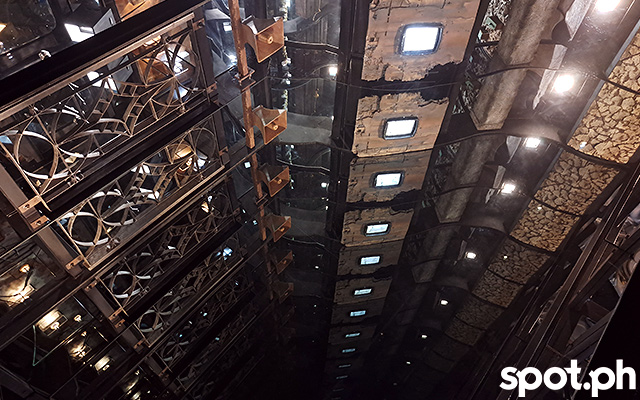
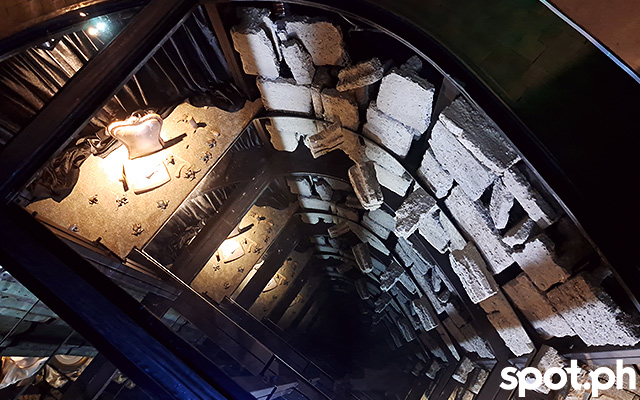
Traces of coloniality, which were essentially seeds of the dictatorship, were present as well: the early cinemas in the Philippines, Americanized education, and a twisted perception in radio and television. Some are nostalgic, too—with mantels during the early years, remnants of the Second World War, and a list of debts the poor cannot get out of.
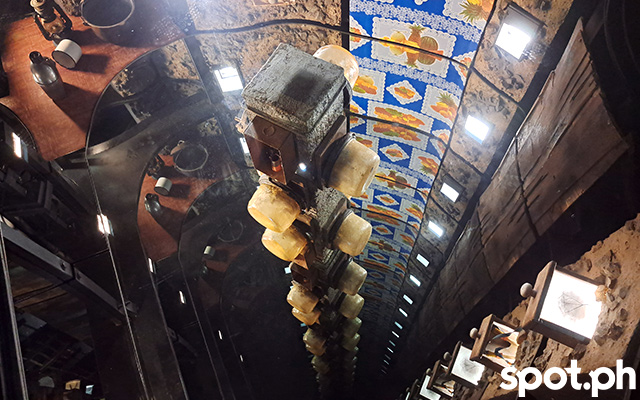
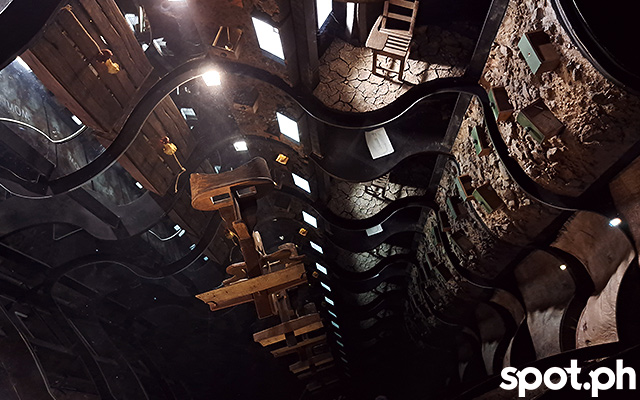
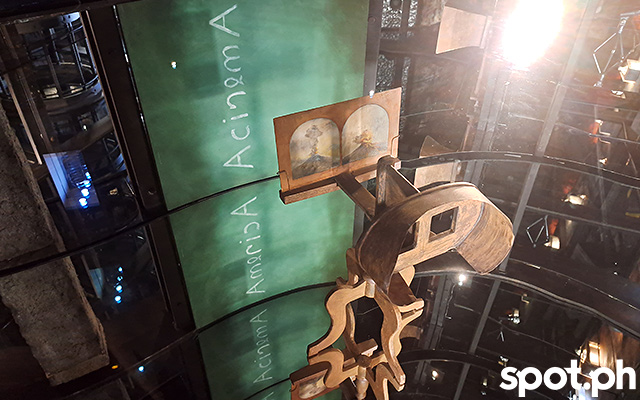
It eventually circles back to a Molotov cocktail, a common sight during the student and activist protests during the dictatorship of Marcos, especially during Martial Law. The hopelessness and frustrations are evident in the panel and feel inescapable despite the spectacle of the presentation.
Anthropocene and Precarity
"Cyclone," the last module in the Arkipelago series looks into the grim present, at the same time, hope for the future. Anthropocene, the geologic era pertaining to the present—where the environmental changes are caused by human actions, rather than natural causes—becomes a touchpoint for many contemporary artists, Justiniani included.
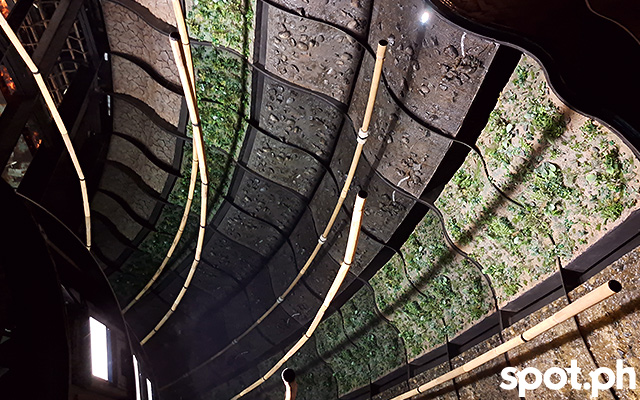
The last module, with a more pronounced form as the reflections bend towards the center that was previously observed in his wall-bound works, looks into the status of the environment. The concrete and metal transition into bamboo and crystals—and then, with a provocative thinking point—pieces of paper as if attached to a string, with children’s dreams written on them. The notes were made in a workshop with children, inviting them to reflect on their dreams and what they want in the future. The output was embedded in the installation as if they were paper tails of a supposed kite—and if the audience sits on a specific spot, the audience transforms into the kite that takes flight.
It was a turn for the dreamlike and fanciful after the morose and heavy tone of the Arkipelago series. Justiniani invites hope amidst the disaster; unfortunately, the Philippines often finds itself vulnerable. The most powerful typhoon in global history—Typhoon Haiyan, locally known as Typhoon Yolanda—devastated the country at an unprecedented level and is remembered to this day. The country's geographic location is always at risk of the immediate effects of climate change.
Hope for Children
The exhibition, though spectacular and fantastical in presentation, is burdensome to think about. It is akin to the fun-loving, happy Philippines presented on the surface, but with hundreds of years of colonization and oppression running undercurrent. We can take from it what we will, the ultimate "wow" of the presentation or the scars of experience hiding in plain sight. The last module would leave the viewer hopeful, if not completely unburdened.
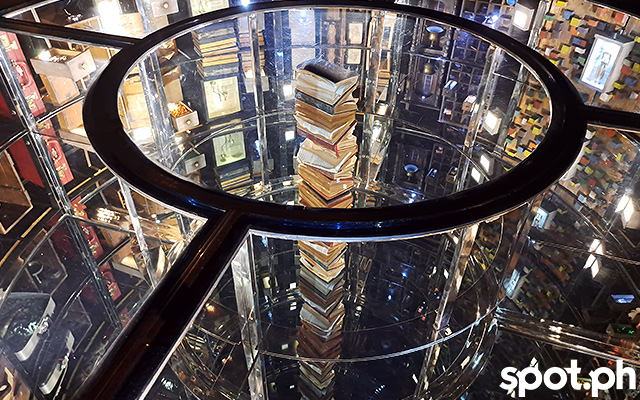
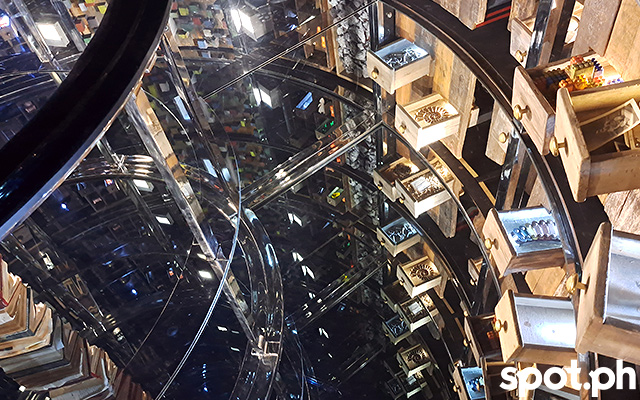
Well, originally commissioned for a children’s biennale in Germany, is full of wonder. Books, toys, and knick-knacks are there. It is an endless opportunity for exploration, inviting the viewers to be children again. I asked Justiniani how the children initially reacted to the installation, and he said they liked it and played with the installation. But they did not expect the children to carry the bucket around, eventually damaging the inside. He said this with a smile, though. Naturally, artworks in a children’s biennale are meant to provoke interest and imagination.
Art Impressions
Artworks can create an indelible impression on children, as Justiniani experienced. Growing up in Negros, specifically in Victorias City, exposed the young Justiniani not only to the harsh realities and questionable labor conditions of sugar production but also to the notable Alfonso Ossorio murals referred to as the Angry Christ.
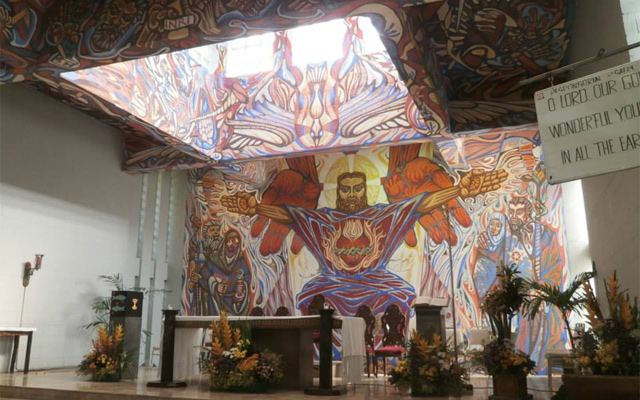
Justiniani went to the St. Joseph the Worker Chapel as a child and looked at the Ossorio murals regularly. Though controversial because of its different iconography—presenting a brown, muscular, powerful Christ figure with strong lines and bright coloring of reds, oranges, blues, and yellows—the mural transforms a commentary on religion, society, and the harsh labor conditions, just outside its walls into the farmland and sugar refinery. Though the original intentions might differ, the potent visuality resonates with the harsh realities of sugar production. The artwork made an impression on Justiniani, eventually growing into a socially engaged artist despite the declared subtleties of his works in the past decade.
Heartbreaks for Filipinos
All around the exhibition space are the smaller pieces originally included in Firewalk, continuing the narrative of the installation. At times, it is curious; sometimes provocative—particularly the piece with enflamed crystals, which may perhaps be sugar crystals. It is not an easy exhibition to embody, as the more you look, the more you would discover. There is an endless transition, from the fear of the walk to beholding the wonder of the exhibition's entirety, and then to noticing the minute details that make a Filipino’s heart endlessly break. Justiniani’s works are many things—yet unforgettable, provocative, and painful are central to what comes to mind and what sticks to memory.
Continuing Activism and Social Engagement
I asked if he still identifies with the social realist practice of his past, as I know many artists do not like direct identification with the movement at times because they find themselves boxed in it.
For Justiniani, it is good to know that social realism is still embedded in the works, though much subtler than his earlier practice. His consciousness of difficult sociopolitical movements and sensitivity to the present-day struggles is still palpable. During the opening, Ateneo Art Gallery Director and Curator Boots Herrera used the word activism—something I did not expect but refreshing to hear nonetheless. It was discussed between Justiniani and Herrera beforehand, as she revealed. The activist spirit and the fight for justice continue, even in an art gallery's quiet halls.
Mark Justiniani's Void of Spectacles: Reflections on Passages Through Time and History runs from February 6 to July 6 at the third floor galleries of Ateneo Art Gallery, Ateneo de Manila University, Katipunan Avenue, Quezon City. It is open from Monday to Saturday, from 9 a.m. to 5 p.m. Admission is free.
Due to the nature of exhibitions, guests will be asked to remove their footwear. Non-skid socks will be provided for use.