

Anita Magsaysay-Ho and Nena Saguil In Their Private Worlds
Looking back on one of the best art shows of the year and the two women it celebrated.
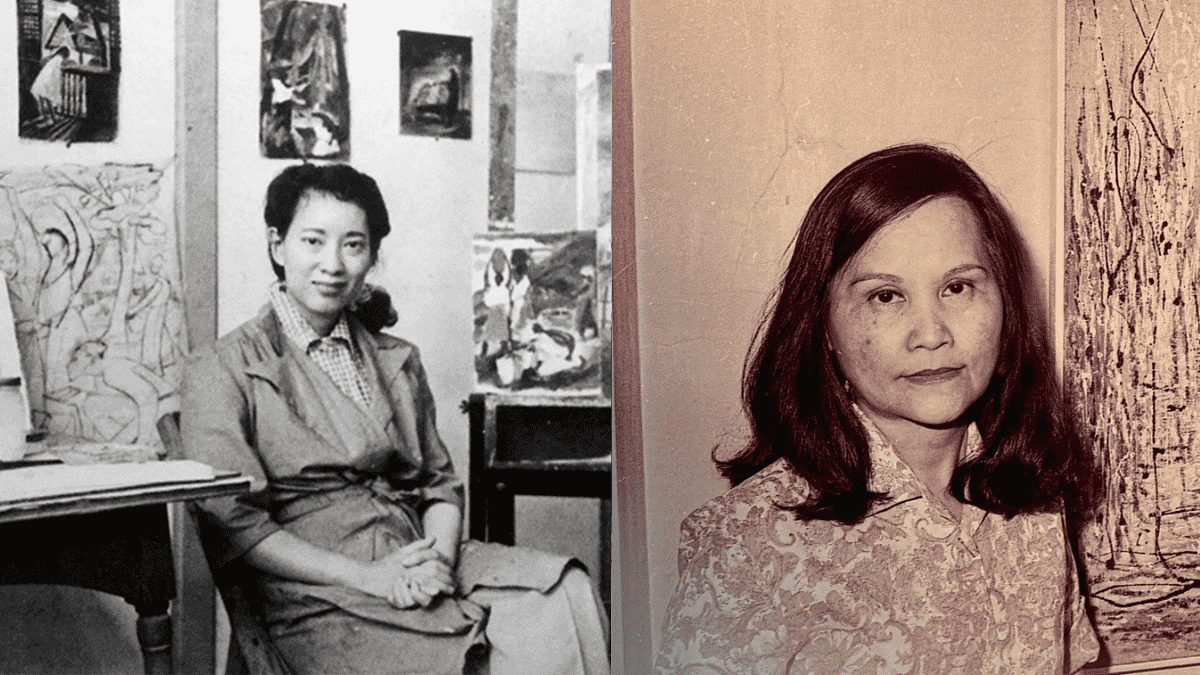
(SPOT.ph) “They are all men. There is not one woman… yet,” declared Ambeth Ocampo, Ateneo University professor and noted public historian. The “they” he was referring to was the current all-male roster of National Artists for Visual Arts. The women he was alluding to were the artists Anita Magsaysay-Ho and Nena Saguil who lived and worked during the glory days of the Philippine post-war art scene alongside the likes of Cesar Legaspi, H.R. Ocampo, Vicente Manansala, Arturo Luz, Napoleon Abueva—all National Artists and all men.
This remark came midway through Ocampo’s lecture titled “Anita Magsaysay-Ho, Nena Saguil, and Me” held last November at the Metropolitan Museum of Manila in support of its recently concluded exhibit on Anita Magsaysay-Ho and Nena Saguil curated by Patrick Flores called Manila Inspirations. While Ocampo’s talk was not really about challenging the patriarchy, he was happy to reminisce about his personal encounters with Magsaysay-Ho and Saguil, in the hopes that these two brilliant women, especially the lesser-known Saguil, can truly be recognized as “masters” alongside their male peers.
Also read: Art Fair Philippines is Moving to Ayala Triangle in 2025
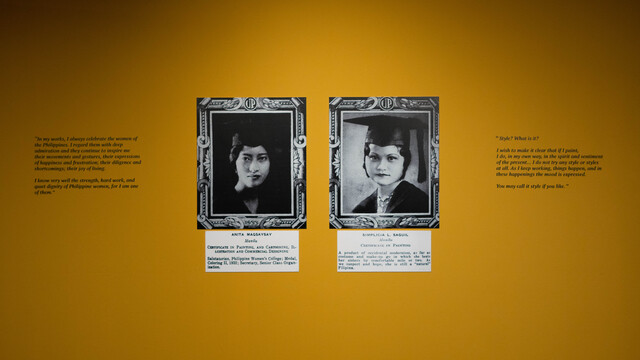
Same birth year, disparate lives
Both born in 1914, Magsaysay-Ho and Saguil were contemporaries, even classmates at the University of the Philippines. However, their lives could not have been more different. Magsaysay-Ho was born into privilege, married a very successful businessman, and traveled the globe while raising a family and pursuing her art. Saguil lived a solitary, “very quiet, mostly ascetic life” in Paris, France, according to Ocampo. Magsaysay-Ho’s artworks command record-breaking prices at galleries and auction houses. Saguil struggled to sell her art, with her works only now being recognized, many decades after she passed away in 1994. Although both artists lived vastly disparate lives, somehow, they seem to have a few surprising commonalities, as I soon learned while listening to Ocampo’s talk and perusing the exhibit.
Of Anita Magsaysay-Ho, Ocampo recalls visiting her studio to have her authenticate a painting inherited from his father. Of course she recognized the work, bemusedly recalling that it had been stolen from her studio when she left for Brazil in 1956. And then she signed the painting. Ocampo recounts that, in her later years, she went back to painting with egg tempera, an extremely tedious and temperamental medium she had mastered early on. He remembers getting alarmed at her using a razor to patiently make scratches on a small piece of wood, while she gently assured him that she knew exactly what she was doing.
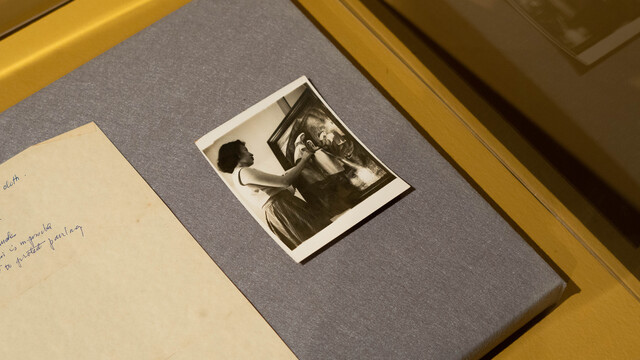
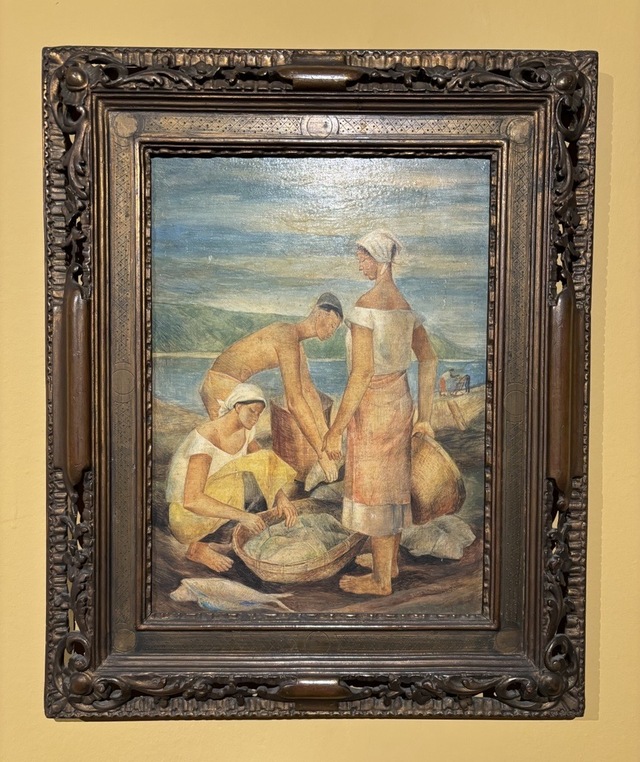
Curiously, I queried my mother about her own memories of Magsaysay-Ho who was a close friend of my grandmother Purita Kalaw-Ledesma. She described her as very sweet, kind, and gentle, as well as quite sophisticated, thanks to her international exposure. But even as she played wife to prominent business magnate Robert Ho, Magsaysay-Ho remained an artist at heart, bringing her studio to whatever country she lived in, continuing to paint her signature subjects—Filipina women at work. Her egg tempera paintings were described as “glistening jewels” by Arturo Luz (as shared by Ocampo), that glowed “as beautiful as when she first painted them.” According to Ocampo, even in her later years, Magsaysay-Ho continued to draw or paint, practicing her art as a part of her daily life until she passed away in 2012.
Nena Saguil in Paris
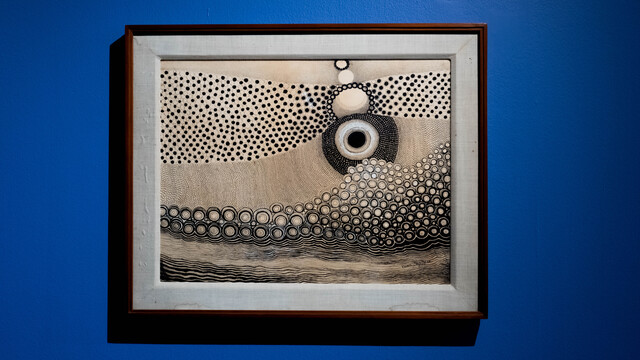
While Ocampo’s recollections of Anita Magsaysay-Ho were heartfelt and evocative, his stories of Nena Saguil were even more revelatory, perhaps because not much is known about her strange solitary life. Ocampo kept in touch with Saguil, visiting her often in Paris. He recalls the spiral staircase he would climb to access her studio apartment, with her unsold paintings hanging on all sides of the stairwell. Inside her apartment, he observes, “Everything was painted in dots, the bed, the table, the refrigerator. The only thing without dots was the telephone!” Her work, especially her extensive use of dots and circles, may be reminiscent of the eminently more famous Japanese artist, Yayoi Kusama, but Ocampo quips, “Kusama was more lucky. She got the breaks.”
Like Magsaysay-Ho, Saguil worked daily and meticulously, pouring herself into her art without breaks. Ocampo shares, “When Nena would work, she would start in the afternoon painting, and she would just continue doing what she’s doing, just looking at her work. The story is when she [would] look up, it was already the next day. She had worked all night to produce these very intricate wonderful paintings.”
Indeed, Saguil easily slides into the trope of the “starving Parisian artist” who only lives for their art. Chuckling to himself, Ocampo made sure to dismiss the urban legend that Saguil survived on cat food in Paris. However, he had to admit that she ate sparingly. He recounted once sharing a meal with her consisting of one egg, some old baguette, and a lonely tub of chocolate yogurt. According to him, Saguil even used to barter her paintings for food from Nora Daza who ran Aux Iles Philippines, the well-loved Filipino restaurant in Paris.
Recluse, aloof and unsmiling
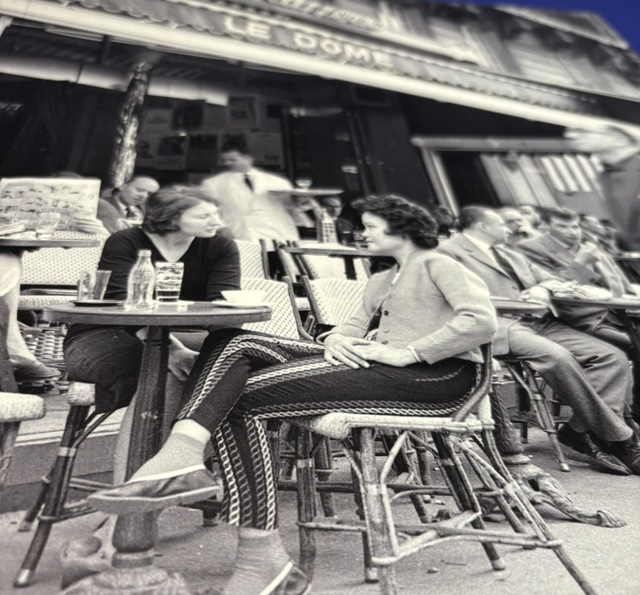
It so happens my family was living in Paris in the 1980s, where my father served as the Philippine Ambassador. My mother remembers Saguil well as a recluse, aloof and unsmiling, who would only attend embassy functions out of friendship for my grandmother Purita who would make sure to visit her every time she traveled to Paris. She looked like a school marm, Ocampo adds, soft spoken and with very small movements, perhaps because she lived in such a cramped space. “We would go to bookstores, go to galleries to look at paintings. This was how she kept herself busy outside of [her art].” He muses, “There was something about living in Paris that gave her great introspection.”
After Ocampo’s lecture, I took my time to appreciate Magsaysay-Ho’s “glowing” egg tempera paintings as well as Saguil’s hypnotic pen-and-ink works on display. I imagined Magsaysay-Ho assiduously grinding her pigments with egg yolk for her egg tempera in order to conjure the grace and beauty inherent in the Filipina women she painted. I then imagined Saguil hunched over in her studio, with the waning light of dusk, carefully marking dot after dot after dot to create her eerily otherworldly compositions.
Their art involved time consuming, technically difficult processes that, nonetheless, revealed an intimacy and dreaminess borne out of extreme effort and painstaking commitment. Their lives were void of any public drama—no scandalous affairs, no drunken revelations, no bombastic eccentricity—that many consider the hallmarks of a “genius” or “artist extraordinaire.” Rather, their artistry resided in the quiet of their studios where they worked until the end of their days.
Anita Magsaysay-Ho and Nena Saguil may not be National Artists, but their legacies continue to shine brightly. At this year’s Venice Biennale, their paintings were displayed for the first time. Saguil’s works were also prominently shown at this year’s Art Fair Philippines, and Ocampo promises another retrospective coming soon to “bring her back into the consciousness” and “to give her the recognition she deserves.” So until the day the Philippine government chooses a woman as National Artist for Visual Arts, let’s continue to appreciate our artists, both women and men, with discernment, in keeping with Ocampo’s closing advice: “Look closely. Connect broadly. Think critically. And place art in context.”
Also read: Banksy Universe in Now at Metropolitan Museum of Manila BGC