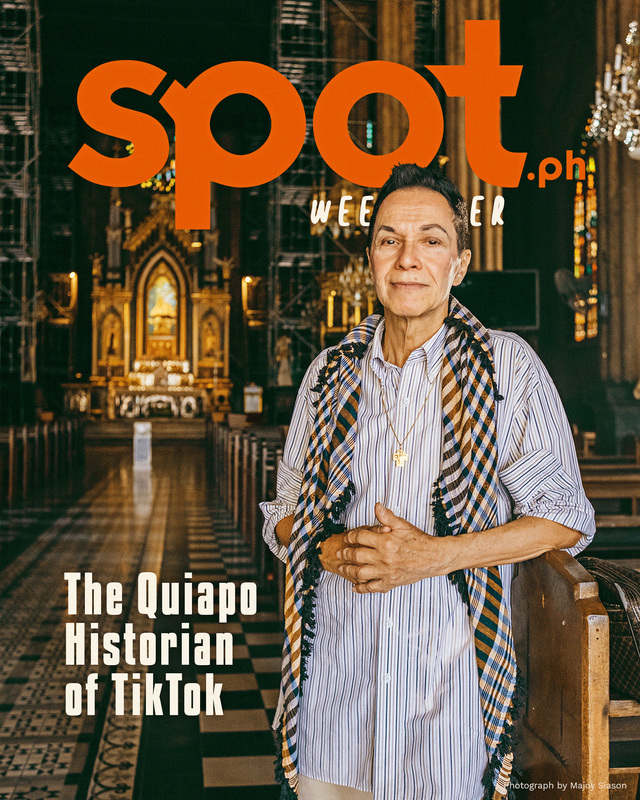
(SPOT.ph) The endless scroll of TikTok can show you many things. There are the latest dance trends, crazy 30-second meme clips, adorable furbaby content, and everything and anything to distract you from real life. If on your next swipe up you encounter an old man simply occupying the frame, spiritedly telling a story about a moment in the past, the things that shaped our now, take a moment to listen. This is Nicanor "Nick" Legazpi.
A former curator who worked with the National Museum from 1973 to 2014, Legazpi is bringing his knowledge—even sharing some of his own prized artifacts—to the fast-paced platform. Legazpi is admittedly not the type of personality you'd expect on trend-dependent TikTok but that only makes his videos all the better.
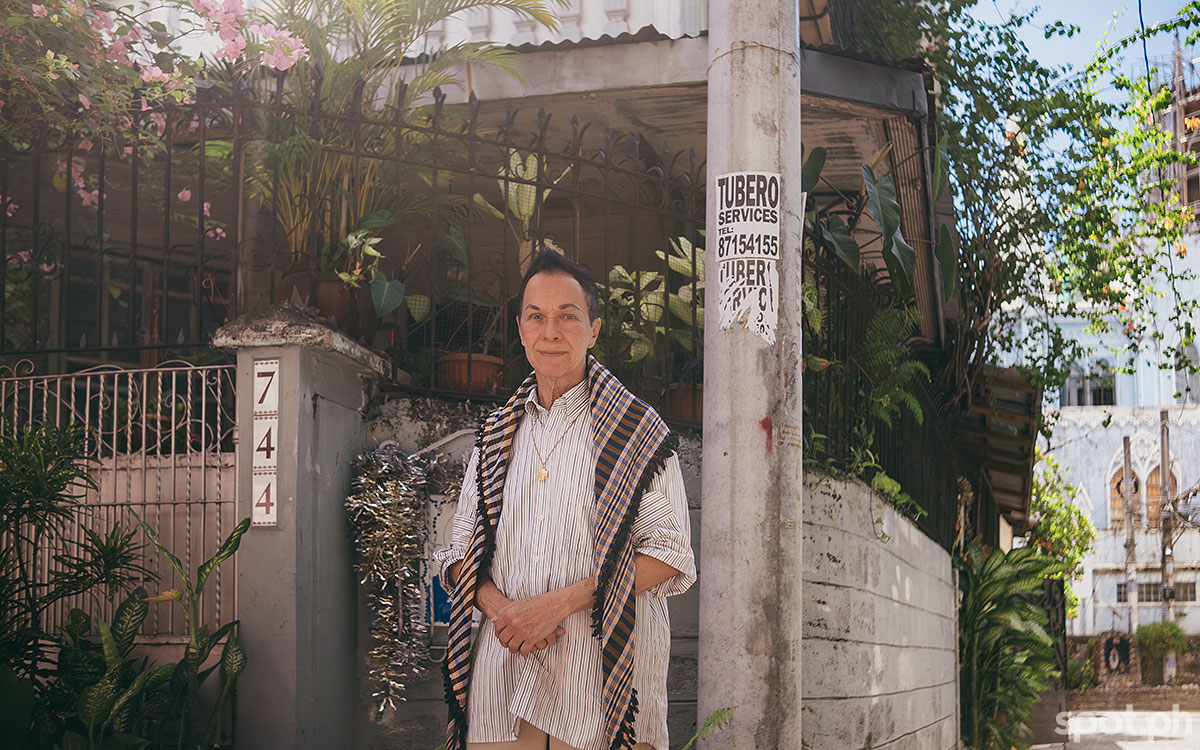
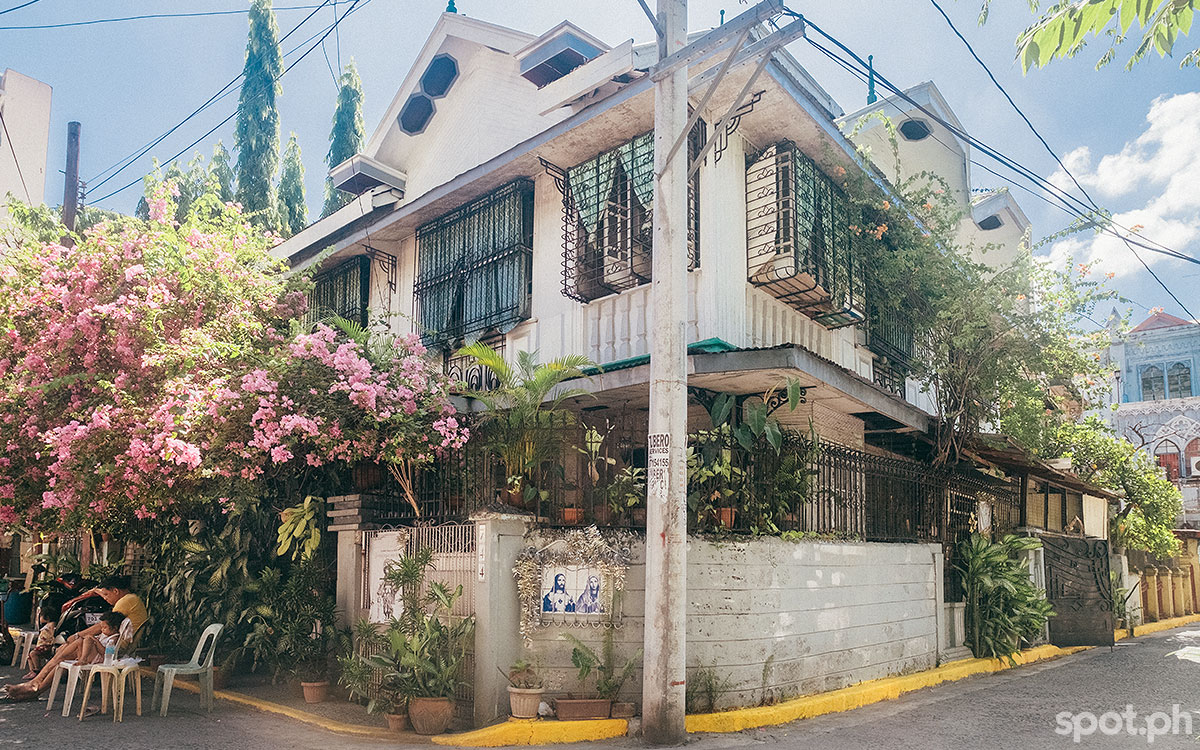
Nick Legazpi stands outside his 1920's home in Quiapo. PHOTO: Majoy Siason
Post a Comment
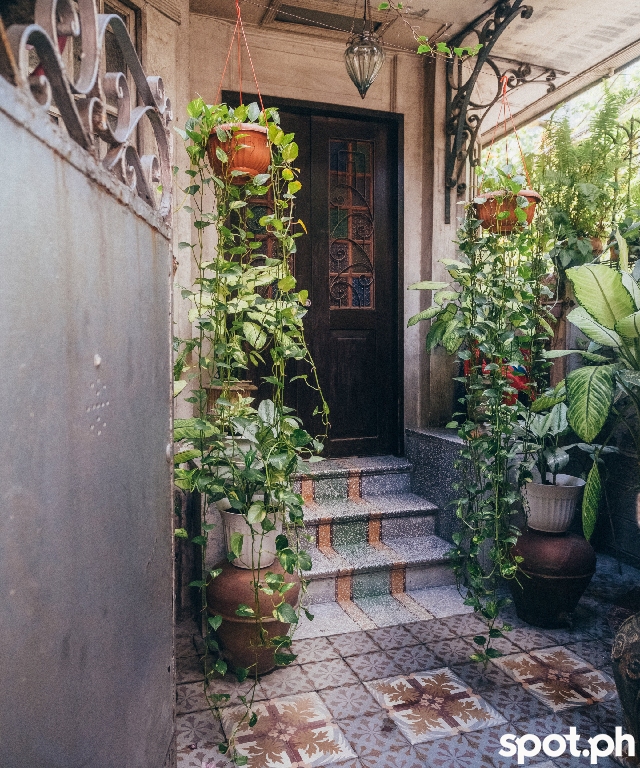
The original front door.
PHOTO BY Majoy Siason
PHOTO BY Majoy Siason ILLUSTRATION War Espejo
Article continues after this ad.
ADVERTISEMENT - CONTINUE READING BELOW
Who is Nick Legazpi, the Quiapo historian bringing heritage to TikTok?
Known to most as "Sir Nicky," Legazpi is quite the figure in the old town, a true Quiapense. He has lived in an old 1920s house near the historic all-steel San Sebastian Church for practically all his life, a fact that enabled him to be as much a part of Quiapo's fabric as he is now. When we take a walk with him during the day of our interview, people on the street raise their hands to greet their "Sir Nicky," a salutation he returns warmly.
"I'm married to Quiapo, I'm married to Philippine heritage," he tells us at the garage of his house, which has been turned into a small canteen after his retirement. "Adaptive reuse," he says, is one of the ways he's managed the upkeep of the century-old structure, and it's also an option he pushes for when his neighbors struggle with maintaining theirs. This advocacy for keeping heritage structures intact—and all other keepsakes of the past, both tangible and intangible—began way back when he was just a child, growing up with his grandmother in the very house we hold our interview in.
The American period house was originally owned by a Spanish mestizo couple who were childless, and so when the husband died, the wife sold it to Legazpi's grandmother. Legazpi says they're not sure who the original architect is, but it may have been a relative of Juan Arellano, the National Artist known for his Art Deco structures.
PHOTO: Majoy Siason
Post a Comment
San Sebastian once towered over Quiapo, an old image you can still sort of see gazing at its towers from Legazpi's street.
PHOTO BY Majoy Siason
Article continues after this video.
ADVERTISEMENT
watch now
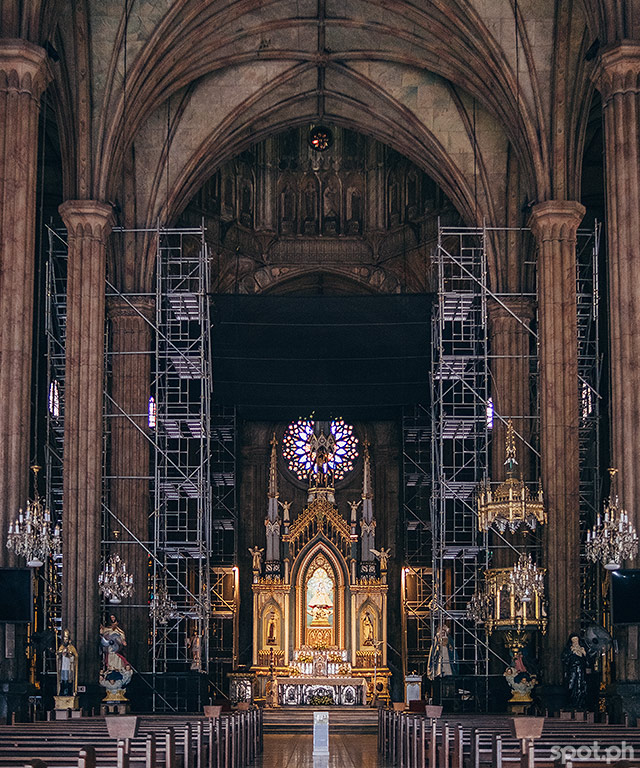
Inside the all-steel church. Scaffolding is in place as maintenance and restoration is never-ending with this structure.
PHOTO BY Majoy Siason
"My grandmother chose this because it is a beautiful house during that period, and it is very near San Sebastian Church. That was the deciding factor," adds Legazpi. A former Miss Bulacan, his Lola Rosario was a prominent figure of the old Quiapo, a woman full of life and energy. His grandfather, on the other hand, was a quiet and religious businessman. Lola Rosario was "the real Commander in Chief," says Legazpi cheekily.
Legazpi was just two years old when he was brought to his grandparents after the war, and so he grew up exposed to the grandeur of his grandmother's life. "She was the one who introduced me to the beauty of our heritage," says Legazpi, recalling how, while dressed in her best finery, she'd bring him along to hear mass at San Sebastian. "Halos ang buhay nila, simbahan, bahay, commerce," he says, "and konting tsismisan." He recalls seeing his grandmother, then known in Quiapo as "'Nyora Gore," chatting with other Doñas about "how life is running in the community."
He would accompany his grandmother on her usual routes, and would attend the house blessings of the old rich families. "Quiapo used to be the citadel of beauty and fame. This used to be the Forbes Park of the Philippines!" Legazpi says.
Article continues after this ad.
ADVERTISEMENT - CONTINUE READING BELOW
PHOTO: Majoy Siason
Post a Comment
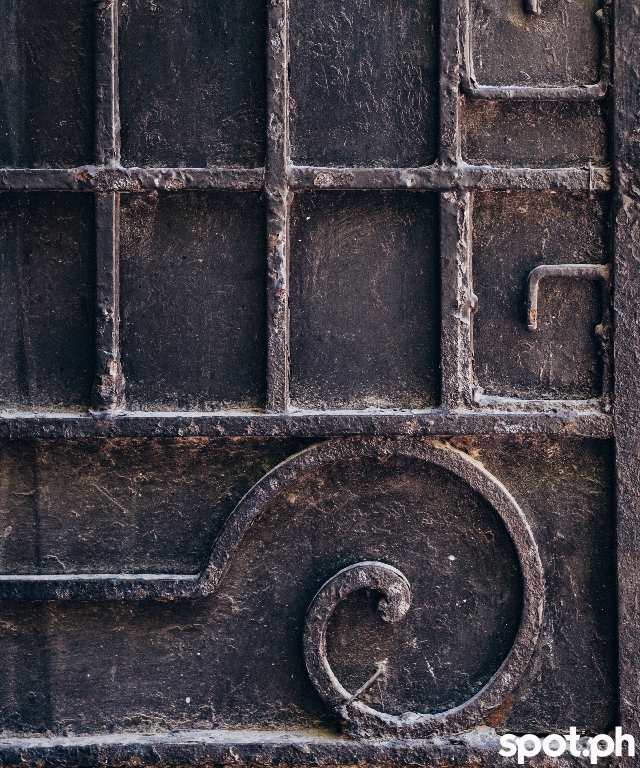
Art Deco details on the garage door of Legazpi's home.
PHOTO BY Majoy Siason
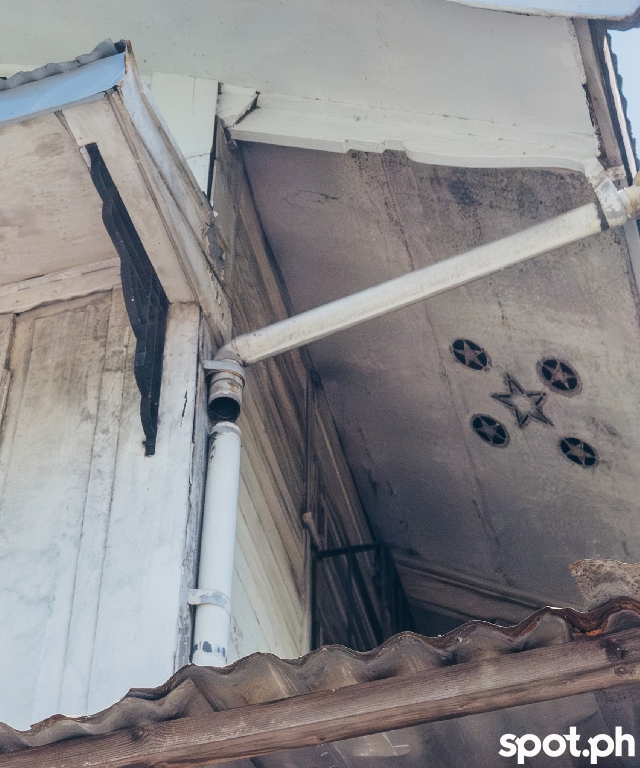
Little stars up on the roof, a different style from the usual flora.
PHOTO BY Majoy Siason
After graduating from the University of the East, Legazpi landed a job as a museum guide at the National Museum, and was then elevated to Chief Guide thanks to his ability to speak Spanish; something he learned growing up in his grandparent's Kastila household.
"I was really talkative about Philippine heritage kasi really in love ako," says Legazpi proudly. "So madaldal ako dyan, kahit nakapikit ako, madaldal ako." This passion no doubt helped him throughout his around four-decade career with the National Museum, where he also became a Secretary General of Authentication, verifying paintings and the like.
Article continues after this ad.
ADVERTISEMENT - CONTINUE READING BELOW
Outside of the National Museum, Legazpi curated many exhibits, including one at the Metropolitan Theater some 20 years ago showcasing his Quiapo. "It was at the biggest gallery at the Metropolitan Theater, and it was well attended," he says. There was a chilling exhibit on corporal punishment at Muntinlupa prison, one that featured an actual electric chair. And in line with his advocacy to keep memories, he was at one point put in charge of creating an inventory for the Malacanang Palace, where he was able to go through not just prized artworks, but also furnishings, dining sets, and all sorts of treasures.
When 2014 came around, the time of his compulsary retirement, there was only one question on his mind. "I was associated with the National Museum from 1973 up to 2014. That used to be my second home and I love and respect the place," he tells us, so what was he supposed to do now?
Well, to say that he's been busy the past decade or so would be an understatement. Legazpi continued his push for heritage conversation by walking the talk. First thing he did was to secure his own family's material heritage by preserving what he could of their old treasures from Bulacan and working to sustain his Quiapo home. Then he moved bigger. Legazpi is a permanent figure when it comes to the effort of turning Quiapo into a government-declared heritage zone; he was witness to the changing of the tides in Quiapo, and there would be no sweeter success than to see some of the old glory restored. And while he is no stranger to the struggles of keeping a heritage structure, like his house and an entire heritage zone like Quiapo, alive, there will be no stopping him.
"Just like what they did in Imperial China or Imperial Japan or Europe and the Americas, they protect the lineage. What happens to the dynasty after the founder? And ganon din ang sinasabi ko. What happens to a heritage structure kung mamatay na ang founder? So, I think it's their obligation to secure the future of the empire," he says, picking up the struggle.
And moving even further beyond his Quiapo, Legazpi spent the years after his retirement giving out lectures in universities, museums, and other institutions. "Every time I deliver my lecture, very simple basic information on heritage, I invite the [local] chief of the fire station and the police," he tells us, explaining that they are vital in protecting heritage structures, so it pays for them to know their significance. Very important, too, is how Legazpi delivers the message: "I go down to the level of my students, to have a rapport with them, because you can talk in highfaluting English, but if nobody can understand you, then there is no message. There is no interaction."
Sir Nicky takes us on a tour around Quiapo, telling stories even from the trike. PHOTO: Majoy Siason
Post a Comment
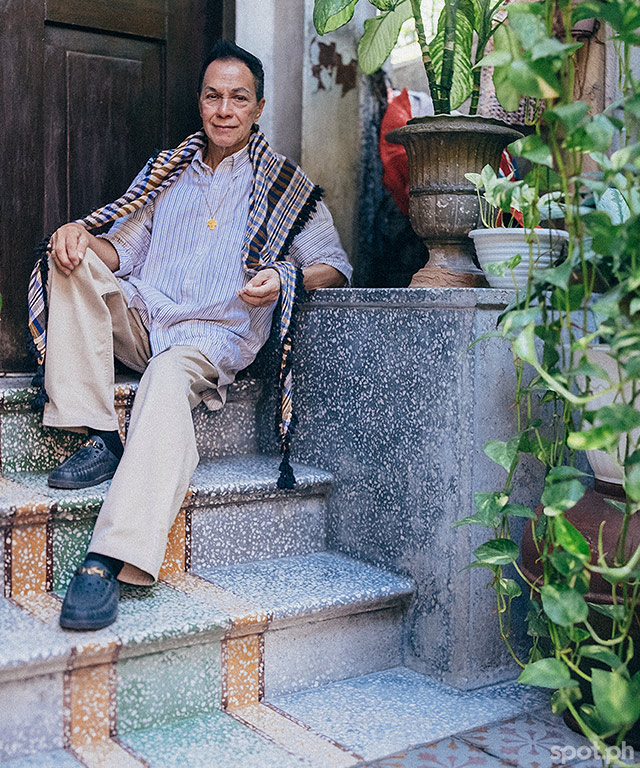
On the front steps of his home.
PHOTO BY Majoy Siason
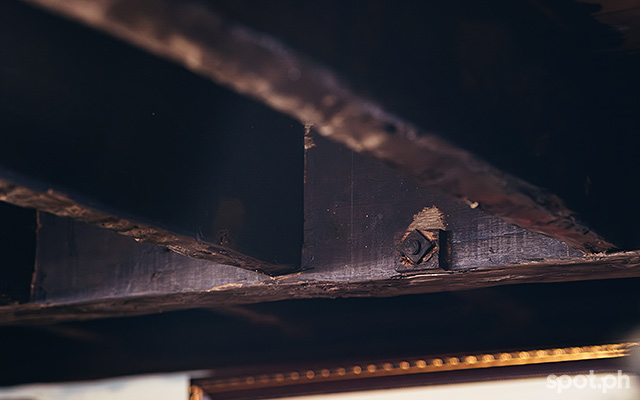
The wooden beams of Legazpi's 1920s house remain intact.
PHOTO BY Majoy Siason
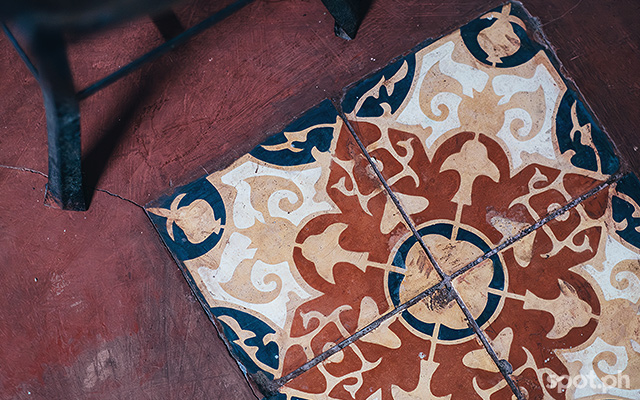
Machuca tiles can be spotted all over the house's ground floor.
PHOTO BY Majoy Siason
This was how Legazpi was bringing heritage to the forefront—until an impromptu visit by a history vlogger landed him on the social media feeds of many in early 2024. You might have seen him giving a tour of his house on the channel of Fern, a.k.a. Ka-YouTubero, which racked up millions of views on Facebook. A peek at the comments showed many people in awe of the house, yes, but more often, of Legazpi's easy delivery and ability to tell the heritage structure's story.
"Natuwa naman ako na may positive effect pala itong sinabi ko. Maski walang makeup, walang alahas, walang ngipin, bagong gising, umiinom pa ako ng Coca-Cola," Legazpi tells us while laughing. "But it was so fantastic."
It was after the tour went viral that his friends began pushing him, asking "How can you reach other people? Passé na ang period mo sa National Museum when you have to deliver several lectures a day." Coupled with the comments on the video asking to see more of him and his fast facts, "that gave me the challenge to participate with the modernization of communication by joining this so-called Facebook, TikTok, and whatever you call it."
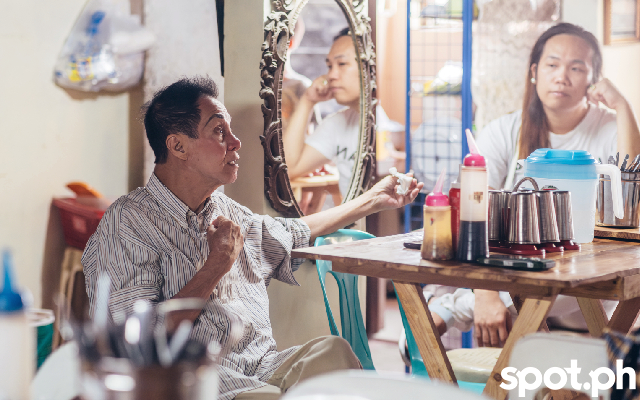
Nick Legazpi tells a story as Nikki Cortez looks on during our interview at his home.
PHOTO BY Majoy Siason
Now, Legazpi has both a Facebook and TikTok page, as helped by fellow history buff Nikki Cortez who grew up under his wing and is now the OIC of Sta. Mesa tourism.
Legazpi's style is very different from the usual overly polished edits and ring light-lit educators you see on TikTok, and that is because Legazpi himself is, for the most part, not delivering a lecture, but sharing something of himself. Legazpi doesn't need a script for his videos, "because I really talk coming from the heart. Walang artificiality," he tells us.
"I feel that I'm being effective," shares the historian, especially whenever he sees the discussions his clips and pictures generate. His most viral TikTok to date, at 1.4 million views, is of him sharing one of his family treasures: a cartamoneda, or an intricate coin purse from his lola. The comments are a mixed bag, of course, from people sharing that they finally realize why their grandparents used the same word, or of them having their own purse passed down through generations, others asking for more bits of history, and some, telling them to sell. Legazpi accepts them all, and hopes that his videos will point viewers the right way.
We use cookies to ensure you get the best experience on Spot.ph. By continued use, you agree to our privacy policy and accept our use of such cookies. Find out more here.





Comments