

John Tewell and Why His Collection is a Portal to Manila's Past
Heritage workers speak of him with fondness and respect.

(SPOT.ph) Within the circle of Filipino archivists and heritage advocates, John Tewell is a name regarded with fondness and respect. So when the American passed away on February 11 this year, based on the messages posted online, it felt like the community lost an unsung hero whose contributions to the country’s cultural preservation efforts held its own significance.
Among the first to pay tribute to Tewell were cultural agencies such as the Department of Tourism, Culture and Arts of Manila and the National Historical Commission of the Philippines (NHCP).
“John’s work not only captured moments in time but also touched the hearts of many, sharing Manila’s soul with the world,” wrote the former on its official Facebook page. “You will always be a part of Manila’s legacy.”
Also read: The Forgotten Houses of Quiapo
“Tewell will forever be remembered by a grateful Filipino nation, whenever his photographs are seen in our history museums and beyond,” wrote the NHCP, also on its Facebook account. The group has featured images from Tewell’s collection in permanent and special exhibitions, as well as in various audio visual presentations and documentaries.

Tewell, who has also shared his pictures with authors, collectors, curators, and architectural conservators and restorers, is a known collector of old Philippine photographs from the 19th century onwards. Before he died, he managed to digitize nearly 13,000 images, a chunk of which he took himself. These have been posted on a public Flickr account.
A life dedicated to collecting and photography
For nearly 18 years, Tewell was the go-to for many in the heritage community. His collection has become a source of invaluable information and served as helpful illustrations, capturing scenes from a distant past, giving us a glimpse of how we once lived as a people.
Even as he neared death, he only had his collection in mind. “He just kept talking about the photos,” says Bea Dolores, a culture and heritage advocate who turned to Tewell for her research on the Pasig River.
“The Philippines need to know that these old photos are heritage, they have to be for the Filipino people,” Dolores recalls a very weak Tewell repeatedly telling her at the hospital where he was confined. Dolores, who is also the co-founder of the cultural organization Renacimiento Manila, was by the 81-year-old’s side during his last few days. She helped raise awareness on his situation online and asked for donations from the heritage community to help with Tewell’s hospital bills.
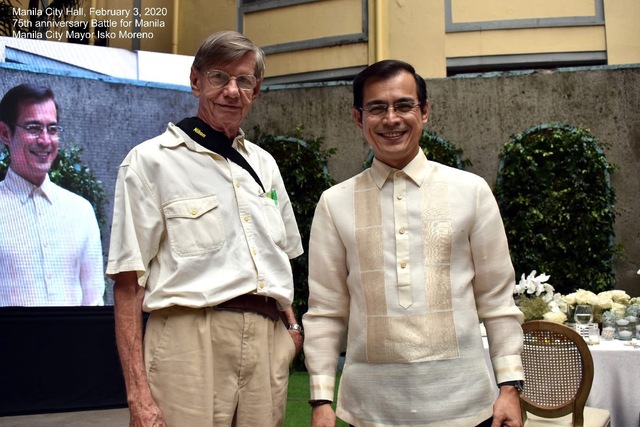
Who is John Tewell?
A former US pilot from Girard, Kansas, USA, Tewell retired in the Philippines in 2007, and dedicated the years that followed almost exclusively to collecting rare and old Philippine photographs. Anyone who gets to visit his Flickr account would be impressed not just by the number of photos but by the scope of the collection and the quality it is in. Whole albums are dedicated to Spanish era Philippines; pre-, post-, and war-time Manila; old Philippine architecture; Filipino indigenous peoples; and 19th century daily urban and rural life.
In a Philippine Star feature written by former Senator Nikki Coseteng in 2017, Tewell, who was also a photographer since the 1950s, shares that his life was always "pointing in the direction of photography." A visit to an antique shop in Ermita with his partner Dorothy in 2008 started him on his collecting journey. “I found a complete album of 1930s portrait photographs and I bought it. That started me actively searching for other heritage photographs; I enjoy collecting them and looking at the stories they tell.”
The Ermita discovery set Tewell on a lifetime of adding to his growing number of black and white photographs that captured the Philippine’s beauty, misery, destruction, progress, and transformation. “Hobby niya every single day [is to] discover old photos,” Dolores says, describing the collector. “He scours the internet for that and then helps us Filipinos discover it and make it clearer. Yun lang din [photo collection] ang bukambibig niya most of the time.”
Tewell sourced old Philippine images everywhere –online libraries around the world, eBay, photo magazines like Life, antique shops, sometimes shelling out as much as Php2,000 per photograph. “I own many of the original photographs such as this 1926 aerial photo,” he told a Flickr follower who admired an aerial shot of 1926 Manila. “Others, I mostly get from online libraries that I clean up removing dust spots, blemishes, etc. and enhance the image to look its best. It is a pleasing hobby in retirement for me. I am happy that you like [it].”
In the Philippine Star article, he shares that many of his original prints are deposited for safekeeping at the Filipinas Heritage Library.
Link to the past
Never did Tewell think that his passion could be of use to Pinoys, especially those who needed to piece together valuable information to complete history and heritage-based projects. Dolores, for instance, reached out to Tewell when she needed to do research on the proposed Pasig River Expressway (PAREX). “With limited technology and resources, it was only Sir John’s photos that really helped me understand what the Pasig River’s history was. The huge change between what it is now and what it was before--na may carabaos pala tayo sa Metro Manila that [used to] take a bath on the river… and that may certain type of soil pala siya and how we don’t have any of these anymore,” laments Dolores. She adds Renacimiento Manila uses many of Tewell’s photos as reference for recreating Manila locales in 3D.
Restorers have also turned to Tewell’s collection to understand the architectural and period details of local historical structures. His photos were used as reference during the restoration of the former Army and Navy Club, now Rizal Park Hotel, once a social club for the exclusive use of US military personnel. In a 2017 article in Manila Standard, Tewell was quoted as saying that its reconstruction was “an important undertaking, being part of the Filipino heritage and history.”
For the impact of his collections on preserving the heritage and culture of the country, for helping ordinary Filipinos rediscover their heritage through photos, and for complementing the work of many heritage organizations and museums, Tewell certainly deserved to leave this world under better circumstances. It’s ironic that it had to be a foreigner like him teach us Filipinos a valuable lesson on the importance of preserving our heritage.
“It is a shame that the citizens of the Philippines cannot experience the beauty of Manila, the Pearl of the Orient as it was,” he once lamented, responding to a comment on Flickr. “Even though I am not a Filipino,I feel so very sad about this. Part of my effort is to show to the people of the Philippines that they have lots of reasons to be proud of those that came before them. And that it could be that way again if the greed and corruption could be rooted out and decency and caring for the country be allowed to grow.”
Also read: A Pasig River Esplanade Walking Tour with Paulo Alcazaren