(SPOT.ph) It's almost an ordinary sight here in the Philippines: the ruins of a structure from a time long gone, standing in a crowded street surrounded by so-called markers of urbanization, abandoned or repurposed without any respect for what it once was. And while there have been better efforts in recent years to preserve some monuments of our heritage, a walk along the streets of Quiapo shows the fight is far from over.
Quiapo was once "the Forbes Park of Manila," says the historian and retired National Museum curator Nicanor "Nick" Legazpi who lives in a 1920s home near San Sebastian Church. Quiapo was where all the prominent families came to build their houses before World War II, and some of those grand structures have survived—it's just that preserving them has been an ongoing struggle. Since Legazpi has lived practically all his life in the area, he's been witness to and a part of the district's old glory days, its fall, and now its hoped-for regeneration. He stands as one of the figures pushing for Quiapo and the Philippines as a whole to better preserve its heritage.
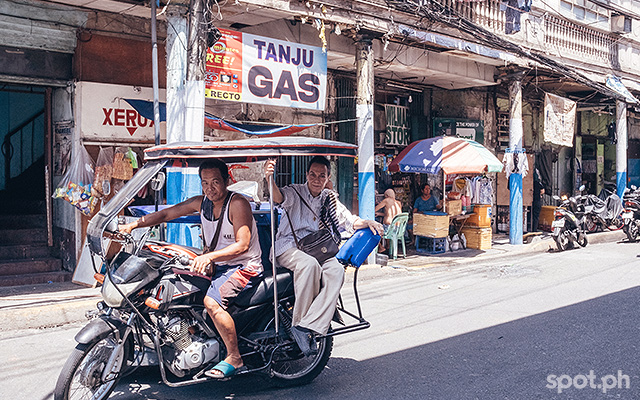
Nick Legazpi sits on a trike zipping past an old house during our tour.
PHOTO BY Majoy Siason
Article continues after this ad.
ADVERTISEMENT - CONTINUE READING BELOW
But the fact is most of these heritage structures are a bane for their owners. While some continue to live in them, some have rented out these properties, admittedly struggling with the upkeep that century-old structures require. Legazpi himself has opened up his garage for use as a canteen; "adaptively used to generate income," he tells us. But others have not been able to find ways to preserve their homes. "Some of them are callous, some of them are negative," says Legazpi, but "some of them are falling in love again with the idea."
On the struggle of preserving heritage structures in Quiapo and beyond
"Heritage, makakain ba 'yan, Nicky?" This is the question Legazpi usually gets whenever he speaks to other homeowners about preserving their old homes. "You cultural workers, culturati, literati, you are always talking about cultural history, kasaysayan, kalinangan—but can we eat that?"
There may not be much practical wisdom in spending a large chunk of your money on the upkeep of an old house, much less restore it with materials that are hard to find or no longer available, using techniques no one practices anymore. This is not something Legazpi denies. "You can quote them the Bible and say 'Man does not live on bread alone,' but at the end of the day what we all need is bread."
Article continues after this video.
ADVERTISEMENT
watch now
Still, there are options, Legazpi says: there is adaptive reuse (if there is enough capital, of course), then there is the option to donate to or partner with cultural organizations and institutions, or sell the structure to someone who can better take care of it. But an option he hopes no one takes is demolition. "They cannot demolish it!"
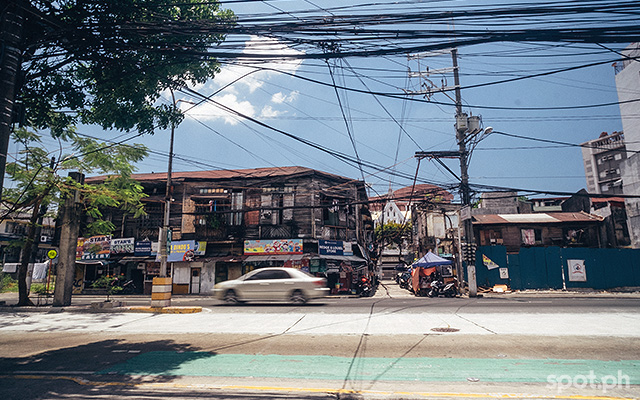
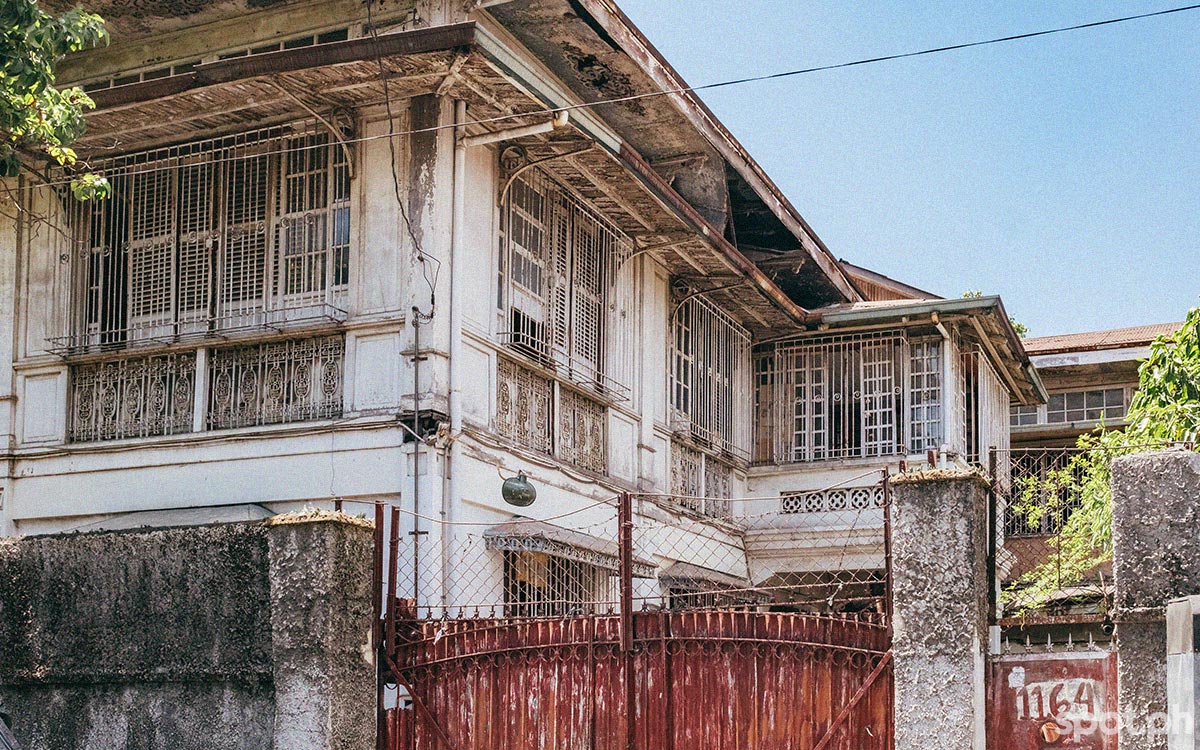
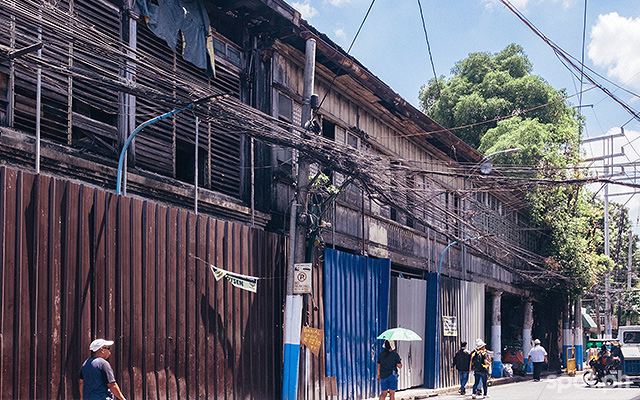
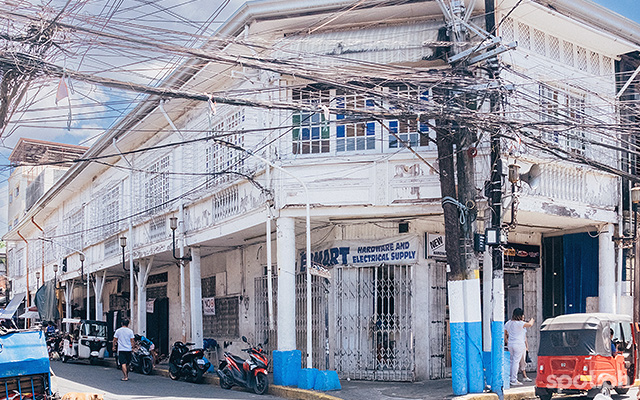
Beyond the old structures named by Legazpi, we also passed many houses like this pictured one near the Tanduay Fire Station that appear to have been left behind.
PHOTO BY Majoy Siason
At the core of it, people will not be empowered to preserve heritage without action from government. "This is the role of the local and national government: to preserve this heritage structure by legislation," says Legazpi. "But unfortunately, walang ngipin ang ating legislation, bungi lahat."
In Quiapo alone, Legazpi has witnessed beautiful houses demolished in three days, gone after having stood there as part and witness to the past century or so. "You destroy the footprint of our ancestors, you destroy the soul of our ancestors," Legazpi says—and all "in the name of urbanization." This continuing erasure of our heritage structures, of changing the landscape with no respect to our past, will result in a city that the former curator says do "not represent our dreams and aspiration, which can guide us to the future."
Article continues after this ad.
ADVERTISEMENT - CONTINUE READING BELOW
He continues: "Kaya't sana pangalagaan natin, lalo na nung mga kabataan, ang pag-aaral natin ng cultural heritage at arts at history. Dito nakasalalay ang karunungan ng kabataan natin, at sa karunungan ng kabataan magkakaroon ng matinding pagmamahal at kung ano talaga ang sariling lahing kayumanggi."
The old Martelino Mansion is right across the much-better kept Padilla Mansion. You can see the way the house has been partitioned for different shops. PHOTO: Majoy Siason
Post a Comment
For now, there are two bills being routed on a national level that aim to have Quiapo officially declared a heritage zone: House Bill 8664 by Manila's Third District Representative Joel Chua and a similar bill in the senate authored by Senator Loren Legarda, No. 2324. The former was approved by the house in recent months.
Both bills will work to protect physical heritage in Quiapo, designating both structures and materials "dating at least 50 years old" as "cultural properties." Property owners will also get tax perks. Most importantly, the bills put Manila in charge, mandating the creation of a "heritage zone development plan," as well as allocating funds from the national budget for the zone.
"If they can only help homeowners, cultural agencies, to really establish the identity of the city, then perhaps we can ressurect the glorious days," as Legazpi says.
The old Herrera Mansion next to the Tampinco compound. PHOTO: Majoy Siason
Post a Comment
A close up of the roof's detailing.
PHOTO BY Majoy Siason
Article continues after this ad.
ADVERTISEMENT - CONTINUE READING BELOW
Forgotten structures of Quiapo
Quiapo is full of treasures hidden in plain sight, some just under layers of city grime, or random extensions to the structure. Some have just faded into the commotion of the streets. Some are better mantained than others, with restorative efforts in the works or adaptive reuse applied. Others look to have been shackled up and forgotten. Legazpi takes us on a tour of his neighborhood, past the usual stars of a Quiapo walking tour: the Quiapo Basilica, the San Sebastian Church, the Bahay Nakpil-Bautista House (arguably a stellar example of heritage preservation), and zeroing in on the houses and structures that need help before they are lost forever.
The Tuason-Tampinco House
This structure was built later on, says Legazpi.
PHOTO BY Majoy Siason
Next to it stands this white house with intricate metalwork.
PHOTO BY Google Maps Streetview
Along Arlegui Street stands the Tuason-Tampinco house, a gorgeous structure in white built in the early 1900s. It has windows and intricate metal grills that Legazpi says may be the work of Hilario Sunico, a famed metalsmith during colonial times. Next to it is another house but much younger. These two sit side-by-side along a now-crowded street next to townhouses and commercial buildings.
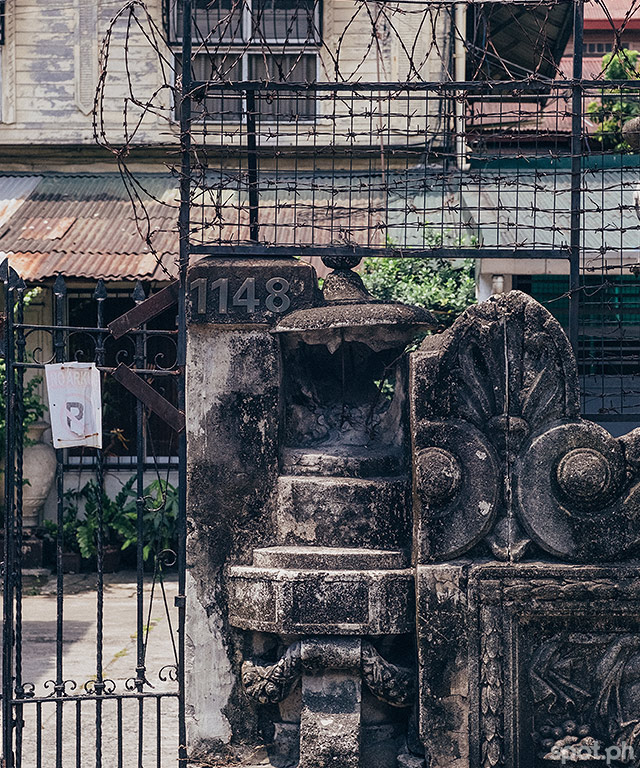
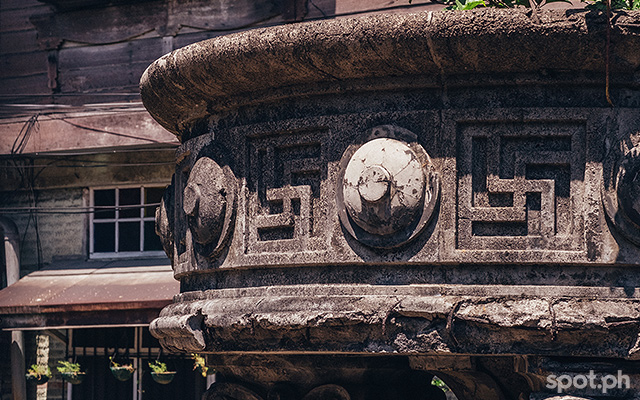
The gates of the Tampinco compound along Concepcion Aguila bear what look to be the markings of the great sculptor.
PHOTO BY Majoy Siason
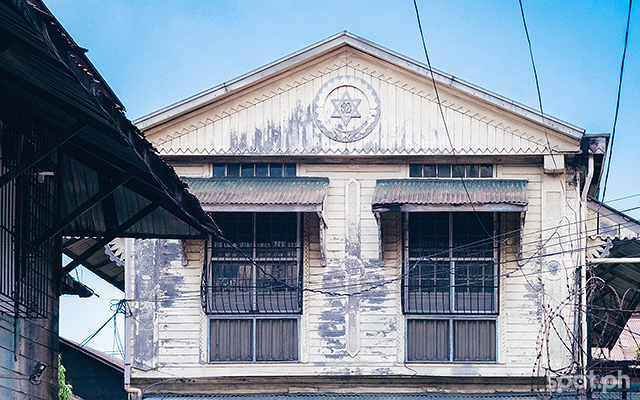
Peep the Star of David atop one of the old houses in the compound. This may be a Masonic symbol.
PHOTO BY Majoy Siason
Details of a prototype of a statue meant for the Manila Post Office.
PHOTO BY Majoy Siason
PHOTO BY Majoy Siason
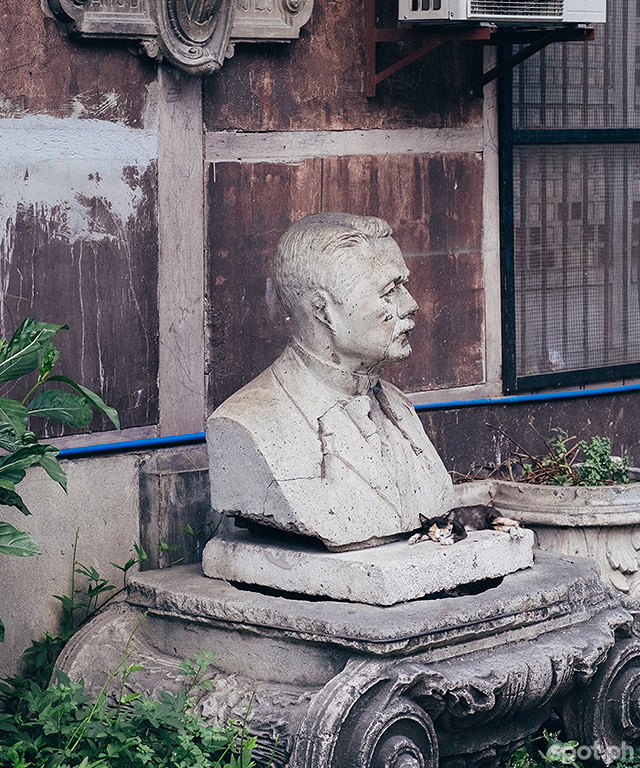
It appears the Tuason-Tampinco compound occupies a large lot because as we headed to the street parallel Arlegui, the Concepcion-Aguila Street, we saw more century-old houses and even a yard full of Tampinco's works behind where the main structures would be. Isabelo Tampinco, as a refresher, was a famed Filipino scuptor. We spotted a prototype of a monument that might have been made, as per Legazpi, for the Manila Post Office building. We saw a kitten sleeping by a giant bust of what looked to be Marcelo Del Pilar, under a house marker that had the year 1929 carved on it. All these were visible through the closed gates of the residential compound (pictures taken with permission from the current residents).
A condenser unit above a bust and right next to the marker that says 1929.
PHOTO BY Majoy Siason
The Paterno Mansion is now dwarfed by a condominium next to it. PHOTO: Majoy Siason
Post a Comment
The Paterno Mansion
A few streets away, along Calle Hidalgo, are two mansions from the late 1800s that stand right across each other: the Paterno and Zamora houses. The Paterno house differentiates itself from the usual grand old houses with its row of stone columns upfront, framing the simple capiz windows. The house is associated with the infamous Pedro Paterno, known to some as the fabulously rich aesthete and intellectual, but to others a turncoat, siding with whichever colonizer was in power. While Legazpi could not say for sure whether Paterno himself lived in the house, its construction coincides with the time the man was active in the first Philippine republic during the turn of the 20th century.
Throngs of people crowd outside and inside these houses.
PHOTO BY Majoy Siason
A closer look at the Paterno house's details.
PHOTO BY Majoy Siason
The Zamora Mansion
Right across the Paterno mansion is the Zamora house, which has been shuttered down entirely. This massive property from the late 19th Century was the home and the laboratory of pharmacist Manuel A. Zamora, famous for having created the Tiki-Tiki vitamin used to help cure infantile thiamine deficiency (better known as beriberi). His vitamin came at a time when infant mortality rate was high because of the said sickness, and his vitamin was significant help in bringing it down.
The state of the Zamora mansion during our visit.
PHOTO BY Majoy Siason
As it was before.
ILLUSTRATION Warren Espejo
Alarms were raised by the heritage conservation group Renacimiento Manila in January 2023 when they saw the insides of this last remaining bahay-na-bato in the area being dismantled. On our visit in April this year, this huge house did feel like an empty shell, but at least there did not appear to be any more demolition happening. According to Legazpi, the facade thankfully cannot legally be destroyed, but the inside may be turned into a museum or restaurant.
The Padilla House
The Padilla Mansion.
PHOTO BY Majoy Siason
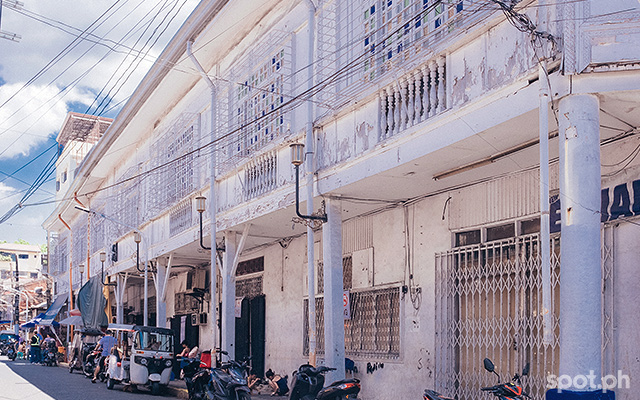
You can see why it's dubbed the long white house here.
PHOTO BY Majoy Siason
A few steps aways from the Zamora house is the much better maintained Padilla House, occupying the corner of Calle Hidalgo and Z.P. De Guzman. Standing here since the 1880s, the Padilla ancestral home is also known as the "long white house," thanks to how it stretches across De Guzman Street from the corner. There is now a gallery in this house that you can visit, a great example of "adaptive reuse," thanks to the efforts of descendant Manuel Padilla.
The Ocampo Pagoda Mansion
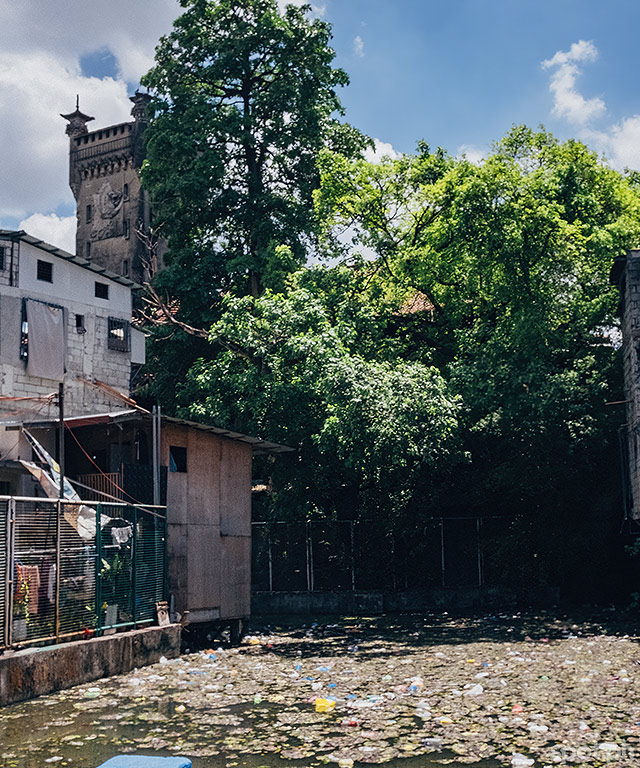
The tower pops up into view over this dismal scene.
PHOTO BY Majoy Siason
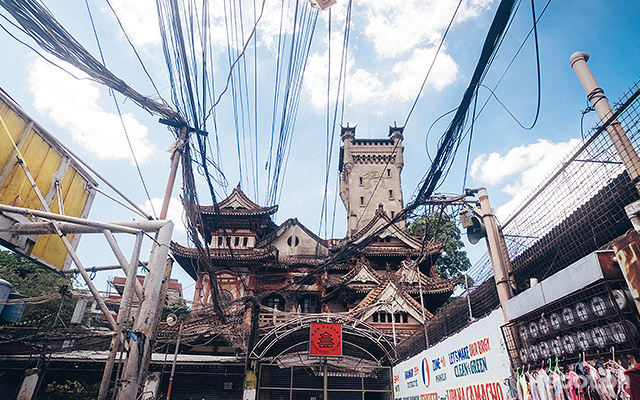
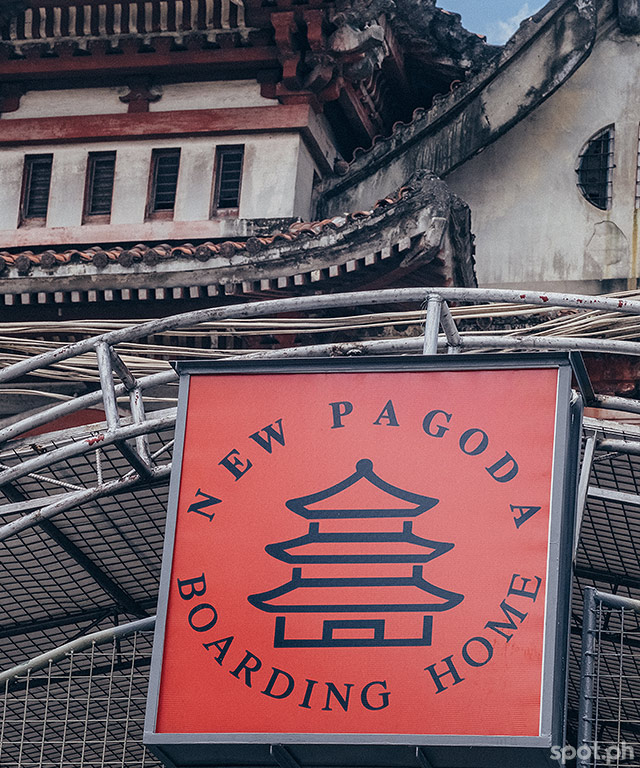
Down De Guzman Street, you'll come across a small bridge over a sadly typical trash-filled estero of Manila. Take a closer look above the detritus and there, right next to a tall tree, is an almost fairy-tale like castle tower, complete with what looks to be once a dragon. No, this is not a dream, this is the Ocampo Pagoda House. Turn right past the bridge, land on Gonzalo Puyat Street, and enter an eskinita to your right. Past the tightly knit houses, you'll be greeted by the Japanese-pagoda inspired mansion of the Ocampos—now a transient house for seamen.
Once past the eskinita, the area opens up to a sort of community center, complete with a basketball court, and yes, all the wires strewn about.
PHOTO BY Majoy Siason
You will not be allowed inside the boarding house unless you are renting.
PHOTO BY Majoy Siason
Constructed by Don Jose Mariano Ocampo in the 1930s to 1940s, this very unique mansion once stood proudly amidst Japanese gardens. Ocampo was a devout Catholic and a patron of the arts, so he built his home in the Oriental style and covered his gardens with relics and holy images. The Pagoda still stands today, clearly, although the grand sculptures are missing some of their parts here and there, and the structure is no longer as grand, or as well-kept, as it used to be. The land around it is now full of tightly packed houses, too, but you can still see holy images scattered around, proof that the area was once a garden. Legazpi tells us that, as the story goes, this house was not destroyed during the Japanese occupation of Manila as it reminded them of their own culture.
The Tanduay Fire Station
This road was once called Tanduay, hence the name.
PHOTO BY Majoy Siason
PHOTO BY Majoy Siason
Spot the thick stone walls of this historic structure on the ground floor.
PHOTO BY Majoy Siason
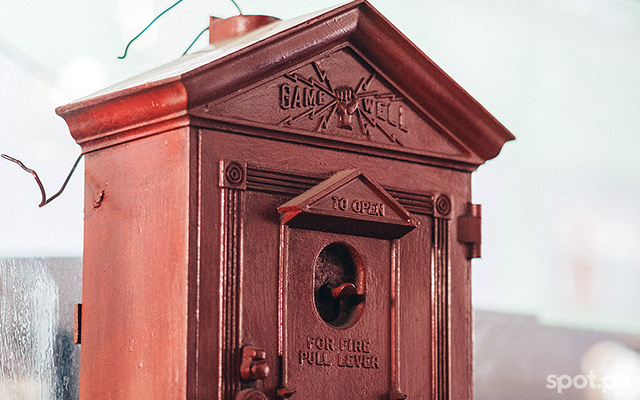
An original alarm system.
PHOTO BY Majoy Siason
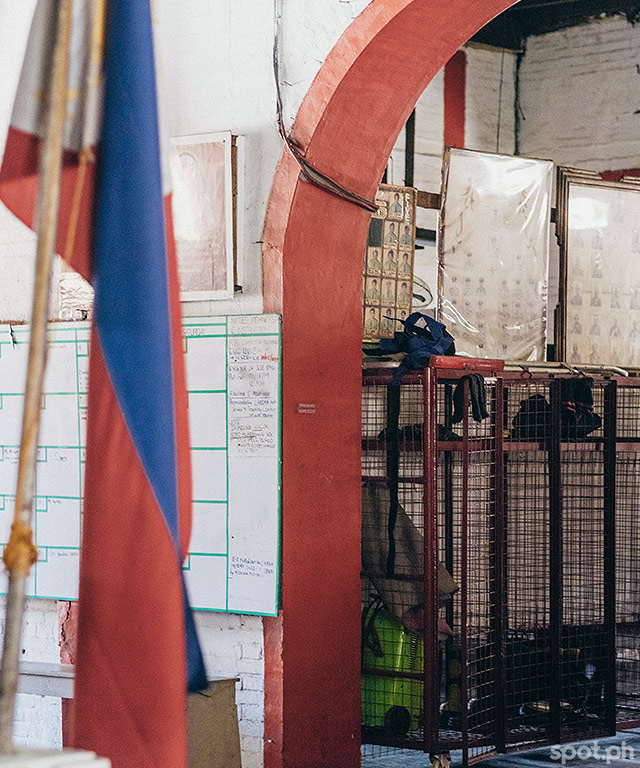
Between Nepomuceno and Legarda is one of the oldest fire stations in the country: the Tanduay Fire Station, which has been around since 1904. It retains its old structure, with thick stone walls on the lower ground, and the top half made of wood—only that most of the second floor is no longer safe to use. You can still see the original wooden beams across the ceilings, as well as the old bell and fire alarm now placed at the newer, air-conditioned office in the center of the station.
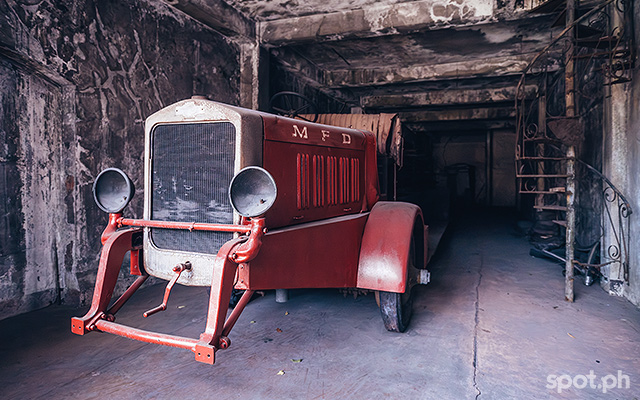
You had to crank up the engine to get this old fire truck started.
PHOTO BY Majoy Siason
The firefighters assigned to this historic landmark are clearly proud of what they have, with Fire Officer 3 Jackielyn Caranguian gamely leading us to one of their biggest treasures. Sitting quietly in one of the unused garages is an old fire truck that dates back to the 1930s. There are only two of these left in the world, says Caranguin; the other one's in New York.
We use cookies to ensure you get the best experience on Spot.ph. By continued use, you agree to our privacy policy and accept our use of such cookies. Find out more here.












Comments