

How Angono's National Artists Influenced Its Observance of Lent
Botong Francisco and Lucio San Pedro left rituals that have become traditions.
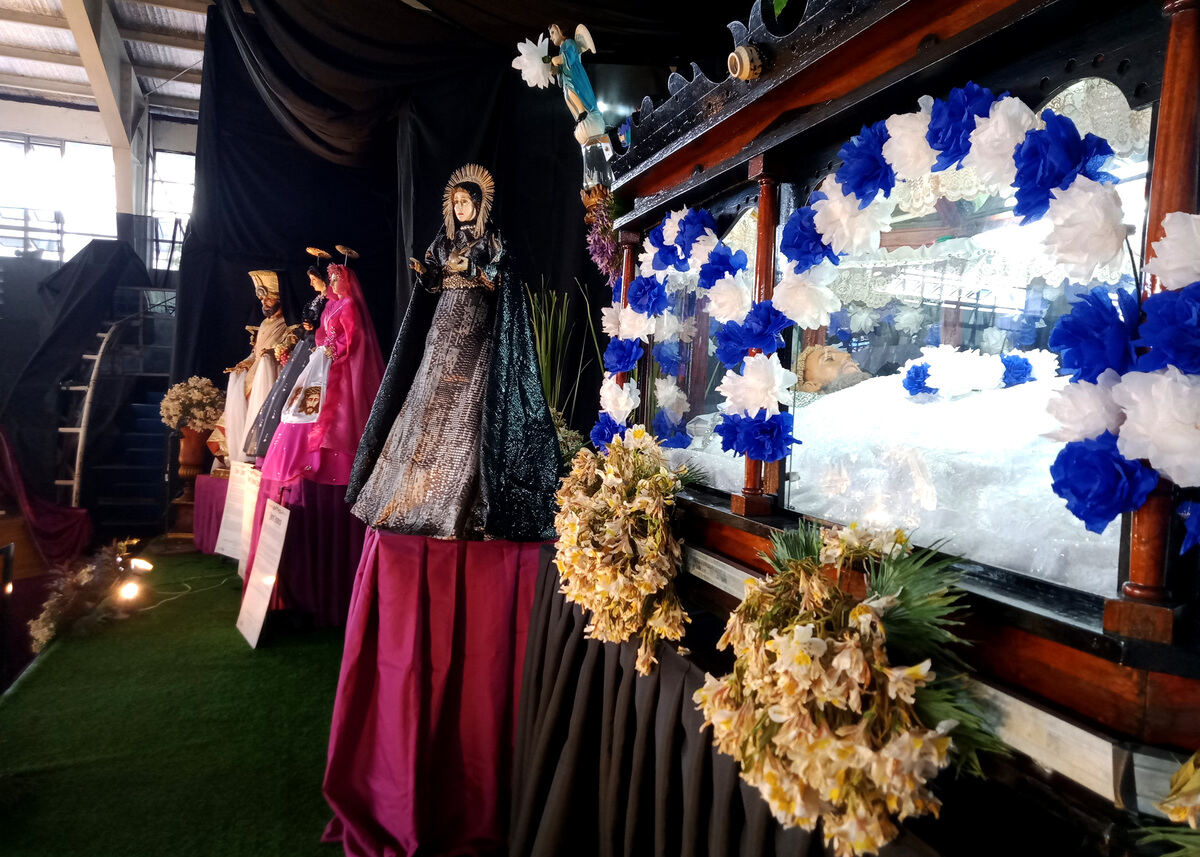
(SPOT.ph) What sets Angono’s Holy Week festivities apart? Having two National Artists—Carlos ‘Botong’ Francisco for visual arts and Lucio San Pedro for music—certainly impacted how Angonians express their faith. Known as the art capital of the Philippines, any visitor to this small town will undoubtedly be reminded of its great cultural heritage. In Poblacion Itaas alone, several residential walls are decorated with sculptural murals to honor their beloved artists.
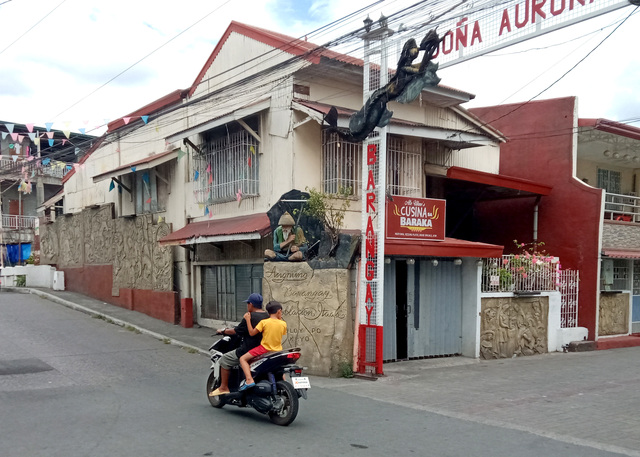
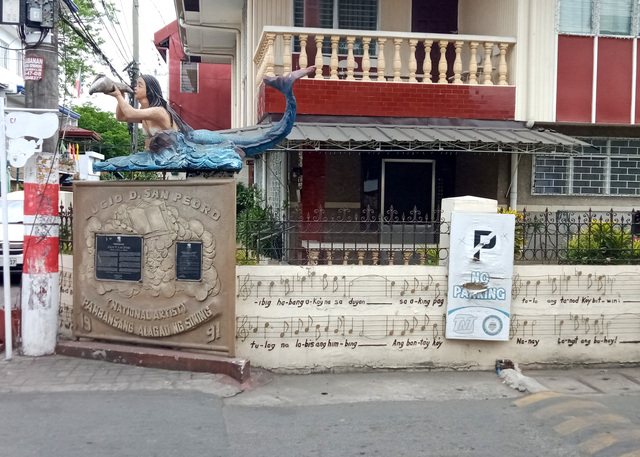
Both Francisco and San Pedro made significant contributions not just in the high-brow realms of their practice but also in Angono’s religious traditions. “In between the seven last words rituals ng Holy Week, kinakanta ang mga awitin na composed by Lucio San Pedro exclusive to Angono,” reveals Ric Lipio, a floral stylist, barangay councillor and active church volunteer. “Nung kami maliliit pa, siya mismo ang kumukumpas sa harap ng banda.”
Also read: Not-a-Surprise: We Know Where Botong Francisco's Obra Maestra Can Be Found
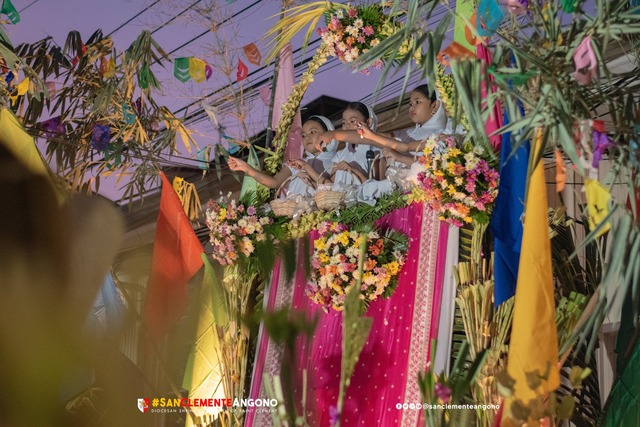
Lucio San Pedro's discovery
During the Japanese Occupation, San Pedro discovered a forgotten song at the Metropolitan Theater. Little girls now sing it on the Onsanahan, a platform from which they release confetti during the Palm Sunday rituals.
Francisco, on the other hand, is credited with the idea for a ritual called “Paso,” in which young boys carry the items associated with the sacrifices and death of Jesus Christ. These include a nail used for the crucifixion, the crown of thorns, the lance that pierced Jesus’ side, a chalice that symbolized his suffering, etc., which are attached to long bamboo poles and decorated with blue paper cutouts. This dramatic assembly leads the procession of the Santo Entierro, or the statue of the dead Christ.
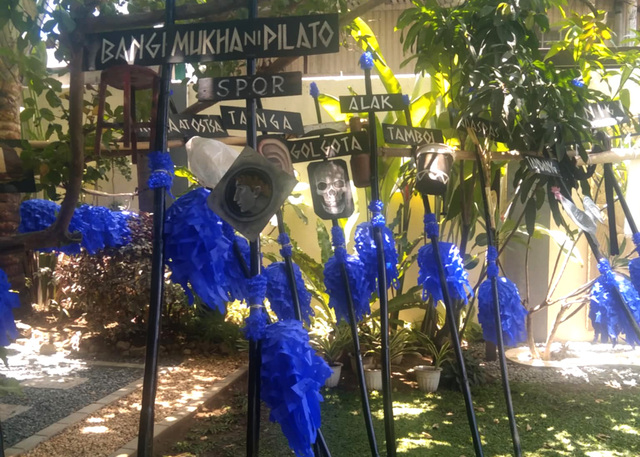
“Kinagisnan ng mga taga rito yung Paso since 1960s kung di ako nagkakamali,” says Carlos “Toto” Francisco II, a grandson of the National Artist. “Baka late 1950s pa nga nagsimula itong Paso. Although idea ni Lolo, yung circle of friends niya ang nagsama nitong ritual sa procession. 'Yung ibang bayan walang ganito.”
It wasn't only Botong who would carry the materials, Toto continued. "Yan po ay hinatihati ni Lolo sa mga kilalala niya. Binubuo yang paso ng mga nakatira sa street ni Lolo.”
During his famous grandfather’s time, the poles were prepared right in the Francisco ancestral home up until the death of Toto’s Lola Nene in the 1980s. Another friend of the family took over the preparation of the Paso up until five years ago. “Its about time ibalik dito uli ang pangangalaga,” Toto explains.
Angono through changing times
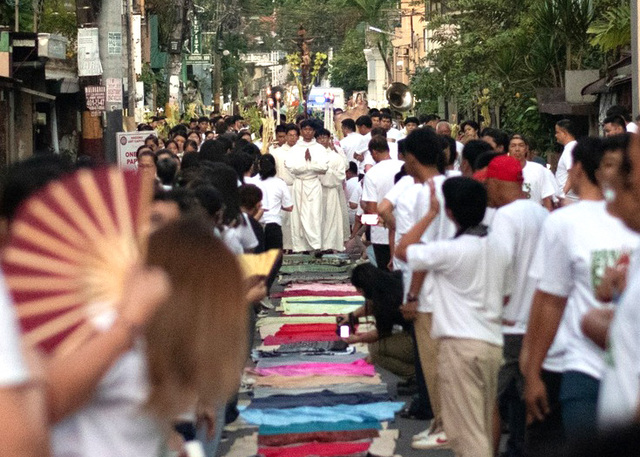
Angono’s religious traditions survived the changing times due in large part to a collective sense of heritage. Most of the roles in the festivities are passed on through generations. In a ritual before the priest’s procession around town, for example, banigs are laid over the paths before adding lambongs or veils. “Etong mga roles na to, nagsimula pa sa mga ninuno,” says Ric Limpio. “Lahat ng gumaganap sa Holy Week, nagpapasalin-salin, mula pa sa lola at lelang pa nila. Hindi yan basta gusto mo lang maglatag ng banig or lambong. Kailangan galing ka sa angkan.”
“Dito sa bayan namin, you can say na ang heart and soul ay art and music,” Toto answered when asked what makes Angono’s festivities unique. “Yong dalawang bagay na yan are with every tradition, especially yung mga gawaing simbahan, and even with yung gawain ng mga local goverrnments.”
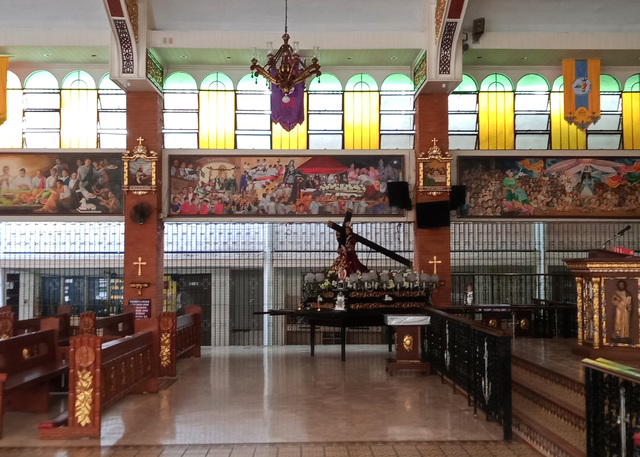
Father Peter Julian Eymard Balatbat, the parish priest and rector of Angono’s Diocesan Shrine and Parish of Saint Clement also observed the locals’ special way of observing the different religious rituals.
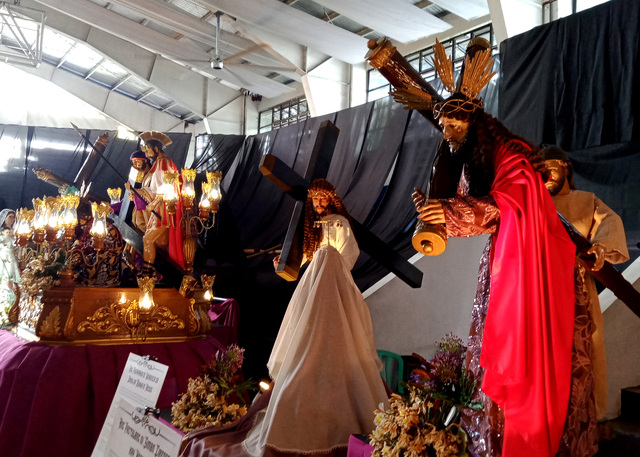
“There’s a big difference,” he says, as compared to the other parishes he has served. “Talagang ang mga taga-Angono very passionate sa traditions. They have a lot of traditions in expressing faith during Holy Week. Tsaka, mahilig tagala sila sa mga poon!” He mentions how the Samahang Semana Santa organized a special exhibition of all the poons at a gymnasium. “Yung kanilang exhibit, talagang pinakapakita nila what Angono can give. Hindi lang basta nagset-up ng exhibit. Lumalabas pa din yung kultura nila, yung traditions nila as Angonian, na pag nakita mo exhibit nila, sasabihin mo, ay mga taga Angono ito.”
Also read: Holy Week Beliefs and Superstitions in the Philippines