
Floy Quintos' Take On 'Lipa Miracle' Is Next Big Theater Event
It will mark the first time the story will be dramatized anywhere.

(SPOT.ph) If you thought Floy Quintos’ last play, the acclaimed Kakampinks-Vs-Apologists comedy The Reconciliation Dinner, dealt with a controversial subject matter, wait till you get a load of his next one: a fictionalized narrative based on the Lipa Miracle.
Entitled Grace, it follows the supposed events that happened in the Carmelite monastery in Lipa, Batangas in September of 1948, when a series of alleged apparitions of the Blessed Virgin Mary ran over 15 days. The Blessed Mother supposedly appeared to a 21-year-old novice named Teresita Castillo.
Also read: Mystics and Miracles: 10 Stories of Filipinos with Supernatural Gifts
The Lipa Miracle story
Catholics throughout the country welcomed the “miracle” and for three years celebrated it. People would make the journey to the little town to visit the site and pray to the Holy Mother. Rose petals, they heard, even floated down from the sky at one point. Interest became so intense it prompted Philippine Airlines to add two daily flights from Manila, to give the affluent religious set a faster, more convenient travel option to the 4-hour land travel. Pilgrims came from as far as the United States.
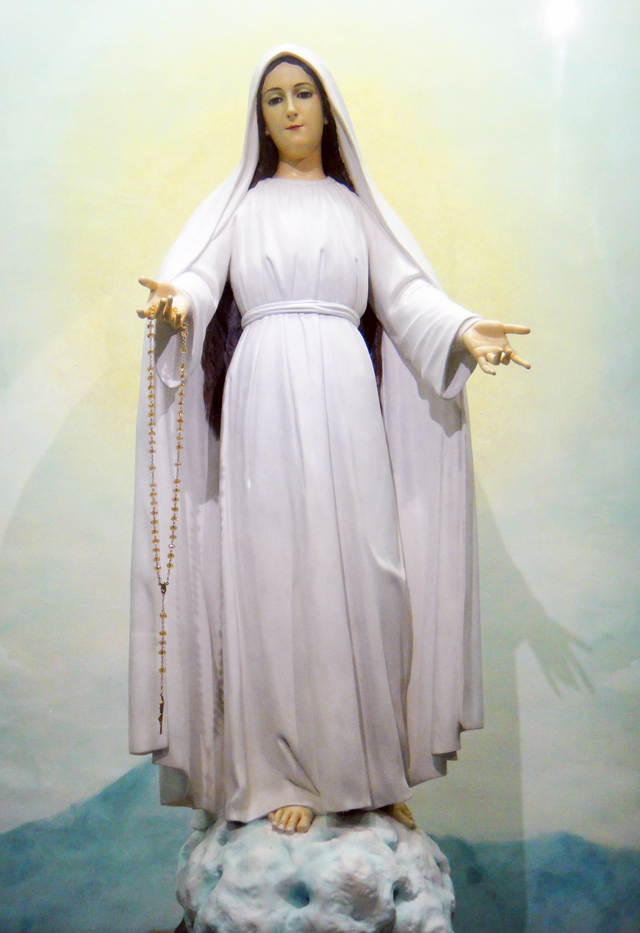
Because of the huge crowds and attendant activities, Lipa quickly rose from the ravages of World War 2, which turned the place into a literal ghost town, what with over 20,000 Filipinos killed by the Japanese.
Lipa came back to life, thanks to the reported apparitions, but it just as quickly suffered a certain death when the Vatican in 1951 declared, after a three-year investigation, that the events in the Carmel monastery were not supernatural. That the petal showers were fake and Sister Teresita’s visions of the Virgin Mary were not to be believed. The fallout was merciless: Mother Cecilia, the Prioress of the monastery, was transferred to the Carmel monastery in Iloilo and demoted to the position of maid; the Lipa bishop, a champion of the “miracles,” was removed from his post; and Sister Teresita was asked to leave the monastery and abandon life as a nun, which was the only thing she wanted in life.
These characters and the rest of their congregation suffered being publicly shunned and being called liars to their faces by many of the very faithful who flocked to Lipa those three years.
It's not another Himala
Shades of Himala, you say? Perhaps, but Grace will not tell the same story as that of the 1981 film classic. “Himala questions faith, the belief in the Virgin, in miracles,” Quintos notes. Besides, Sister Teresita never became a public figure like the movie’s fictional Elsa (played by Nora Aunor). “In keeping with the vows of the postulant, Sister Teresita was never exposed,” explains Quintos. “Wala din naging Bernadette [the visionary girl of Fatima] effect, kasi nga, unlike Bernadette who was a shepherdess, Sister Teresita was a postulant and she had to live by her vows.”
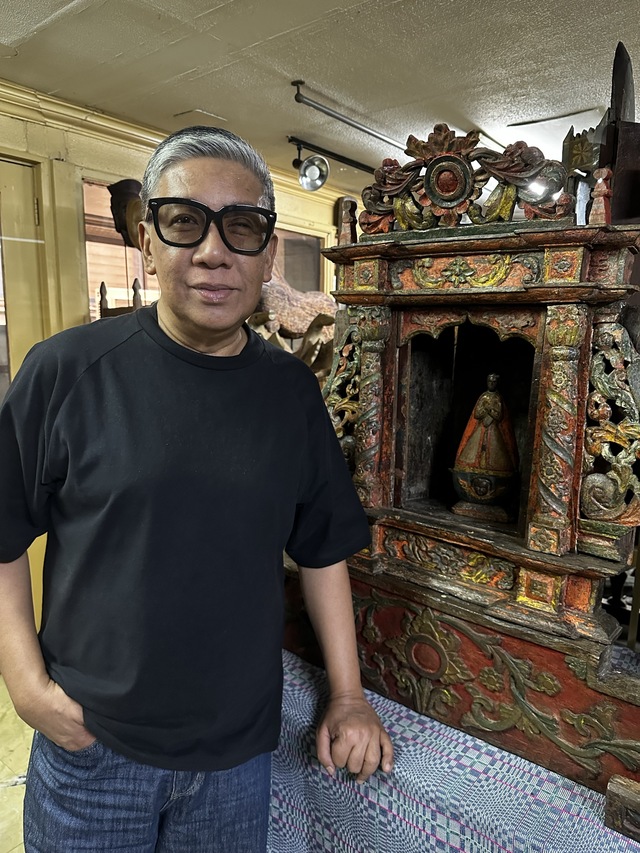
The seven-time Palanca awardee describes Grace as “a fictionalized narrative, an artistic expression” of what happened in Lipa. It will mark the first time the story will be dramatized anywhere. The play does not take a particular position, Quintos states. “We cannot say that the Church is right and Sister Teresita was wrong or vice versa.” It may or may not fan the flames of the decades-old controversy further. Many Filipino Catholics, both lay people and men and women of the cloth, remain devout to the devotion to Mary, Mediatrix of all Grace based on the 1948 events. They are vocal with their resistance to the Vatican decree and are calling for the reopening of the investigation, especially in light of the official 1951 Vatican document containing the decree against Lipa released for the first time just recently, more than 70 years after the decision was announced.
Quintos is not interested in any of that. What he finds fascinating about the “Lipa Miracle” narrative is the culture of total obedience and utmost silence that shaped the latter half of the story. It’s the controversial half that saw nuns and priests obeying higher authorities despite their convictions and keeping silent despite their personal truths. “They lived in a time that was so repressive,” he says. “It’s such a different life, a different way of looking at things, a different discipline which we don’t know in this world anymore.”

Quintos adds: “We live in a time when social media has allowed us the freedom to say what we want to express. While doing research for the play, I tried to understand the culture of Obedience, of Silence, of Unquestioning submission to the Church and to one's superiors. In monastic life, the ‘spirit of death’ refers to the dying of one's ego and will to become an empty vessel for the higher will to fill. How alien that concept is to us today. How difficult to understand and accept!
“My last two plays, The Kundiman Party and The Reconciliation Dinner dealt with the ways in which we resist the established powers. Soc Med played a large part in these two plays. The story of Lipa Carmel was a chance to explore the idea of Faith and quiet, personal Resistance in a culture where the ‘spirit of death’ was a pervasive factor that was used to silence Sister Teresing and the nuns of Lipa Carmel.
“And yet long after Sister Teresing and the key players of Lipa 1948 had died, we have seen the devotion to the Mediatrix grow. We have seen devotees asking the Church to re- investigate the apparition. The silence of S. Teresing and the nuns could be mistaken for weakness. But through the years, it has birthed a resistance to Church dogma, a devotion that survives, that is lived and yes, fought for.”
Ultimately, Grace is a story about the rule of men and about resistance. “We’re saying that this is a Church of God run by men; things will happen, decisions will be made, but at the same time there’s the idea of resistance,” Quintos says. “That even if I’m obedient, even if I’m silent, I can resist without being loud.” That’s a controversial thought right there.
GRACE runs from May 25 to June 16, Saturdays and Sundays, at the Power Mac Blackbox Theater in Ayala Circuit Mall in Makati. Tickets for the June 1, 3PM show are available online at Ticket2Me.net or thru mobile number 09175112110.